
23 Percent of a Nation’s Electricity
Ireland’s Central Statistics Office just dropped a number that should make everyone in tech sit up and pay attention: data centers consumed 23 percent of the country’s metered electricity in 2025. That’s nearly a quarter of all electricity used by an entire nation — eaten up by server farms.
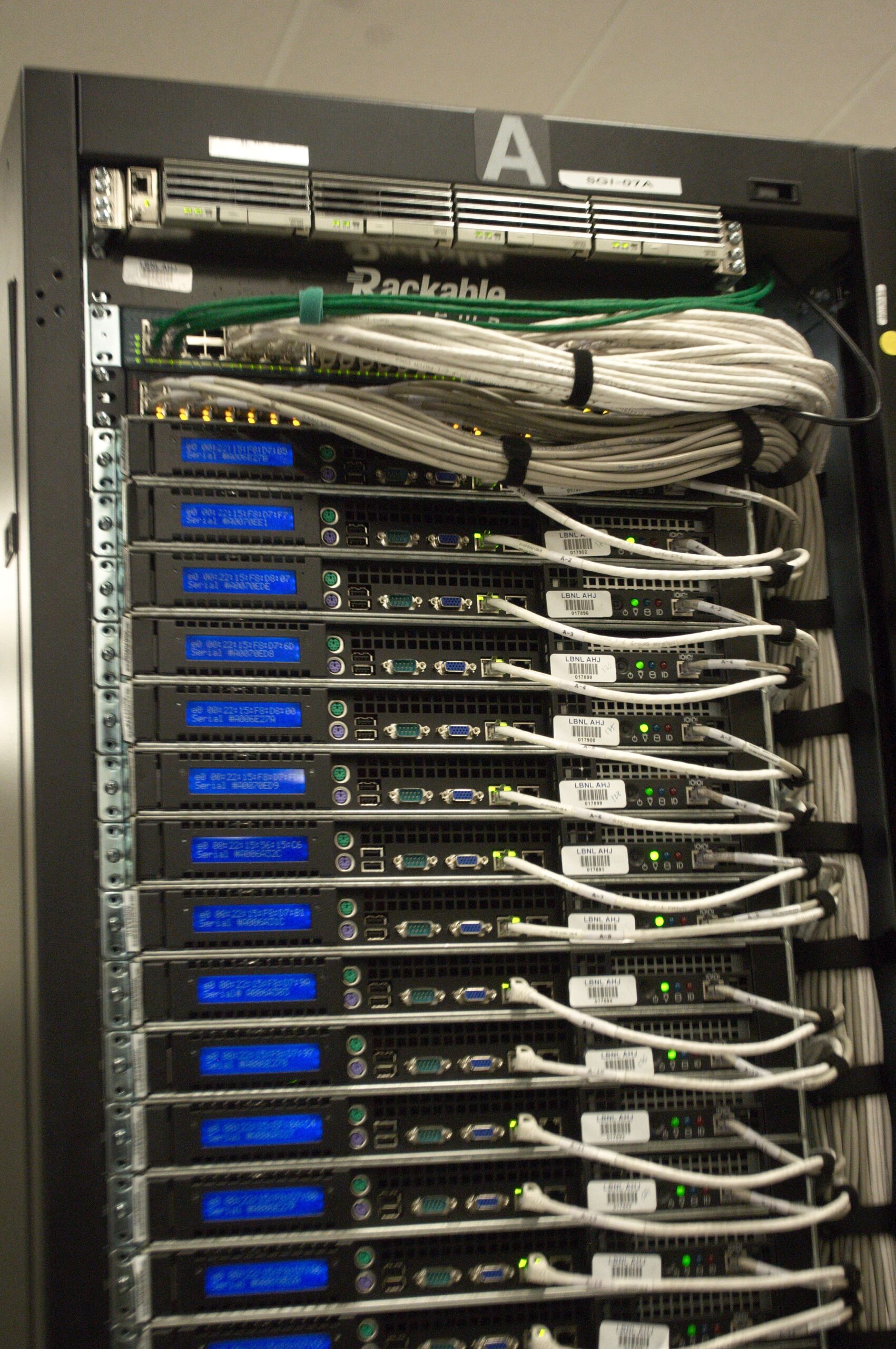

To put that in perspective, data centers used more power than all urban households in Ireland combined (18 percent), and more than twice what rural households consumed (9 percent). Their share has climbed from just 5 percent in 2015 to 14 percent in 2021, 20 percent in 2023, and now 23 percent last year. The total draw hit 7,663 gigawatt hours (GWh) in 2025 — up 10 percent from the year before, even while an effective moratorium on new grid connections in the Dublin area was in place for most of the year.
This isn’t just an Irish problem. It’s a preview of what’s coming everywhere as the AI buildout accelerates.
How Did We Get Here?
Ireland became a data center hub for the same reasons many tech companies park their European headquarters there: a favorable corporate tax rate, a skilled English-speaking workforce, and relatively cool temperatures that reduce cooling costs. Today, there are over 80 data centers scattered across a country of just 5.1 million people. That’s roughly one server farm for every 64,000 residents.
The growth has been relentless. Between 2015 and 2019, data center electricity consumption more than doubled from 1,240 GWh to 2,490 GWh. Then it tripled again between 2019 and 2025, hitting 7,663 GWh. “Data center consumption has grown every single year without exception,” noted Grzegorz Głaczyński, a statistician at the CSO’s Climate and Energy Division.
Things got so strained that Ireland’s Commission for Regulation of Utilities (CRU) imposed a moratorium on new data center grid connections in the Dublin area, where most of these facilities cluster. The moratorium was only lifted in December 2025 — and even then, under stricter rules. New connections above 10 MW now require operators to provide their own generators or battery systems that can feed power back to the national grid when needed.
As I covered in my earlier piece on AI data centers getting a fast lane to the power grid, the tension between hyperscaler demand and grid capacity isn’t unique to Ireland. The US Federal Energy Regulatory Commission faced the same pressure last year, and the outcomes have been mixed at best.
The AI Factor Changes Everything
Traditional data centers were already power-hungry. But AI training clusters take that to another level. A single NVIDIA DGX server pulls 700W to over 10kW depending on the configuration, and training runs can last weeks across thousands of these nodes. The International Energy Agency flagged this back in 2024, projecting that global data center electricity demand could double by 2026, with AI being the primary driver.
That projection is looking increasingly conservative. Every major hyperscaler — Microsoft, Google, Amazon, Meta — has announced massive data center expansion plans tied directly to AI infrastructure. Microsoft’s own emissions jumped 25 percent in a single year, driven almost entirely by AI data center builds. I wrote about AI’s growing power problem and the battery-backed solutions emerging earlier this year, and the trends have only accelerated since.
The scale is staggering. A single ChatGPT query is estimated to use roughly 10x the electricity of a standard Google search. If Google fully implemented AI-generated answers across all search results — which it’s clearly moving toward — the IEA estimated it could require nearly 10 TWh of additional electricity per year. That’s the equivalent of powering a small country.
Pushback Is Building Everywhere
Ireland isn’t alone in pushing back. Community opposition to data centers is growing across the United States and Europe. The Verge’s Emma Roth documented this in a recent column: yard signs opposing planned data centers are popping up in Pennsylvania, Virginia, and other states where hyperscalers are trying to build. The complaints are consistent — noise, water usage, strain on local grids, and the sense that these facilities benefit distant shareholders more than local residents.
Even the Trump administration has gotten involved, asking hyperscalers to publicly commit that their expanding server farm estates won’t spike energy bills or drain local water supplies. That’s a remarkable development — presidential pressure on the tech industry about data center externalities — and it signals just how visible this issue has become at the highest policy levels.
In Europe, the EU is moving toward stricter data center efficiency requirements and emissions reporting. Ireland’s new rules requiring on-site generation and grid-feed capability could become a template for other jurisdictions. The pattern is clear: the era of building data centers with minimal regulatory friction is ending.
What This Means for the Rest of Us
This isn’t just a story about Ireland. It’s a story about the economics of the AI boom that we’re all living through. Data center energy costs don’t exist in a vacuum — they flow back to cloud pricing, which flows back to the cost of running AI workloads, which affects every developer, startup, and enterprise building on top of these services.
If energy becomes a binding constraint — and the evidence suggests it already is in some regions — the cost of AI inference and training will rise. That’s one reason you’re seeing companies quietly moving away from expensive cloud AI APIs toward self-hosted alternatives. When the hyperscalers pass on their energy costs, the math on self-hosting gets more attractive by the quarter.
There’s also a broader question that I keep circling back to: whether all this AI infrastructure spending will actually pay for itself. The hyperscalers have committed hundreds of billions of dollars to data center builds. If energy constraints slow those builds or increase operating costs, the return-on-investment timeline stretches even further. At some point, the market has to reconcile the promises of AI revenue with the reality of AI electricity bills.
What Comes Next
Ireland’s 23 percent figure is a warning, not a crisis. It shows what happens when infrastructure growth outpaces energy planning — and it gives the rest of the world a roadmap for what to avoid.
The solutions aren’t mysterious. More efficient chips, better cooling techniques, location diversity (put data centers where renewable energy is plentiful), on-site generation requirements, and grid-feed obligations all help. Some of these are already rolling out. But they need to scale as fast as AI demand is growing, and right now, they’re not keeping pace.
For developers and tech professionals in the Philippines — where we’re also seeing data center investments from Microsoft, Google, and others — this is worth watching. Our energy grid faces its own challenges, and the lessons from Ireland are directly applicable. We have the chance to build smarter from the start rather than playing catch-up later.
The AI boom promised to transform everything. It’s delivering on that promise. But transformers, GPUs, and data centers all need power — and that power has to come from somewhere. Ireland just showed us the bill. The rest of the world should be taking notes.