
.jpg)
A Breakthrough Run at the All England Club
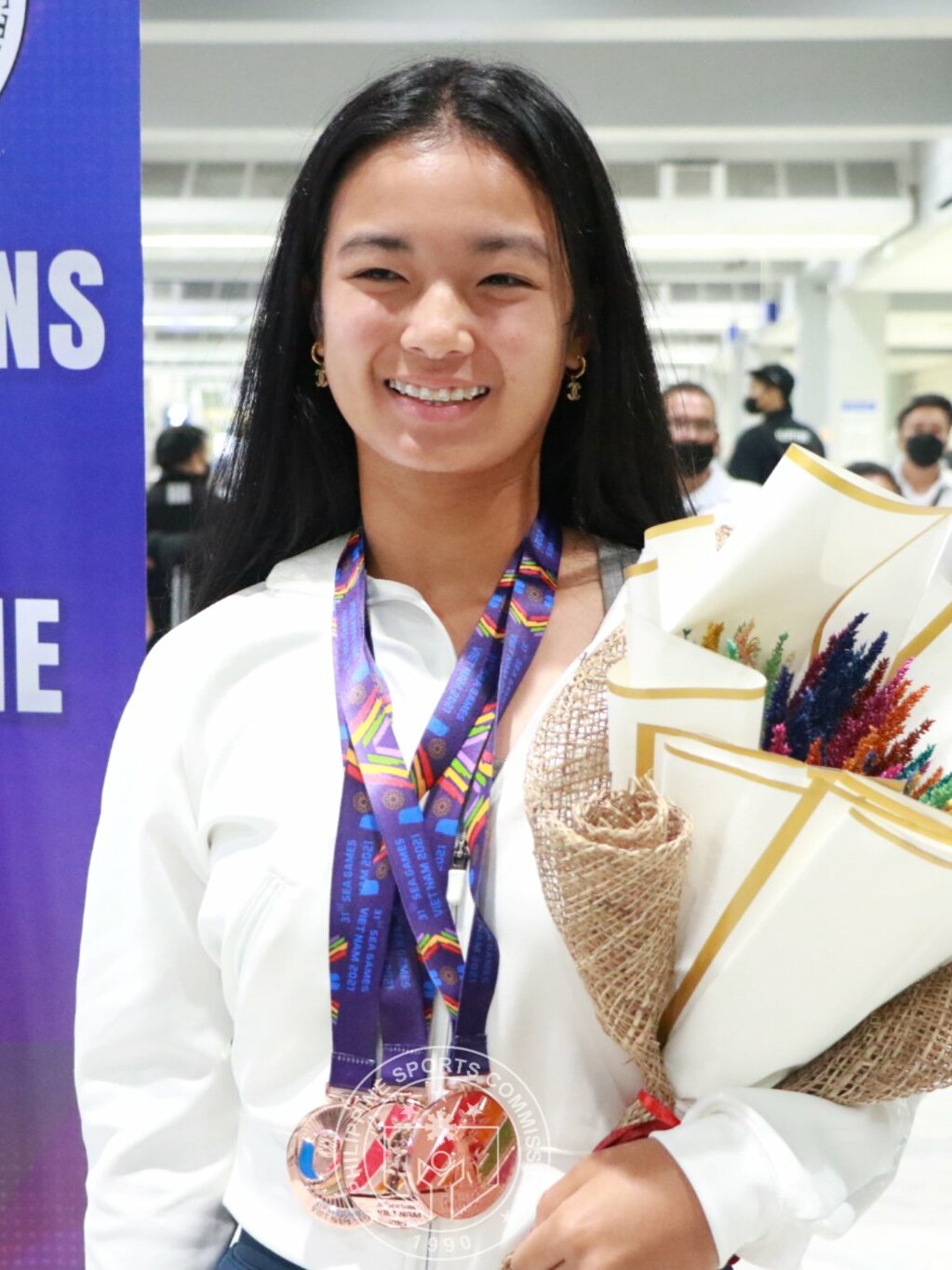
For Filipino sports fans, Wimbledon 2026 will be remembered as the tournament where Alex Eala announced herself on grass — not just as a promising talent, but as a legitimate Grand Slam contender.
The 21-year-old from the Philippines entered Wimbledon as the 29th seed, herself making history as the first Filipina ever seeded at the Championships. But seeding only gets you so far at SW19. It’s what you do on those hallowed grass courts that matters.
And what Alex Eala did was nothing short of extraordinary.
Round 1: A Dominant Statement Against Zarazua
Eala opened her campaign against Mexico’s Renata Zarazua, a player who held a 1-0 head-to-head advantage coming in. That record didn’t last long.
In just 78 minutes, Eala dismantled Zarazua 6-1, 6-2 in a performance that left no doubt about her grass-court credentials. She struck 22 winners against just 11 unforced errors, went 16-of-21 at the net, and saved both break points she faced. It was clinical, aggressive, and exactly the kind of statement a seeded player needs to make in the first round.
“I’m very happy with my first round,” Eala told reporters afterward. “I think I played really well and kept the intensity throughout the whole match. So I’m hoping to keep this momentum going.”
Round 2: The Comeback That Made History
Things got significantly tougher in the second round. Standing across the net was Australia’s Maya Joint — the same woman who had beaten Eala in a heartbreaking three-set final at Eastbourne last year, and who was coming off a statement victory over 23-time Grand Slam champion Serena Williams in the first round.
The first set was all Joint. She broke Eala early, dictated rallies with aggressive ball-striking, and took the opener 6-3 with a commanding 13-4 edge in winners. The Filipino fans packing Court 12 went quiet.
But champions respond. And Eala responded emphatically.
She reset in the second set, breaking Joint early and riding a wave of aggressive returning and consistent baseline play to level the match at 6-2. Joint’s error count climbed as Eala’s confidence grew.
Then came the decider — and it was pure domination. Eala broke Joint’s spirit in a grueling 13-minute opening game, converting her sixth break point of that game alone. She won 10 of the next 12 points to race to a 3-0 lead and never looked back, closing out the set 6-0 in a masterclass of controlled aggression.
The final score: 3-6, 6-2, 6-0. History made. Alex Eala became the first Filipino player — male or female — in the Open Era to reach the third round of a Grand Slam singles tournament.
“I really had to dig deep, especially after that first set,” an emotional Eala said on court. “Maya came out on fire. But I’m really happy. I think I improved a lot in this past year. I’m happy I’m able to look back at that loss and I’m able to smile.”
Round 3: A Blockbuster Awaits Against Swiatek
Standing between Eala and a spot in the second week is Iga Swiatek — the defending Wimbledon champion, world No. 3, and a three-time Grand Slam winner. The match is scheduled for Saturday, July 4, and it shapes up as the third chapter in what is quickly becoming one of the WTA’s most intriguing rivalries.
Their head-to-head is tied at 1-1. Eala stunned Swiatek on her breakthrough run to the Miami Open semifinals last year, a match that announced her arrival on the world stage. Swiatek responded by taking their second meeting in Madrid the following month. Both matches went three sets. Both were wars.
Now they meet on grass for the first time — a surface that has been kind to both players this season. Swiatek comes in having dismantled Karolina Pliskova 6-1, 6-3 in the second round, while Eala has looked increasingly comfortable on the grass with her aggressive style and improved net game.
“She has a tricky game,” Swiatek said of Eala ahead of the match. “I can assume on grass that it’s even more tricky because of the surface. For sure she’s using her strengths, the change of rhythm and everything. So I will prepare and I’ll be ready.”
The match is scheduled on No. 3 Court — which has been a sea of Philippine flags throughout Eala’s run. Expect the same on Saturday, as Filipino fans in London and around the world tune in to see if their champion can pull off another upset for the ages.
Win or lose, Eala has already made history. But a victory here would be nothing short of seismic.
A Grass Season to Remember
Eala’s Wimbledon run didn’t happen in isolation. It was the crowning achievement of a grass-court season that announced her as a force on the surface.
It started with a bang at the Birmingham Open, where she won her second WTA 125 title, outclassing the field on British grass. Then came Berlin, where she reached the semifinals with back-to-back top-10 wins over Elena Rybakina and Elina Svitolina — a run that turned heads across the tennis world.
Add in a doubles partnership with Venus Williams at Bad Homburg, where Eala got to learn from a five-time Wimbledon champion, and you have the makings of a player who is absorbing every lesson grass has to offer. It’s no wonder she entered Wimbledon with a 10-3 record on grass for the season.
Her ranking is now projected to rise further from its current career-high of No. 29, which already makes her the highest-ranked Filipino player in history — male or female.
What This Means for Philippine Tennis
Here’s the thing about Alex Eala’s Wimbledon run, and what it means for us back home.
In a country where tennis remains an expensive sport — where a decent racquet, regular coaching, and court fees are luxuries most families can’t afford — Eala’s success hits different. She didn’t come from a tennis power structure. She came from a place where tennis dreams are often just that: dreams.
She moved to Spain at 13 to train at the Rafa Nadal Academy, leaving her family behind to chase something that had never been done by a Filipino before. She learned to play on clay, adapted to hard courts, and in the past two years, has become one of the most improved players on grass.
Every time she steps on court carrying the Philippine flag, she reminds every kid in the Philippines with a racket — or just the dream of holding one — that it’s possible.
As one Filipino fan wrote during her second-round match: “For countries where tennis is woven into everyday life, these celebrations may seem excessive. But for a nation where holding a tennis racquet is a luxury for many, every Alex Eala victory feels like a victory for millions who have long believed that some dreams were simply too expensive to chase.”
That’s what this Wimbledon run meant. Not just the results — though the results were historic — but what those results represent.
What’s Next for Alex Eala
At just 21, Eala’s trajectory is pointing firmly upward. She’s proven she can compete with the best in the world on any surface. She’s shown she can come back from a set down against a dangerous opponent. She’s already beaten Swiatek once before, in Miami — and now she gets another shot at the defending champion on the biggest stage in tennis.
The US Open swings into view next. If her grass-court season is any indication, the hard courts of Flushing Meadows should suit her game beautifully. The same aggressive baseline style, the same fearless net play, the same relentless competitive fire — it translates everywhere.
This won’t be the last time you read about Alex Eala making history at a Grand Slam. If her Wimbledon 2026 campaign proved anything, it’s that she’s just getting started.
More Sports Coverage from Bleuken
If you enjoyed this article, check out our other sports coverage — including an update on what Oleksandr Usyk’s belt vacatur means for the heavyweight division and our recap of Boots Ennis vs. Xander Zayas and the Ancajas upset.
so where to watch Wimbledon 2026: Eala vs Swiatek round 3?