
Six months after its February launch, the Galaxy S26 has quietly become one of the better value flagships in the market. Its EU price just dropped under €800 on Amazon Germany while Google’s freshly launched Pixel 11 base model still asks €1,000, and in the Philippines the official SRP sits at a steady ₱58,990. That price drop makes the vanilla S26 worth a serious second look — a compact 6.3-inch flagship with Samsung’s 2nm Exynos 2600, battery endurance that finally matches an iPhone, seven years of updates, and one glaring holdover: 25W charging that even a ₱28,990 mid-ranger would blush at.
Design & Build Quality
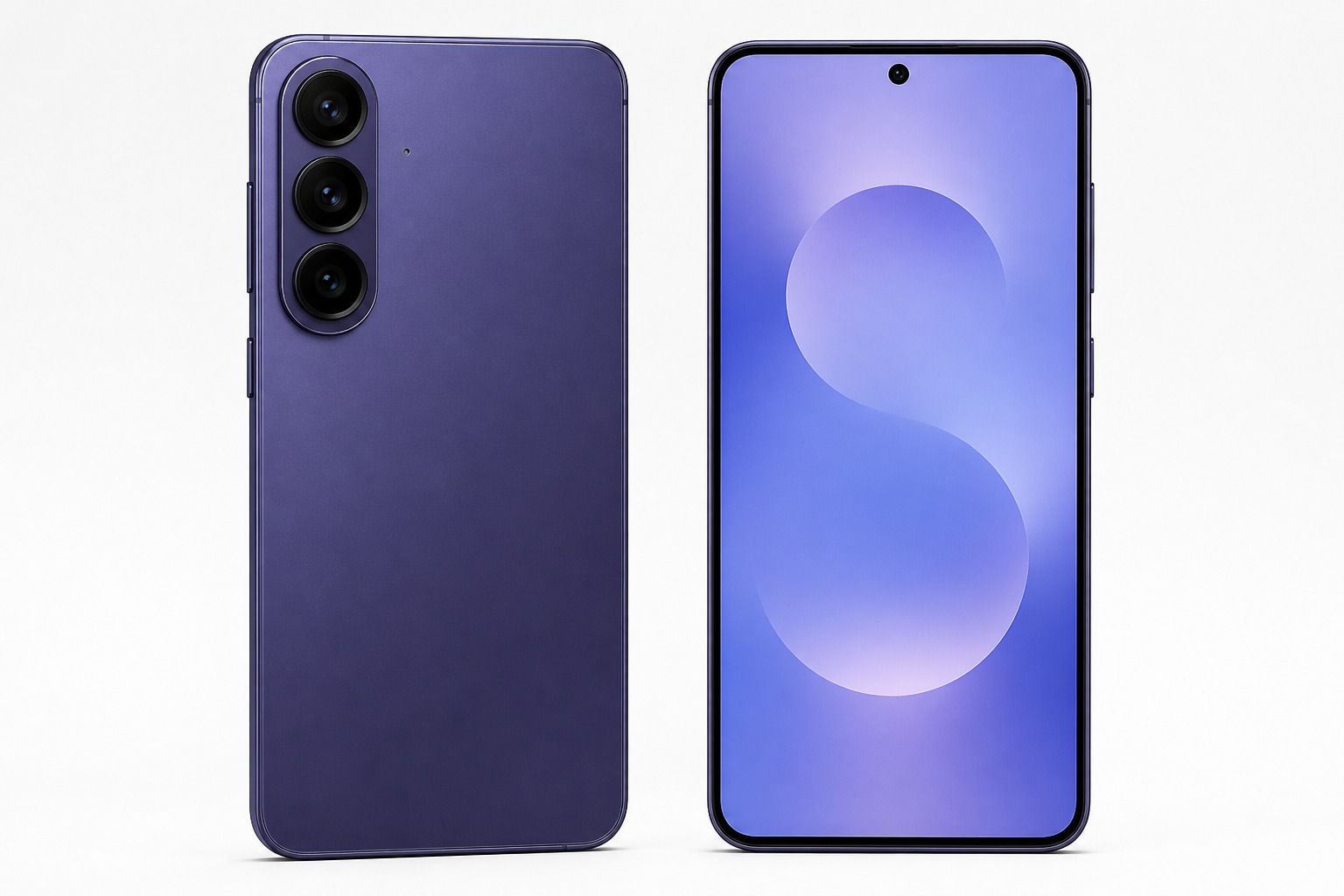
The S26 keeps the flat-front, flat-back language of recent Galaxies, and at 149.6 x 71.7 x 7.2mm and 167g it’s one of the few genuinely compact flagships you can still buy. It’s lighter than the 190g Galaxy S26+ and far easier to use one-handed, which is exactly why this size keeps a devoted following.
The materials are unchanged and still premium: Gorilla Glass Victus 2 on both front and back over an Armor aluminum 2 frame, with IP68 dust and water resistance. Samsung did make one design change this year — the three rear cameras now sit inside a single joined bump instead of separate rings. It looks tidier, but the bump protrudes enough to make the phone wobble on a flat desk, and I found myself reaching for a case more often than with last year’s S25.
Port layout is standard: power and volume on the right, USB-C on the bottom with a hybrid dual-SIM tray (two physical SIMs, or one plus eSIM). The ultrasonic in-display fingerprint reader is fast and reliable even with slightly damp fingers. There’s no 3.5mm headphone jack, as expected at this tier. The S26 comes in Cobalt Violet, Sky Blue, Black, White, plus the Silver Shadow and Pink Gold online exclusives. If you want the full family breakdown, my Galaxy S26 Ultra review covers how the flagship sibling differs.
Display
This is the same excellent 6.3-inch Dynamic LTPO AMOLED 2X panel family, now with a 1080 x 2340 (FHD+) resolution, 411ppi, 1-120Hz refresh, and HDR10+ support. It’s bright: GSMArena measured 751 nits in manual mode, roughly 1,383 nits in auto with a 75% white patch, and a 2,552-nit peak on small highlights. I used it on a harsh summer afternoon under direct sun in Roxas and never once had to shield the screen — that’s a flagship-class number.
On the flip side, the panel still caps at HDR10+ with no Dolby Vision, and there’s no high-frequency PWM dimming, which is a genuine concern for people sensitive to flicker. The S26 also skips the Privacy Display that debuted on the Ultra — that remains an Ultra-exclusive feature, so if the whole point of the S26 for you is panel-level privacy, you need to look up a tier.
What the vanilla model does gain this year is Samsung’s custom display processing: ProScaler, which sharpens lower-resolution content, and mDNIe, which smooths color gradients. Both run on the new chip’s dedicated display controller, and the effect is subtle but real when watching 1080p YouTube on the FHD+ panel. Android Ultra HDR photos also render properly in the Gallery app and Chrome.
Performance
Here’s where the silicon story gets interesting. The Philippines, like most of the world, gets the Exynos 2600 — Samsung’s first 2nm chip — while North America, China, and Japan get the Snapdragon 8 Elite Gen 5 for Galaxy. It’s the return of Samsung’s dual-chip strategy after last year’s all-Snapdragon S25 family.
The Exynos 2600 uses a 10-core layout (one high-performance C1-Ultra core, three performance cores, six mid-tier cores) with no dedicated efficiency cores, and the early numbers are respectable. In Geekbench 6 it scores around 2,995 single-core and 10,824 multi-core — matching the Snapdragon 8 Elite Gen 5’s multi-core on the S26 Ultra, though its single-core result only barely clears last year’s chips. AnTuTu v11 comes in near 3.06 million, and in 3DMark Wild Life Extreme the Xclipse 960 GPU (7,230 points) actually edges out the Galaxy S25’s Adreno 830. Samsung claims up to 39% higher CPU performance and 113% faster AI over the previous generation, and the NPU work — Gemini on-device, photo processing, live translation — is genuinely quick.
Memory is a sore spot, but through no fault of Samsung’s: the S26 starts at 12GB/256GB with no 128GB tier, a direct consequence of the global memory shortage that’s been pushing RAM and storage prices up all year. 12GB is still plenty for a 2026 flagship, and UFS 4.x storage is fast. In day-to-day use, One UI 8.5 flies — app launches, multitasking, and the AI features all feel immediate. Thermals are fine for a compact phone: heavy camera work warms the top edge but nothing alarming.
Camera
Samsung’s camera strategy here is honest and simple: the S26 carries over the S25’s hardware almost unchanged. That means a 50MP main sensor (Samsung ISOCELL GN3, 1/1.56-inch, f/1.8, OIS), a 10MP 3x telephoto, a 12MP fixed-focus ultrawide, and a 12MP autofocus selfie camera that this year gets a wider lens.
In daylight, the main camera delivers very good photos — natural textures, reliable white balance, excellent dynamic range. The 2x zoom mode is useful and clean in good light, and portraits at 2x look convincing with believable background separation. The 3x telephoto is competent rather than exciting: pleasing colors and good detail outdoors, with a 17cm minimum focus that’s actually better than the 22cm on both the S26+ and S26 Ultra for close-up shots. The ultrawide, with no autofocus, is the weak link again — fine outdoors, soft indoors, and nearby subjects come out blurry.
The standout is the selfie camera. The wider lens plus autofocus makes for sharp, well-exposed front shots with excellent skin tones and solid low-light results. If you live on your front camera, this is one of the best in the compact class. The 12MP selfie sensor punches well above its size.
Low-light is where the S26 frustrates. Samsung’s new auto Night mode doesn’t always kick in, there’s no way to force it from the main camera app, and the crescent icon that appears is unreliable — you often have to install the separate Camera Assistant app to get a dedicated Night mode. Max out the auto mode you can trigger, and photos clean up nicely, but the point-and-shoot experience after dark is a step behind rivals like the Pixel 11 Pro XL, whose computational photography just works.
Video is genuinely strong for the price: 8K30 on the main camera, 4K60 on every camera including the front, 10-bit HDR10+ recording, a Log profile, five pre-loaded LUTs, and Horizon Lock stabilization (up to 1440p) that keeps the horizon level no matter how you tilt the phone. You won’t get the Ultra’s 4K120, APV codec, or custom LUT imports — those stay flagships-only.
Battery & Charging
The battery is the S26’s best-kept secret. At 4,300mAh it’s only 300mAh bigger than the S25’s 4,000mAh cell, yet GSMArena’s Active Use test recorded 15 hours and 20 minutes — comfortably beating the Pixel 10 Pro and matching the iPhone 17 Pro, and a huge jump over last year. I got a full day with heavy camera use, something the S25 rarely delivered. The bigger cell plus the efficient 2nm chip did real work here.
Charging is the asterisk on the whole package. The S26 tops out at 25W wired, exactly like last year — but the charging curve got more aggressive, so the phone hits 62% in 30 minutes and 100% in about 1 hour 4 minutes, 13 minutes faster than the S25. It’s an improvement, but it’s still the slowest in its class: the S26+ does 45W, the Ultra 60W, and even Samsung’s own mid-range Galaxy A57 ships with 45W. Wireless tops out at 15W via Qi2 (no built-in magnets, so you’ll want a magnetic case), and reverse wireless is 4.5W.
The other practical note: no charger in the box, just a USB-C cable. At 25W, pretty much any USB-PD charger will do, which softens the blow. Samsung also includes its Battery Protection options — Basic, Adaptive, or a custom 80/85/90/95% cap — which are worth switching on if you plan to keep this phone for years.
Software
The S26 runs Android 16 with One UI 8.5, and Samsung’s update commitment remains best-in-class: seven major OS upgrades and seven years of security patches, taking it to March 2033. For a phone you’re buying at a discounted price, that longevity is a big part of the value equation — this is a device that will outlive its resale value by a wide margin.
One UI 8.5 is mature and feature-rich: Galaxy AI tools, Gemini integration, Samsung DeX desktop mode, and the new ProScaler display processing all present properly. It’s not as slick as the Pixel 11’s Android 17, which launched this week with Google’s newest AI suite, but One UI remains more customizable out of the box. Just don’t expect the Privacy Display panel trick here — it’s Ultra-only, as noted.
Pros and Cons
| Pros | Cons |
|---|---|
| Compact, light 167g flagship build with Victus 2 and IP68 | 25W charging is the slowest in its class — even a ₱28,990 A57 offers 45W |
| Bright LTPO OLED, 2,552-nit peak, great outdoors | No Dolby Vision, 10-bit depth, or high-frequency PWM for flicker-sensitive eyes |
| 15:20h battery endurance — the family’s best, matches iPhone 17 Pro | No UWB and no Privacy Display — both Plus/Ultra exclusives |
| Faster charging curve than S25: 62% in 30 min, full in ~1h 4min | No charger in the box |
| Excellent autofocus selfie camera with a wider lens | Unintuitive auto Night mode; ultrawide lacks autofocus |
| Seven years of OS updates and security patches to 2033 | Very minor upgrade over the Galaxy S25 overall — same cameras, same charging |
| Rich video tools: 8K30, 10-bit HDR10+, LUTs, Horizon Lock | No 4K120 or APV codec — those remain Ultra exclusives |
Should You Buy This?
Buy it if
- You want a genuinely compact flagship that’s easy to use one-handed — the 6.3-inch S26 is one of the last of its kind
- The price drop matters to you: under €800 in Europe, or ₱58,990 official in the Philippines, it undercuts the vanilla Pixel 11 by over €200
- Battery endurance is a priority — 15:20h Active Use matches the iPhone 17 Pro and outlasts the Pixel 10 Pro
- You plan to keep a phone 5+ years and want Samsung’s 7-year update commitment
- You take lots of selfies and want an AF front camera that’s genuinely good
Skip it if
- You need fast charging — 25W in 2026 is hard to justify when the S26+ at 45W or a budget A57 with the same charger exist
- You already own a Galaxy S25 — this year’s updates are incremental, and GSMArena’s own verdict calls it a minor upgrade
- You want the newer Android 17 right away, or Google’s camera processing — the Pixel 11 family does both better
- You shoot a lot of photos in the dark — Night mode is frustratingly hidden behind a separate app
- UWB for smart tags and Digital Key is important to you — only the S26+ and Ultra have it
Final Verdict
The Galaxy S26 at its launch price was an easy phone to skip — a modest refresh of the S25 with the same cameras, the same 25W charging, and only a bigger battery to show for it. That’s the criticism in most reviews, and it’s fair. But the price drop changes the math. At under €800 in Europe and ₱58,990 in the Philippines, the S26 is no longer competing with the S25 — it’s competing with mid-rangers on one side and the brand-new Pixel 11 on the other, and on that field it looks much stronger.
What you get for the money is a compact build quality that nothing else at this size matches, class-leading battery endurance for the form factor, an excellent selfie camera, seven years of updates, and a mature software experience. What you give up is fast charging, UWB, a Dolby Vision display, and the assurance that automatic night photos will just work. Those are real compromises, but they’re the same compromises you’d have made at the full ₱58,990 — nothing about the price drop makes it a worse phone.
For compact-phone loyalists upgrading from an S21 or S22, this is an easy recommendation — the endurance gain alone is transformative, and the AI features plus seven-year support make it a genuine long-haul device. For S25 owners, there’s no reason to move. And for first-time flagship buyers in the Philippines, the Top 10 Phones 2026 roundup is a useful sanity check before you commit — the S26’s value case depends on how much you care about charging speed, because at ₱58,990 there are 100W-capable mid-rangers that will charge noticeably faster — GSMArena’s lab clocked the S26 at around an hour for a full charge.
My honest take: the Galaxy S26 is the phone the S25 should have been, arriving six months late with a price cut instead of an apology. If 25W doesn’t scare you — and for a phone you charge overnight, it mostly shouldn’t — this is the compact flagship to buy in the second half of 2026.