
Inkling 2 Mini: AI That Runs on Your Laptop
If you’ve been following AI news, you’ve probably heard that frontier models keep getting bigger. Bigger GPUs, bigger clusters, bigger bills. But this week, a Manila-based lab did something that turns that assumption inside out.
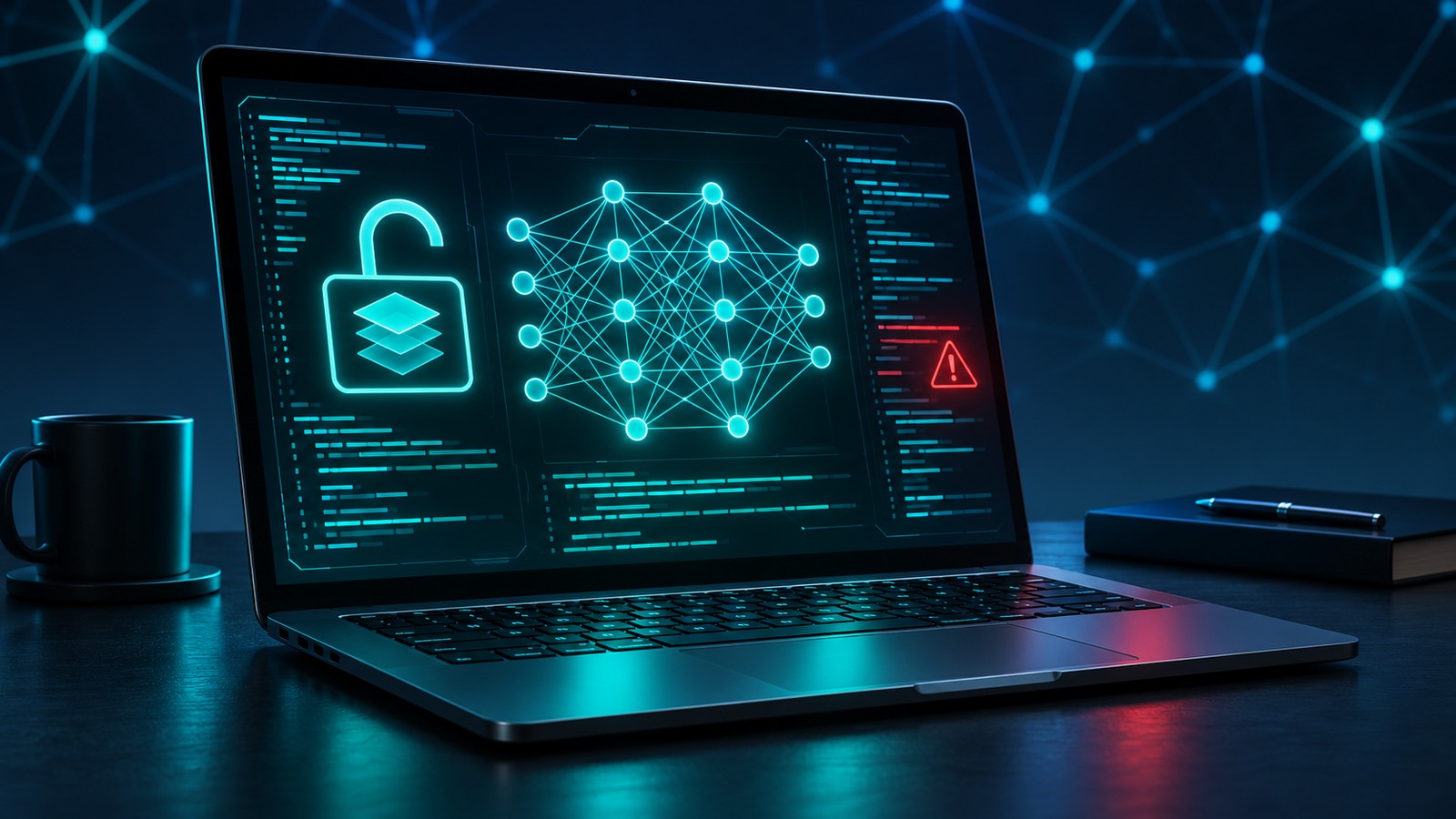
Thinking Machines Lab, the AI research group founded in the Philippines, released Inkling 2 Mini on November 20 — an open-weights model small enough to run on a consumer laptop. And not just “runs okay” — it runs at benchmarks that put it on a par with models many times its size.
This isn’t just another model release. It’s a signal. The era of AI that only lives in a data center is ending, and for the Philippines, it’s a story worth paying attention to.
Who built it, and why it matters
Thinking Machines Lab is no stranger to the global AI scene. Founded in Manila in 2015 by Stephanie Sy, the lab operates as a research division focused on multimodal interaction models, and it’s already an OpenAI services partner for Asia Pacific. It’s a homegrown Philippine AI company that has quietly become a global player.
Inkling 2 Mini is their answer to a question the whole industry is asking: can you get frontier-level AI without frontier-level infrastructure? The model is a 26.4-billion-parameter mixture-of-experts model with 3.4 billion active parameters per token. Its secret isn’t raw scale — it’s architecture. The model uses a looped transformer design: of its 24 layers, the middle 12 run three times for every token. That gives it 5.4 billion effective active parameters without adding more weights.
The result is a model that punches above its weight class. On DeepSoftware Engineering v1.1 (DeepSWE), it scores 48.2%. On Vals Index v2.2, 46.5%. On SWE-bench Pro v2 Hard, 77.9%. For an open-weights model under 100 billion parameters, those numbers are exceptional.
What this means for developers
The most immediate change is practical. Inkling 2 Mini is distributed in mixed NVFP4 and MXFP8 precision, with a total footprint of about 20GB. That means you can download it, point it at a laptop, and it runs. The lab’s own researchers demonstrated this mid-flight: they took the model on a plane, ran it offline on a MacBook Pro, and built a playable flight simulator in minutes. The same shift is already reshaping how developers think about AI tooling — AI agents are now building apps, and local models are part of that.
At launch, the lab supports Apple Silicon with 32GB or more of memory via Ollama. NVIDIA’s DGX Spark desktop AI computer is also supported natively. Quantized GGUF versions are available through Unsloth and llama.cpp for anyone running other hardware.
There’s also a research side that deserves attention. Alongside the released model, Thinking Machines released a variable-loop variant designed specifically for “monitorability” — the ability to understand what a model is doing under the hood. Early results show the model’s chain of thought getting shorter but staying legible as loops increase, and importantly, it doesn’t trend higher on tests of agentic sabotage. In an era of anxieties about AI oversight, that’s a quietly important data point.
The bigger picture: local AI, finally local
For a Filipino tech blog, this is the story that connects. The Philippines has been producing serious AI talent for years — Thinking Machines itself has trained more than 10,000 professionals and deployed hundreds of AI systems across financial services, retail, and the civic sector. But much of that capability lived in the cloud, in systems you don’t control, in pipelines you can’t see.
Inkling 2 Mini changes the equation. A model this capable, running on hardware you already own, means the Philippines doesn’t have to import AI — it can run it locally, build on it, and make it its own. The weights are open under the Apache 2.0 license, available on Hugging Face, with inference support on Ollama, SGLang, vLLM, Unsloth, NVIDIA Dynamo, TokenSpeed, and Llama App.
One example that brings this home: a developer in Manila who wants to run an AI agent that doesn’t leak data to a third-party cloud can now run Inkling 2 Mini locally on a MacBook. No round-trips to a data center. No surprise bill. Just a model that runs where the work happens.
It also reframes the cost conversation. AI economics have been dominated by the assumption that the only viable path is renting frontier models at scale. Inkling 2 Mini shows a different path: efficient intelligence that runs on your own laptop. If more developers and companies in the Philippines, and across Southeast Asia, adopt this model for local workloads, the cost structure of AI changes — and who pays when your AI agent makes a bad financial call is a question the region can now answer for itself.
The same trend is touching everyday tools. Google Gemini Tasks is now free and other assistants are becoming embedded in the software people already use every day — Inkling 2 Mini points the other direction, toward running AI where you choose, not where a cloud provider decides.
Thinking Machines Lab just proved a point that matters to every developer in the region: the next AI breakthroughs don’t all have to come from a handful of data centers in a handful of countries. A Philippines-built model, small enough to sit on your laptop, is now part of the equation.
Whether you’re a developer looking for a model you can run offline, a researcher interested in monitorability, or simply someone who believes the future of AI should be accessible, not exclusive, Inkling 2 Mini is worth your time. The weights are on Hugging Face. The Tinker platform is open. And the laptop on your desk just got a lot more interesting.