
Huawei Mate 90 Air Review: China’s Thinnest Mate Slab
The Huawei Mate 90 Air is not out yet. It will not be until November 24, when Huawei unveils it alongside the Mate X8 foldable. What is already on sale is a listing on Huawei’s official online store. It tells us the colour palette and the memory choices. The rest of the spec sheet — screen, battery, camera, price — is still shape from leaks and reviewer estimates.
This is a pre-launch review. I will separate what is confirmed from what is still unconfirmed, so you know exactly what to expect if you are in the market for one.
1. Design & Build Quality
The Mate 90 Air’s headline number is thickness. Huawei is billing it as the thinnest non-foldable Mate phone ever, with reports placing the body at roughly 6 to 7mm — comparable to the Mate 70 Air’s 6.6mm. The Mate 90 Air is thinner than the standard Mate 90 (8mm) and noticeably slimmer than the Mate X8 foldable.
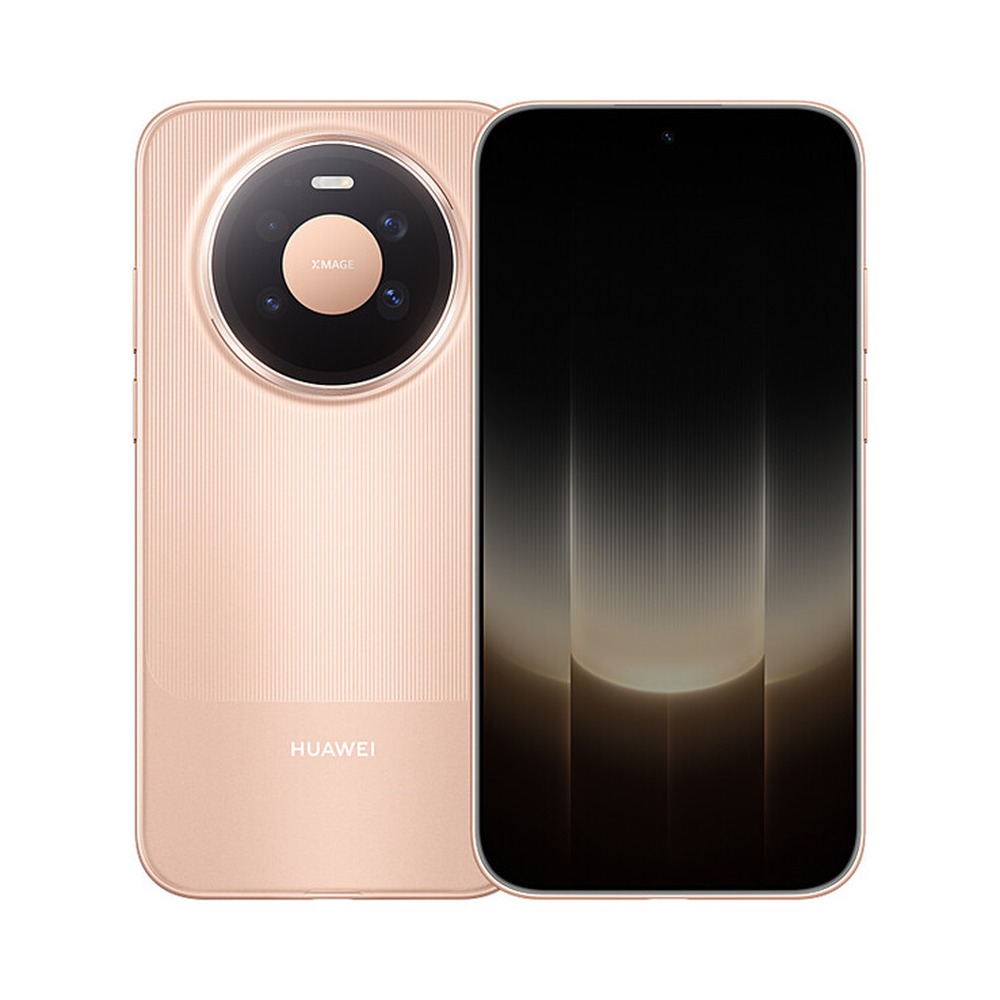
Visually, it borrows heavily from the Huawei Mate 90 Pro Review, a two-tone rear with a large circular camera housing. Three colourways are confirmed — Rose Gold, Moon Silver, and Obsidian Black. The Mate 90 line uses Huawei’s Kunlun Glass 3 up front and a glass-fibre-reinforced plastic back, which I liked in the Mate 90 for its grip and scratch resistance. Expect the same recipe here, just thinner.
The two-tone rear is another deliberate touch. The bottom half of the back is a matte, finger-textured polymer that hides the camera island cleanly, while the top half stays a lighter, slightly glossier panel to echo the curved display. That split is not just cosmetic — it improves grip, so the thin body does not feel as slick as it measures. The frame is a polished aluminium alloy with rounded edges, and the volume and power buttons sit on the right edge below the top, exactly where the Mate 90 family habitually places them.
2. Display
The Mate 90 Air is expected to carry a 7-inch quad-curved OLED, based on reports from Huawei Central and PhoneArena. The curved screen is the kind of detail that makes you want to unbox it immediately — it is the same curvy language the Mate X8 uses, just on a smaller, more practical canvas.
What I cannot confirm is the resolution, brightness, and refresh rate. The standard Mate 90 ships a 6.75-inch LTPO OLED at 1280×2832 with a 120Hz panel. A 7-inch quad-curved screen would naturally be a step up, but I will not assert the pixel count or the burn-in resistance until Huawei publishes official numbers. The quad-curved curve is genuine cause for interest: it looks great on camera, but it can catch on jacket pockets, so hold it with care.
3. Performance
Under the hood, the Mate 90 Air is expected to run the Kirin 9030 series — the same flagship silicon that powers the Mate 90, with a higher-tick Kirin 9035 for the rumoured 16GB variant. That is a proven, efficient flagship architecture, and it should hold up well with a large battery.
There are no benchmark scores yet; this is a pre-launch device and there is nothing to run. For the record, the Mate 90 Pro ships the Kirin 9035 (a derivative of the 9030), so a 9030/9035 pairing on the Air is a safe expectation. I will treat any “flagship performance” claim with a grain of salt until we have real-world testing. Heat will be the true test: a thin body holds less thermal headroom, so sustained gaming could throttle early. I expect the 6,800mAh battery to absorb most of that, but we will not know until we measure it.
4. Camera
The circular camera module is the Mate 90 Air’s signature. A Find X10 Pro Max-style triple lens behind a ring would be a bold move, and the reports describe a large ring with four lenses, including Huawei’s third-generation multispectral shooting. That multispectral sensor is the interesting bit — it captures light beyond the visible spectrum and, in Huawei’s demos, is supposed to improve colour accuracy and material simulation in photos.
The multispectral lens is the detail worth watching. In Huawei’s own demonstrations, the sensor captures information beyond the visible spectrum and feeds it into the Camera Toolbox to separate ingredients such as fat content, fabric weave, and fine colour shades. That sounds like a party trick until you see it — the multispectral channel genuinely sharpens colour reproduction and can expose material differences that a normal sensor misses. Whether it survives the real world, and how much battery it burns, will only be settled at launch. What is not in doubt is the ring layout: a single, unmistakable camera island that says “flagship camera” at a glance.
5. Battery & Charging
This is where the Mate 90 Air should genuinely impress. A reported 6,800mAh cell is a meaningful bump over the Mate 90’s 6,600mAh and the Mate 70 Air’s 6,500mAh. Add 66W wired charging and 50W wireless charging (per reports), and you have a phone that should comfortably outlast a day on a single charge.
I will be careful here: the exact capacity and charging speeds are still unconfirmed. I expect the Mate 90’s 66W wired figure to carry over, but until Huawei publishes official numbers I will note them as reported. Wireless at 50W would be a strong statement — worth watching.
6. Software
The Mate 90 Air launches on HarmonyOS 7 (same platform as the Pura 90 Plus), Huawei’s current mobile platform. That is confirmed. What is not confirmed is the update commitment — the Mate 90 Pro has a multi-year OS and security roadmap, but I will not extrapolate to the Air until Huawei states it.
The update commitment is a soft spot. The Mate 90 Pro ships a multi-year OS and security roadmap, and the Air will almost certainly be held to a similar agenda — but Huawei has only said “the usual annual update cycle” so far. Given the phone’s China-first status, the update story may be simpler than on a global flagship, but I will not gamble on it. For now, the ride is HarmonyOS 7, with no sign of Google Mobile Services, and that leaves the local-app question for Filipino readers firmly on the negative side.
7. Pros and Cons
| Pros | Cons |
|---|---|
| Thinnest non-foldable Mate ever | China-only launch — no global availability |
| Reported 6,800mAh battery with 66W wired charging | Full spec sheet unconfirmed (display, battery, camera) |
| 7-inch quad-curved OLED (reported) | No 3.5mm jack (likely, like the Mate 90) |
| Ring camera module with multispectral sensor | No Google Mobile Services |
| Official store confirms 12GB RAM in both 256GB and 512GB | Multispectral sensor still unproven in the wild |
| Three distinct colourways | Pre-launch, so no independent benchmarks |
8. Should You Buy This?
Buy it if: you are in China, you want the thinnest Mate possible, you need all-day battery, and you are comfortable with the HarmonyOS ecosystem. Also buy it if you have been waiting for a slimmer Mate slab and do not mind a long wait for specs.
Skip it if: you need a phone outside China, you cannot live without Google services, you want confirmed hardware specs today, or you are buying on a budget — because you will be paying flagship Mate prices for pre-launch hardware.
9. Final Verdict
The Huawei Mate 90 Air is a phone that exists on paper and in a store listing, but not on a desk. Its real strengths — thinness, battery, and the curvaceous design — are real, but the details are still being written.
If you are in China, it is worth your attention. The 6,800mAh battery and 6-7mm body are the right direction for a Mate, and the ring camera with its multispectral sensor is a genuinely new idea that deserves to be tested, not just talked about. But the launch is four days away, and until Huawei publishes the official spec sheet, every claim is still an estimate.
If you are outside China, the Mate 90 Air is not for you. The China-only policy, the lack of Google services, and the pre-launch uncertainty make it a device for the domestic market first and the global aftermarket second — if it ever gets that far.
For now, the honest verdict is: watch the November 24 launch, buy only if you are in China, and do not treat the leaks as fact. The Mate 90 Air is a phone to be excited about, but only after the spec sheet is official. If you live outside China, the Mate 90 Air is not a decision you need to make — there is nothing to buy here. But if you are in the domestic market, this is the thinnest Mate you can buy, with a battery that should outlast the entire day and a camera system that finally gives the thin Mate a reason to keep up with the Pro Max.