
OnePlus Turbo 7 Pro Review: 100W Charging, 200MP Camera — What Leaks Tell Us So Far
The OnePlus Turbo 7 Pro has just cleared China’s 3C certification, and the details on that listing give us our clearest picture yet of the next Chinese flagship. There is 100W wired charging, a 200MP main camera, and a Snapdragon 8-series chip. On paper, it is a step up from the Turbo 6. The problem? Almost none of it is confirmed yet. This is a pre-launch review for a phone still weeks away from announcing itself, and the honest framing is simple: here is what we know, here is what we do not, and here is why the 100W charging headline matters regardless of the rest.
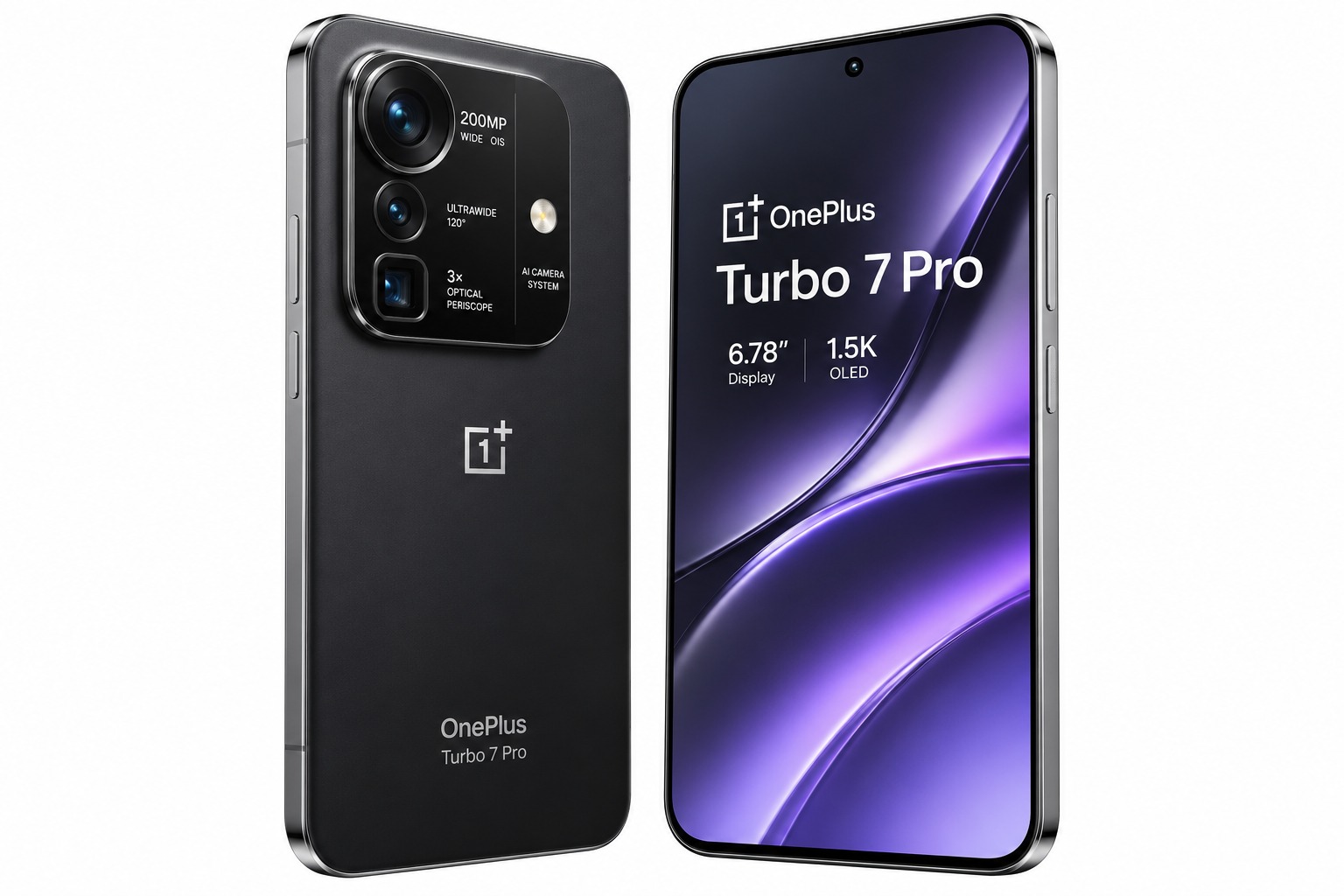
I have been watching the OnePlus Turbo line for a while now. The Turbo 6 was a solid but unremarkable flagship that sold mostly on its 80W charging and Snapdragon 8s Gen 4. The Turbo 7 Pro, if the leaks hold, is a different animal entirely. I am publishing this review before the phone launches because the 3C certification is the closest thing we have to a hardware snapshot, and the PH angle matters: the Turbo series has never officially reached our shores, so this read is entirely about what the leaks and the certification tell us.
Design & Build Quality
The Turbo 7 Pro’s design language is, on paper, a direct lift from the OnePlus 16. A 6.78-inch flat 1.5K OLED with 185Hz peak and 165Hz system-wide is the same spec-tuple that sold the OnePlus 16, so the display should be a high-quality panel with a fast refresh response. The body is expected to keep the polished-aluminium mid-frame and glass back that OnePlus popularised, with a large square camera island housing the 200MP main sensor plus an ultrawide and a periscope lens.
No fans or vents are rumoured on the rear. The earlier “gaming cooling accessory” claims were walked back by the tipster, which suggests the phone relies on software optimisation rather than active cooling. That said, the 3C listing confirms the model number PYP110, and that is about all we have for the chassis. Confirmed: the 3C certification was issued on 17 November 2026. Unconfirmed: dimensions, weight, materials, and whether the glass is curved or flat. We will need a hands-on sample before judging the actual build quality. For the design side, the closest reference is our OnePlus Ace 7 Pro review — the same design-thinking, different tier of silicon.
Display
The screen is the one spec-tuple worth watching. GSMArena lists a 6.78-inch flat 1.5K OLED at 185Hz peak and 165Hz system-wide — the same numbers as the OnePlus 16. OnePlus has a history of shipping the best panel it can get, so the 165Hz system-wide refresh rate is the figure that matters for daily comfort. A 165Hz response rate means scrolling feels buttery on a content feed and buttery in games, and it sets the phone apart from most A-series rivals in the same price bracket.
What we do not know is the panel supplier or peak brightness. The OnePlus 16’s local peak of around 1,800 nits is a reasonable guess, but unconfirmed for the Turbo 7 Pro. The 1.5K resolution sits between the Turbo 6’s FHD+ and a true 4K panel, so expect a sharp but not power-guzzling screen. In real use, the display should be a strong point — but until a hands-on, I am treating the numbers as leaked, not measured.
Performance
Under the hood, the Turbo 7 Pro is expected to carry Qualcomm’s 3nm SM8845 Pro chipset, which Qualcomm has teased as the “Snapdragon 8 Gen 5 Pro”. That is a big deal: the Turbo 6 ran the Snapdragon 8s Gen 4, so a full-generation step-up in silicon is exactly what the “Pro” name implies. The catch is that Qualcomm has not officially announced the SM8845 Pro, so “Snapdragon 8 Gen 5 Pro” is a rumour, not a fact. I want to be clear about this distinction — the chipset may launch as the 8 Gen 5 Pro, or it may stay SM8845 Pro, or it may be something else entirely.
RAM and storage variants have not been disclosed, and there is no word on whether the phone ships with the ultra-high-end variant that the OnePlus 16 uses. Gaming performance should be class-leading on paper, but we will only know for sure once the phone lands. For the same-generation frame, our Xiaomi 18 review is a good benchmark — it ships with the Snapdragon 8 Elite Gen 6, so the Turbo 7 Pro is expected to hold its own and then some.
Camera
The camera is the biggest single claim here: a 200MP main sensor with OIS, likely the 1/1.55-inch ISOCELL HP5, plus an ultrawide and what is rumoured to be a 3x periscope telephoto. That is a meaningful jump from the Turbo 6’s 50MP main. The large HP5 sensor is the kind of component that gives a real low-light advantage, and OnePlus has shown a willingness to push the main camera as the star of the show. The HP5 is also the sensor inside the Xiaomi 18’s high-end variant, so the imaging chain is a proven one.
The ultrawide and telephoto specs are still unconfirmed — no sensor resolutions, no aperture values. We will also need to see whether the phone keeps the circular “AI CAMERA SYSTEM” branding OnePlus has used on its recent flagships. That is a design choice, but it says something about how the camera software is positioned. For the 200MP camera frame specifically, our Samsung Galaxy F70 5G review covers the 200MP + OIS story in detail and offers a useful precedent for how these sensors behave in practice.
Battery & Charging
The 100W wired charging headline is the real story. The 3C listing lists two adapters — VCBAOBCH and VCBAJDCH — which put out 100W on 200-240V mains but drop to 80W and 55W respectively on 100-130V. That is a crucial detail for PH readers: anyone importing the phone into the Philippines would be limited to 55W or 80W depending on the adapter. I want to flag this explicitly, because a reader in our market reading “100W charging” and plugging in a 220V socket would not actually get the full 100W.
Battery capacity is listed as over 9,000mAh, with an engineering sample using a 10,000mAh cell. Combined with 100W charging, that is a genuinely compelling battery story — the kind of physical advantage that handset makers struggle to match. Wireless charging is unconfirmed, as is reverse charging. Expect a large single-cell battery layout, which OnePlus has favoured on its big-battery flagships. Our Oppo Reno17 review is the closest published reference for how these large-Si/C packs behave in the wild, so I am using it as a comparison anchor rather than an assertion about the Turbo 7 Pro.
Software
On paper, the Turbo 7 Pro is expected to ship Android 17 with OnePlus’s custom skin (later ColorOS). The Android 17 commitment is the headline — OnePlus has shown a pattern of giving its flagships a full software update cycle, and the Turbo 6 got a solid run of months. What is unconfirmed is the update commitment length and whether Google Mobile Services will be included for global buyers. OnePlus has explicitly said the Turbo 7 Pro is a China-first device, so PH expectations around Google Play Services should be low until the phone actually launches. This is a genuine caveat: no GMS means no Google Play, no Gmail, no Maps, no YouTube — and the local banking and mobility apps that Filipinos rely on daily would not run without workarounds.
Pros and Cons
| Pros | Cons |
|---|---|
| 100W wired charging headline | Almost nothing is confirmed |
| 200MP main camera with OIS | No official chipset confirmation |
| Large 9,000mAh+ battery | China-only launch so far |
| 3nm 8-series silicon step-up | Exact battery capacity unconfirmed |
| 165Hz system-wide 1.5K OLED | No RAM/storage variants disclosed |
Should You Buy This?
Buy it if: you want a flagship battery that can outlast a full day, a 200MP main camera that is built to be the star, and you do not mind a China-only device that arrives in December. This is also worth watching if you are a OnePlus fan and want to see whether the new “Pro” chipset actually ships, and whether the update commitment is as strong as the previous generation.
Skip it if: you need the phone today, you want a global Android edition, or you are buying on specs alone. Until the 3C list converts into a real announcement, every number is a rumour. Stick with a known quantity until the phone launches in December.
Final Verdict
The OnePlus Turbo 7 Pro is a phone that has not been announced, and that is the most important thing to say before anything else. What the 3C certification tells us is that a device exists, that it carries the model PYP110, and that it has 100W wired charging with a battery over 9,000mAh. The 200MP main camera, the 6.78-inch 1.5K OLED, and the Snapdragon 8 Gen 5 Pro-class chip are all credible leakwork, but none of it is official.
The honest takeaway is that the phone is shaping up to be a serious flagship with a genuinely strong battery, but it is also a reminder that OnePlus’s best phones this year are still only visible to Chinese regulators. For PH readers, the key line to watch is whether the phone receives a global release at all. If it stays in China, the 100W charging and 200MP camera remain interesting but unobtainable. We will follow this closely, and the full review will arrive when the phone finally launches in December.