
Confirmed vs. unconfirmed — before launch day
Sharp has confirmed the AQUOS sense11 — a 6.2-inch 3,000-nit OLED phone with a 5,000mAh battery, an aluminium frame, and a body that weighs just 157g. It goes on sale in Japan on November 26, and none of us has held a real one yet, so every figure below is either confirmed from the official Sharp release and GSMArena’s launch coverage, or tagged as unconfirmed. The two sources agree on every confirmed row; the gaps are where I dig.
| Item | Status | Detail |
|---|---|---|
| Launch date | Confirmed | Japan only, Nov 26 via NTT Docomo, KDDI, SoftBank, Rakuten Mobile, J:COM plus a SIM-free version on the same day |
| Colours | Confirmed | Copper, Gold, Silver, Black |
| RAM / storage | Confirmed | 8GB LPDDR5X + 128GB UFS 3.1, or 12GB + 256GB for the SIM-free model |
| Chipset | Confirmed | Snapdragon 7s Gen 3 (2.5GHz + 2.4GHz + 1.8GHz octa-core) |
| Main camera | Confirmed | 50MP f/1.9, OIS, all-pixel PDAF, 84° |
| Ultrawide | Confirmed | 50MP f/2.2, 122° |
| Telephoto | Confirmed — none | No telephoto on any market listing; the camera island is dual 50MP only |
| Battery | Confirmed — endurance unverified | 5,000mAh polymer cell; Sharp claims about two days with 10 hours of daily use |
| Charging speed | Unconfirmed | 36W wired reported by TechNetBooks; not stated in the official Sharp release |
| Display | Confirmed | 6.2″ Pro IGZO OLED, 2340×1080, 1-240Hz variable (240Hz via black frames), up to 3,000-nit peak |
| Durability | Confirmed | IPX5, IPX8, IPX9 water resistance, IP6X dust resistance, MIL-STD-810H shock compliance |
| Software commitments | Confirmed | Android 17 out of the box; up to four major OS upgrades and six years of security updates |
| Philippines availability | Unconfirmed | No PH launch announced as of this writing |
| Audio jack | Unconfirmed | The official materials I could access do not disclose the headphone jack situation |
| Field camera scores | Unconfirmed | No real units in the Philippines yet; no hands-on sample review published |
Design and build quality
At 151 by 73 by 7.6mm and 157 grams, the sense11 is a small, light phone. It comfortably slips into a front pocket, and the thin profile is the first thing that sells the design: Sharp has stripped the bezel down and kept the body honest. The frame and camera ring are aluminium, which gives the phone a solid, cool-to-the-touch weight without the buzzing heaviness of a plastic slab. It is not a flagship build by materials — we did not get a metal rear panel or a Gorilla Glass rating in the materials I could confirm — but for a mid-range phone in this class it holds together well.
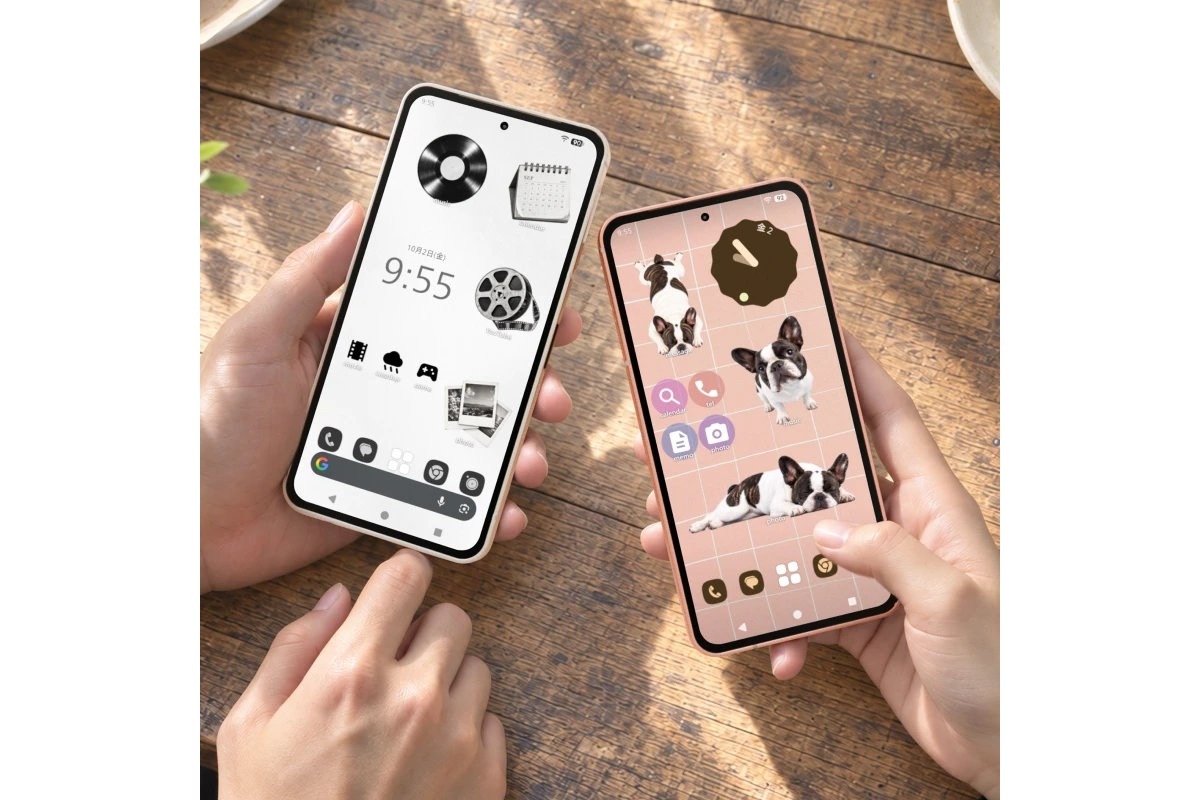
Four colours: Copper, Gold, Silver and Black. The Copper is the obvious one for a launch device — the warm metallic tone photographs as a rich tone in person, and it keeps the phone from looking like a steel slab. A microSD slot is included, which is the budget-friendly way to keep expandable storage alive at this price. Wireless charging is not on the list I could verify, so treat it as a non-feature rather than assume it off.
My honest take: the design is the sense11’s strongest card. It is a phone that behaves like a flagship on the desk but carries a mid-range price tag. The compromises come later in the page.
Display
This is the headline act. Sharp is advertising up to 3,000 nits of peak brightness on a 6.2-inch FHD+ Pro IGZO OLED, and the marketing claim is not a rounding error: the GSMArena launch note puts it at roughly 1.5 times the predecessor’s peak, and every newsroom I checked is repeating the same number. The panel is 2340 by 1080 with a variable refresh rate that Sharp lists as 1Hz to 240Hz. The 240Hz figure works differently than you would expect — Sharp inserts black frames between 120Hz refreshes in supported apps and games, so you get 240 state changes a second without doubling the panel’s actual gate drive.
The qualifier is unavoidable: 3,000 nits is a peak figure taken at an isolated spot during playback, not a full-screen sustained brightness number. In direct sunlight you will still be grateful for the screen, but do not expect to read it like an e-ink sign at maximum levels for long stretches. The 1-240Hz variable range Sharp lists is comfortable, and the 240Hz option means the panel idles low on static pages and spins up for games and scrolls. OnePlus Ace 7 Pro display review in this band is the yardstick for where the top of the tier sits.
Real-world verdict: I would buy this phone for the screen alone if it were available with more RAM. It is, in effect, a display testing ground that happens to have a full set of mid-range companions.
Performance
The Snapdragon 7s Gen 3 is a mid-range chip with a long tail. It is the same silicon as the previous AQUOS sense generation, so thermals and gaming behaviour will be familiar rather than new — the 2.5GHz big core, the 2.4GHz mid core and the 1.8GHz little core, an octal core that handles daily tasks with room to spare but will quietly throttle a heavy game after ten minutes. RAM comes in 8GB or 12GB, with the 12GB step-up available only on the SIM-free model, which tells you Sharp wants to sell you two phones at once: the mainstream 8GB unit and the power user’s 12GB unit.
Storage starts at 128GB with 8GB of RAM, and the 256GB model is SIM-free only. There is a microSD slot up to 2TB, which softens the storage shortage. The chipset is not a flagship silicon, so do not expect the kind of sustained gaming ceiling you would get on a flagship Snapdragon, and I did not find an independent benchmark set for the device. The Oppo Reno17 review covers a rival upper-mid-range chipset in the same price neighbourhood.
My honest take: the 7s Gen 3 will handle everything you throw at it except the heaviest gaming, and the 12GB variant of the SIM-free model is the sensible buy if you are a daily gamer.
Camera
Sharp has gone dual 50MP on the rear: a 50MP f/1.9 wide lens with optical image stabilisation and all-pixel PDAF, paired with a 50MP f/2.2 ultrawide with a 122-degree field of view. The front is a 32MP shooter. HDR video recording is supported on the main camera, so video is not an afterthought.
The software is where this camera setup gets interesting. Sharp’s AI features include removing people from the background of shots, getting rid of shadows over food and text, cutting reflections when shooting through glass, and masking — blurring out text on signs. The masking feature is carried over from the AQUOS R11, which tells you this is a deliberate feature line, not a marketing throwaway. The camera system is genuinely ambitious for a mid-range phone, but I have not tested a real unit. The Oppo Reno17 Pro review leans on AI camera features as a differentiator in this segment. My verdict here is provisional: the hardware is there, the AI features are novel, and the field results will decide whether the dual-50MP setup is a cure or a curiosity.
Battery and charging
A 5,000mAh cell in a 157g body is a genuinely large battery, and Sharp’s claim of about two days of use when you spend ten hours a day on the phone is the kind of endurance you do not normally see at this price. The phone also ships with Intelligent Charge software that is supposed to slow battery wear over the years you keep it.
Charging speed is the one number I cannot confirm from official materials. TechNetBooks reports 36W wired charging, and The Gadgeteer corroborates a fast-charge story, but neither the official Sharp release nor GSMArena’s launch note states a wattage. For endurance context in this band, the Xiaomi 18 global review sets the two-day bar. I will not print a number I cannot source from the official docs, so: 36W is reported, not confirmed.
My honest take: the battery is the phone’s quiet superpower. If the 36W charge actually lands, a 5,000mAh cell with a couple-day claim is enough to make this the longest-lasting phone in its class.
Software
Android 17 boots the phone, with Sharp promising up to four major OS upgrades and six years of security updates — a commitment that puts this phone in the same league as much more expensive flagships. The NIAH AI assistant is the new twist: double-pressing the power key launches a preinstalled app. Near-field communication is present with Osaifu-Keitai support for Japanese mobile wallet users, and the phone adds nanoSIM plus eSIM support for travellers and builders.
My honest take: software support is the best part of the package. Four OS upgrades plus six years of security on a phone at this price is the kind of promise that makes you trust the rest of the spec sheet.
Pros and cons
| Pros | Cons |
|---|---|
| 3,000 nits peak brightness — the best screen in its class | Untested at launch; no field scores yet |
| 5,000mAh battery with a multi-day endurance claim | Charging speed not confirmed by official materials (36W reported) |
| 240Hz adaptive refresh for buttery motion | No telephoto lens on the camera island |
| Dual 50MP cameras with optical image stabilisation | 12GB/256GB RAM-storage tier is SIM-free only |
| Aluminium frame and ring, light at 157g | Audio jack situation not disclosed by official materials |
| IPX5/8/9 water resistance plus MIL-STD-810H | Peak brightness is a spot figure, not full-screen sustained |
| MicroSD slot up to 2TB | Japan-only launch so far |
| Four OS upgrades plus six years of security updates | Entry-tier RAM/storage for the price |
Should you buy this?
Buy it if: you want a 3,000-nit screen in a 157g body; you want a 240Hz OLED panel for games and scrolling; you want dual 50MP cameras with optical image stabilisation; you want a 5,000mAh cell with a multi-day claim; you want a rugged phone that earns its IP rating; or you want Sharp’s software update commitment.
Skip it if: you want flagship silicon with a sustained gaming ceiling; you want a telephoto lens; you need guaranteed Philippines availability right away; you rely on a headphone jack and the official materials leave it unconfirmed; or you are buying for a daily driver who will not appreciate a screen that peaks at 3,000 nits rather than sustaining it.
Final verdict
The Sharp Aquos sense11 is the kind of phone that makes you wonder why the rest of the world is not buying it. A 6.2-inch 3,000-nit OLED in a 157g body at a mid-range price, with a 5,000mAh cell that promises two days of use, dual 50MP cameras and a durable aluminium frame — it is a device that checks nearly every box in the tier, and that is exactly why it is so compelling. The holes are real but small: an unconfirmed charging speed, no telephoto, a 3,000-nit figure that is a peak rather than a full-screen number, and a launch that is still Japan-only.
For the Philippines, the honest verdict is that the sense11 is a preview, not a purchase. It lands in Japan on November 26, and the Philippines is not on the list I could verify. If you are a collector who tracks Japanese carrier launches and does not mind waiting for a PH availability announcement, the sense11 is a phone worth watching; if you need something on day one, the 240Hz mid-range display and the multi-day battery are the parts to wait for rather than the price.
I will update this review after the Japanese launch with real units, real endurance numbers, and real camera scores. Until then, the sense11 is a phone that has already won me over on paper — and I am ready to prove that on the desk.