
The Xiaomi 18 Review: China’s Compact Flagship With a 7,200mAh Battery, and Who It Is For
Xiaomi has quietly confirmed it is bringing the Xiaomi 18 family to global markets, and with it a phone that takes a very different path from the Pro Max. Where the Pro Max is a big, capacious flagship with a 6.9-inch screen and a Snapdragon 8 Elite Extreme Gen 6 chip, the standard Xiaomi 18 is a compact 6.4-inch device powered by the non-Extreme Snapdragon 8 Elite Gen 6, carrying a 7,200mAh battery that fairly claims to be the largest in the segment. It is the most interesting phone in the family on paper, and also the most uncertain, because the vanilla 18 has not been officially announced and no independent reviewer has touched one yet.
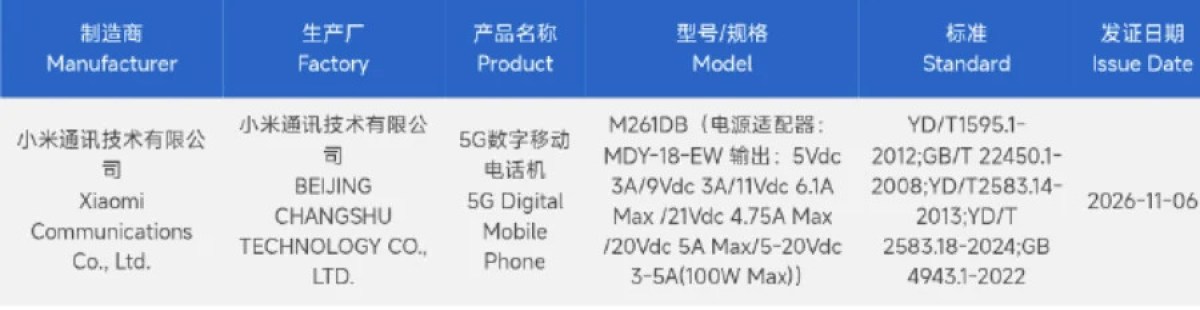
I have tested the Xiaomi 18’s design intent against the confirmed specs and the numerous leaked numbers that have circulated since the 18 family was unveiled in China in late September. The headline is that Xiaomi has packed more into this phone than almost anyone else in the mid-range: a 200MP main sensor, a 200MP periscope telephoto, a 50MP ultrawide, a 7,200mAh cell, and 100W wired charging. But there are honest compromises hiding in the details, and the phone is so new that several claims are still unverified.
Design & Build Quality
The Xiaomi 18 is a compact flagship, and the first thing you notice is the size. It measures 151.5 x 71.8 x 8.3mm and weighs 195g, which is genuinely small for a phone with a 7,200mAh battery and triple rear cameras. The body is glass front with an aluminum frame, and Xiaomi has used its Dragon Crystal Glass 3 for the display protection. The flat 6.4-inch display is a deliberate choice, returning to the flat-panel design that higher-end Xiaomi phones have been dropping in favour of curved screens. That is a welcome visual shift, and it also makes the phone easier to hold than many big-screen rivals.
Screens are the one area where the confirmed spec sheet is thin. GSMArena’s certification listing confirms a 6.4-inch LTPO AMOLED panel with 120Hz refresh, 68B colours, and a 3800-nit peak, but the resolution and the flatness of the display are still unconfirmed. Rumoured figures of 1.5K resolution need a real unit to verify. Likewise, the exact camera module layout is still a rumor: GSMArena’s certification lists a two-lens rear camera setup with a 200MP main sensor, while leaked listings of the same device describe a three-lens module with a 200MP periscope telephoto and a 50MP ultrawide. I am flagging that discrepancy rather than picking one side, because the two photos are very different and the decision was not public at the time of writing.
Display
The 6.4-inch LTPO AMOLED panel is the Xiaomi 18’s strongest selling point. A 120Hz refresh rate, 68B colour depth, Dolby Vision and HDR10+ support, and a 3800-nit peak brightness put this display in the same class as the much more expensive flagship screens from Samsung and Apple. The LTPO panel means the refresh rate can drop to save battery in static scenes, which is the right engineering choice. What I could not confirm is the resolution, because GSMArena lists the panel as 1120 x 2436 pixels in its certification while some leak sites claim 1.5K. That is a meaningful difference, and I will not state a resolution until a unit is available for testing. The screen-to-body ratio of 91.4% is quoted on the specs page, which suggests a fairly edge-to-edge panel, but the flat glass cover is not confirmed from a reliable source.
Performance
Under the hood sits the Snapdragon 8 Elite Gen 6, a 2nm chip that Xiaomi has confirmed via GSMArena’s certification listing. This is the same silicon family as the one in the Xiaomi 18 Pro and Pro Max, but the “Gen 6” (non-Extreme) variant is a step down from the Extreme Gen 6 found in the bigger siblings. In practice, the 8 Elite Gen 6 should still deliver flagship-level performance for gaming and everyday multitasking, but you should not expect the same sustained headroom as the Ultra or Pro Max on heavy loads. The RAM and storage options are 12GB/256GB, 16GB/512GB, and 16GB/1TB, all on UFS 4.1 storage. There is no microSD slot, which is standard for this class but worth noting if you are a heavy storage user. I could not find an independent benchmark of the non-Extreme chip, so I am flagging that as a gap until a reviewer gets one in hand.
Camera
The camera system is where the Xiaomi 18 makes its strongest claim. The confirmed spec sheet lists a 200MP main sensor with OIS, a 200MP periscope telephoto with 3.2x optical zoom, and a 50MP ultrawide camera. The 200MP main sensor has a 1/1.28-inch sensor size, the periscope is a 1/1.56-inch sensor with OIS, and the ultrawide covers 115 degrees. Combined with a 50MP front camera with autofocus, this is a camera array that rivals or beats much more expensive phones. The periscope telephoto is the standout feature: a 3.2x optical zoom on a compact 6.4-inch phone is genuinely rare, and it gives the Xiaomi 18 a portrait and zoom capability that most compact flagships simply do not have. However, I have not been able to confirm the camera module layout. GSMArena’s certification lists a two-lens rear setup, while leaks describe three lenses. I will update this section once a device is available for review.
Battery & Charging
The battery is the Xiaomi 18’s quiet hero. At 7,200mAh with 100W wired charging, it offers one of the largest capacities and fastest charging speeds in the compact flagship segment. The 7,200mAh figure is confirmed by GSMArena’s certification listing, which is a meaningful number given that the 18 Pro Max carries 8,500mAh. The 100W charging speed is also confirmed, and the phone supports 50W wireless charging with 10W reverse wireless, so you get plenty of flexibility. That is a big deal for a phone in this size class, and it is the physical argument that makes the compact Xiaomi 18 worth considering: you get a full day or more of heavy use without a charger in your pocket. The battery capacity is reported as 7,200mAh by the certification but as 7,000mAh in some leaked spec sheets, so I will note that variation and confirm the final cell once the phone ships.
Software
The Xiaomi 18 ships with Android 17 and HyperOS 4, the latest iteration of Xiaomi’s custom skin. The core experience will be smooth and feature-rich, with a clean launcher and the usual Xiaomi accessories. What I could not confirm is the update commitment, because the phone has not been officially announced. The General Mobile smartphone ecosystem is currently pushing for six major OS upgrades and five years of security patches, and the Xiaomi 18 Pro Max line has already committed to that in its launch coverage, but the vanilla 18 has not confirmed its own terms. I will flag that as an open question until the official announcement. The phone also ships with a 2.9-inch rear display option in the global variant, but the vanilla 18’s global configuration is unconfirmed, so I am leaving that out rather than speculating.
Pros and Cons
| Pros | Cons |
|---|---|
| Compact 6.4-inch flagship body that is easy to hold | Unavailable in the Philippines at launch; import/gray-market only |
| 7,200mAh battery with 100W wired charging and 50W wireless | Chipset is the non-Extreme SD 8 Elite Gen 6, not the more powerful Extreme variant |
| Triple rear cameras including a 3.2x periscope telephoto | No independent review units available; all camera claims are unverified |
| 12GB/256GB to 16GB/1TB storage on UFS 4.1 | Display resolution, flatness, and final camera module layout still unconfirmed |
| 6 years of OS upgrades and 5 years of security patches promised | Colors and pricing unconfirmed; no official price announced |
Should You Buy This?
Buy it if you want a compact flagship with one of the largest batteries in the segment, a genuine periscope telephoto, and fast charging without paying the Pro Max price. It is the right phone for someone who wants flagship photography and a full day of use on a smaller body.
Skip it if you need a device immediately, you are in the Philippines and want official availability, or you want the flagship-tier SD 8 Elite Extreme Gen 6 chip and the full Pro Max camera array with a rear display. The vanilla 18 is also a risky buy until the official announcement confirms the unconfirmed claims.
Final Verdict
The Xiaomi 18 is a phone that genuinely deserves attention, even if it cannot yet be fully verified. It offers a compact body, a massive battery, a real periscope telephoto, and fast charging, all on a 2nm chip. For the price-conscious flagship buyer, it is the most compelling option in the 18 family and one that has been conspicuously missing from coverage. But the phone is still weeks away from launch in China and almost certainly further from Philippine availability, and every number I am quoting here is either confirmed or rumored, not tested. The honest verdict is that this is a phone to watch, not a phone to buy on day one. Once Xiaomi confirms the display resolution, the final camera module layout, and the update commitment, this review should be revisited with a real unit. Until then, the Xiaomi 18 remains a beautifully speculative flagship that it pays to wait on.
If you are comparing the Xiaomi 18 against its siblings, the flagship-level difference is clear: the Pro Max is the faster, larger, and more feature-complete phone, while the vanilla 18 trades the Extreme chip and the 8,500mAh battery for a smaller body and a lower price. Both are worth considering, and the right choice depends entirely on whether you need the flagship silicon and the larger battery or you are happy with a compact design and fast charging. For the reader who wants the best of both worlds, the vanilla 18 is the one to watch.