
Huawei just quietly added a fourth phone to the Pura 90 family. Pre-orders opened in China on October 23, the launch is set for October 28 at 14:30 local time, and the HUAWEI Pura 90 Plus is shaping up to be the most interesting of the bunch — a camera-first phone with a 1-inch sensor and a physically adjustable aperture, sitting below the Pura 90 Pro.
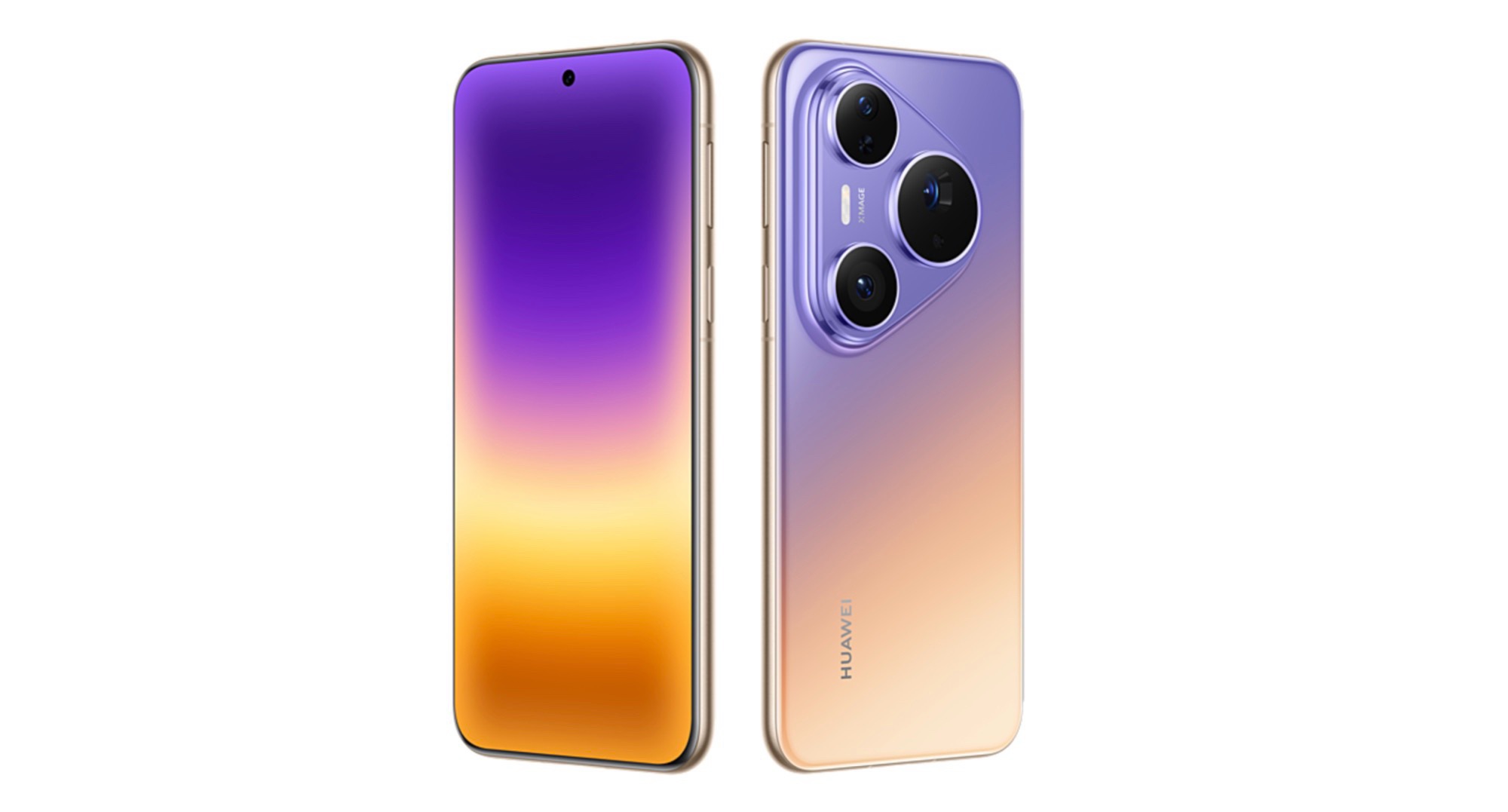
Here is the awkward part, and I am going to say it up front because it shapes everything below: Huawei has not confirmed a single specification. Not the chipset, not the battery, not the camera sensors, not the price. What we have is a design reveal, a confirmed colour and storage list, and a pile of leaks from people who have seen the pre-order listing or the retail demo units.
So this is not a traditional hands-on review. It is a pre-launch deep dive, three days before the event, with every claim labelled as confirmed or unconfirmed. If you are the kind of buyer who wants certainty before spending money, this one is for you to bookmark and come back to on October 28.
HUAWEI Pura 90 Plus Review: Confirmed vs Unconfirmed
Because Huawei has published nothing, here is the whole picture in one table. This is the part I would want if I were you.
| Specification | Status | The detail |
|---|---|---|
| Launch date | Confirmed | October 28, 2026, 14:30 CST in China; shipments expected before November 8 |
| Colours | Confirmed | Obsidian Black, Snowy White, Sunset Purple, Dawn Gold |
| RAM / storage | Confirmed | 12GB RAM; 256GB, 512GB and 1TB variants |
| Chipset | Leaked | Kirin 9025, described as an overclocked Kirin 9020 at up to 2.6GHz |
| Main camera | Leaked | 50MP 1-inch sensor, variable aperture f/1.6–f/4.0, OIS |
| Telephoto | Disputed | 48MP f/2.1 macro periscope (leaks) vs 50MP f/2.2 88mm 3.7x (GSMArena) |
| Ultrawide | Disputed | 40MP (leaks) vs 12.5MP (GSMArena) |
| Battery | Disputed | 5,700mAh (leaks) vs 6,500mAh (GSMArena) |
| Charging | Partly confirmed | 100W wired agreed by all sources; wireless 80W vs 50W disputed |
| Display | Partly confirmed | 6.8-inch LTPO OLED 120Hz quad-curved; exact resolution disputed |
| Durability | Leaked | IP68/IP69, Kunlun Glass |
| Software | Confirmed | HarmonyOS 7.0 |
| Price | Unconfirmed | Family anchors: Pura 90 CNY 4,699, Pura 90 Pro CNY 5,499 |
The GSMArena specification page is the source behind most of the “disputed” rows, and it carries an explicit preliminary disclaimer. Everything in the leaked column traces back to Chinese retail-demo reporting and a small number of well-followed leakers.
Design & Build Quality
Huawei did confirm the looks, and the Pura 90 Plus is a genuine departure from the rest of the 2026 flagship crowd. Where almost everyone else has moved to flat slabs with squared-off rails, Huawei went the other way: the Pura 90 Plus has a rounded, curved aluminum frame and a quad-curved display. Notebookcheck put it plainly — the company “surprisingly opted for a rounded rather than flat frame, bucking the current trend.”
The rear is a triangular camera island with three lenses, which is classic Pura language, sitting on a gradient glass back. Four colours are confirmed on the official pre-order page: Obsidian Black, Snowy White, Sunset Purple (an orange-to-purple gradient) and Dawn Gold. Huawei Central notes the Sunset Purple gradient appears to share its finish with the Pura 90 Pro Max.
Durability looks serious. The preliminary GSMArena listing carries IP68 and IP69 — that covers high-pressure water jets and immersion up to two metres for 30 minutes — plus Kunlun Glass on the front. That is the same toughness bracket as the Pura 90s Pro Max, which we tested as the hardest-wearing Huawei flagship to date.
What is missing: no 3.5mm headphone jack, no microSD card slot, and no FM radio. Dimensions and weight are not published yet, so I cannot tell you how it feels in the hand — GSMArena has a dash where the numbers should be.
Display
The screen is a 6.8-inch LTPO OLED with a 1.5K+ resolution and a 120Hz adaptive refresh rate, curved on all four edges. It supports a billion colours, HDR Vivid and high-frequency PWM dimming, which matters if you are sensitive to flicker at night.
There is a resolution discrepancy worth flagging. GSMArena’s preliminary sheet lists 1320 x 2856 pixels at a 19.5:9 ratio, roughly 463ppi. Chinese retail-demo reporting lists 2848 x 1276. Both are 1.5K-class and both are plausible; they are just different pixel maps, and Huawei has not settled it. Treat the exact figure as unconfirmed.
One number nobody is talking about: peak brightness. Huawei has not published a nit figure, and neither has anyone else. On a phone at this price, that is a real gap in the record.
Performance
This is where the leaks take over completely. The Pura 90 Plus is reported to run a Kirin 9025, described by multiple Chinese sources as an overclocked version of the Kirin 9020, clocked up to 2.6GHz. Huawei Central cites a report putting it around 19 percent faster than the Kirin 9020 that powers the Pura 80 Pro.
Let me be straight about what that means. An overclock is not a new architecture. The Kirin 9025 is the same silicon as the 9020 with a higher clock, so the gain is burst and sustained-load headroom rather than a generational leap. If you were hoping this would finally match a Snapdragon 8 Elite Extreme Gen 6 or a Dimensity 9600 Pro, the evidence so far says otherwise.
Memory is the one performance spec Huawei has actually confirmed: 12GB of RAM, across all three storage variants. There are no independent benchmarks yet — the phone has not launched, so nobody outside Huawei has run one.
There is also a small but real conflict in the sourcing. Gizmochina’s launch piece lists the chipset as “Kirin 9020” while describing it as new, and Huawei Central’s own reporting has used both names. I am going with Kirin 9025 because that is what the bulk of the leak cluster and the GSMArena preliminary sheet say, but I would not print it on a box yet.
Camera
The camera is the entire reason this phone exists, and the headline is a 1-inch main sensor with a physical variable aperture spanning f/1.6 to f/4.0, paired with optical image stabilisation. That is the same trick the Pura 90 Pro uses, in a body that sits lower in the range.
Why the aperture matters: at f/1.6 in a dark room, the lens opens wide and pulls in light. In harsh midday sun, it stops down toward f/4.0 to keep the highlights under control and the edges of the frame sharp. It is a mechanical solution to a problem most phones solve in software, and it is one of the few genuine hardware advantages left in mobile photography.
The leaked triple setup adds a 48MP f/2.1 macro periscope telephoto and a 40MP ultrawide, plus a 1.5MP multispectral colour sensor. Huawei is also said to be shipping a new version of its XMAGE imaging algorithm.
Now the conflict. Notebookcheck’s launch report and the GSMArena preliminary sheet list the telephoto as a 50MP f/2.2 88mm periscope with 3.7x optical zoom, and the ultrawide as 12.5MP f/2.2 — not the 40MP the leaks claim. Those are materially different cameras, not just different marketing names. Until Huawei publishes the sheet, I am treating both as unconfirmed and leaning toward the leak cluster only because it is more specific.
Video tops out at 4K with gyro-EIS and OIS, plus a 1080p at 480fps slow-motion mode that GSMArena marks as interpolated. The selfie camera is a 50MP f/2.0 autofocus unit per the preliminary sheet.
Battery & Charging
Charging is the one place where two independent sources agree: 100W wired. GSMArena adds a “100 percent in 45 minutes” claim, which I am recording as a manufacturer figure rather than a tested result — Huawei has not published independent verification.
The battery capacity is a genuine dispute. The leak cluster — ixbt, Huawei Central and Chinese retail reporting — says 5,700mAh. GSMArena’s preliminary sheet says 6,500mAh. That is an 800mAh gap, roughly the difference between a two-day phone and a three-day phone. Huawei has not confirmed either number, and I am not going to pretend I know which one is right.
Wireless charging is disputed too: 80W per the leaks, 50W per GSMArena. Both agree there is reverse wireless and 5W reverse wired charging.
One more thing worth knowing if you travel: the Pura 90 Plus supports BeiDou satellite messaging in both directions, but that is a China-only feature. Outside China it is dormant.
Software
The Pura 90 Plus ships with HarmonyOS 7.0 out of the box, and Huawei is promoting its Star Shield anti-fraud suite as a headline feature. That part is confirmed.
The part that should decide this purchase for anyone in the Philippines is not. Chinese-market HarmonyOS devices do not ship with Google Play Services. That means no Google Play Store, no Google Maps, and — most importantly — no native GCash, Maya or the mainstream Philippine banking apps. The workaround is a virtual environment like GBox, which GSMArena found workable on the Huawei flagships it has reviewed, including the Huawei nova 16s and the Pura 90 — but it is a workaround. Your banking app is running inside somebody else’s virtual machine.
Huawei has a habit of renaming China-only devices for global release — the Chinese Pura 90 Pro and Pro Max became the Pura 90s Pro and Pro Max internationally, shipping EMUI with HMS instead of HarmonyOS. Whether a “Pura 90s Plus” ever appears outside China is unknown, and even a global Huawei phone would still lack official Google Play Services.
Update commitment: not announced. Huawei has said nothing about OS upgrades or security support length for this device.
Price and Availability
No official price exists. The anchors we do have are the rest of the family: the standard Pura 90 starts at CNY 4,699 and the Pura 90 Pro at CNY 5,499. Analysts expect the Plus to land between them, around CNY 4,999 to 5,199 — which converts to roughly ₱44,000 to ₱46,000 in direct peso terms, before taxes and duties.
The official pre-order listing is the only Huawei source with hard numbers, and it confirms nothing beyond colours, memory and storage. GSMArena lists “about 590 EUR.” Pre-order perks in China include a 100 yuan discount, 12 interest-free instalments, a student bundle worth 944 yuan (music membership, 200GB cloud storage and a year of Huawei Video) and a month of the Petal One package.
There is no Philippine launch date, no Philippine price, and no announced global rollout. If you are waiting for a local release, this is a waiting game.
Pros and Cons
| Pros | Cons |
|---|---|
| 1-inch main sensor with a physical variable aperture (f/1.6–f/4.0) | No Google Play Services — GCash, Maya and banking apps will not run natively |
| 100W wired charging with reverse wireless support | Huawei has confirmed zero specifications — everything is a leak |
| Quad-curved 6.8-inch 1.5K LTPO OLED at 120Hz | Battery capacity is disputed (5,700mAh vs 6,500mAh) |
| IP68/IP69 plus Kunlun Glass on the front | China-only launch, with no PH date or price announced |
| 12GB of RAM and up to 1TB of storage | Kirin 9025 is an overclocked 9020, not new silicon |
| Two-way BeiDou satellite messaging on board | No 3.5mm jack, no microSD slot and no FM radio |
| Rounded aluminum frame with a proper gradient glass back | Side-mounted fingerprint reader instead of an ultrasonic one |
Should You Buy This?
Buy it if
- You shoot in mixed lighting constantly and want a physical variable aperture instead of software simulation
- You already live inside the Huawei ecosystem — watch, tablet, laptop — and HarmonyOS is not a barrier for you
- You are comfortable with the GBox virtual-environment workaround for apps outside AppGallery
- You want 100W wired charging and fast wireless in a body that sits below the true flagships
- You like curved glass and gradient finishes and are tired of the flat-slab trend
Skip it if
- GCash, Maya or your bank’s app is non-negotiable on your daily driver
- You want a confirmed update commitment before spending flagship-adjacent money
- You are outside China and unwilling to import a device with no local warranty
- You want top-tier gaming silicon — the Kirin 9025 is a refresh, not a rival to the Snapdragon 8 Elite Extreme Gen 6
- You need a headphone jack or expandable storage
Final Verdict
The Pura 90 Plus is a strange and compelling phone to evaluate, because the thing that makes it interesting is the thing Huawei will not talk about. A 1-inch sensor with a mechanically adjustable aperture in a sub-Pro body is a genuinely good idea, and pairing it with 100W charging and IP68/IP69 gives it a hardware story that the flat, safe flagships of 2026 have mostly abandoned.
But I have reviewed enough Huawei phones now to know exactly how this ends for a buyer in the Philippines. The hardware is excellent on paper. The software is where it falls apart — no Google Play Services means the phone that arrives in your hands will not run the apps you actually use, and the fix involves trusting a third-party virtual environment with your banking credentials. That is not a compromise I can wave away with a footnote.
Then there is the state of the record itself. Three days before launch, Huawei has confirmed the colours, the RAM and the storage tiers, and nothing else. The battery is disputed by 800mAh, the ultrawide and telephoto sensors disagree between sources, and the chipset is an overclock of last year’s part. Compare that with the Oppo Find X10 Pro Max, which arrived with a complete official specification sheet, or the phones we have already tested and ranked, and the gap in buyer confidence is obvious.
So who is the Pura 90 Plus for? If you are a Huawei ecosystem user who shoots a lot of stills in changing light, who does not depend on Google services, and who is content to wait for an official global release before spending a peso — this is worth watching on October 28. For everyone else, the honest answer is to wait for the confirmed specification sheet, and to check whether a Pura 90s Plus ever actually reaches Manila.