
Samsung’s Galaxy S26 Ultra is the phone every 2026 flagship got compared to. Google’s Pixel 11 Pro XL explicitly measured itself against it, and nearly every Chinese launch deck referenced it as the benchmark. Five months after it went on sale, the conversation is shifting — GSMArena reported this week that the S26 Ultra carries a €500 discount in Europe, dropping the base model under €1,000, while Samsung Philippines is offering trade-in savings of up to ₱45,725. At that price, the question stops being “is this the best Ultra Samsung has made?” and becomes “is this the right flagship to buy right now?”
Design & Build Quality
The S26 Ultra keeps the familiar Ultra silhouette: a 6.9-inch slab measuring 163.6 x 78.1 x 7.9mm and 214g. It’s not light, but the more rounded corners make it noticeably easier to hold than the boxier S25 Ultra. Samsung also quietly reverted to an aluminum frame after last year’s titanium, a change that barely matters in daily use — you’d have to weigh them side by side to notice.
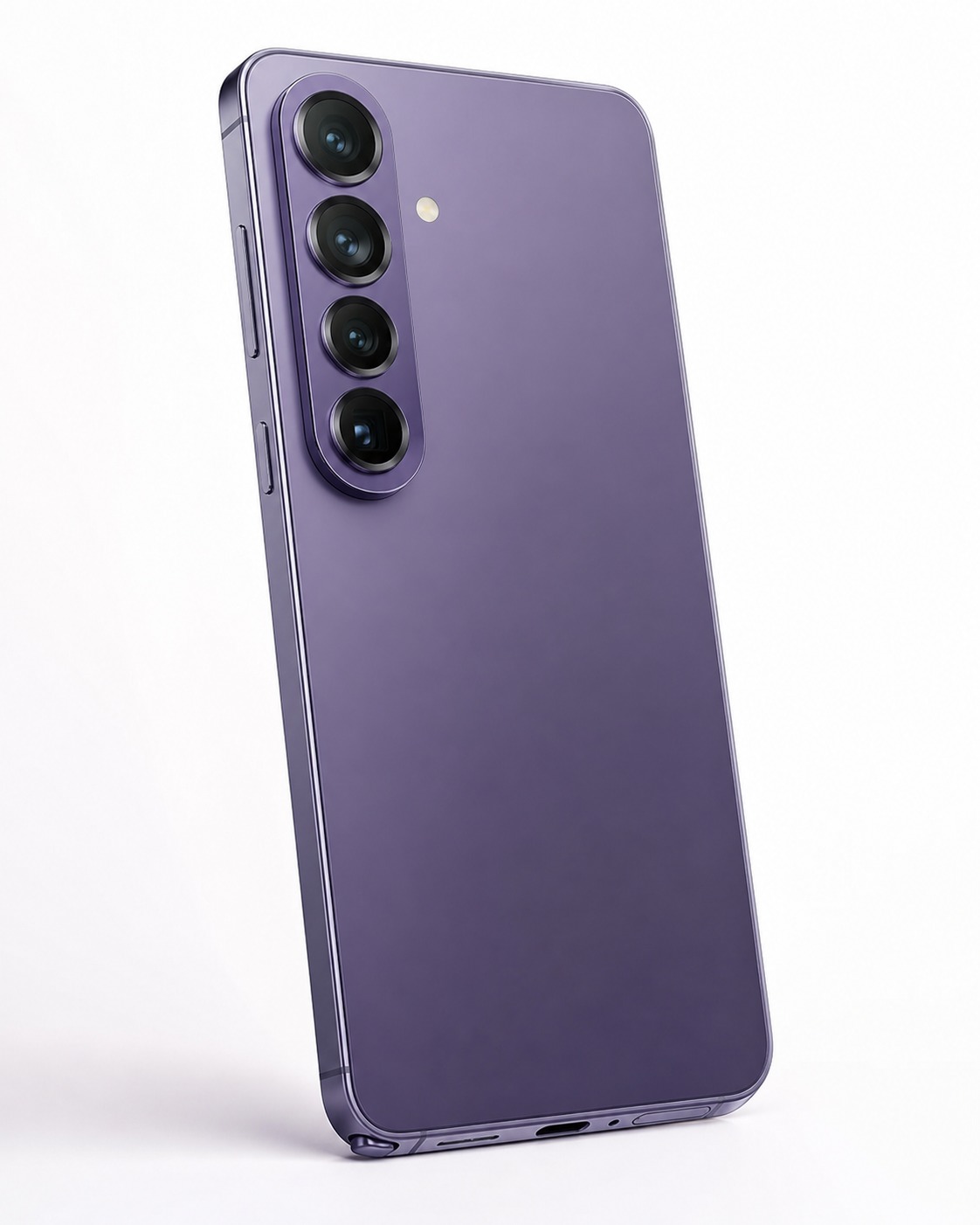
The most visible change is the camera island. Instead of individual rings sitting flat on the back, the four lenses now sit inside a raised vertical island. It gives the phone a more distinct look, but it introduces enough wobble that laying it flat on a table without a case is hopeless. If you type with the phone on your desk, budget for a case.
The integrated S Pen returns, still with no Bluetooth, but it’s now shorter and lighter with rounded corners. Build quality is top-tier: IP68 water resistance (1.5m for 30 minutes), Gorilla Armor 2 on the front with a Mohs 6 scratch rating, and the DX anti-reflective coating that made last year’s display so readable outdoors. Color options are Cobalt Violet, Sky Blue, Black, White, Silver Shadow, and Pink Gold. There’s no 3.5mm jack, and the SIM tray handles dual nano-SIM plus eSIM with two active at once — handy if you juggle a PH number and a travel line.
Display
The 6.9-inch Dynamic LTPO AMOLED 2X is the same resolution as before — 1440 x 3120, 500ppi, 1-120Hz adaptive — and it’s still excellent. Colors are vibrant, contrast is deep, and the anti-reflective coating keeps it legible even under harsh afternoon sun. GSMArena measured around 1,480 nits in auto mode, against the 2,600-nit peak rating, which is a marketing local-peak figure. HDR10+ is supported, but there’s no Dolby Vision certification, and the panel is still 8-bit with FRC rather than true 10-bit — both things competitors have moved past.
The headline feature is the world’s first Privacy Display, and it’s genuinely clever. The panel uses two pixel types — narrow-angle pixels for direct viewing and wide-angle pixels for everyone else. Toggle Privacy Display on and the wide pixels dim, so someone looking over your shoulder on the LRT sees a washed-out blur instead of your screen. It’s not a gimmick: it can activate only for PIN entry fields, specific apps, notification pop-ups, or through Routines at set times and places.
The trade-offs are real, though. With Privacy Display on, peak brightness is roughly halved, and the effective pixel density drops since only half the pixels are doing the work. In standard mode it’s still readable — around 800 nits with the anti-reflective coating is fine outdoors — but the “Maximum Privacy” setting crushes contrast so hard that blacks turn gray. Use it selectively, not as a daily driver.
Performance
The S26 Ultra is the one model in the lineup that skips the Exynos split entirely — it runs the Snapdragon 8 Elite Gen 5 for Galaxy worldwide. That’s the 3nm chip with two 4.74GHz Oryon V3 prime cores and six 3.62GHz cores, paired with the Adreno 840. In practice, it’s absurdly fast: apps open instantly, 8K footage scrubs smoothly, and there’s no thermal throttling drama in normal use.
RAM starts at 12GB with a 16GB option that’s reserved for the 1TB model, and storage is fast UFS 4.X starting at 256GB. No microSD slot, but at these capacities that’s a minor complaint. Samsung’s Galaxy AI suite is richer this year, though a fair number of features stay locked to Samsung’s own apps, and language support remains limited — something to keep in mind before buying a flagship for a specific AI feature.
Camera
The camera story is more complicated than the spec sheet suggests. The main shooter is a 200MP sensor with an f/1.4 lens — a full stop wider than the S25 Ultra’s f/1.7 — which helps low-light shots and gives nicer background blur. The 50MP ultrawide and the 50MP 5x telephoto (f/2.9, up from f/3.4) follow the same theme: more light, better bokeh.
But there are two downgrades worth knowing about. The 10MP 3x telephoto now uses a much smaller sensor (1/3.94″ vs the S25 Ultra’s larger 1/2.52″ unit), and the 5x module switched from a traditional periscope to Samsung’s ALoP folded design — lens elements stacked on the prism. That ALoP change means the 5x camera’s minimum focus distance doubled to 52cm, so tight close-up shots are noticeably harder than on last year’s Ultra. If you shoot product details or food with the telephoto, this is a real regression. The upside is rounder, more natural bokeh instead of the rectangular shapes periscopes produce.
Video is where the Ultra shines. The new APV codec records near-lossless HDR up to 8K at 30fps or 4K at 120fps, and Horizon Lock keeps footage level even through aggressive handheld movement by cropping into the sensor. The 12MP front camera handles 4K selfies at 60fps. For a phone this size, it’s a complete video package — most people will never outgrow it. If you want a different 200MP experience at a PH-friendly price, the HUAWEI Pura 90s Pro Max is a strong alternative, and the Z Fold8 Ultra pairs this same 200MP main with a foldable screen.
Battery & Charging
The battery is the most stubborn part of this phone. It’s still a 5,000mAh cell — the same capacity Samsung has shipped for years — with no silicon-carbon chemistry, while rivals like the vivo X300 E (7,200mAh) push well past it, and GSMArena credits the Xiaomi 17 Ultra with better battery life in its comparison. GSMArena’s Active Use Score is a solid 16:23h, better than the S25 Ultra through software optimization, but still behind the best from China and Apple.
Charging finally caught up, though. Super Fast Charging 3.0 runs at 60W over USB-PD with a PPS profile — nothing proprietary. GSMArena measured 84% in 30 minutes (Samsung officially claims 75%) and a full charge in 43 minutes, with the phone holding 51-53W for a good stretch before easing off. You don’t even need a 5A cable; it never pulls above 3A. A third-party 67W charger works fine.
Two charging caveats for PH buyers. First, the official 65W Trio multi-port charger only negotiates about 45W with this phone because it carries the older PPS profile — owners have confirmed this across Reddit and GSMArena comments. If you want the full 60W, grab a single-port 60W+ PD PPS charger instead. Second, wireless charging is 25W Qi2.2, but there are no built-in magnets — Samsung warns against MagSafe cases due to interference with the vertical camera stack and S Pen. You’ll need a magnetic case to reliably align for 25W, or you’ll sit at the slower rate.
Software
The S26 Ultra ships with Android 16 and One UI 8.5, and Samsung’s update promise is the class standard: seven major OS upgrades and seven years of security patches, taking the phone through March 2033. One UI remains polished, with useful Quick Panel customization and deep battery-care options — you can cap charging at 80%, 85%, 90%, or 95% to extend cell life.
Galaxy AI gets real additions this year: smarter search, better on-device context, and improved camera processing through the ProVisual Engine. But be honest about the limits — many AI features only work inside Samsung’s own apps, and language coverage is narrower than the marketing suggests. The AI is a reason to upgrade, not the only reason.
Pros and Cons
| Pros | Cons |
|---|---|
| Privacy Display is a genuinely useful world-first | 3x telephoto sensor shrinks vs the S25 Ultra |
| 60W charging: 84% in 30 min, full charge in 43 min | 5x camera minimum focus distance doubles to 52cm |
| Wider main lens (f/1.4) improves low-light and bokeh | 5,000mAh battery unchanged for years, no Si/C chemistry |
| 7 years of OS and security updates to 2033 | No Qi2 magnets built in; MagSafe cases discouraged |
| Integrated S Pen remains a unique Ultra advantage | IP68 while rivals moved to IP69/IP69K |
| Worldwide Snapdragon 8 Elite Gen 5, no Exynos split | 8-bit display with FRC; no Dolby Vision or high-frequency PWM |
Should You Buy This?
Buy it if
- You want the best display and S Pen flagship at a price that just dropped — the €500 EU cut and PH trade-in promos change the math.
- You shoot a lot of video and want near-lossless 8K HDR with Horizon Lock stabilization.
- You upgrade every 3-4 years and want the longest update runway in Android — 7 years through 2033.
- You regularly commute and want privacy from shoulder-surfers without sticking a film over your screen.
Skip it if
- You’re on an S25 Ultra — the changes are real but modest, and last year’s model still takes better close-ups and costs less.
- You need all-day-plus endurance — the 5,000mAh cell trails the bigger batteries in rivals like the vivo X300 E or Xiaomi 17 Ultra.
- You want Qi2 magnets for accessories — you’ll be fighting Samsung’s own warnings about MagSafe cases.
- You’re camera-first at telephoto ranges — the 3x sensor shrink and ALoP focus distance are genuine steps back.
Final Verdict
The Galaxy S26 Ultra is an unexciting upgrade wrapped around an excellent phone. Samsung didn’t chase the spec sheet wars this year — it kept the proven formula, added a genuinely useful Privacy Display, made charging competitive for the first time in years, and leaned on software where it already leads. That’s a defensible strategy when your sales are steady and your update promise is unmatched.
In the Philippines, the value story has two threads. The official price remains ₱86,990 for the 256GB model — in my Top 10 Phones list for 2026, it sits at the top of the flagship tier — but the €500 European discount (base under €1,000, roughly ₱65-67,000 converted) shows what the market is willing to accept five months in, and Samsung PH’s trade-in offer of up to ₱45,725 can effectively cut the 256GB price to around ₱41,000 if you have an eligible old device. Importing from Europe saves money but sacrifices local warranty; trading in keeps everything safe.
Who is this phone for? Someone who wants the complete Samsung flagship — best-in-class display, S Pen, seven years of updates, and now charging that doesn’t embarrass itself — at a moment when the price is finally moving in the right direction. If you can live with the camera regressions and the modest battery, this is the easiest Ultra to recommend since the S23 generation. If those two things matter to you, wait for the next one or keep last year’s.