
The Shortage You Can See in a Delivery Date
Try to buy a MacBook Air right now and the Apple website will politely show you a delivery window in the back half of August. Certain configurations slip into September. Retailers say supply is more constrained than they have ever seen it. The most popular laptop in the world is running out, and the reason is not a factory fire or a shipping backlog. It is a global memory shortage that has been building for a year, and it just reached your wallet.
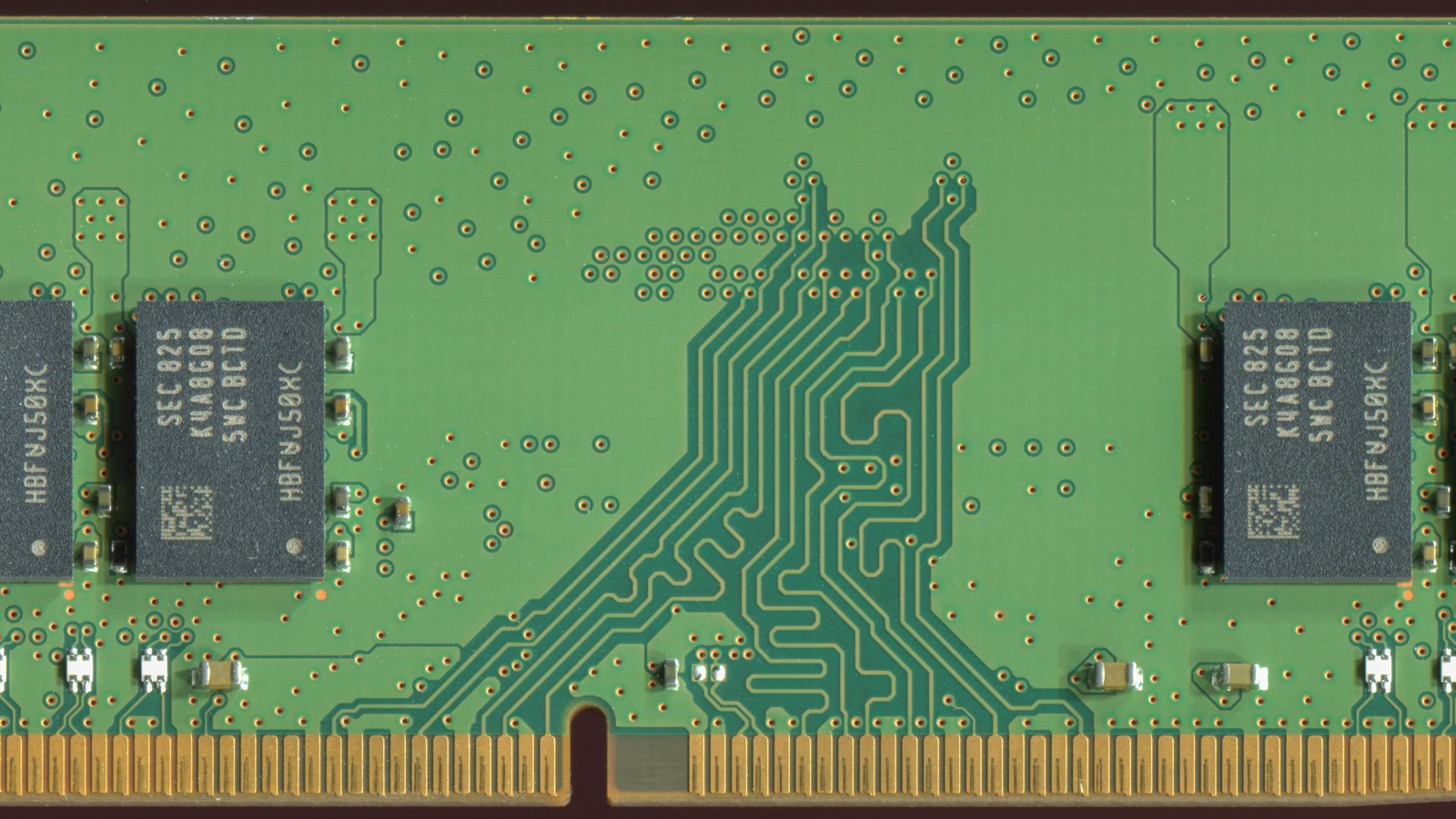

This is not a Mac problem. It is a memory problem that happens to be hitting Macs first, and it is about to hit everything else. Apple already raised Mac and iPad prices in June. Qualcomm confirmed on July 29 that Snapdragon chip prices are going up across the board starting September 1. And the companies selling the chips are making so much money they can barely hide it. Micron just posted a fourfold year-over-year revenue jump. Everyone is paying for the AI boom, whether they use AI or not.
The Numbers Behind the Shortage
The scale of this price surge is hard to grasp until you see it in a spreadsheet. Conventional DRAM contract prices rose 90 to 95 percent quarter-over-quarter in Q1 2026, according to NAND Research’s market tracking, which notes the actuals blew past even the most pessimistic January forecasts. NAND flash followed with 70 to 75 percent increases in Q2. Counterpoint’s research director Tarun Pathak told TechCrunch that memory prices have increased more than fourfold since Q4 2025. Four times. In eight months.
Goldman Sachs calls this the most severe memory supply-demand imbalance in 15 years: a global DRAM deficit of 4.9 percent in 2026, NAND at 4.2 percent, and HBM at 5.1 percent — the largest deficits since 2011. TrendForce’s 3Q26 forecast still shows conventional DRAM contract prices rising 13 to 18 percent quarter-over-quarter, with NAND up 10 to 15 percent. And the analysts who watch this market for a living say there is no real relief before the second half of 2027.
For context: when I covered the circular AI financing engine behind Nvidia’s data center deals, the point was that hyperscaler money was pouring into compute. That same money is now buying memory at a scale consumers simply cannot compete with. Goldman projects total hyperscaler AI capex of $7.6 trillion between 2026 and 2031. Every one of those dollars eventually turns into servers, and every server is stuffed with DRAM and NAND that would otherwise go into laptops and phones.
Why AI Is Eating the Memory Supply
The mechanism is straightforward. Memory makers like Samsung, SK Hynix, and Micron only have so much fabrication capacity, and they allocate it to the products that pay the most. Right now that means HBM — high-bandwidth memory for AI accelerators — and enterprise SSD-grade NAND for data centers. Consumer-grade DRAM and NAND are what is left over.
That prioritization is rational for the suppliers and brutal for everyone else. Enterprise SSD usage of NAND is expected to exceed smartphone consumption for the first time this year. Samsung’s next-generation V9 NAND was nearly booked before it even launched. When a component maker can sell everything it makes to AI data centers months in advance, there is no economic incentive to reserve capacity for a $699 laptop.
Memory is only part of the squeeze, too. The whole component chain is tightening at once: advanced packaging capacity is booked solid for AI accelerators, foundry wafers are being allocated to the highest-margin chips, and now the chips themselves are getting pricier. This is the same pressure I wrote about when AMD’s ROCm.AI started telling models to write their own GPU kernels — the AI hardware gold rush is reshaping who gets silicon and at what price, and consumer devices are at the back of the line.
Apple’s own statement to CNBC in June put it plainly: “The consumer electronics industry is facing an unprecedented challenge. The rapid expansion of AI data centers has created an extraordinary surge in demand for memory and storage. We have never seen a component price increase this much, this quickly.” That is a company with enormous bargaining power admitting it cannot absorb the costs.
The Price Hikes Keep Coming
Apple moved first. In late June it raised prices across the Mac and iPad lineups: the base MacBook Air jumped from $1,099 to $1,299, the MacBook Pro from $1,699 to $1,999, the Mac Studio from $1,999 to $2,499. iPads went up $100 to $200 depending on the model. Even the HomePod and Apple TV got more expensive. Tim Cook told the Wall Street Journal the increases were “unavoidable” as memory and storage costs kept climbing, and hinted that iPhones might not be spared forever.
Then the chipmakers joined in. Qualcomm CEO Cristiano Amon confirmed on the company’s July 29 earnings call that Snapdragon processor prices would rise for shipments after September 1, reportedly by double digits. His phrasing was refreshingly direct: “Cost went up, prices are going to go up.” The company cited broad input cost increases across wafer fabrication, assembly, testing, advanced packaging, and memory, and said it could no longer absorb them. MediaTek, Qualcomm’s main rival, had already raised prices 10 to 20 percent back in June.
Pathak expects every other PC and tablet maker to follow Apple’s playbook: raise prices on select products, cut discounts, or quietly refocus on premium devices. The days of the $600 gaming laptop and the $349 budget iPad are fading. As I wrote in my vivo X300 E review, we are used to phones delivering flagship-ish specs at midrange prices — that entire category is now under direct cost pressure from the components inside it.
What This Feels Like From an ICT Office
This is where the story stops being abstract for me. I manage an ICT division in a Philippine government institution, which means I plan hardware purchases months, sometimes a year, in advance. Budgets here are approved in one fiscal year and spent in another. A price list I submitted in December is no longer a price list by June — it is a historical document.
We are not buying Mac Studios. We are buying midrange laptops, desktops, and the occasional batch of units for new staff, and every one of those line items has quietly gotten 15 to 30 percent more expensive. The same DRAM and NAND shortage that delays a MacBook Air in San Francisco delays a Dell Latitude order in Roxas City, except we do not get a nice Apple-style apology. We get a revised quotation and a memo asking why the procurement variance went up.
The Philippines adds its own layer: import lead times, freight costs, and a peso that does not buy what it used to. When global component prices rise, local SRPs follow within a quarter, and there is no domestic manufacturing cushion to soften it. For ordinary buyers, the advice I keep giving is the same advice I give myself: if you genuinely need a new laptop or phone in the next year, buy it sooner rather than later, and buy as much RAM and storage as you can afford on day one, because upgrading later will cost you more than it ever has.
What Should You Actually Do?
So if you are a regular person in the Philippines looking at a phone or a laptop right now, what is the sensible move? First: do not panic-buy. The shortage is real, but it is not going to make every gadget double in price overnight — the biggest jumps already happened. Second: if you were already planning to buy something in the next six months, and the price is within your current budget, buy it now. Waiting for a “sale” in November is a gamble, because the base prices keep getting reset upward.
Third, and this is the one that hurts: buy the higher-memory configuration even if it feels overkill. The single most expensive lesson from this shortage is that RAM and storage are now the components with the most volatile pricing. A laptop with 8GB of RAM bought today will feel thin in three years, and upgrading it later costs a small fortune. When I reviewed the Poco M8 Power, part of the appeal was a phone that genuinely lasts — and in a memory-shortage era, “buy something that lasts” is not just a lifestyle preference, it is a financial strategy.
Fourth, extend the life of what you already own. A device that works is now worth more than it was two years ago. Hold off on that upgrade cycle if you can, and if you do upgrade, pass your old device down instead of letting it gather dust in a drawer. The secondhand market is about to become a lot more interesting.
The Bigger Picture
The uncomfortable truth is that this shortage is not an accident, and it is not going to be fixed by a holiday sales season. It is a structural reallocation of the world’s memory supply toward AI infrastructure, and it will last as long as the AI buildout does. The two AI economies — the trillion-dollar data center buildout and the free open models we use daily — are both feeding on the same silicon, and consumers are the minority shareholder who does not get a vote.
There is a mild silver lining. Memory makers are finally spending on new capacity, and every price surge in semiconductor history has eventually been followed by an oversupply crash. The question is whether that crash comes in 2027, as Goldman expects, or later. In the meantime, the smartest moves are boring ones: extend the life of what you own, max out memory when you do buy, and treat hardware purchases less like impulse buys and more like the multi-year commitments they actually are.
And if you are waiting for MacBook Air prices to come down before upgrading? Do not hold your breath. The delivery dates are the tell: when the supply chain is this tight, the price list is next.