
Here’s a headline I did not expect to write in 2026: an electric pickup truck just posted a 155 percent month-on-month sales jump in the Philippines. That’s the Radar RD6 (known globally as the Riddara RD6), and it moved 112 units in June against 44 in May, according to its local distributor United Asia Automotive Group Inc. (UAAGI).
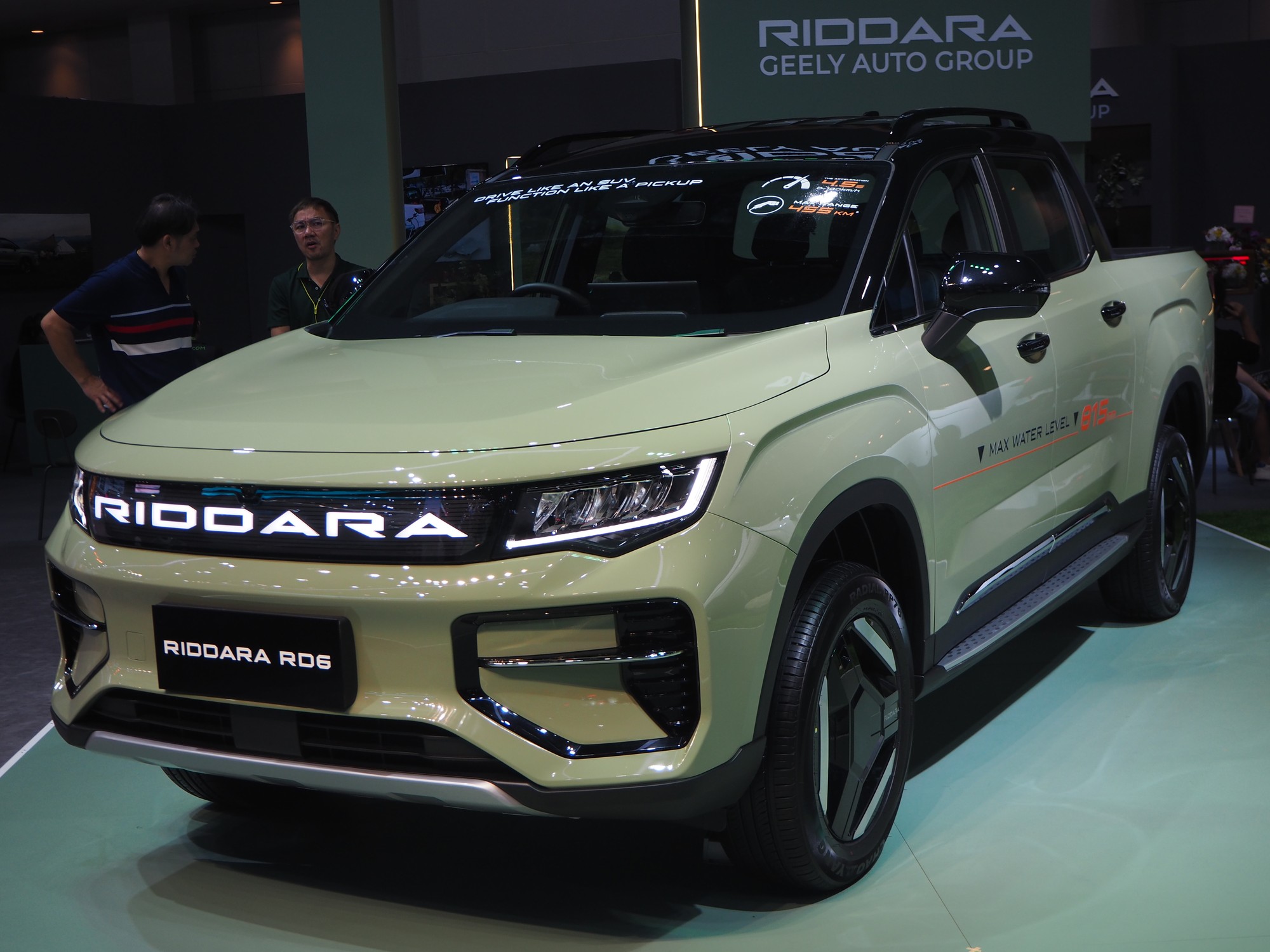

For a segment that has been dominated by diesel for decades, that number is worth paying attention to. The pickup truck is supposed to be the last holdout of the internal combustion engine, the one vehicle type where “practical” always meant “diesel.” Then an EV pickup starts outselling its own previous month by more than double, and suddenly the math changes.
So what exactly is the Radar RD6, how much does it cost, and does it make sense on EDSA, on provincial roads, and through the kind of flooding that hits Metro Manila every rainy season? Let’s dig in.
What Is the Radar RD6?
The RD6 is a mid-size electric pickup built by Radar, the EV sub-brand of Chinese automaker Geely. In the Philippines it’s sold under the Radar name, while other markets know it as the Riddara RD6. UAAGI Auto Group, the distributor with a two-decade track record, brought it in as part of the country’s push into electrified mobility.
The big departure from tradition is the platform. Instead of the body-on-frame construction you find in almost every pickup sold here, the RD6 rides on a dedicated electric unibody architecture with an independent multi-link rear suspension. The result is a truck that drives more like a crossover than a ladder-frame pickup, while still carrying serious payload.
Full Specifications
The Philippine lineup spans three Econ battery-electric variants plus a plug-in hybrid range. Here are the key numbers:
| Specification | RD6 Econ 4×2 | RD6 Econ 4×4 | RD6 EM-P (PHEV) |
|---|---|---|---|
| Body type | Mid-size pickup (5-seater) | Mid-size pickup (5-seater) | Mid-size pickup (5-seater) |
| Battery | 63 kWh LFP | 73 kWh LFP | PHEV (1.5L + electric) |
| Power | 242 hp | 376 hp (dual-motor AWD) | 457 hp (DHT) |
| Torque | – | 485 Nm | – |
| 0-100 km/h | – | 5.7 seconds | – |
| Range (NEDC) | up to 385 km (intl. spec) | up to 443 km | 1,000+ km combined |
| Charging | 11 kW AC / ~110 kW DC (intl spec) | 11 kW AC / ~110 kW DC (intl spec) | Hybrid, no charging dependency |
| Length / Width / Height | 5,260 / 1,900 / 1,730 mm | 5,260 / 1,900 / 1,730 mm | 5,277 / 1,900 mm |
| Ground clearance | 225 mm | 225 mm | 225 mm |
| Wading depth | 815 mm | ||
| Payload | up to 1,000 kg | up to 1,000 kg | up to 800 kg |
| V2L output | Up to 3.5 kW (cabin + bed outlets) | ||
| Warranty | 5 yrs / 150,000 km bumper-to-bumper; 8 yrs / 200,000 km battery | ||
Figures compiled from UAAGI’s official announcements, Zigwheels, and AutoIndustriya; DC charging rates are from international reviews of the same platform. The LFP (lithium iron phosphate) battery chemistry is worth noting for the Philippines, and I’ll explain why in the heat section below.
Price: PHP, USD, and INR
Here’s the full local price list, converted at the BSP reference rate of about PHP 61.75 per US dollar and USD 1 = INR 95.38 (early August 2026):
| Variant | PHP | USD (approx.) | INR (approx.) |
|---|---|---|---|
| RD6 Econ 4×2 (63 kWh) | P1,398,000 | $22,640 | Rs 21.59 lakh |
| RD6 Econ 4×2 Long Bed (73 kWh) | P1,598,000 | $25,878 | Rs 24.68 lakh |
| RD6 Econ 4×4 (73 kWh) | P1,748,000 | $28,308 | Rs 27.00 lakh |
| RD6 EM-P Comfort (PHEV) | P1,698,000 | $27,498 | Rs 26.23 lakh |
| RD6 EM-P Elite (PHEV) | P1,798,000 | $29,117 | Rs 27.77 lakh |
| RD6 EM-P Luxury (PHEV) | P1,948,000 | $31,547 | Rs 30.09 lakh |
Where does that sit against the competition? A diesel Toyota Hilux starts around P891,000 but climbs past P2.4 million for the top trims, and the Ford Ranger territory is similar. Against EVs, the RD6 Econ 4×2’s P1.398 million tag puts it right in the thick of the crossover crowd I covered this morning in my Chevrolet Captiva EV analysis — slightly under the BYD Atto 3 Standard at P1,598,000, and in the same neighborhood as the MG S5 EV that’s launching this August at an estimated P1.4 to P1.6 million.
The pricing story gets even better when you count operating costs. UAAGI says the Econ costs as little as P2.64 per kilometer to run, with preventive maintenance around P8 per day — savings of up to 84 percent over three years versus a diesel pickup. The EM-P Elite 4WD runs about P3.86 per kilometer with P29 daily maintenance, still saving at least 76 percent. For fleet buyers, that math is the whole argument.
What Others Are Saying
UAAGI itself framed the June sales jump as proof that buyers are “opting for electric mobility in the pickup truck category, traditionally dominated by internal combustion engines.” AutoIndustriya and CarGuide.PH both covered the 112-unit milestone, and Zigwheels noted the RD6’s starting price undercuts “many mid- to high-tier diesel variants” in the segment.
International reviewers who’ve driven the Riddara RD6 have been surprisingly impressed. Auto Trader NZ called it “the real deal,” noting the twin-motor setup delivers instant, brutal acceleration for a pickup and that no rival matches its onboard power. CarExpert’s review of the 4×4 model praised the 815-mm wading depth, the 225-mm ground clearance, and the fact that Riddara claims extensive hot-weather testing in the Middle East — a detail that matters more here than anywhere.
The common thread in every review: the unibody platform makes it drive like a passenger car, which is a genuine differentiator in a segment where ride comfort is usually an afterthought.
Is the RD6 Right for Philippine Roads?
City driving
Let’s be honest: a 5.2-meter pickup is not a BGC parking-friendly machine. The RD6 is nearly 1.9 meters wide, so squeezing into tight Makati parking slots takes care, and the turning radius is what it is. But for EDSA crawling, the instant torque of an EV is actually a plus — no turbo lag, no gear hunting, just smooth pull when the traffic finally moves. The Econ 4×2’s 242 hp is plenty for city duties, and the ride quality on the multi-link suspension makes stop-and-go less tiring.
Long-distance travel
The 73-kWh Econ 4×4 claims up to 443 km on NEDC, which sounds great — but NEDC is generous. In real-world mixed driving, expect something closer to 350 km, and less if you’re carrying a full load. Manila to Baguio is about 250 km, so a full battery handles that round trip only if you can charge up north. The DC fast charging (around 110 kW in international spec) can take you from 30 to 80 percent in roughly half an hour, which is manageable if the charging station exists. That’s the real constraint: the charging network, not the car. If range anxiety is a dealbreaker for you, the EM-P plug-in hybrid’s 1,000-plus km combined range removes the problem entirely — it’s the same reason I was impressed by the BYD Seal 5 DM-i and its hybrid flexibility.
Flooded situations
This is where the RD6 earns its keep. The 815-mm wading depth is the standout spec for a country where streets turn into rivers every monsoon season. For context, that’s more than most compact crossovers’ ground clearance total — the vehicle can cross water roughly knee-to-thigh deep at slow speed without drama. The battery is sealed under the floor, and being electric means there’s no air intake to hydrolock and no exhaust pipe. I’m not saying you should go joyriding through a typhoon, but when Ondoy-style flooding strands the sedans, a pickup with 815 mm of wading depth and 225 mm of ground clearance is a genuinely different proposition.
High temperature conditions
Manila summers push past 36 degrees Celsius, and the RD6’s LFP battery is the right chemistry for it. LFP is more thermally stable than NMC, which is exactly why the brand markets the truck’s hot-weather credentials — Riddara says it tested the platform in Middle East summer heat. I’ve written before about how battery tech is quietly solving problems nobody expects, and this is the same story in miniature: the chemistry choice matters as much as the kilowatt count. The cabin AC has a bigger space to cool than a hatchback, but that’s the same tradeoff every pickup buyer already accepts. Just expect range to take a small hit in extreme heat, same as any EV.
Other factors for Filipino buyers
- V2L power: Up to 3.5 kW of output from outlets in the cabin and the bed. Brownouts? This truck can run your refrigerator, charge your gadgets, even power a small appliance during an outage. In the Philippines, that’s not a gimmick — that’s a feature.
- Payload for business: A full ton of payload in the Econ makes it a legit work truck for contractors, farms, and small businesses, not just a lifestyle vehicle.
- Warranty: Five years or 150,000 km bumper-to-bumper plus eight years or 200,000 km on the battery gives fleet owners the long-horizon assurance they need.
- Government fit: Bataan’s provincial government already acquired RD6 Econ 4WD units for public service operations. As someone who works in a government ICT division, seeing agencies adopt EVs is exactly the kind of signal that the transition is real.
Bottom Line
The Radar RD6 is not the cheapest EV in the Philippines — the Geely EX2 starts below a million — but it doesn’t need to be. It’s the first serious electric pickup for the local market, and it attacks the two biggest Filipino anxieties at once: floods and brownouts. The 155 percent sales jump suggests buyers are noticing.
The charging network still lags, and the long-bed range math demands planning, but the hybrid EM-P variants cover that gap too. If you run a business that needs a workhorse, or you just want a pickup that won’t die in a flood, the RD6 deserves a test drive. The diesel era isn’t over, but it just got its first real challenger.