
MG Motor Philippines just made a move that’s going to shake up the compact EV crossover segment. The company has officially confirmed that the MG S5 EV is launching this August, and it’s bringing the fight directly to the BYD Atto 3 and GAC Aion V.
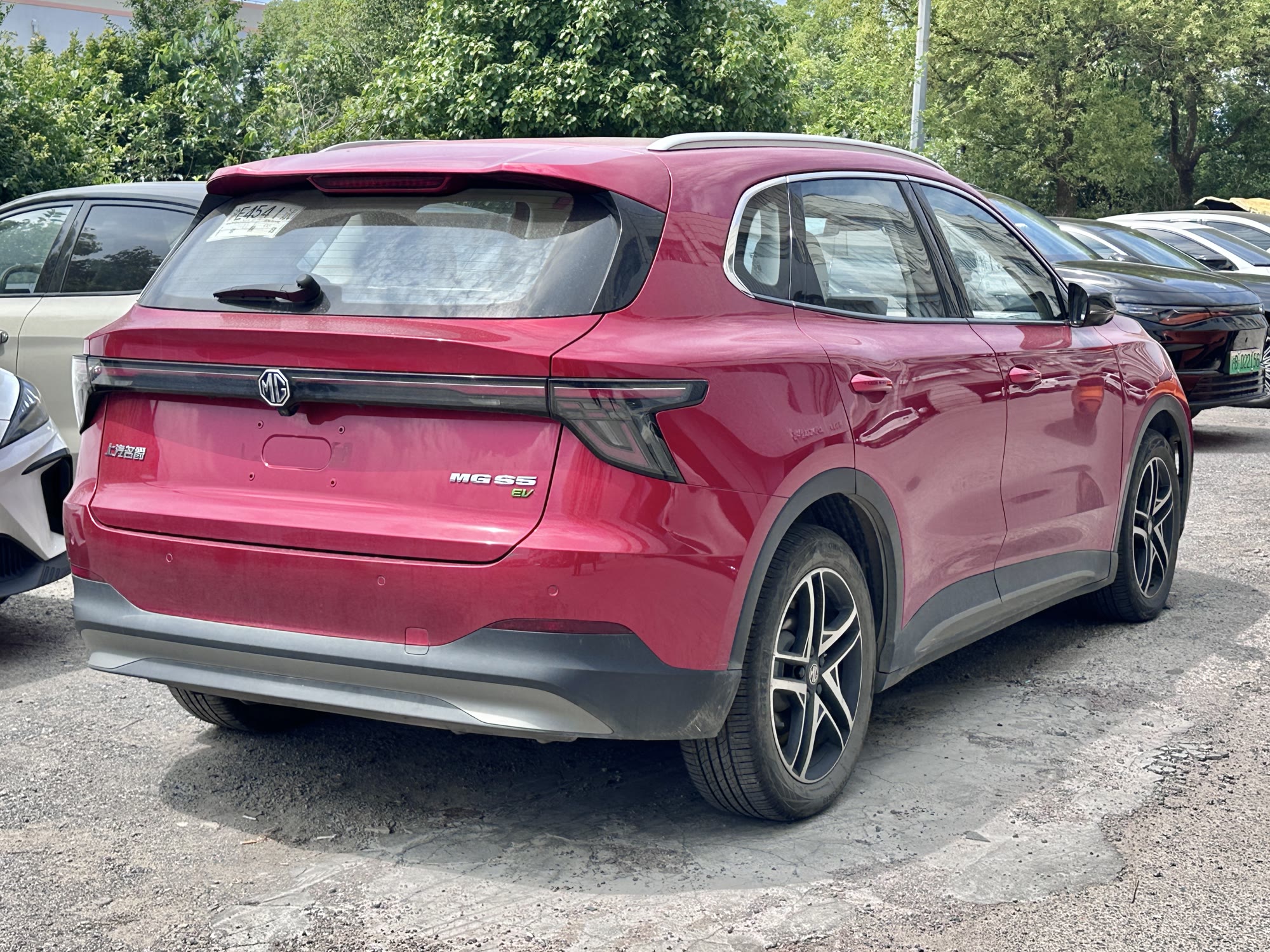

This isn’t a facelift or a refresh. The S5 EV is a ground-up electric crossover built on a dedicated EV platform — the same architecture that makes the MG 4 such a compelling hatchback. And from what we’re seeing in the specs, it might just be the most interesting EV launch in the Philippines this year.
MG S5 EV: At a Glance
| Motor | Single rear permanent magnet synchronous, 125 kW (170 PS) |
| Torque | 250 Nm |
| Drive Layout | Rear-wheel drive |
| Battery | 49 kWh lithium iron phosphate (LFP) |
| Range (NEDC) | Up to 415 km |
| DC Fast Charging | 120 kW CCS2 (30-80% in 24 minutes) |
| AC Charging | 7 kW Type 2 (0-100% in 8.5 hours) |
| Dimensions | 4,476 mm L x 1,849 mm W x 1,621 mm H |
| Wheelbase | 2,730 mm |
| Cargo Volume | 453 L (seats up) / 1,441 L (seats folded) |
| Ground Clearance | ~180 mm (estimated) |
| Wheels | 17-inch alloys, 215/60R17 tires |
| Infotainment | 12.8-inch touchscreen, wireless Apple CarPlay & Android Auto |
| Safety | MG Pilot ADAS, 7 airbags, rear camera with dynamic guidelines |
| V2L | Yes (Vehicle-to-Load) |
What Makes the MG S5 EV Different?
Here’s the thing that caught my attention — the S5 uses a rear-mounted motor with rear-wheel drive. That’s the same layout Porsche uses on the 911. On paper, it means better handling balance compared to front-wheel-drive rivals. The low center of gravity from the underfloor battery, combined with an all-around independent suspension, should make this thing genuinely fun to drive.
It’s also surprisingly aerodynamic for a crossover. MG quote a drag coefficient of just 0.28 Cd, which is hatchback territory. That matters for range, especially on the expressway.
LFP Battery: The Right Choice for the Philippines
MG went with a lithium iron phosphate (LFP) battery for the S5 EV, and honestly, that’s the smart call for our market. LFP chemistry is inherently more stable at high temperatures compared to NMC batteries. LFP cells also handle more charge cycles before degrading. For a country where summer temps regularly hit 36-38°C, that’s a meaningful advantage. Just as we’re seeing battery tech push forward in phones — the Poco M8 Power packs an 8,000mAh cell — EV batteries are also getting smarter about longevity and thermal management.
The 49 kWh pack delivers up to 415 km on the NEDC cycle. Real-world range will be closer to 330-350 km in mixed driving, which is still enough for a Manila to Baguio run with some charge to spare.
If 49 kWh sounds small compared to the 62 kWh versions available in Australia and Europe — that’s likely MG keeping the price competitive. More on that below.
Charging: Fast Enough for Daily Life
The MG S5 EV supports both AC and DC charging through the CCS2 standard. On a 120 kW DC charger, you can go from 30% to 80% in 24 minutes. That’s about the time it takes to grab coffee and stretch your legs. For home charging, a standard 7 kW wallbox fills the battery from empty to full in about 8.5 hours — plug it in when you get home, and it’s ready by morning.
It also comes with Vehicle-to-Load (V2L), so you can power appliances, laptops, or even an electric fan during those inevitable Metro Manila brownouts. As someone who’s worked through more power interruptions than I can count, I can tell you — that feature is more useful here than most people realize.
Interior and Tech
Inside, the S5 EV gets a clean, modern cockpit. A 10.25-inch digital instrument cluster sits behind the steering wheel, and a 12.8-inch touchscreen handles infotainment with wireless Apple CarPlay and Android Auto. There are fabric seats (which is fine — leather in our climate is a sweat trap anyway), automatic climate control with rear vents, and a rotary shift knob.
MG says the S5 also comes with the full MG Pilot suite of advanced driver-assist systems, though the exact feature list for the Philippine variant hasn’t been detailed yet. We know it includes adaptive cruise control, lane-keep assist, and automatic emergency braking on other markets, so expect the same here.
Seven SRS airbags and a rear-view camera with dynamic guidelines round out the safety package.
Estimated Pricing: What to Expect
MG Philippines hasn’t announced official pricing yet, but we can make an educated guess. The MG 4 EV starts at ₱1.469 million, while the BYD Atto 3 ranges from ₱1.598 million to ₱1.798 million. The MG S5 EV sits between these two — a crossover body style like the Atto 3 but built on the same platform as the MG 4.
| Market | Price (Local Currency) | PHP Equivalent |
| Thailand | 719,900 THB | ~₱1,180,000 |
| Malaysia | RM 101,000 | ~₱1,360,000 |
| Australia | A$42,990 | ~₱1,590,000 |
Given these regional prices and MG’s aggressive local pricing strategy — we saw them undercut competitors significantly with the G50 PHEV — I’m estimating the Philippine price will land between ₱1,399,000 and ₱1,599,000.
At those levels:
- USD (at 61.7 PHP/USD): $22,700 – $25,900
- INR: ₹22,00,000 – ₹25,15,000
That would make it a direct competitor to the BYD Atto 3 Dynamic (₱1.598M), while potentially undercutting it significantly if MG aims for ₱1.399M. Official pricing will be announced closer to the August launch.
What Others Are Saying
AutoIndustriya broke the news this morning, with Marcus De Guzman reporting that MG Motor Philippines confirmed the S5 EV for an August launch. The report highlights MG’s strategy of competitive pricing — the brand managed to significantly undercut rivals with the G50 PHEV, and they’re expected to do the same with the S5.
CarGuide.PH adds that the S5 EV shares its bespoke EV architecture with the non-Urban MG4, and features the same Porsche 911-inspired rear-motor, RWD layout. They also note that the ultra-thin battery design keeps the center of gravity low, with all-around independent suspension for planted handling.
Driving in the Philippines: Real-World Considerations
City Driving
The MG S5 EV’s compact dimensions (4,476 mm long, 1,849 mm wide) make it manageable for Metro Manila streets. That’s shorter than a Toyota Innova and about the same width as a Honda Civic. Parking in Makati or BGC shouldn’t be a headache. The instant torque from the electric motor — 250 Nm available from zero RPM — means you won’t struggle in stop-and-go EDSA traffic. The four regenerative braking modes include an Adaptive setting that automatically adjusts based on traffic conditions, which is a nice touch for fuel- (or rather, range-) efficient city driving.
Long-Distance Travel
With a real-world range of around 330-350 km, the S5 EV can handle Manila to Baguio (250 km) with about 80-100 km of range left, depending on how heavy your foot is on the zigzag roads. Manila to Baler (230 km) or Manila to Tagaytay (90 km) are no-brainers. For longer trips like Manila to Laoag (480 km), you’d need one charging stop, and with 120 kW DC charging getting you from 30% to 80% in 24 minutes, it’s not a dealbreaker.
The 453-liter cargo bay is big enough for luggage for a family of four, and with the rear seats folded, you get 1,441 liters — enough for a small appliance haul from the hardware store.
Flooded Situations
This is the question every Filipino EV buyer asks. The MG S5 EV’s ground clearance is estimated at around 180 mm — comparable to a typical crossover. The battery and electrical systems are fully sealed with a high IP rating. EVs have a significant advantage here: no exhaust pipe, no air intake, no risk of hydrolock. That said, common sense applies — you wouldn’t take any car through floodwater deep enough to reach the bottom of the doors. But for the average baha along EDSA or C5, the S5 should handle it no worse than a regular crossover.
High Temperature Performance
This is where the LFP battery shines. Unlike NMC batteries that can degrade faster in sustained high heat, LFP chemistry handles 36-38°C Philippine temperatures much better. The battery thermal management system keeps the pack at optimal temperature, and the automatic climate control with rear vents keeps the cabin cool without excessively draining the battery. That said, expect range to dip by 10-15% in heavy traffic with the AC running full blast — that’s normal for any EV.
How It Compares to the Geely EX2
We just covered the Geely EX2 Philippines pricing and specs this morning, and the contrast is interesting. The EX2 is a smaller, more affordable city EV with a 200+ km range, targeting the urban commuter. The S5 EV is larger, more powerful, longer-range, and aimed at families and crossover buyers. Depending on what you need — a city runabout or a do-everything crossover — both have their place in the growing Philippine EV market.
The Verdict: A Serious Contender
The MG S5 EV has the specs, the platform, and the pricing strategy to give the BYD Atto 3 a real run for its money. LFP battery (good for our climate), RWD handling (fun to drive), V2L capability (practical for our power situation), competitive range — it checks most of the boxes Filipino EV buyers care about.
The August launch can’t come soon enough. As more brands enter the Philippine EV space — we’ve seen Geely, BYD, MG, GAC, Jaecoo, and soon XPENG all making moves — the competition is only going to get better for consumers. From feature-packed gadgets like the vivo X300 E to affordable EVs, 2026 is shaping up to be a great year for tech buyers in the Philippines. And right now, the MG S5 EV looks like one of the strongest contenders in the compact electric crossover segment.
Official pricing will be the deciding factor. If MG can land this between ₱1.4M and ₱1.5M, they’ll have a winner on their hands.
Stay tuned for the full review once we get behind the wheel at the August launch.