
A Flagship Coupe in an SUV-Dominated Market
Most Filipino buyers shopping for a new EV today are looking at SUVs. The GAC Aion V Premium, Kia EV3, and Deepal S07 are all practical, boxy, and built for families. The Joyee S08 plays in that same SUV space. But FAWCAR’s new Joyee brand also brought something different to the Philippine Electric Vehicle Summit: the N09, a B+ segment flagship coupe that tries to blend electric performance with luxury coupe styling.
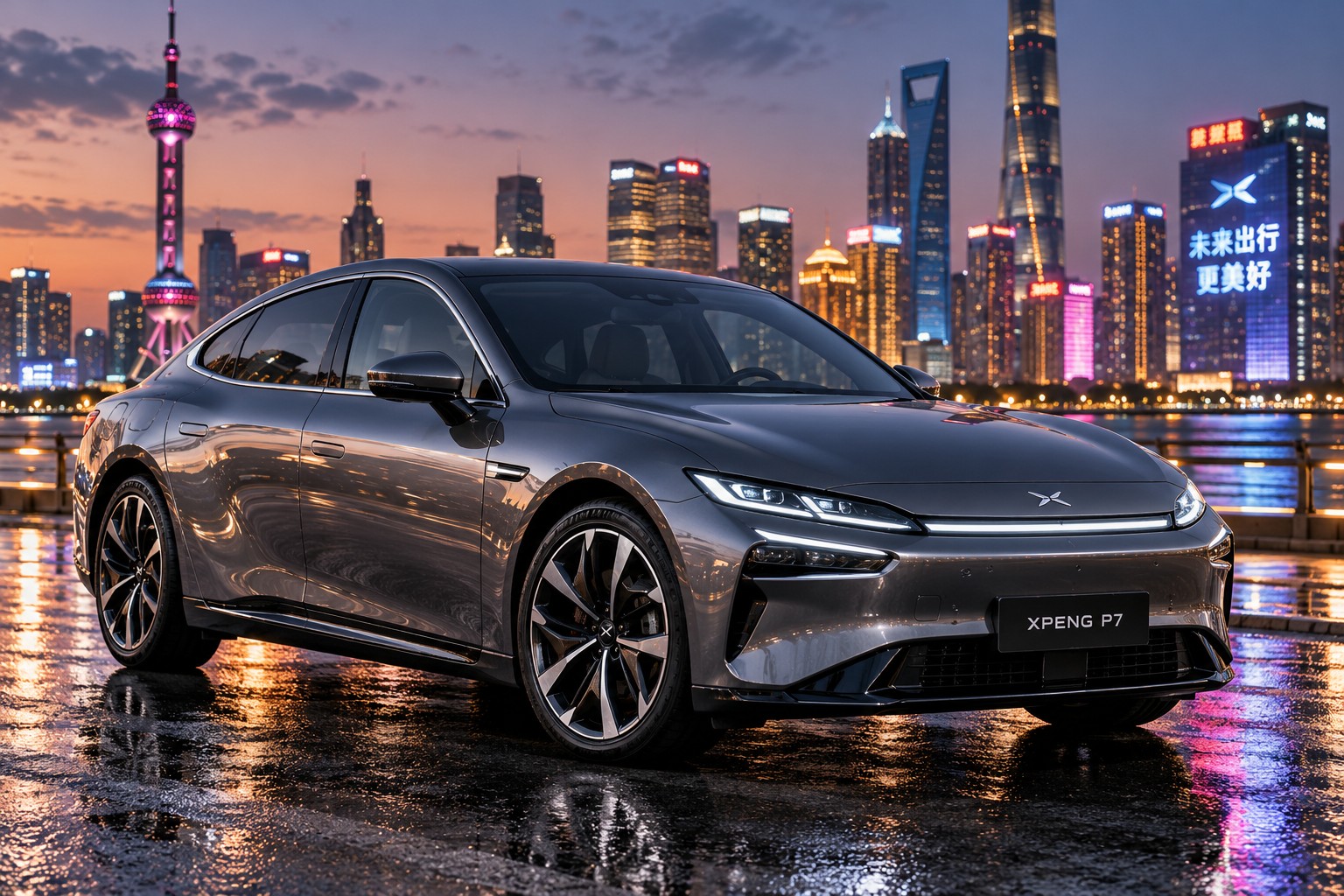
The N09 launched in the Philippines on October 22, 2026, alongside the S04 electric SUV and S08 plug-in hybrid SUV. While those two models will likely carry the brand’s sales volume, the N09 is the halo product — the one that shows what Joyee can do when the brief is “premium” rather than “affordable family transport.” With an 800V electrical architecture, 6C ultra-fast charging, and a starting price of P1,968,000, it sits in an interesting space between the luxury coupe segment and the high-performance EV segment.
Two Electrified Flavors: BEV and REEV
Filipino buyers can choose between two powertrain options. The Joyee N09 is available as a pure battery-electric vehicle (BEV) or as a range-extended electric vehicle (REEV). Both share the same rear-mounted permanent-magnet synchronous motor, rear-wheel-drive layout, and LFP battery chemistry, but they differ in range, charging speed, and powertrain complexity.
The BEV variant claims 565 km of range under the CLTC cycle and consumes 11.4 kWh per 100 km. It can recharge from 30% to 80% in approximately 18.5 minutes on a DC fast charger. The REEV variant offers 240 km of pure-electric range under the same CLTC standard, with a fuel consumption of 4.5 L/100 km when the range extender is active. Its 30-80% DC fast charge time is slightly longer at roughly 20 minutes, and it consumes 13.1 kWh per 100 km in electric mode.
Both versions share the same core hardware: an 800V high-voltage platform, 6C ultra-fast charging capability, a 50:50 front-to-rear weight distribution, and a five-link independent rear suspension. The motor produces 202 kW (approximately 271 hp) and 300 Nm of torque in both configurations, giving the N09 a 0-100 km/h time of 6.4 seconds and a top speed of 185 km/h. Those figures put it firmly in performance-coupe territory, not luxury-sedan territory.
Specifications at a Glance
The N09 measures 4,920 mm long, 1,920 mm wide, and 1,475 mm tall, riding on a 2,900 mm wheelbase. That makes it a large coupe — longer than a Toyota Camry and wider than a BMW 4 Series. Trunk space is rated at 618 liters, which is competitive for the segment. The drag coefficient is claimed at 0.208 for the BEV and 0.23 for the REEV, both respectable numbers for a car with a fastback silhouette.
| Specification | Joyee N09 BEV | Joyee N09 REEV |
|---|---|---|
| Powertrain | Rear-mounted PMSM, RWD | Rear-mounted PMSM + 1.5L range extender, RWD |
| Motor Output | 202 kW / 271 hp, 300 Nm | 202 kW / 271 hp, 300 Nm |
| 0-100 km/h | 6.4 s | 6.4 s |
| Top Speed | 185 km/h | 185 km/h |
| Platform Voltage | 800V high-voltage | 800V high-voltage |
| Charging (30-80%) | ~18.5 min DC | ~20 min DC |
| Range (CLTC) | 565 km | 240 km pure-electric |
| Consumption | 11.4 kWh/100 km | 13.1 kWh/100 km electric / 4.5 L/100km fuel |
| Dimensions | 4,920 x 1,920 x 1,475 mm (LxWxH) | |
| Wheelbase | 2,900 mm | |
| Trunk | 618 L | |
| Tires | 225/55 R18 | |
| Battery Chemistry | Lithium iron phosphate (LFP) | |
| Safety | 9 airbags | |
| Curb Weight | 1,740 kg | 1,765 kg |
Pricing in Three Currencies
The Joyee N09 is priced starting at P1,968,000 for the range-extended variant. Some trade reports list the pure-electric BEV variant at P1,988,000, making the REEV the more accessible entry point into the N09 lineup. That puts the N09 roughly P340,000 above the Joyee S08 and about P780,000 above the Joyee S04.
At the November 2, 2026 exchange rates of approximately 63.75 PHP per USD and 1.494 PHP per INR, the N09 REEV translates to roughly $30,870 or ₹2,939,000. The BEV variant at P1,988,000 would be approximately $31,180 or ₹2,969,000.
That pricing places the N09 against established luxury-brand coupes and fast sedans rather than against other Chinese EVs. A BMW 4 Series Gran Coupe starts well above P3 million in the Philippines, and even the domestically priced BYD Sealion 7 undercuts the N09 while offering more power. The N09’s value proposition is its technology package — the 800V charging architecture, Snapdragon cockpit, and Dolby Atmos audio — rather than raw price leadership.
What Others Are Saying
Top Gear Philippines covered the Joyee brand launch on October 27, 2026, and noted that while the S04 and S08 had full specifications disclosed, the N09’s power output and range were not yet specified for the local variants at the time of publication. The publication highlighted the Snapdragon 8295P cockpit and 23-speaker Dolby Atmos system as standout features, and rated the overall launch as a credible entry into the premium new-energy segment.
AutoIndustriya reported on the same October 22 launch event, emphasizing that FAWCAR positioned the N09 as a “B+ segment sport coupe” with both BEV and REEV options. The outlet noted the 800V architecture and 6C charging as technically impressive, but did not publish a full local-spec review because final Philippine equipment lists were not yet confirmed.
Zigwheels Philippines listed the Joyee N09 at P1.968 million and highlighted the 800-volt electrical architecture, 6C ultra-fast charging, and the claim that the car can add 325 km of driving range in under eight minutes. Zigwheels also noted the 8.77 km/kWh efficiency figure and the 50:50 weight distribution as engineering highlights.
City Driving: Coupe Dynamics in Metro Manila Traffic
The N09’s 4,920 mm length is its biggest liability in city traffic. At nearly five meters, it is longer than a Toyota Camry and will struggle in tight parking slots at Glorietta or the basement levels of BGC office towers. The 2,900 mm wheelbase helps rear-seat passengers, but the coupe silhouette means reduced rear headroom compared to the GAC Aion V Premium.
On the positive side, the 202 kW motor delivers instant torque from zero rpm, which is exactly what you need for merging onto EDSA from a crowded on-ramp. The RWD layout with a 50:50 weight distribution should make the N09 feel balanced in city corners, and the five-link rear suspension is more sophisticated than the torsion beams found on cheaper EVs. The 225/55 R18 tires strike a reasonable compromise between comfort and grip.
One concern for Metro Manila owners: the N09’s ground clearance has not been published for the Philippine specification. Chinese-market coupes often ride lower than local buyers prefer, and if the N09 dips below 150 mm, it will be vulnerable in flooded underpasses. FAWCAR says the car was “optimized for Philippine driving conditions,” but without a published ground-clearance figure, buyers should wait for local reviews before assuming it clears floodwaters safely.
Long-Distance Travel: The 800V Promise
The N09’s 800V architecture is its most compelling long-distance feature. FAWCAR claims 325 km of added range in 7.5 minutes of charging, which — if true — would make the Kia EV3‘s 128 kW peak charging look modest. A Manila-to-Baguio trip (roughly 250 km) would be achievable on a single charge in the BEV variant, with a brief top-up on the NLEX or SCTEX if needed.
The reality check: Chinese manufacturers have a habit of quoting best-case charging curves. The 6.4-second 0-100 claim and the 325 km-in-7.5-minutes claim both come from FAWCAR’s marketing materials, not from independent testers. The 30-80% times of 18.5 and 20 minutes are more conservative and likely closer to real-world experience. Still, an 800V system charging at those rates is competitive against the GAC Aion V Premium‘s 180 kW peak and the Kia EV3‘s more modest architecture.
For buyers who regularly do Manila-to-Ilocos or Manila-to-Batangas trips, the N09 REEV eliminates range anxiety entirely. Its 240 km pure-electric range covers most intercity legs, and the range extender takes over seamlessly when the battery depletes. The 4.5 L/100 km fuel-consumption figure in range-extender mode is respectable for a car that weighs 1,765 kg.
Flooded Streets and 36-Degree Heat
As with any new EV in the Philippines, the N09’s ability to handle local conditions depends on details FAWCAR has not yet disclosed. The battery is LFP, which is thermally stable and less prone to degradation in sustained 36-38°C heat than NMC packs. That is a major plus for Filipino buyers.
The N09 has not been tested for wading depth, and there is no published IP rating for the battery enclosure. In a country where floodwaters regularly reach knee height during the habagat, that missing data is a gap buyers should note. The EV advantage — no air intake to hydrolock — means the N09 can theoretically drive through water deeper than a gas car, but only if its battery pack and high-voltage components are properly sealed. FAWCAR says the car was optimized for high temperatures and heavy rainfall, but until an independent water-crossing test appears, treat the flood claim with caution.
The Verdict
The Joyee N09 is the most technologically ambitious model in FAWCAR’s Philippine lineup. The 800V platform, 6C charging, Snapdragon cockpit, and 23-speaker Dolby Atmos system are genuine differentiators in a market where most EVs compete on price and range alone. The P1,968,000 starting price is reasonable for what you get on paper, especially compared to German luxury coupes with slower charging and older infotainment systems.
The honest caveats: ground clearance is unverified, battery capacity is not officially published, and both the 6.4-second 0-100 claim and the 325-km-in-7.5-minutes claim come from the manufacturer’s marketing. If you are a performance-minded buyer who wants a sleek electric coupe with cutting-edge charging, the N09 is worth a test drive. If you need a practical family car that can clear floodwaters with confidence, the Joyee S04 or GAC Aion V Premium are safer bets.
For FAWCAR, the N09 does exactly what a halo product should do: it makes the rest of the lineup look more attainable while giving the brand a technical headline. Whether Filipino buyers will pay nearly P2 million for a Chinese-market coupe with no local track record remains the open question. The S04 and S08 will answer that with their sales numbers. The N09 is here to make the answer sound better.