
Chevrolet finally has an electric car in the Philippines, and it’s been quietly racking up reviews. AutoIndustriya handed back the keys to the Captiva EV last month with a 7/10 overall score — strong marks for performance, a harsh 6/10 for value. That’s the conversation starter. The bigger question for Filipino buyers: is a P1.999-million crossover with a US badge and Chinese bones actually worth it in 2026?
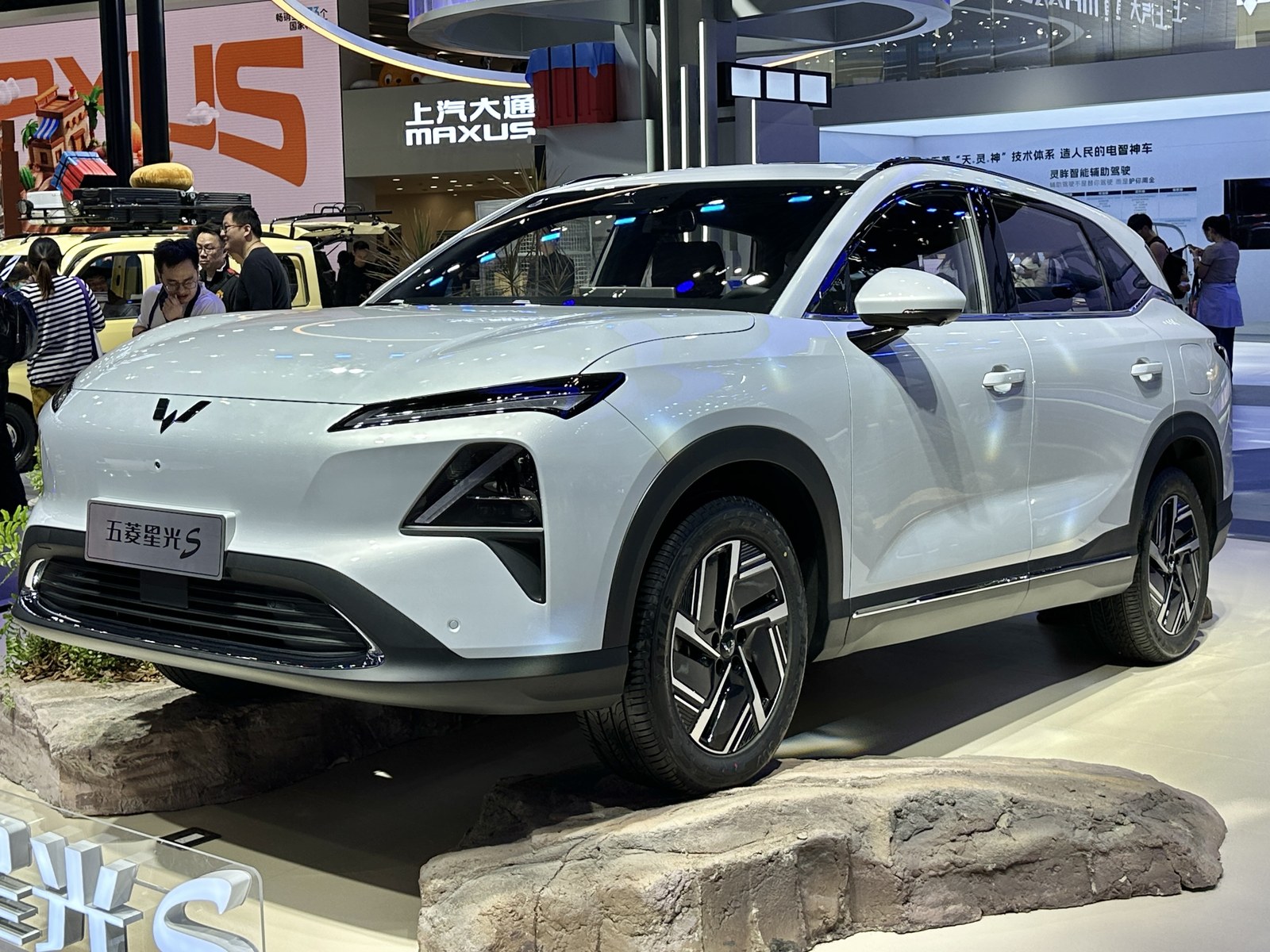

A Quick Look at the Captiva EV
Chevrolet Philippines launched the Captiva EV and Captiva PHEV in February 2026 through its exclusive distributor, Hariphil Asia Resources. Before you ask: no, this is not the seven-seat Captiva MPV that came back in 2024. This is a brand-new five-seat compact crossover, and it’s the bow-tie brand’s first-ever EV on Philippine soil.
Here are the key numbers for the Captiva EV Premier:
| Spec | Value |
|---|---|
| Body | 5-door compact crossover SUV, 5 seats |
| Motor | Single front permanent magnet synchronous, 150 kW |
| Power | 204 PS / 201 hp |
| Torque | 310 Nm |
| Drive layout | Front-wheel drive |
| Battery | 60 kWh lithium iron phosphate (LFP), ~57 kWh usable |
| Range | 415 km (NEDC) |
| 0-100 km/h | 7.7 seconds |
| DC fast charging | CCS2, up to 120 kW |
| AC charging | 6.6 kW (full charge in about 8 hours) |
| Dimensions | 4,745 x 1,890 x 1,675 mm |
| Ground clearance | 155 mm |
| Infotainment | 15.6-inch touchscreen, wired Apple CarPlay & Android Auto |
| Instrument cluster | 8.8-inch digital display |
| Safety | 6 airbags, ADAS (IDA, AEB, lane-keep, ACC with traffic jam assist), 360-degree camera |
What Is the Captiva EV, Really?
Here’s where it gets interesting. The Captiva EV is a rebadged Wuling Starlight S, built by SAIC-GM-Wuling — the joint venture between GM, SAIC, and Wuling in China. Manila Bulletin’s Eric Tipan said it plainly in his June review: “technically a rebadged Wuling Starlight S, Chevrolet has done enough to set it apart.”
That’s not a knock, by the way. GM has a long history with this playbook — the previous Captiva was a rebadged Baojun 530, and the pint-sized Spark EUV that followed in February is a Baojun Yep Plus underneath. What matters is what you get for the money: a proper 60 kWh LFP battery, 415 km of range, and a 15.6-inch infotainment screen that doesn’t feel budget at all. The same model is being sold in the Middle East and Latin America, and GM started local production of the Captiva EV in Brazil in June 2026.
How Much Is the Chevrolet Captiva EV in the Philippines?
The Captiva EV Premier launched at P1.86 million as an introductory price. As of August 2026, the list price sits at P1,999,000 — AutoIndustriya’s July review prices the car at that figure, and Zigwheels’ current price guide agrees. Here’s the 2026 Chevrolet electrified lineup in three currencies (at roughly 61.3 PHP/USD and 95.6 INR/USD):
| Model | PHP | USD | INR |
|---|---|---|---|
| Captiva EV Premier (intro price) | P1,860,000 | ~$30,343 | ~Rs 29.0 lakh |
| Captiva EV Premier (current SRP) | P1,999,000 | ~$32,610 | ~Rs 31.2 lakh |
| Captiva PHEV Premier | P1,959,000 | ~$31,958 | ~Rs 30.6 lakh |
| Spark EUV Activ | P1,547,000 | ~$25,237 | ~Rs 24.1 lakh |
In Philippine terms, that parks the Captiva EV right next to the BYD Atto 3 Premium at P1,798,000 and slightly above the MG ZS EV at P1,839,000. It’s pricier than the Atto 3 Standard at P1,598,000, and miles above the sub-million entry EVs like the Geely EX2 at P938,000. If you want a plug-in hybrid instead, the Captiva PHEV lists at P1,959,000 — and the BYD Seal 5 DM-i starts way down at P898,000. A quick comparison against the crossover crowd:
| Model | PH Price | Range (NEDC) |
|---|---|---|
| Chevrolet Captiva EV Premier | P1,999,000 | 415 km |
| BYD Atto 3 Standard | P1,598,000 | 480 km |
| MG S5 EV (est., launching August) | P1,399,000 – P1,599,000 | 415 km |
| JAECOO J5 EV | P1,399,000 | 461 km |
| Geely EX2 Pro | P938,000 | 395 km |
What Others Are Saying About It
AutoIndustriya — 7/10 overall (July 2026)
Marcus De Guzman scored the Captiva EV 9/10 for performance, 8/10 for design, 7/10 for handling, 8/10 for comfort, and a stinging 6/10 for value. His framing says it all: “Chevrolet wants buyers to make the electric switch with the Captiva EV, but can it deliver?” In a segment currently dominated by BYD, that value score is the part that hurts.
Manila Bulletin — “a step in the right direction” (June 2026)
Eric Tipan spent five days with it. He loved the instant, quiet acceleration — “I had to honk occasionally to remind tricycles I was overtaking on the left” — and the straight-line comfort that put his passengers to sleep on a four-hour drive. His gripes: cornering felt less stable than expected for a battery-heavy car, and the ADAS lane-keeping “kept overcorrecting to the left and right every five seconds” on SCTEX and TPLEX. He also found the charging network outside Manila thin — in La Union, most of the few stations only offered 7 kW, which is an eight-hour job for this battery.
Top Gear Philippines — Chevy’s most relevant launch in years
At the February launch, Leandre Grecia called the Captiva EV and PHEV arguably the two most relevant models Chevrolet has launched in recent years, and praised the design as “a far, far cry” from the old MPV. The one thing every review circles back to: the fundamentals are solid, but the price-to-specs math gets awkward when the Atto 3 undercuts it by roughly P400,000.
Is It Right for Philippine Roads?
City driving
415 km of NEDC range is overkill for Metro Manila commutes in the best way — you can run EDSA-Makati-BGC loops for a week or two on a single charge. The instant torque makes merging on EDSA effortless, and the 4,745 mm body is compact enough for tight BGC and Makati parking. The flat floor means the rear middle seat is genuinely usable, there’s plenty of cabin storage, and the quiet cabin makes daily stop-and-go traffic far less draining.
Long-distance travel
Manila to Baguio is about 250 km — comfortably inside the Captiva EV’s real-world envelope. Tipan’s trip computer was accurate to the kilometer: full charge showed 415 km, and after 318 km of driving he still had 100 km left. The catch is infrastructure, not the car. DC fast chargers at 120 kW are still rare outside Metro Manila, and many provincial stations top out at 7 kW. Plan your stops around SEA Charge and hotel top-ups, or treat an overnight 6.6 kW AC charge as the routine.
Floods
Here’s the honest bit: the Captiva EV’s 155 mm ground clearance is average for a crossover and lower than most body-on-frame SUVs. EVs don’t hydrolock like gas cars and the battery pack is sealed, but that doesn’t make it a flood-fighter. Treat it like any other crossover — if the water’s above the wheel centerline, turn around. The LFP chemistry at least means you’re not carrying the more volatile NMC packs that some rivals use.
High temperatures
LFP batteries handle heat better than NMC packs, which matters in a country where 36-38°C afternoons are normal. Chevrolet picked LFP specifically for durability and thermal stability. Still, expect real-world range to sit below the NEDC figure when the AC is fighting a summer sun — and give the panoramic sunroof’s tilt mode a pass unless you enjoy sauna vibes. If battery chemistry is your kind of rabbit hole, I went deeper on why batteries might be the answer to a lot of our problems.
Should You Buy Now or Wait?
Timing is the interesting part. On July 30, President Marcos Jr. signed Executive Order 121, creating the Electric Vehicle Incentive Strategy (EVIS) program to push local EV manufacturing. The DOE estimates EV prices could fall 6 to 12 percent — potentially up to P200,000 per vehicle — as production volumes and incentives kick in. That’s enough to matter at the P1.999-million price point.
None of that makes the Captiva EV a bad buy today. It’s a genuinely solid first EV from a brand name people trust, with a real battery, real range, and a spacious cabin. But if you’re not in a rush, the next 12 to 18 months could get very interesting — the DOE-listed Kia EV3 with 436 km of range is on its way, and the MG S5 EV lands this August with an estimated P1.4 to P1.6 million tag.
Bottom Line
The Captiva EV is Chevrolet’s most credible product launch in years, and the fundamentals hold up against the Chinese EV onslaught. It loses points on price — that 6/10 value score from AutoIndustriya is fair when the Atto 3 undercuts it — and the ADAS needs polish. But as a first EV, it’s a strong one: comfortable, quick, honest range, and a badge that dealerships across the country actually service.
Is it worth P1.999 million? If you want a brand-name EV with crossover practicality and you’re not hung up on absolute price-per-kilometer value, yes. If you’re chasing the best specs per peso, BYD still wins that fight. Either way, the EV choices in the Philippines just got a whole lot more interesting — and with EVIS coming, they’re about to get cheaper, too.