
Lynk & Co has finally pulled the trigger. The 900 — the brand’s flagship plug-in hybrid SUV — made its official Philippine debut on November 6 at Sta. Elena Golf and Country Estate in Santa Rosa, Laguna, and it arrives with a number that will make premium buyers pause: P4,280,000.
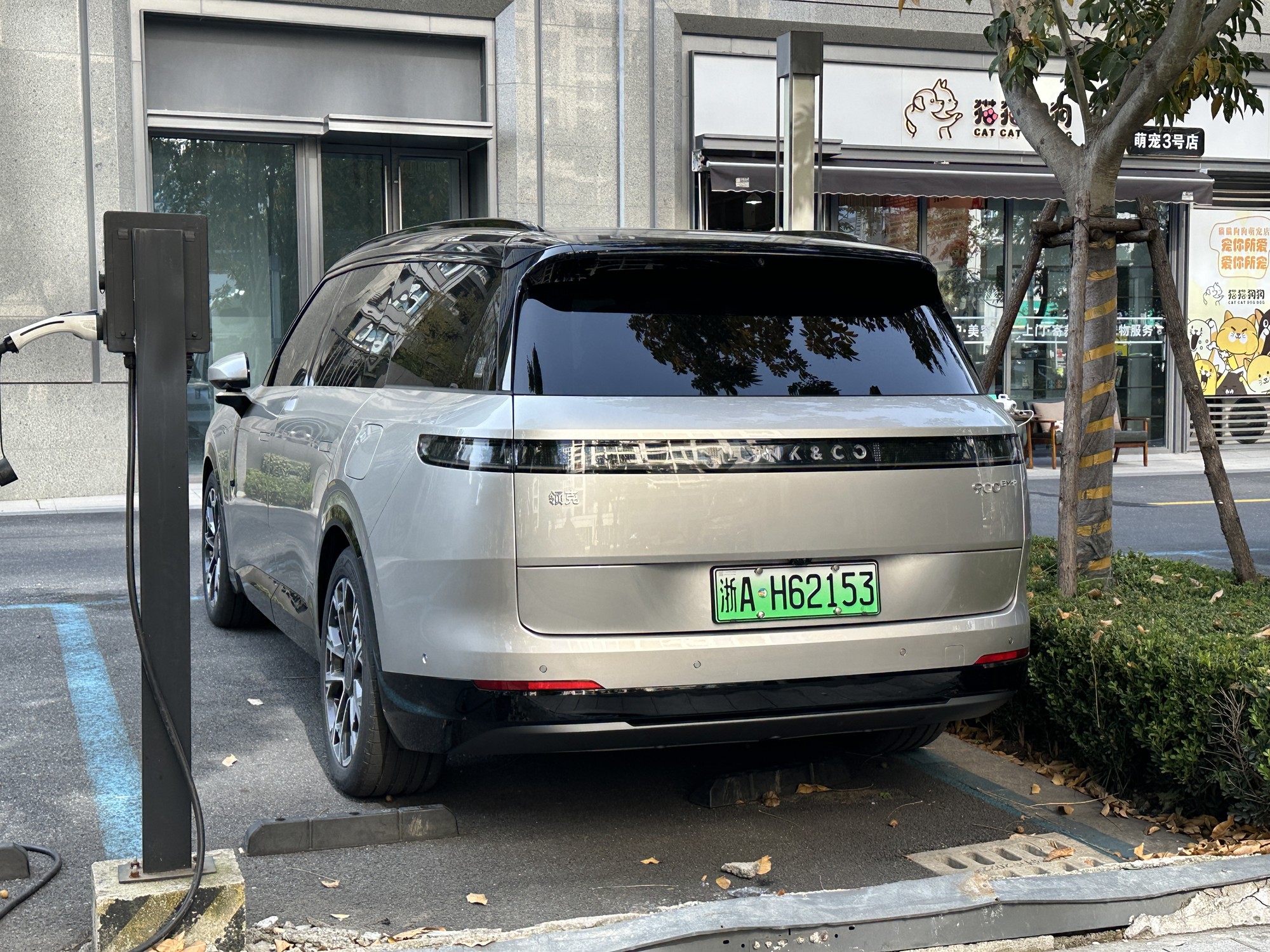

This is the first Lynk & Co product launch since the brand’s local operations were folded into Geely Motor Philippines under the One Geely strategy. As I noted in my earlier preview of the 900, that integration was the clearest signal the flagship was genuinely coming. Three months on, it’s here — and the final numbers are a mix of the expected and the genuinely surprising.
What the P4.28M buys you
The 900 is offered in a single, fully loaded EM-P Ultra variant. The powertrain pairs a 2.0-liter turbocharged gasoline engine with two electric motors — one driving each axle — through a 3-speed Dedicated Hybrid Transmission (3DHT) and an electric all-wheel-drive system. Combined output is 718 PS (528 kW) and 1,038 Nm of torque, good for a 4.9-second 0-100 km/h sprint and a 210 km/h top speed.
The battery is a 50 kWh ternary lithium (NMC) pack. Lynk & Co’s Philippine launch materials claim up to 170 km of pure electric range and up to 1,000 km of combined range. That is well below the 280 km and 1,350 km the Department of Energy’s recognized-EV listing cites for the same Ultra variant on the CLTC cycle, and below the China-market 2.0T Ultra, which uses a slightly larger 52.38 kWh CATL Freevoy pack. The gap is worth asking the dealership about; for local planning, treat 170 km as the working number.
Charging is a genuine strong suit: up to 120 kW DC fast charging takes the battery from 20 to 80 percent in about 17 minutes, and 6.6 kW AC home charging is standard. Vehicle-to-Load (V2L) at 6.6 kW means the car can power campsite gear or a laptop during a brownout — a small thing that matters more in the Philippines than most.
Philippine specifications
| Powertrain | EM-P plug-in hybrid, 2.0L turbo + dual electric motors, 3DHT, electric AWD |
| Combined output | 718 PS (528 kW) |
| Torque | 1,038 Nm |
| 0-100 km/h | 4.9 seconds |
| Top speed | 210 km/h |
| Battery | 50 kWh ternary lithium (NMC) |
| EV range | Up to 170 km (PH claim) |
| Combined range | Up to 1,000 km (PH claim) |
| DC fast charging | 120 kW, 20-80% in ~17 min |
| AC charging | 6.6 kW |
| Seating | 6 seats, 3 rows |
| Dimensions (L x W x H) | 5,240 x 1,999 x 1,810 mm |
| Wheelbase | 3,160 mm |
| Ground clearance | Not published for PH |
| Cargo | Not published for PH (global 2.0T Ultra: 300 L / 1,070 L) |
| Suspension | Dual-chamber air suspension + continuous damping control |
Pricing and the competition
At P4,280,000, the 900 lands in territory that would normally carry a European or Japanese badge on the hood. At today’s rates (63.16 PHP/USD and 93.88 INR/USD), that is roughly $67,800 or about ₹63.6 lakh.
| Model | Price (PHP) | Power | EV range | Combined range |
| Lynk & Co 900 EM-P Ultra | 4,280,000 | 718 PS | 170 km | 1,000 km |
| Mazda CX-80 PHEV Exclusive | 4,280,000 | 327 PS | 65 km (WLTP) | Not published |
| GAC GN8 PHEV Executive | 3,338,000 (intro) | 373 PS | 120 km | 1,000+ km |
| Jaecoo J8 PHEV (est.) | ~2.4-3.1M | Up to 422 PS | 169 km (DOE) | 1,300-1,350 km |
| Ford Territory Hybrid Platinum | 1,655,000 | 1.5L turbo hybrid | Self-charging | Not published |
The most direct rival is the Mazda CX-80 PHEV Exclusive, which I covered when it launched at the exact same P4.28M. The Mazda is smaller, makes 327 PS, and manages just 65 km on electricity from its 17.8 kWh pack. The Lynk & Co counters with more than double the EV range, a larger cabin, and a six-seat layout. It is a genuine fight at the same price.
Step down a million pesos and the GAC GN8 PHEV Executive plays the comfort card with a 120 km EV range and over 1,000 km of total range, while the Jaecoo J8 PHEV undercuts the pair entirely with a 422 PS flagship variant and up to 169 km of DOE-listed EV range. The 900 is the most powerful car of the group by a wide margin — and the most expensive.
Interior and technology
Inside, the 900 is unapologetically premium. Six individual seats are spread across three rows, and the second row can rotate 180 degrees to face the third row — useful for a parked family conversation, or 90 degrees toward the door for easier access. Massage functions run through all three rows.
The tech shelf is deep: a 30-inch 6K entertainment display, a 12.66-inch digital instrument cluster, a 95-inch augmented-reality head-up display, dual 50 W wireless chargers, and a 31-speaker Harman Kardon system with Dolby Atmos and a 2,640 W amplifier. There is even a built-in nine-liter refrigerator — the kind of feature that sounds silly until you are stuck in EDSA gridlock with a packed lunch. Twin Qualcomm Snapdragon 8295 chips run the show.
For driver assistance, Lynk & Co has gone all-in: a roof-mounted LiDAR, cameras, millimeter-wave radar, and ultrasonic sensors make up a 29-sensor suite feeding 23 assistance functions. Adaptive cruise, autonomous emergency braking, lane keep and change assist, blind-spot monitoring, and automatic parking are all on the list.
Living with the 900 in the Philippines
City driving
At 5,240 mm long and 1,999 mm wide, the 900 is not small. EDSA traffic is fine — the instant electric torque makes it feel lighter than its size — but Makati and BGC parking lots are where you will feel the width. The 540-degree camera and automatic parking assist are not optional luxuries here; they are daily tools. The air suspension’s access mode lowers the body by 40 mm when parked, which helps with kerbs and steep ramps.
Long-distance travel
Manila to Baguio is about 250 km. On 170 km of EV range, you would plan one DC fast charge each way — and at 120 kW, that is a 17-minute top-up from 20 to 80 percent. In practice, most owners will let the hybrid system do the long haul: 1,000 km of combined range means a full tank and battery covers a round trip with room to spare.
Flooding
Here the 900’s spec sheet gets quiet. Ground clearance has not been published for the PH variant, and neither has a battery enclosure IP rating or a wading depth. The air suspension can raise the body for rough roads, but there is no official figure to lean on. As a plug-in hybrid, the car still has an engine air intake — so deep flood water remains a risk regardless of how good the electrics are. Treat the official numbers as missing, and wade with the same caution you would any large SUV.
Heat
The NMC (ternary lithium) chemistry is the one place the 900 gives ground to its LFP rivals. NMC packs are less thermally stable than LFP, so 36-38°C heat combined with a full air-conditioning load is the worst case for long-term battery health. It is the same energy-density-versus-longevity trade-off I explored in my piece on why batteries are the part of the energy transition nobody talks about. Lynk & Co has not published the PH car’s thermal management details, so ask the dealership how the pack is cooled before you sign.
What others are saying
The PH launch drew the local motoring press in force. Autocar Philippines framed the 900 as the opening move of Lynk & Co’s closer integration with Geely, while the Daily Tribune noted the P4.28M price “places it in the luxury segment.” Early international impressions have been warm — one UAE buyer’s guide called it “almost British” in its plushness, while noting that real-world EV range in 45°C Gulf heat settles closer to 170-220 km than the official CLTC figure. That is a useful data point for a Philippine summer.
The bottom line
The Lynk & Co 900 is a statement car. It is the most powerful plug-in hybrid SUV you can buy in the Philippines right now, it seats six in genuine comfort, and its 170 km of EV range and 120 kW charging make it usable as a daily electric vehicle for most families. The P4.28M price is steep — but it undercuts the European and Japanese flagships it is sized against, and it matches the Mazda CX-80 on price while beating it on paper in nearly every measurable way.
The open questions are the ones Lynk & Co has not answered: ground clearance, wading depth, and battery cooling. If the brand publishes those numbers and they hold up, the 900 becomes a genuinely compelling premium PHEV for the Philippine market — not just a big SUV with a big number on the sticker. Either way, the premium PHEV fight just got a lot more interesting.