
Every time someone asks me about AI’s future, the conversation eventually lands on the same uncomfortable truth: these models are power-hungry. Training a single large language model can consume as much electricity as hundreds of homes use in a year. Running inference at scale — the kind ChatGPT handles every second — demands data centers that rival small cities in energy consumption.
We talk about AI breakthroughs constantly. We rarely talk about what keeps the lights on.

The Numbers That Should Worry You
The International Energy Agency projects that data centers will consume over 1,000 terawatt-hours by 2030. That’s roughly the entire electricity consumption of Japan. And the majority of that growth is driven by AI workloads — training runs that stretch across weeks and inference pipelines that never sleep.
Google’s recent $85 billion capital raise was almost entirely earmarked for AI infrastructure. I wrote about what that means for developers — but the energy angle is equally important. When a company spends more on compute than most countries spend on their entire power grid, you start to understand the scale of the problem.
Then there’s the Google-SpaceX deal — $920 million a month for compute capacity. That’s not just a business transaction. That’s an energy commitment that would make utility companies nervous.
Batteries Are Scaling Faster Than Anyone Expected
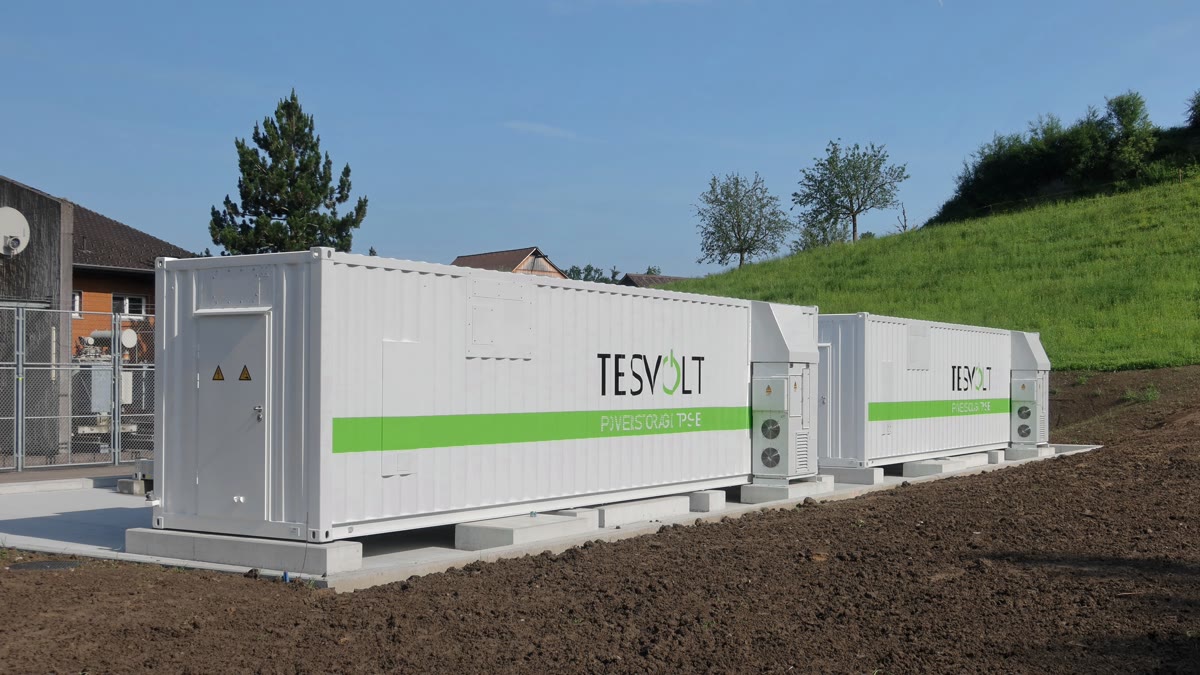
Here’s the part of the story that doesn’t get enough attention: while AI’s power demands are exploding, grid-scale battery storage is quietly having its best year ever. The U.S. hit a Q1 record for energy storage installations — up 32% year over year. Solar installations keep climbing. And battery costs have dropped so dramatically that what seemed like a fantasy five years ago is now just infrastructure.
The Huawei-DeepSeek story is instructive here. Chinese companies are training massive models on domestic chips, partly because they can’t access NVIDIA’s best hardware — but also because they’re building energy-efficient compute pipelines that Western companies haven’t prioritized. When your hardware is less powerful, you get creative about efficiency. And efficiency is exactly what the energy crisis demands.
The Vehicle-to-Grid Wildcard
GM just announced vehicle-to-grid technology specifically designed for AI data centers. The idea is straightforward: millions of electric vehicles sitting in driveways and parking lots represent a massive distributed battery network. During peak demand, those batteries feed power back into the grid. During off-peak hours, they charge using surplus renewable energy.
It’s elegant in theory. The challenge is coordination — getting millions of EV owners to participate, building the infrastructure to handle bi-directional power flow, and convincing data center operators to rely on a power source that might disconnect when someone needs to drive to work.
What This Means for Developers
If you’re building AI applications — and increasingly, every developer is — the energy conversation isn’t abstract. It affects your costs, your architecture choices, and eventually your users’ experience.
Here’s what I’m watching:
- Edge inference is becoming necessary, not optional. Running models closer to users reduces the energy cost of moving data across networks. Apple’s on-device AI push with iOS 27 isn’t just about privacy — it’s about not overwhelming centralized compute.
- Model efficiency matters more than model size. The NVIDIA RTX Spark and similar hardware are designed for efficient inference, not just raw performance. Smaller, specialized models that run on cheaper hardware will win in production.
- Cloud costs will reflect energy costs. As grid electricity becomes more expensive during peak demand, cloud providers will pass those costs along. Smart architecture means scheduling batch workloads during off-peak hours and using spot instances when energy is cheap.
The Filipino Angle
The Philippines is in an interesting position here. We’re a country that experiences both the benefits and costs of tech infrastructure daily — from call centers running AI-assisted customer service to the brownouts that remind us how fragile our power grid can be.
Grid-scale battery storage could be transformative for us. The Philippines has abundant solar potential, but we’ve struggled with energy storage and distribution. If the global battery revolution delivers on its promise, it could help stabilize our grid and reduce the energy costs that make tech operations here more expensive than they should be.
For Filipino developers building AI tools, the message is clear: think about efficiency from day one. Don’t assume compute will always be cheap and available. Design for a world where energy is a real constraint — because that world is arriving faster than most people realize.
The Bottom Line
AI’s energy problem is real, and it’s growing. But the battery storage revolution is happening at the same time, just with less fanfare. The companies that figure out how to match AI’s power demands with sustainable, distributed energy storage will have a massive competitive advantage.
For the rest of us — the developers, the users, the people who just want their apps to work — the takeaway is simpler. The future of AI isn’t just about smarter models. It’s about building systems that can actually run without burning through the planet’s energy budget. And that’s a problem worth solving with the same intensity we bring to making models bigger and faster.
Because at some point, someone has to pay the electric bill.