
The Biggest Capital Raise in Tech History
When I saw the headline that Alphabet just raised $85 billion in a single stock sale—specifically earmarked for Google’s AI business—I had to read it twice. Eighty-five billion. That’s not a funding round. That’s not a corporate budget. That’s more than the GDP of half the countries in Southeast Asia combined, and it’s all going into one thing: artificial intelligence.
Let that sink in for a moment. Google, a company that already generates over $300 billion in annual revenue, just went to the public markets and said, “We need more. Give us $85 billion. We’re spending it on AI.” And investors said yes.
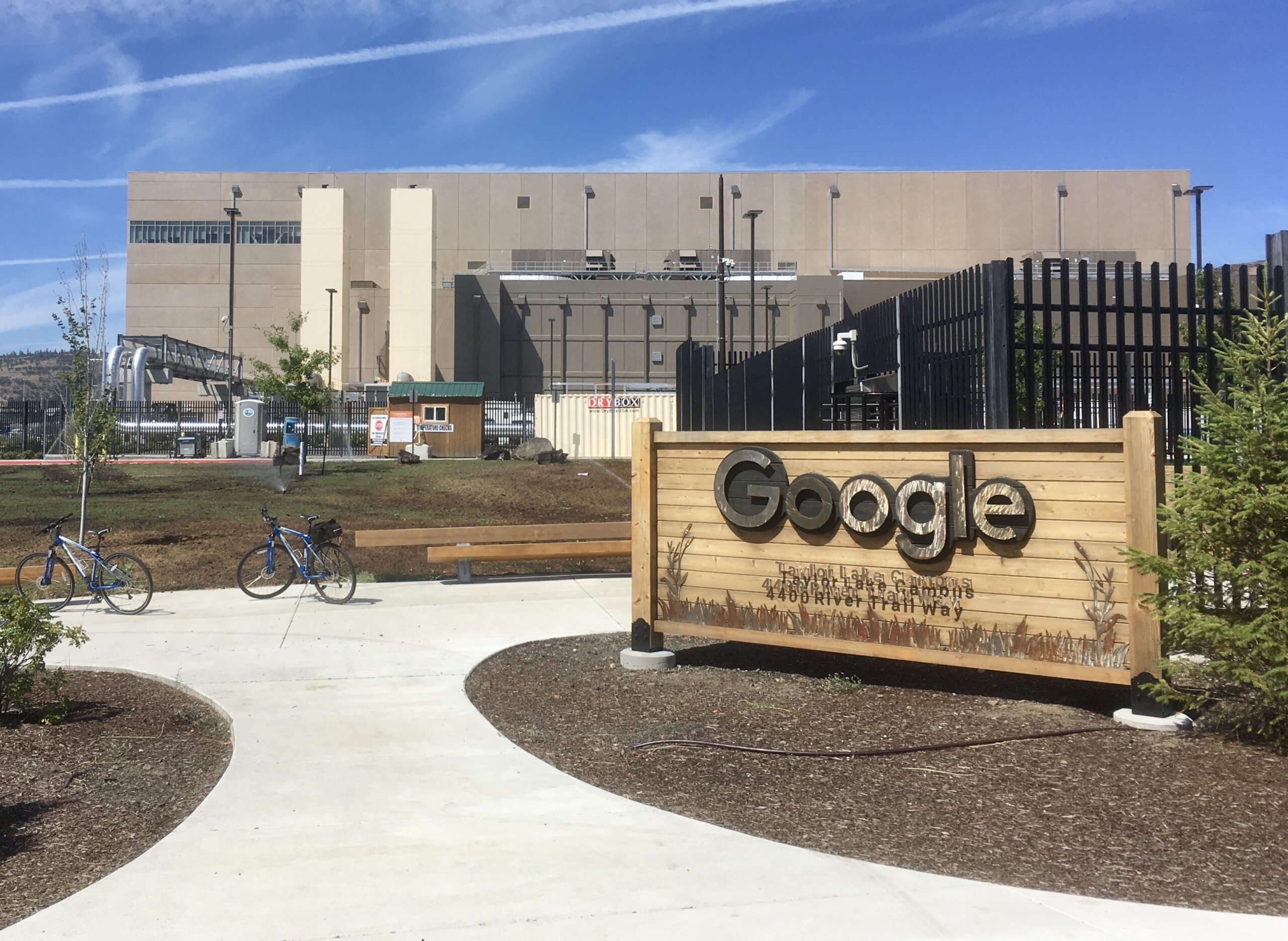

This isn’t just a story about Google. It’s a signal about where the entire tech industry is headed, and as a developer working in the Philippines, it tells me something important about the next five years of my career.
What Google Is Buying With $85 Billion
The sheer scale of this raise makes it the largest secondary stock offering in U.S. history, and it’s not even close. According to TechCrunch’s reporting, the proceeds are going straight into Google’s AI infrastructure: data centers, TPU and GPU clusters, research talent, and the massive energy contracts needed to power it all.
To put this in perspective, the entire global venture capital investment in AI for 2025 was roughly $100 billion. Google just raised 85% of that in one shot. Microsoft has invested approximately $30 billion into OpenAI cumulatively. This single Alphabet raise more than doubles that. Just yesterday, I was writing about Anthropic’s decision to go public — a move that signals AI companies are racing to secure long-term capital. This $85 billion raise takes that dynamic to an entirely different level.
The question isn’t whether Google is serious about AI—it’s whether anyone else can keep up.
Gemma 4 12B: The On-Device Counterpoint
On the same day the $85 billion raise hit the wires, Ars Technica reported on Google’s release of Gemma 4 12B, a new open-weight model designed to run on any laptop with 16GB of RAM. This is the strategic yin to the $85 billion yang.
While the massive raise funds the cloud-side AI infrastructure—the gigantic models, the search integration, the training clusters—Gemma 4 12B represents Google’s bet that AI also needs to run locally, on your machine, without sending data to the cloud.
Gemma 4 12B uses a new encoding scheme that lets it punch well above its weight class in terms of performance. For developers like us building applications in the Philippines, where internet reliability varies and cloud API costs add up fast, this is genuinely exciting. A model that runs on a standard laptop means we can build AI-powered features that work offline, respond instantly, and don’t rack up API bills.
I’ve been experimenting with running smaller models locally for some of our internal tools at the office, and the biggest pain point has always been the hardware requirement. Gemma 4 12B running on 16GB RAM changes that equation significantly. Most developers I know have at least 16GB laptops—this suddenly makes on-device AI practical for real-world applications.
Android Fake Call Detection: AI for Consumer Protection
Google also rolled out a new Android security feature called “fake call detection” that addresses one of the more unsettling developments in AI: deepfake voice scams.
The feature works through a clever cryptographic handshake. When someone calls you, their device sends a silent, encrypted confirmation signal to your phone. If that signal is missing (meaning the call is likely spoofed), your phone automatically pings the caller’s actual device. If the real device says “I’m not making a call right now,” you get a warning on your screen to hang up immediately.
This is rolling out globally this month to Android 12 and later devices, starting with Pixel. It’s enabled by default.
What I appreciate about this feature is that it doesn’t require the user to be technically savvy. You don’t need to install anything, configure anything, or understand how deepfakes work. The protection is just there, silently, automatically. That’s the kind of AI implementation that actually helps people—especially in the Philippines where phone scam awareness is still growing.
This fits into a broader theme I’ve been tracking: AI security is becoming a two-front war. On one side, you have shadow AI adoption in workplaces surging 400% as employees use AI tools without official approval. On the other, you have AI being used offensively—deepfake scams, automated phishing, synthetic identities. Google’s fake call detection addresses the defensive side, but the offensive capabilities are evolving just as fast.
The Regulatory Pushback: UK Orders Changes to AI Overviews
Of course, with great power comes great regulatory scrutiny. On the same day all this AI news broke, the UK’s Competition and Markets Authority ordered Google to put clearer links in its AI search features and give publishers a way to opt out of AI Overviews entirely.
The CMA ruled that Google must not downrank publishers who opt out of AI features, and must provide clear attributions with links to source content. This is a world first—the first regulatory framework specifically addressing how AI-generated search results handle publisher content.
This matters because it sets a precedent. If the UK can force Google to change how AI Overviews work, other regulators—including in Southeast Asia—may follow. For content creators and publishers in the Philippines, this could mean more control over how their work appears in AI-generated search results, and potentially better negotiation positions for content licensing deals.
It’s also a reminder that the AI gold rush isn’t happening in a legal vacuum. Every company pouring billions into AI is going to have to navigate an increasingly complex regulatory landscape, and that’s going to shape which business models survive.
What This Means From a Filipino Developer’s Perspective
So where does this leave us—developers, tech workers, and businesses in the Philippines?
First, the $85 billion raise confirms something I’ve been feeling for a while: the AI race is entering a phase where only the hyperscalers can compete at the frontier. Google, Microsoft, Amazon, and Meta are spending at levels that no startup or even mid-sized company can match. Nvidia’s ambitions here are equally telling — at Computex last week, they announced the RTX Spark and laid out plans for N2X and N3X chips, signaling they see the AI hardware race as a marathon, not a sprint. If you’re building a new AI model from scratch, you’re either doing it inside one of these giants or you’re not doing it at scale.
But second, and more importantly, Gemma 4 12B shows that the real opportunity for developers like us isn’t at the frontier—it’s at the edge. The value isn’t in building the next foundation model. It’s in taking these increasingly capable small models and applying them to real problems: local business tools, agricultural monitoring, healthcare screening, educational software that works offline.
The Philippines has specific challenges that big AI models trained on Western internet data don’t address well. Tagalog and Cebuano language support. Local context. Infrastructure constraints. A model like Gemma 4 12B that runs on a standard laptop is exactly the kind of tool that lets us build solutions for our own problems, on our own terms.
I wrote a few weeks back about how AI is transforming app development, and the same principle applies here: the tools are getting good enough that the bottleneck is no longer the technology—it’s whether we have the imagination and the domain knowledge to apply it well.
The Bottom Line
Google’s $85 billion raise is a reminder that AI is the most capital-intensive technology bet in history. But the real story isn’t just the number—it’s the strategy behind it. Massive cloud infrastructure, practical on-device models, consumer safety features, and navigating regulatory pushback. Google is building on every front simultaneously.
For those of us watching from the Philippines, the lesson is clear: the frontier model race belongs to the hyperscalers, but the application layer—where AI actually solves problems for real people—is still wide open. And with tools like Gemma 4 12B becoming more accessible every quarter, the barrier to entry keeps getting lower.
The question isn’t whether AI is coming. It’s already here. The question is what we build with it.