
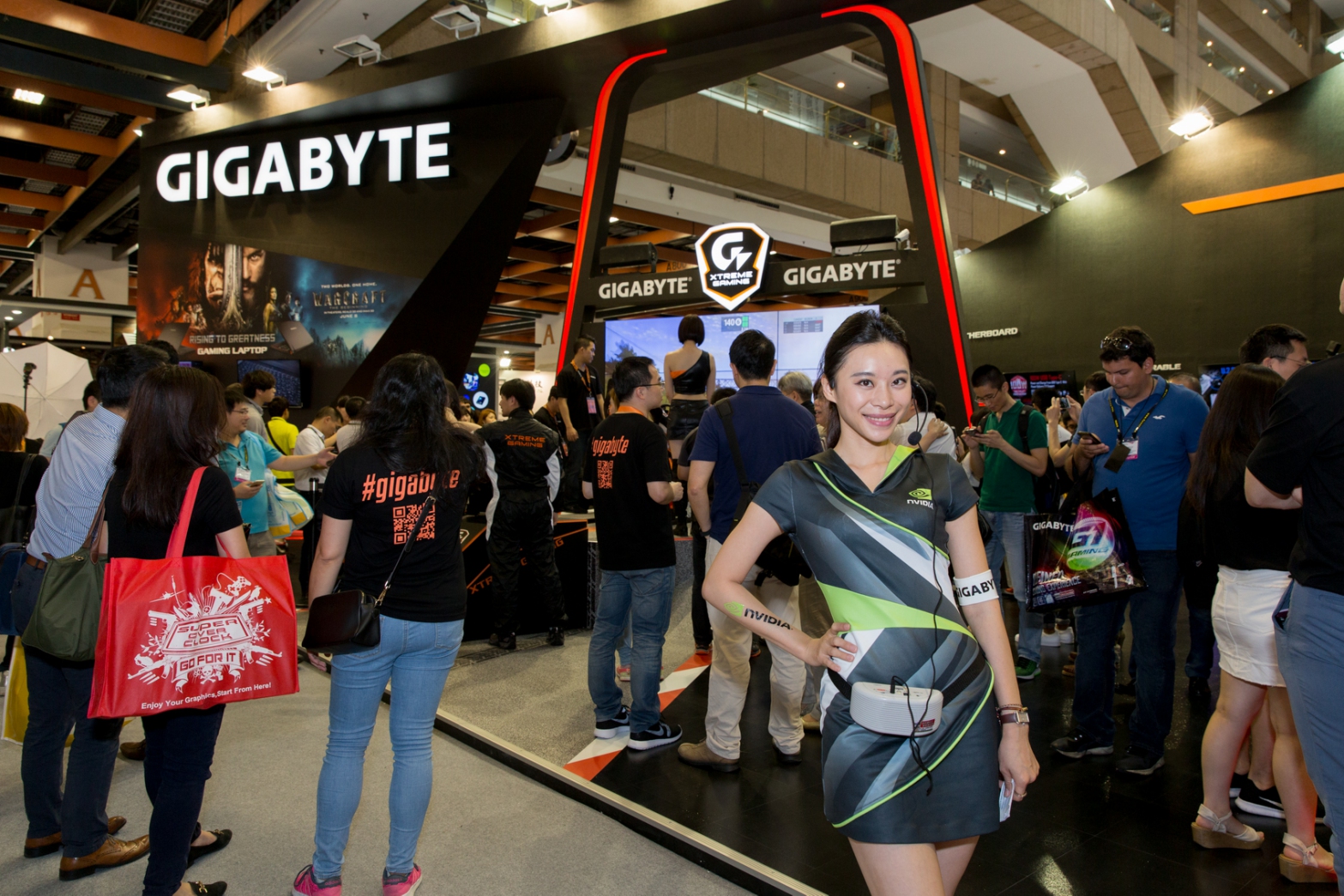
Computex 2026 kicked off today in Taipei, and if you’ve been following the rumors, you probably expected Nvidia to make a splash. What you might not have expected is just how much the ground is shifting underneath the entire PC industry in a single morning.
.jpg)
I’ve been building and tinkering with computers since I was a teenager in the Philippines — back when “future-proofing” meant buying a motherboard you hoped would last two years. So trust me when I say: what happened at Computex today changes the trajectory of personal computing in ways we haven’t seen since Apple dropped the M1.
The Big One: Nvidia RTX Spark Brings Team Green to Consumer PCs
Nvidia is no longer just the company that makes your graphics card. Starting this fall, Nvidia officially becomes a consumer PC chipmaker — putting a complete computing chip, not just graphics silicon, into the heart of laptops and mini-PCs. The chip is called RTX Spark, and Nvidia isn’t being subtle about its ambitions.
“This is the most efficient PC chip ever built,” said Nvidia senior director Mark Aevermann during the Computex keynote. Bold claim, no charts to back it up — but the specs tell their own story. The flagship RTX Spark packs 20 CPU cores, 6,144 GPU cores, and 128GB of LPDDR5X memory into a single package. That’s the same GB10 silicon that powered last year’s DGX Spark “personal AI supercomputer,” but now reimagined for the laptop on your desk.
What does that mean in practice? Nvidia says you can render a 90GB 3D scene, edit 12K video, or play Indiana Jones and the Great Circle at 100fps on 1440p — all on a 14mm-thin laptop running on battery. If those numbers hold up in real-world testing, Intel and AMD have a serious problem on their hands.
The RTX Spark isn’t just one chip, either. Nvidia confirmed a whole family is coming, with entry-level variants sporting as little as 16GB of RAM. “RTX Spark is going to attack a lot of different price points,” Aevermann promised. Eight laptops are already confirmed for this fall — including machines from Asus, Dell, HP, Lenovo, MSI, and Microsoft — with over 30 laptops and 10+ desktops in the pipeline.
Microsoft Surface Laptop Ultra: The First RTX Spark Flagship
Microsoft wasn’t about to let Nvidia have all the fun. The company unveiled the Surface Laptop Ultra, a 15-inch machine built around the RTX Spark chip that Surface boss Andrew Hill called “the most powerful thing we’ve ever made.”
Details are thin — Microsoft hasn’t shared final specs or pricing — but the Ultra packs up to 1 petaflop of AI compute and promises all-day battery life with roughly RTX 5070 laptop-level graphics performance. It’s a full-circle moment for Microsoft, which famously bet on Nvidia’s ARM chips for the original Surface RT back in 2012 — a $900 million write-off that became a cautionary tale. Thirteen years later, they’re trying again. This time, the technology might actually be ready.
The port selection looks solid for an ultraportable, and the shadowy teaser render suggests Microsoft is going for something sleek. But the real story here isn’t the hardware — it’s the partnership. Microsoft and Nvidia working together on Windows-on-ARM signals that Qualcomm’s exclusive license for the ARM variant of Windows 11 has finally ended. Competition is finally arriving.
AMD’s Counterpunch: “Our Old Tech Is Still Better Than Your New Tech”
While Nvidia was busy announcing the future, AMD took the stage with a surprisingly humble message: you don’t need to buy a new motherboard. The company committed to supporting its AM5 desktop socket through 2029, meaning anyone who bought into the platform can keep upgrading their CPU until the end of the decade without swapping boards.
AMD also dropped three “new” products that are really just greatest hits. There’s the Ryzen 7 5800X3D “10th Anniversary Edition” at $349 — celebrating a decade of the AM4 platform — and a new Ryzen 7 7700X3D at $330, essentially a slightly dialed-down version of the beloved 7800X3D. On the GPU side, the RX 9070 GRE offers a more affordable entry into RDNA 4 graphics.
I’ll be honest: this isn’t the most exciting Computex showing from AMD. But it’s strategically smart. With RAM prices spiking and Nvidia pushing an entirely new platform, AMD is betting that PC builders will appreciate stability over novelty. “Keep your board, drop in a new chip” is a compelling pitch when building a whole new system costs a small fortune.
Dell XPS 13 Returns to Take On the MacBook Neo
Dell is bringing back the XPS 13 name — and this time it’s aimed squarely at students. The new XPS 13 launches in July with a promotional price of $599, exactly matching Apple’s MacBook Neo. It’s Dell’s thinnest and lightest XPS ever at 0.5 inches thick and just 2.2 pounds.
The catch? The entry-level model ships with an Intel Core 5 “Wildcat Lake” chip, 512GB of storage, and just 8GB of RAM. That’s tight for 2026, even at this price point. Higher-end configurations with Intel Panther Lake chips and up to 32GB of RAM will arrive later, but the base model feels like Dell is cutting corners to hit that $599 number. Students can actually get the MacBook Neo for $100 less — so Dell needs to prove the XPS 13 experience is worth the premium. It reminds me of the same calculus I went through when choosing my Galaxy Z Fold 7 — sometimes the cheaper option isn’t the better deal in the long run.
What This All Means: The Windows-on-ARM Moment Has Finally Arrived
Step back from the individual announcements and a bigger picture emerges. For years, Windows on ARM was a punchline — great battery life, terrible app compatibility, zero reason to buy one over an x86 laptop. Apple’s M-series chips proved ARM could be fast and efficient, but Windows users were stuck watching from the sidelines.
That changes now. Nvidia bringing its silicon expertise — the same engineering that powers data centers and AI training clusters — to consumer laptops means Windows on ARM finally has a chip that can compete on both performance and efficiency. Microsoft has spent years tuning Windows 11 and its Prism x86 emulator for ARM. And with Qualcomm’s exclusive license ending, we’re about to see a flood of ARM-based Windows machines from every major manufacturer.
Nvidia is also pushing a vision that goes beyond hardware: “a new personal computing paradigm where AI is the UX.” Their pitch is that RTX Spark’s 128GB of unified memory can host 120-billion-parameter AI models locally — meaning AI agents that run on your laptop, not in the cloud. Software developers could have AI autonomously monitor GitHub repos and fix bugs. Designers could generate 3D renders and videos with voice commands. Whether this vision pans out or becomes another overhyped AI promise remains to be seen, but the hardware capability is genuinely impressive. I’ve written before about how AI is already transforming software development, and having that power run locally — without API calls or privacy concerns — could accelerate the trend dramatically.
That said, the AI-in-everything narrative deserves some healthy skepticism. We’re already seeing Shadow AI surge 400% in workplaces, and putting even more AI capability on every laptop raises legitimate questions about security and governance. The same goes for the software supply chain — as I discovered when auditing our dependencies and finding 47 vulnerabilities, more complexity often means more risk. Local AI is promising, but it’s not a magic wand.
As someone who writes code for a living and manages IT infrastructure, I’m watching this space carefully. A laptop that can run large language models locally — without burning through API tokens or sending data to someone else’s server — that’s a real step toward practical, private AI. The kind of edge processing that makes projects like my AI water meter reader running entirely on-device possible at a whole new scale.
Computex 2026 runs all week, and we’re only on day one. Intel still has its keynote coming up, and there are bound to be more surprises. But the message from Taipei is already clear: the PC industry just got a lot more interesting, and the ARM laptop you actually want to buy might finally be around the corner.