
It’s not every day you hear a CEO quote Star Trek IV during a product roadmap presentation. But then again, Jensen Huang isn’t your typical CEO.
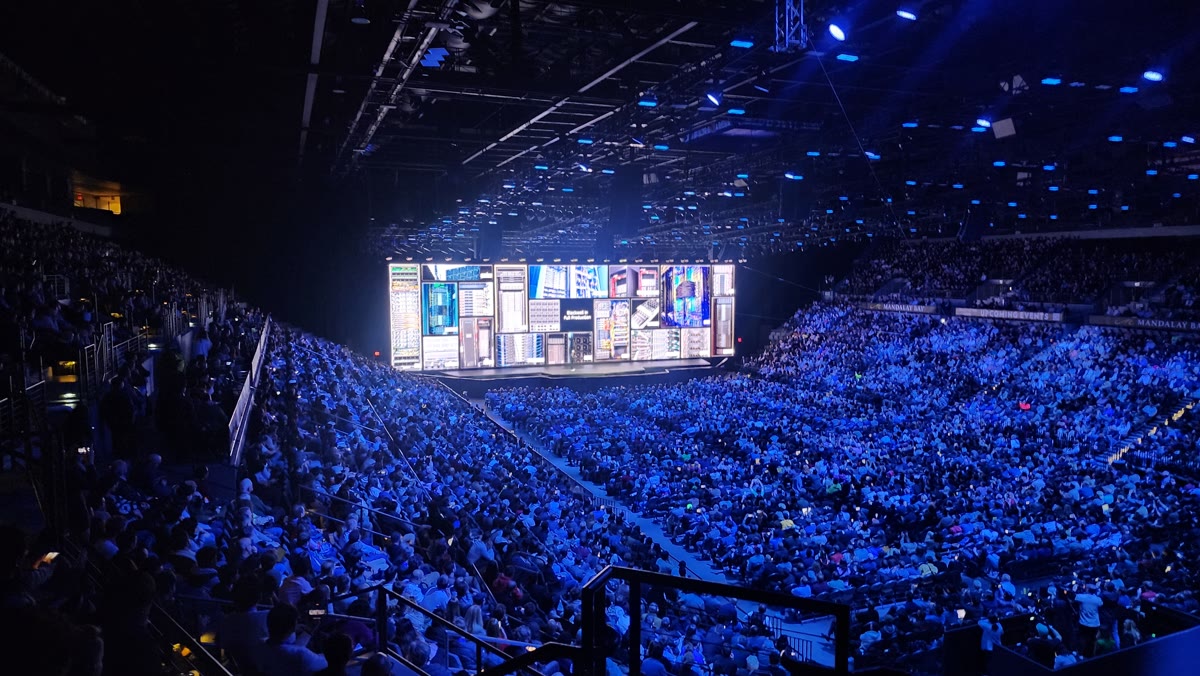
At Computex 2026 in Taipei this week, Nvidia’s co-founder and chief executive took the stage — and promptly started talking about Scotty, R2-D2, and a future where you text your laptop like it’s a personal assistant. Behind the colorful references, though, lies something far more substantial: a multi-generational chip roadmap that could reshape how we think about personal computing.

Let me break down what Nvidia announced, why it matters, and what it means for developers and tech enthusiasts here in the Philippines.
RTX Spark Is Just the Beginning
Earlier this week, Nvidia officially entered the PC chip market with RTX Spark — a new line of processors that combine CPU, GPU, and dedicated AI acceleration into a single package. Think Apple’s M-series approach, but with Nvidia’s decades of GPU and AI expertise baked in. The first laptops with RTX Spark, including Microsoft’s Surface Laptop Ultra, were among the big reveals at Computex 2026, which I covered in my Computex roundup earlier this week.
But here’s the part that got my attention. Speaking to analysts and journalists at Computex, Huang confirmed that RTX Spark is not a one-off experiment. N2X and N3X are already in the pipeline.
According to The Verge’s Sean Hollister, who was on the ground in Taipei, Huang told reporters: “N2X and N3X are already planned, and N1X is called N1X because it has a smaller version called N1. We’re going to expand our family. We’re going to extend this architecture for a very long time.”
That’s a long-term commitment, and it signals that Nvidia is serious about becoming the fifth major player in the consumer laptop chip space — alongside Apple, Intel, AMD, and Qualcomm.
The Star Trek Computer Vision
Huang’s vision for where this is all heading is ambitiously simple: he wants a computer you can talk to like a person. Not a chatbot in a browser window. Your actual machine.
“I want to talk to my laptop! I want R2-D2!” he told the audience, recounting how he started working with Microsoft CEO Satya Nadella on this vision about three years ago.
He painted a picture that’s both futuristic and surprisingly relatable for anyone who’s ever wished their computer could just handle it:
If I want to talk with my laptop today, I gotta wait until I get back to my room. In the future, if I need my laptop to do something, I just text it with WhatsApp. I say ‘R2-D2, there’s this thing with the PowerPoint slide, slide number 17, that image is scaled or titled wrong. It should not say CX9, it should say CX10.’ R2-D2 opens up PowerPoint, modifies it, puts it in PDF, sends it to me.
Huang also dismissed the idea that cloud-based AI could replace local computing. When asked whether we’d rely on services like Claude in the cloud, his response was blunt: “What, am I going to call Claude to control my laptop? Are you insane?”
His argument is practical. Running AI locally is free after you own the hardware. “Why rent a television? Why rent a washer dryer? Why rent a refrigerator? Why rent an assistant computer? You’re going to use it every day.”
What the Hardware Can Actually Do
Let’s set the vision aside and talk specs — because the RTX Spark hardware is genuinely impressive.
The first-generation Spark chip packs up to 128GB of unified memory, which Nvidia says is enough to run AI models with up to 120 billion parameters entirely on-device. To put that in perspective: that’s large enough to run Meta’s Llama 3 70B or a heavily quantized GPT-4-class model with no internet connection.
Scalability is also part of the plan. While the flagship SKU comes with 128GB, Huang confirmed the architecture will scale down to as little as 16GB for more affordable configurations. That means we’ll likely see RTX Spark in everything from premium workstations to reasonably priced laptops over time.
Microsoft also unveiled the Surface RTX Spark Dev Box, a desktop workstation aimed at AI developers who need local compute power for model training and fine-tuning without relying on cloud GPU instances.
But all this power comes at a cost. When an analyst noted that first-gen RTX Spark laptops would likely be “$3,000 or something on that order of magnitude,” Huang nodded along, repeatedly saying “yep.” Early adopters will pay a premium.
A New Battleground in PC Chips
Nvidia’s entry into the laptop CPU market isn’t happening in a vacuum. It builds on years of work on the Grace line of server CPUs, the TensorRT inference stack, and the company’s experience building AI hardware for data centers.
The timing matters. Apple proved with its M-series that tightly integrated, custom silicon delivers real advantages in performance and efficiency. Qualcomm is making gains with Snapdragon X Elite. Intel and AMD are racing to add AI accelerators to their chips. Nvidia’s bet is that AI compute will become the defining feature of personal computers, and that its decade-long head start in AI hardware gives it a decisive advantage.
What This Means for Filipino Developers
For developers in the Philippines, this is more relevant than it might seem. One of the biggest barriers to building with AI locally is the cost and reliability of cloud compute. GPU instances on AWS or GCP are expensive, and our internet infrastructure — while improving — isn’t always consistent enough for a smooth cloud-native workflow. A laptop that can run 120-billion-parameter models locally changes that equation entirely.
Imagine fine-tuning a model, testing an AI agent, or prototyping a local RAG pipeline during your commute — no internet connection required. That’s the promise of RTX Spark and its successors.
I’m coming at this from experience. When I built that AI water meter reader a few weeks back, the hardest part was optimizing the model for limited hardware. With a chip that handles 120-billion-parameter models on-device, those trade-offs largely disappear. You prototype with the full model and optimize for deployment later.
For enterprise IT — government agencies, BPOs, tech companies looking to deploy AI without sending sensitive data to the cloud — local AI compute is a security and compliance win. And for game developers and 3D artists, having Nvidia’s GPU architecture and AI cores in a laptop means you can run complex simulations and real-time ray tracing without a desktop workstation.
The Bigger Picture
There are still unanswered questions. Can Nvidia deliver on the software ecosystem needed to make “talking to your laptop” actually work? Microsoft’s Windows AI platform is still finding its footing, and the experience depends as much on software as hardware.
Can Nvidia compete on price? At $3,000+, the first generation is firmly in early-adopter territory. But if the N1 and N1X variants deliver meaningful performance at lower price points, the conversation changes.
Committing to N2X and N3X this early means Nvidia is betting big on consumer AI compute being a long-term market, not a passing trend. Given what we’ve seen this year — Google’s $85B AI raise, Anthropic’s IPO filing, the explosion of local AI models — that bet looks pretty safe.
Bottom Line
RTX Spark at Computex was impressive. The confirmation that N2X and N3X are already planned makes it genuinely significant. We’re watching the early stages of what could be a fundamental shift — from passive tools we interact with through screens, to active assistants that understand intent and natural language.
For Filipino developers, this means keeping a close eye on the RTX Spark ecosystem. The first generation may be expensive and aimed at early adopters, but the trajectory is clear: local AI compute is becoming a standard feature, not a luxury. And that opens doors that were firmly closed just a year ago.