
Last week, I asked ChatGPT to remind me of a character’s name from a movie I watched years ago. It answered confidently. I nodded, moved on, and only later realized it was completely wrong. The name it gave wasn’t even close. But at that moment, I didn’t question it. I just accepted it.
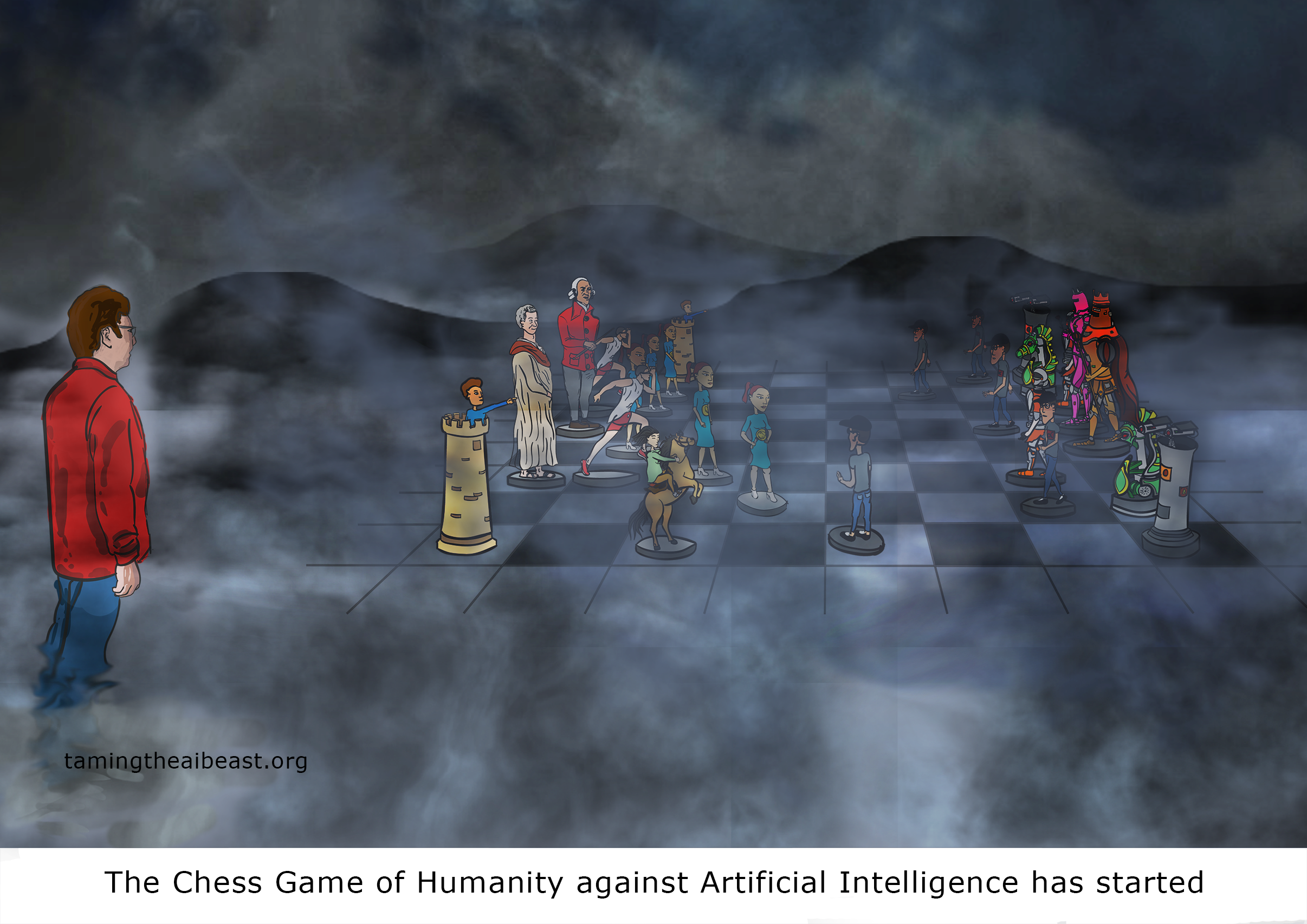

That feeling — the quiet surrender of your own judgment to a machine that sounds sure of itself — now has a name and a frightening set of numbers behind it.
The Study That Should Make Every AI User Pause
Researchers from three European universities — the University of Milano-Bicocca, École Normale Supérieure, and Sapienza University of Rome — published a study this month that lays out the data in stark terms. They set up a simple experiment: give people difficult trivia questions about visual details in films, and see how access to AI advice changes their answers.
They deliberately chose a model that was usually wrong on these questions. The point wasn’t to test whether AI helps. It was to test what happens to human judgment when the safety net has holes.
The Numbers
The results landed like a punch.
Without AI, 44% of participants were willing to say “I don’t know.” With AI advice available, that number collapsed to 3%. People went from honestly admitting uncertainty to confidently repeating a machine’s error.
Accuracy followed the same trajectory. It dropped from 27% to 9% — meaning some participants who would have given the right answer on their own consulted the AI and ended up wrong.
And here’s the part that keeps me up at night: confidence went up. From 30% to 76%. People became three times less accurate but more than twice as sure of themselves.
Lead researcher Valerio Capraro put it plainly in an interview with The Register: “People became much worse — the accuracy was only one third — but they were twice as confident.”
Cognitive Surrender: A New Term for an Old Problem
This study builds on earlier work from Wharton researchers Steven Shaw and Gideon Nave, who coined the term cognitive surrender to describe the moment when AI doesn’t just assist a decision — it replaces it. Their research found that people accepted incorrect AI answers 80% of the time while reporting higher confidence than those who worked without AI.
The new study adds a sharper point: it’s not just that people trust wrong AI answers. It’s that the mere availability of AI advice suppresses the cognitive habit of recognizing what you don’t know. The machine doesn’t just give you an answer. It trains you not to ask whether the answer is right.
This reminds me of something I wrote about a few weeks back — the idea that AI’s capabilities and its failure modes are two sides of the same coin. The same tools that can analyze thousands of lines of code in seconds can also produce confident-sounding nonsense that we’re psychologically unprepared to question.
Why Developers Should Care
You might be thinking: “Film trivia? Who cares if AI gets that wrong?” Fair point. But the same mechanism applies to code, documentation, architecture decisions, and debugging advice. If you’ve ever accepted a code change suggested by an AI assistant without fully understanding it, you’ve experienced a milder version of the same phenomenon.
I’ve done it. You’ve probably done it too. The AI suggests a function, it looks reasonable, you tab to accept, and three hours later you’re wondering why the production build broke. That’s cognitive surrender in action.
The question isn’t whether AI tools are useful — they clearly are. The question is whether we’re building the mental muscles to check their output, or letting those muscles atrophy because the answers come so easily.
This is connected to a bigger trend I’ve been tracking. As the recent spate of security warnings around AI coding tools shows, the risks aren’t just about accuracy — they’re about trust. When you can’t tell whether an AI-generated code change is introducing a vulnerability, you’re not delegating. You’re gambling.
Money Didn’t Help Much
The researchers also tried offering monetary incentives for correct answers. It helped a little — willingness to admit ignorance rose from 3% to 8%. Accuracy climbed from 9% to 16%. But both figures stayed well below the no-AI baseline of 44% and 27%.
Even when people had a direct financial stake in being right, they still deferred to the AI. That tells me this isn’t a laziness problem. It’s a design problem. AI tools are built to answer, never to express doubt. The interface itself shapes how we interact with it.
The Education Angle
Capraro is particularly concerned about children, who are growing up with these systems before developing critical thinking skills. Common Sense Media recently called Google’s AI search overhaul — which replaced traditional links with confident AI-generated summaries — an “unacceptable risk” for students.
This is where the discussion needs to move beyond individual responsibility. When a generation of students grows up asking an AI for answers instead of learning how to find them, the implications go far beyond developer productivity. It affects how we reason, how we disagree, how we verify.
As I discussed in a piece on AI regulation earlier this month, the industry is waking up to the need for standards. Maybe what we need isn’t just rules about what AI can do, but a deeper conversation about how it changes the way we think.
What Can We Do About It?
I don’t have a neat answer, but I have some thoughts based on my own experience as a developer who uses AI tools daily.
First, build friction into your workflow. The easiest way to fall into cognitive surrender is to accept AI output without friction. I’ve started making myself explain why an AI suggestion is correct before I accept it. It takes two extra seconds, and it catches mistakes surprisingly often.
Second, treat AI as a junior developer, not an oracle. Would you accept a code change from a junior dev without reviewing it? Hopefully not. Apply the same standard to AI output. The confidence with which it speaks has no correlation with its accuracy.
Third, practice saying “I don’t know.” It sounds silly, but it matters. The study shows that the mere presence of AI makes us avoid admitting ignorance. Push back against that instinct. Acknowledge uncertainty. It’s the first step to actually resolving it.
I touched on this theme before in a post about Satya Nadella’s warning that companies are feeding their secrets to future competitors. The problem isn’t just technical — it’s behavioral. We’re not just losing data. We’re losing the habit of independent thought.
Bottom Line
AI tools are extraordinary. I use them every day and I’m not about to stop. But this study is a wake-up call that the real bottleneck in the AI revolution isn’t the technology — it’s us. Our tendency to trust confident-sounding machines is a vulnerability that no amount of model improvement will fix.
The best defense against cognitive surrender isn’t better AI. It’s better thinking.