
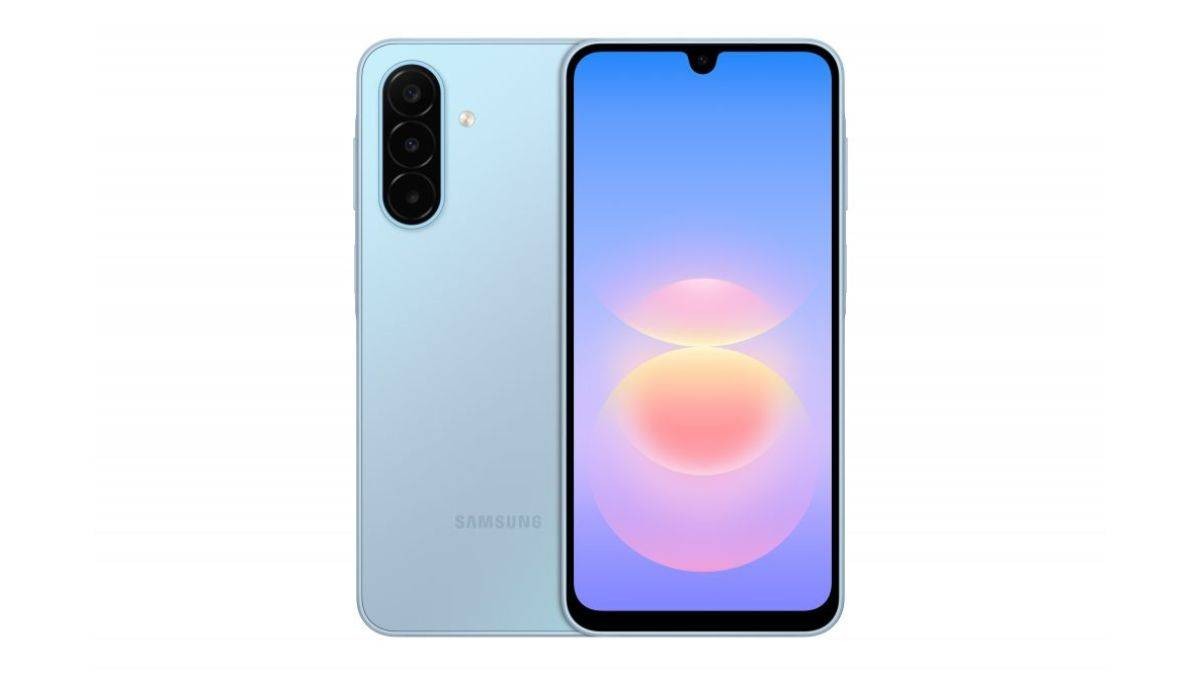
Samsung Galaxy A18 4G Review: Six Years of Updates, But 4G in 2026?
Samsung just dropped the Galaxy A18 4G in Europe, and on paper it looks like the kind of budget phone that should fly off shelves. A 6.7-inch Super AMOLED display, a 50-megapixel main camera, and a software promise that outlasts most flagship phones — six major Android upgrades and six years of security patches, taking this thing into the 2030s. That is genuinely remarkable for a phone retailing at €279.
But there is a catch, and it is a big one: this is a 4G phone. In 2026. When the Galaxy A17 4G it replaces launched at around €200, the extra €80 bought you a new chipset and that incredible update commitment. Whether that trade-off makes sense depends entirely on who you are.
I have spent the past week digging into the specs, comparing it against the A17 and the broader budget segment, and talking through the numbers with the kind of scrutiny a budget phone deserves. Here is what the Galaxy A18 4G actually brings to the table.
Design & Build Quality
The Galaxy A18 4G follows Samsung’s familiar budget-aesthetic formula: a glass front, plastic back, and plastic frame, wrapped in a 196-gram body that feels solid if not premium. At 7.7mm thick, it is slightly chunkier than the A17, but not enough to notice in a pocket. The build is plain, functional, and forgettable — which, for a budget phone, is not necessarily a bad thing.
Three colours are available at launch: Black, Gray, and Light Blue. The Light Blue variant is the one that stands out — a soft, casual tone that works well for a phone aimed at younger buyers and first-time smartphone upgraders. The other two are safe choices that disappear into a bag or desk drawer.
Samsung rates the A18 4G at IP64 — dust-tight and protected against water splashes. That is decent for the price bracket but a step down from the IP67 or IP68 you find on flagship phones. You can use it in light rain and survive an accidental spill, but do not take it swimming. The side-mounted fingerprint sensor is responsive enough for daily use;Face unlock is not offered on this model.
One thing you will notice immediately: there is no 3.5mm headphone jack. This is increasingly standard in Samsung’s A-series, but for a budget phone targeting price-conscious buyers, it remains a frustrating omission. You will need USB-C headphones or a dongle.
Display
The 6.7-inch Super AMOLED panel is the A18 4G’s strongest visual feature. Samsung’s AMOLED technology delivers the deep blacks and vibrant colours you would expect, and at FHD+ resolution (1080 x 2340 pixels), text looks sharp and videos look clean. The 19.5:9 aspect ratio is a bit narrow by modern standards — competing budget phones from Xiaomi and Realme are pushing 20:9 or wider — but it is fine for everyday use.
The refresh rate is 90Hz. That is smooth enough for scrolling, social media, and video playback, but it is behind the 120Hz panels that have become common in this price range. Xiaomi’s Redmi Note series and Realme’s Number series have been offering 120Hz for months, and Samsung holding back at 90Hz on the A18 4G feels like a cost decision — likely to differentiate the A-series from Galaxy S26 FE and Fold lineup. If you are sensitive to screen smoothness, this is worth considering.
Brightness is adequate for indoor and shaded outdoor use. The notch at the top of the display is a design holdover that feels dated — most competitors have moved to punch-hole cameras or under-display sensors. It is not a dealbreaker, but it does make the A18 4G look like last year’s phone, which, in a way, it partly is.
The display is protected by Corning Gorilla Glass 3. That is a meaningful downgrade from the Gorilla Glass Victus found on some competing budget phones, and it is worth flagging: GG3 has been around since 2017 and offers basic scratch and drop protection, but it is not the level of glass protection you would want on a phone you plan to use for six years without a case.
Performance
Under the hood, the Galaxy A18 4G is powered by Samsung’s Exynos 1610 chipset — a custom Samsung silicon that uses an octa-core architecture with two 2.4 GHz Cortex-A7X performance cores and six 2.0 GHz Cortex-A55 efficiency cores. This is not a powerhouse. It is a mid-range chip designed for everyday tasks: social media, messaging, web browsing, video streaming, and light gaming.
The 4GB of RAM is the base configuration across all storage tiers (64GB, 128GB, and 256GB). That is tight by 2026 standards. Heavy multitasking — keeping Instagram, Chrome with multiple tabs, and a music app open simultaneously — will push the limits of 4GB. Samsung does include a microSDXC slot (using the shared SIM tray) that supports up to 2TB of expansion, which softens the storage limitation considerably. The 128GB tier is the sweet spot at launch: enough for most users without relying on a memory card.
For gaming, the Exynos 1610 handles casual titles like Candy Crush, PUBG Mobile at lower settings, and roguelikes without stuttering. Anything more demanding — Genshin Impact, Call of Duty Mobile at high settings — will struggle. This is not a gaming phone, and Samsung is not positioning it as one.
The bigger performance story is actually the software. Running Android 17 with One UI 9 out of the box, the A18 4G is one of the few budget phones that launches with the latest software from day one. Samsung’s One UI 9 brings the full suite of Galaxy features — Samsung Knox security, DeX desktop mode (limited on A-series), and integration with the broader Samsung ecosystem. The Gemini AI assistant and Google’s Circle to Search are supported, which brings some of the AI features that have become table stakes in 2026.
The six-year OS and security update commitment is the headline feature here, and it is genuinely impressive. No other phone in this price bracket comes close to that kind of longevity promise. The Galaxy A08, Samsung Galaxy A08, the budget sibling reviewed recently on Bleuken, offers a similar battery-first pitch but does not make the same software longevity claim — the A18 4G’s update promise is what sets it apart from the sub-€250 crowd.
Camera
The Galaxy A18 4G carries a triple rear camera setup that is virtually identical to the A17’s: a 50-megapixel main sensor (f/1.8, 1/2.76-inch, with OIS), a 5-megapixel ultrawide (f/2.2, 1/5.0-inch), and a 2-megapixel macro sensor. The 13-megapixel front camera (f/2.0, 1/3.1-inch) handles selfies and video calls.
The 50-megapixel main camera is the workhorse here. The f/1.8 aperture lets in a decent amount of light, and the optical image stabilization (OIS) helps with low-light shots and video stability. In daylight, the A18 4G produces sharp, colour-accurate photos that are perfectly fine for social media sharing. Samsung’s image processing tends toward warm, saturated tones — not the most natural-looking, but pleasing for most users.
The 5-megapixel ultrawide is serviceable for landscape shots and group photos where you need a wider field of view, but do not expect flagship-level ultrawide quality. The sensor is small (1/5.0-inch) and the f/2.2 aperture means low-light ultrawide shots will be noisy. The 2-megapixel macro sensor is largely a marketing addition — it is fine for extreme close-ups of textures and details, but most users will rarely reach for it.
Video recording is capped at 1080p at 30fps. No 4K video, no 60fps option. In 2026, this is a significant limitation — even budget phones from Xiaomi and Realme are offering 4K video capture. If you record a lot of video, the A18 4G will disappoint.
The 13-megapixel front camera takes decent selfies in good lighting. Low-light selfies will show the typical budget-phone noise and softness. There is no ultrawide front camera, no 4K front video, and no beauty-mode suite beyond what One UI 9 provides by default.
Battery & Charging
The 5,000mAh battery is a proven capacity that should comfortably get most users through a full day of moderate use. Samsung claims 50% charge in 30 minutes with the 25W wired charger — but the charger is not included in the box. You will need to buy a 25W (or higher) USB-C PD charger separately, which is an extra €15-25 depending on the brand.
There is no wireless charging on the A18 4G. For a phone that promises six years of use, the lack of wireless charging feels like a missed opportunity — it is a feature that becomes more valuable the longer you keep a phone, since wireless chargers are ubiquitous in cars, desks, and public spaces by 2026.
There is also no reverse charging, so you cannot use the A18 4G to top up wireless earbuds or another phone in a pinch. These omissions are typical for the budget segment, though phones like the Motorola Edge 70 Plus manage to include some.ww.bleuken.com/motorola-edge-70-plus-review-6500mah-battery-144hz-oled-misleading-name/” rel=”nofollow”>Motorola Edge 70 Plus manage to include some.
In real-world use, the Exynos 1610’s efficiency cores help keep power draw reasonable during light tasks. Social media scrolling, messaging, and video playback should all comfortably fit within a single charge. Heavy GPS use, gaming, or video recording will eat into the battery faster.
Software
Android 17 with One UI 9 is a polished, mature software experience. Samsung’s One UI is one of the most refined Android skins available, and on the A18 4G it brings a level of polish that rivals often miss at this price point. The interface is clean, customisable, and familiar to anyone who has used a Samsung phone before.
The six-year OS upgrade promise means this phone should receive Android updates through Android 23 — a remarkable commitment for a €279 phone. Six years of security patches on top of that means the A18 4G should stay secure and up-to-date well into the 2030s, assuming Samsung honours its promise (and the company has a strong track record on update delivery for its A-series).
One UI 9 includes Samsung’s DeX desktop mode, though its functionality on the A-series is more limited than on flagship phones. You get the core DeX experience — a desktop-like interface when connected to a monitor — but without some of the advanced multitasking and file-management features found on the S-series.
There is some Samsung bloatware as you would expect — the standard suite of Samsung apps, some of which are useful (Samsung Health, Samsung Pay) and some of which you may never open. The Google apps (Gmail, Maps, YouTube, Chrome) come pre-installed and are the versions you would expect. Overall, the software experience is clean enough for most users.
Pros and Cons
| Pros | Cons |
|---|---|
| Six years of OS updates + six years of security patches — unmatched in the budget segment | 4G-only connectivity in 2026; no 5G option at this price |
| 6.7-inch FHD+ Super AMOLED display with good colour accuracy and deep blacks | 90Hz refresh rate trails the 120Hz panels common in this price range |
| 50MP main camera with OIS delivers solid daylight and low-light photos | No 4K video recording — capped at 1080p/30fps |
| 5,000mAh battery with microSDXC expansion up to 2TB | 25W charging is slow by 2026 standards; charger not included |
| One UI 9 out of the box with Gemini and Circle to Search support | No wireless charging, no reverse charging |
| IP64 dust and splash resistance for a budget phone | Gorilla Glass 3 is a step down from Victus-class protection |
| Side-mounted fingerprint sensor is responsive and reliable | No 3.5mm headphone jack |
| Light Blue colourway is a nice option for younger buyers | Plastic build and dated notch design look uninspired |
Should You Buy This?
Buy it if:
- You want a Samsung phone that will stay updated and secure for years — the six-year commitment is the real selling point here, and it is rare at any price
- You are upgrading from an older budget phone (Galaxy A15 or A16) and want a bigger, brighter AMOLED screen with a better camera
- You primarily use your phone for social media, messaging, video streaming, and everyday tasks — the Exynos 1610 handles these without issue
- You are in Europe and can find the A18 4G at a discount below €250 — at that price, the update commitment alone makes it a compelling buy
- You value software longevity over raw specs — this phone is for the buyer who wants one device to last, not the spec-sheet comparer
Skip it if:
- You need 5G connectivity — the A18 4G is strictly a 4G phone, and Samsung sells a separate Galaxy A18 5G variant for markets where 5G matters — at a similar price to the Oppo A7 Pro
- You record a lot of video — 1080p/30fps is limiting in 2026, and competitors at this price offer 4K capture
- You want a 120Hz display — the 90Hz panel is smooth but not as smooth as what competing budget phones offer
- You are a gamer — the Exynos 1610 is not built for demanding games, and the 4GB of RAM will constrain multitasking
- You are in a market where the Galaxy A17 4G is still available at a significantly lower price — the A18’s hardware upgrades are modest enough that the price delta may not justify the move
- You want wireless charging, reverse charging, or a headphone jack — none of these are available
Final Verdict
The Samsung Galaxy A18 4G is a phone built around a single, compelling idea: that software longevity matters more than raw specs. Six years of OS updates and six years of security patches on a €279 budget phone is a genuinely impressive promise, and it is the kind of commitment that turns a budget purchase into a long-term investment. If you are the kind of person who keeps phones for three, four, five years or more, the A18 4G’s update pledge has real financial value — it means your phone stays secure and functional long after cheaper alternatives — like the vivo V80 Lite with its massive 10000mAh battery — have been abandoned by their manufacturers.
But the hardware underneath that software promise is, to be honest, modest. The Exynos 1610 is a capable but unremarkable chipset. The 90Hz display is smooth but not class-leading. The camera system is solid but not exciting. And the 4G-only connectivity in 2026 is a real limitation that will matter more as 5G coverage expands globally over the next few years.
The A18 4G makes the most sense as a longevity play: buy it, use it for four or five years, and let the update commitment do the heavy lifting. At a discounted price below €250, it is a smart buy. At the full €279 launch price, you are paying a premium for software longevity that you may want to consider against a slightly more spec-heavy competitor that offers 5G, 120Hz, and 4K video for the same money.
For Filipino readers eyeing this phone: Samsung has not announced official Philippines availability for the A18 4G yet. The phone launched first in France, Norway, and Sweden, and a global rollout is expected but unconfirmed. If and when it arrives in the Philippines, expect pricing around ₱16,000-17,000 for the 4GB/128GB variant based on the European €279 starting price — though import taxes and distributor markup could push that higher. Until an official Asia-Pacific announcement, the A18 4G remains a European-launch device, and buyers in other markets should verify local availability before getting their hopes up.