
Here’s a strange one. Oppo just launched the A7 Pro in China at the exact same price as its bigger brother, the A7 Pro Max, which I reviewed last month. But peek at the spec sheet and the A7 Pro gives back a lot of what the Max brings: a smaller battery, slower charging, and a weaker front camera. This is a review of a phone that seems priced to confuse.
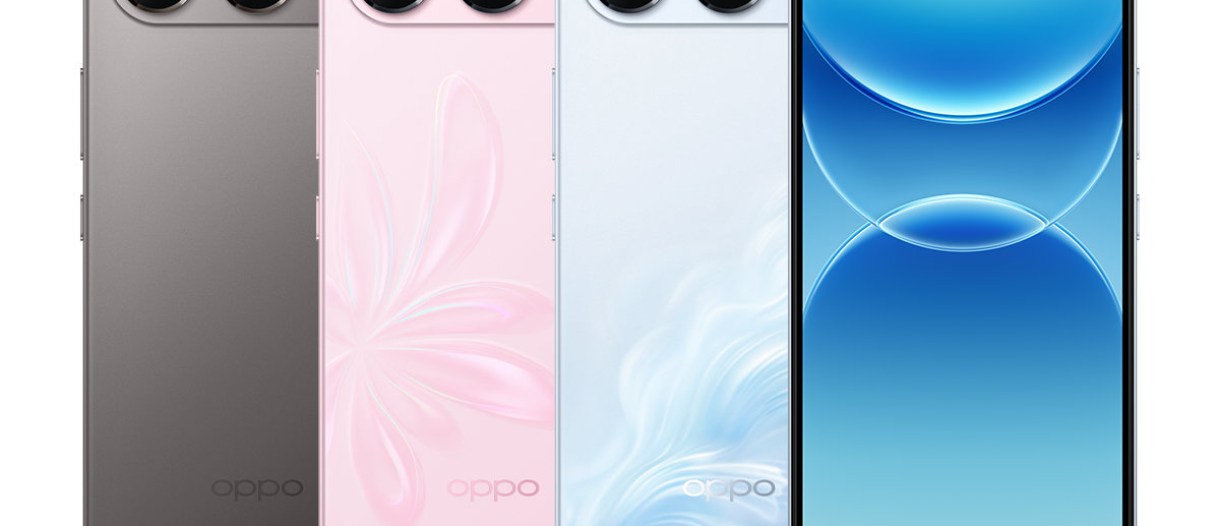
The A7 Pro is Oppo’s attempt to slot a second battery-focused phone just under the A7 Pro Max. It keeps most of the durability story — the full IP66, IP68, IP69, and IP69K ratings plus a drop-resistant build — while trimming some internals to hit its target. Sales begin in China on September 11. The question isn’t whether it’s a good phone; it’s why anyone would pick it over the Pro Max at the same money.
Design & Build Quality
At a glance the A7 Pro looks like a trimmed-down A7 Pro Max. It measures 159.08 x 75.81 x 8.8mm and weighs 205g, which is noticeably lighter than the 224-226g Max. That extra slimness comes partly from the smaller 6.57-inch screen, so the whole package feels easier to hold in one hand.
The build uses a glass front and a plastic frame and back — a reasonable trade at this price. Durability is genuinely strong: Oppo claims IP66, IP68, IP69, and IP69K dust and water resistance, plus drop resistance of up to 1.8 meters on the Tecno Camon 50 Ultra and other rugged rivals that got our attention earlier this year. The A7 Pro comes in Gray, Blue, and Pink. There’s an under-display optical fingerprint reader, a USB-C port, and an IR blaster. One thing missing: a 3.5mm headphone jack, which is becoming a recurring complaint on budget phones.
Display
The A7 Pro packs a 6.57-inch flat AMOLED panel with a 1080 x 2372 resolution and a 120Hz refresh rate. It supports a 240Hz touch sampling rate and 10-bit color, and reaches a peak brightness of 1,400 nits. That’s a solid, bright mid-range panel.
In practice, the flat screen is easier to protect with a tempered-glass screen protector than a curved panel, and the 120Hz refresh keeps scrolling feeling smooth. The 1,400-nit figure is the peak HBM number under bright conditions, not sustained full-screen brightness — the usual marketing caveat. Compared to the Pro Max’s larger 6.78-inch 1,800-nit curved display, this is a slightly smaller and dimmer screen, which matters if you spend a lot of time outdoors.
Performance
Under the hood sits the MediaTek Dimensity 6360 Max, an octa-core chip clocked up to 2.4GHz, paired with either 6GB or 8GB of LPDDR4X RAM and 256GB of UFS 2.2 storage. The GSMArena preliminary table lists a Snapdragon 4 Gen 5, but the official launch coverage and Oppo’s own spec both confirm the Dimensity 6360 Max — trust the official source.
This is firmly a mid-range chip. Day-to-day apps, messaging, browsing, and light multitasking all handle fine. Heavy 3D gaming will ask for compromises in quality settings, and the phone doesn’t have a dedicated cooling system like gaming-focused rivals. For context, it’s a similar tier to what powers the battery-first crowd we’ve been covering, like the Poco M8 Power.
Storage is the one area where the A7 Pro actually undercuts the Max. The Max uses UFS 3.1, while the A7 Pro uses slower UFS 2.2. Both are single-config 256GB, so there’s no 128GB base option to save money on — you get the 256GB everywhere.
Camera
The rear camera is a 50MP main sensor with an f/1.9 aperture, PDAF, and OIS, plus a small auxiliary lens for depth. There’s no ultrawide and no telephoto here — you’re working with one real camera and a helper. Video tops out at 1080p@30, so there’s no 4K recording, which is a noticeable cut for a 2026 phone.
The front camera is an 8MP shooter with an f/2.1 aperture. That’s a big downgrade from the A7 Pro Max’s 50MP selfie camera with autofocus — arguably the single most noticeable difference for casual users who care about front photos.
In good light, the 50MP main sensor with OIS should produce sharp, stable shots. Low light is where it’ll struggle, since there’s no big ultrawide to fall back on and the auxiliary lens doesn’t add reach or width. Don’t expect zoom or wide-angle flexibility.
Battery & Charging
The headline feature is an 8,000mAh silicon-carbon battery (rated 7,820mAh, typical 8,000mAh). Oppo claims the battery retains at least 80% capacity after 2,000 full charge cycles — a longer endurance rating than the A7 Pro Max’s 1,500-cycle claim. That’s aimed at people who keep a phone for years rather than upgrade yearly.
Charging is 45W SuperVOOC wired, plus support for 45W UFCS, 45W PPS, and 13.5W PD reverse wired charging. There’s no wireless charging. An 8,000mAh cell at 45W is going to take over an hour to fill from empty, which is slower than the iQOO Z11‘s faster 90W and well behind the A7 Pro Max’s 80W. The trade-off is that the bigger cell plus si/c chemistry should give genuinely two-day endurance for typical use.
This is where the A7 Pro’s pricing gets awkward. The A7 Pro Max, at the same CNY 2,199 starting point, offers a 10,000mAh battery and 80W charging. The A7 Pro drops to 8,000mAh and 45W. You’re paying the same money for a smaller battery and slower charge, even if the Pro’s longer cycle-life claim is a real longevity perk.
Software
The A7 Pro runs ColorOS 16 based on Android 16 out of the box. Oppo’s update commitment at this tier isn’t as clearly advertised as Samsung’s longer windows, so treat the years of OS and security updates as unconfirmed until Oppo states it. For a budget phone people keep for years, that’s a real consideration — rivals like the Realme 16x promise two years of OS updates, while the Galaxy F70 Pro offered six.
Bluetooth also sees the usual regional variance: the official coverage lists Bluetooth 5.1 while some outlets note 5.4 with LDAC and aptX HD support. Check the specific regional unit before buying.
Pros and Cons
| Pros | Cons |
|---|---|
| 8,000mAh battery with a 2,000-cycle longevity claim | Same CNY 2,199 price as the A7 Pro Max, which has a bigger battery |
| Full IP66/IP68/IP69/IP69K durability | 45W charging is slower than the Pro Max’s 80W |
| Light 205g frame and flat, easy-to-protect AMOLED | No ultrawide or telephoto camera |
| 120Hz 10-bit display with 1,400-nit peak brightness | 8MP front camera is a big downgrade from the Max’s 50MP |
| 256GB storage standard on both configurations | 1080p-only video, no 4K recording |
| IR blaster and NFC | No 3.5mm headphone jack |
| Charge-cycle longevity good for long-term owners | Update commitment unconfirmed |
Should You Buy This?
Buy it if
- You want a durable, two-day battery phone and plan to keep it for years — the 2,000-cycle claim is the real selling point.
- You prefer a lighter, flatter phone that’s easier to hold and protect than the heavier Pro Max.
- A 50MP main camera with OIS is all you need and you don’t care about ultrawide or telephoto.
- You’re already inside the Oppo/colorOS ecosystem and want a mid-range workhorse.
Skip it if
- The A7 Pro Max is available where you shop — at the same price, it’s simply more phone.
- You need an ultrawide lens or any meaningful zoom.
- You want fast charging; at 45W on an 8,000mAh cell, top-ups are slow.
- You take a lot of selfies — the 8MP front camera is a clear step back.
Philippines Availability
Oppo hasn’t announced Philippine availability for the A7 Pro yet. It’s launching in China first at CNY 2,199 (about $327) for the 6GB model and CNY 2,499 (about $372) for 8GB. Once it reaches gray-market channels locally, expect importing and warranty caveats to apply, and keep an eye on local network compatibility — the phone supports 5G, but check that the PH carrier bands line up with your unit’s configuration.
If Oppo brings it officially to the Philippines, the pricing story will matter. Gray-market prices in the earlier battery-first crop have landed around the same money as the more capable A7 Pro Max, so shop around before deciding.
Final Verdict
The Oppo A7 Pro is a genuinely well-built, durable, long-battery mid-ranger. Taken on its own, the 8,000mAh cell with a 2,000-cycle endurance rating, the flat 120Hz AMOLED, and the full IP69K dust and water protection make a compelling case for anyone who wants a phone that shrugs off rough use and lasts a long time.
The problem is the price tag. When the A7 Pro launched, it cost the same as the A7 Pro Max, which gives you a 2,000mAh bigger battery, 80W instead of 45W charging, a sharper 6.78-inch display, and a much better 50MP front camera. Unless you specifically value the lighter, flatter body or the longer battery-cycle claim, the Max is the better buy at every price point.
So who is the A7 Pro actually for? Someone who wants Oppo’s durability and a genuinely long-lasting battery, who doesn’t care about ultrawide cameras or fast charging, and who values keeping a phone for years over getting maximum specs for the money. If that sounds like you, it’s a fine, honest mid-ranger — just double-check the Pro Max’s price in your market before you hit checkout.