
My main work machine is a 2021 MacBook Pro — the 16-inch one with the M1 Pro chip. I bought it in early 2022, before the M2 generation. It is the best laptop I have ever owned. The battery still lasts a full workday, the screen is genuinely great, and the only thing that has ever gone wrong is a key that started double-typing last year.
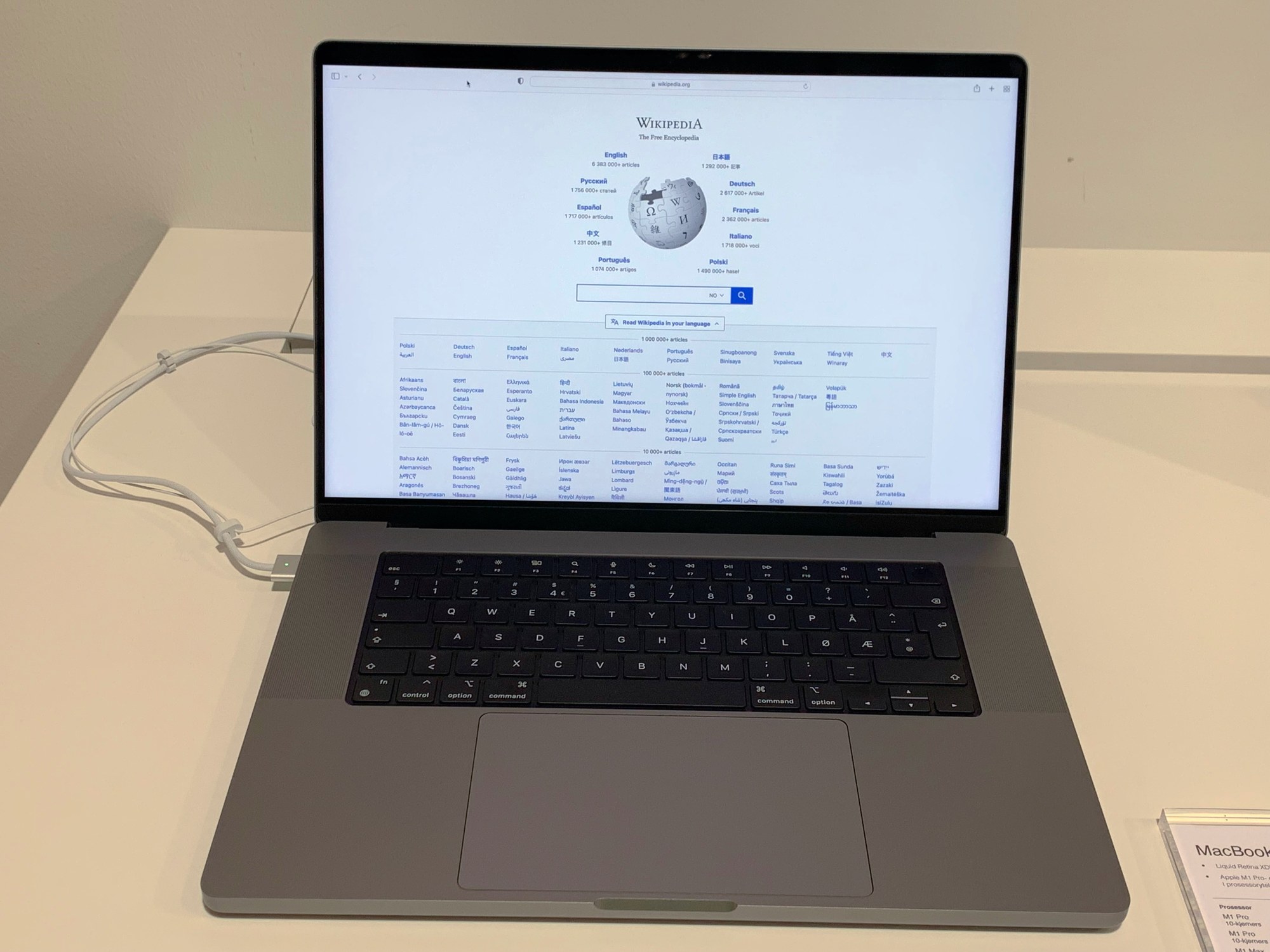

Which is why I have been in no hurry to replace it. And now, on October 28, Apple is about to announce a new MacBook Pro with an OLED touchscreen — its first touchscreen Mac — at a price that reportedly runs up to $500 above today’s models.
Here is the part that is genuinely interesting: the global PC market just shrank 21% year over year in the third quarter, to 57 million units, according to Counterpoint Research. Every major brand shipped less. Apple’s shipments fell 11%, which was one of the better numbers in the industry. And the reason for the collapse is not AI laptops or a lack of new features. It is memory. DRAM and NAND prices have been climbing so hard that PC makers are raising prices, and buyers are simply walking away.
So Apple is going to launch a more expensive, more complex laptop into the worst PC market in years. I have been thinking about that decision all week, and I have a real opinion on it.
What is actually landing on October 28
The event is called “Pro and tell,” and it is not a traditional keynote. Apple sent invitations to a media experience in Los Angeles on Wednesday, October 28 at 10 a.m. Pacific, with hands-on time afterwards; everyone else gets a press release. That alone tells you something about the scale of the thing.
The product itself is well documented at this point. Bloomberg’s Mark Gurman reported that Apple will unveil 14-inch and 16-inch MacBook Pro models with touch-enabled OLED displays, and MacRumors, Macworld, and The Verge all line up with the same outline:
- Touch-enabled OLED displays on both sizes, replacing the mini-LED Liquid Retina XDR panel.
- A Dynamic Island instead of the notch — the same treatment the iPhone got years ago.
- Less weight. The chassis looks similar to the current models but lighter.
- M5 Pro and M5 Max chips — the same silicon introduced in March, not a new M6.
- A higher price. Current M5 Pro and M5 Max models start at $2,499 for the 14-inch and $2,999 for the 16-inch in the U.S.; the new ones could start up to $500 higher.
macOS Golden Gate — macOS 27 — gets what Gurman calls a “dynamic interface.” The system tracks whether you have been touching the display or using the trackpad and presents controls accordingly. Touching a button can pop a menu around your finger, and the Dock and Menu Bar have been rebuilt for touch.
The older mini-LED MacBook Pro models stay in the lineup for now and will eventually be discontinued.
The touchscreen argument, honestly
Let me start with the criticism, because it is the loudest one and it deserves an answer.
Apple has said for over a decade that putting a touchscreen on a laptop was a bad idea. The classic argument is ergonomics: you reach forward to poke a vertical screen, your arm tires, and you end up smudging the display. On an iPad that works because the screen is close and flat. On a laptop it is a stretch.
That argument was true in 2012. It is much weaker in 2026, and here is the part the critics miss: this is not a conversion. Apple is not turning the MacBook Pro into a tablet. The keyboard and trackpad stay primary. Touch is a third input method you use when it makes sense — nudging a slider, tapping a checkbox in a long form, dragging a timeline in a video editor.
The Lenovo Yoga 9n is the best counterexample to the anti-touch crowd. The Verge’s Antonio Di Benedetto, writing about that machine after testing Nvidia’s RTX Spark platform on it, argued that the 2-in-1 form is the most fun Windows laptop he has used — and that the stylus, which works on both the screen and the trackpad, is what sells it for photo retouching.
If Apple brings Apple Pencil support to the MacBook Pro, and if the Pencil attaches and charges on the lid the way it does on the iPad Pro, that is a real workflow gain for anyone who edits photos or marks up documents. I retouch images for this site. I would use that.
Microsoft has been running touch-first Windows laptops for years, and the interesting case is the Surface Laptop Studio, which brought the touchscreen forward instead of flipping it backwards — the idea I covered when I wrote about the Surface Laptop Ultra and Windows 11 26H2. Apple is not doing the convertible. But it does not have to. The clamshell works if the software meets your finger halfway.
Where I do side with the skeptics: a touchscreen on a clamshell is not the same as a tablet. The screen does not fold back, and you cannot hold it like a slate. If your mental model of a “touch laptop” is a Surface-style convertible, this is not that, and you should not buy it expecting one.
The part nobody wants to talk about: the market just collapsed
Now the uncomfortable context.
Counterpoint Research released preliminary data on October 22 showing global PC shipments down 21% year over year in Q3 2026, to 57 million units, and down 13.8% quarter over quarter. Lenovo shipped 15 million units and still fell 23%. HP fell 31%. Dell fell 25%.
The cause is not a lack of good products. It is component cost. Memory makers have shifted capacity toward high-bandwidth memory for AI servers, which leaves less DRAM and NAND for consumer devices. TrendForce reported that conventional DRAM contract prices rose roughly 60% quarter over quarter in the second quarter, and while the pace of increase is cooling, AI demand keeps the supply constrained.
PC makers have started passing the cost on. Digital Trends reported that ASUS plans laptop price increases of 15% to 25%, Acer has flagged 10% to 20% on some models, and Dell and Lenovo already raised prices on higher-end commercial notebooks. Apple raised its M5 MacBook Pro pricing too — $200 more for the M5 Pro and $400 more for the M5 Max.
This is the environment Apple is walking into with an OLED touchscreen model that will cost more than the mini-LED model it replaces. I do not think Apple cares. Apple’s shipments were down 11% year over year while its market share rose to 9.8%, helped by steady demand for the MacBook Neo. That is a company trading volume for margin, and it has earned the right to try.
But it matters to you, the buyer. A $500 price increase on a machine that already starts at $2,999 is not a rounding error. And the memory pressure is not going away soon — Micron’s CEO has said tight DRAM and NAND conditions will persist through and beyond 2026.
My advice: four rules for the next six months
If you need a laptop now, buy the current mini-LED MacBook Pro. It is going to be discontinued eventually, which means Apple will discount it or carry it as the value option. The M5 Pro is still an excellent chip. You lose OLED and touch, and you gain a machine that will be cheaper relative to the new one.
If you are a video or photo pro and you want the touchscreen, wait for reviews, not the announcement. October 28 is a press release and a hands-on session for invited media. Shipping may not start until around November 6. Wait for real battery tests on the OLED panel, real thermal tests, and — most important — real reports on whether the touch gestures actually help or are a gimmick.
If you are a developer or a writer, this is probably not for you. I write, I run code, I manage servers. None of that is better on a touchscreen. The argument for this machine is visual and creative work, not text and terminals. If your daily driver is an editor and a browser, the touchscreen is a tax you will pay for a feature you use twice a month. Platform risk is a better thing to worry about — I wrote about Chrome removing XSLT support and what it breaks for older web applications, which is the kind of thing that quietly costs you more than a new screen.
If you are buying a laptop in the Philippines, watch the memory-driven price moves before you watch Apple. The global PC market is contracting because prices are climbing across the board, not just at Apple. A mid-range Windows machine you were eyeing may jump in price before the end of the year. Counterpoint expects Q4 shipments to fall another 27%. That is not a market that rewards waiting forever — but it does reward buying when you actually need the machine, rather than chasing a launch.
Where I actually stand
I have been honest on this site about the gap between what the industry promises and what the numbers show. The PHP2Shell episode is the clearest recent example of infrastructure getting exposed faster than anyone patched it, and my HomeView review was the same story in miniature — hardware that was easy to like, software that was not ready. The same skepticism applies here. A touchscreen MacBook Pro is not a revolution. It is a very Apple refinement: a better screen, a lighter body, a new input method layered on top of a keyboard that was already the best in the industry.
I will be watching October 28 with real interest, because the question is not whether the hardware is good. It is whether Apple can make touch on macOS feel like a native part of the system rather than a layer bolted on to a mouse-driven interface. macOS Golden Gate is the part that matters, and it is the part nobody outside Apple has seen yet.
If you are in the Apple ecosystem and trying to decide between a new Mac and the new foldable, my iPhone Duo review covers Apple’s first folding device, and it is the same argument in a different shape: excellent hardware, a premium price, and a feature set that is more conservative than the headline suggests.
My 2021 machine is not dead. It still does everything I need. So I am not buying one on launch day — and honestly, that is the review. If a laptop can hold up for four years in 2026, you do not need to upgrade just because a new one is prettier. You upgrade when the machine in front of you stops doing the job.