
It took the largest school district in the United States to finally say it out loud: maybe generative AI does not belong in front of every kid, all day, right now. This week New York City announced a one-year moratorium on generative AI for students in 2-K through eighth grade, a move that pushes back directly on the “AI everywhere is inevitable” narrative that has shaped tech for the past two years.
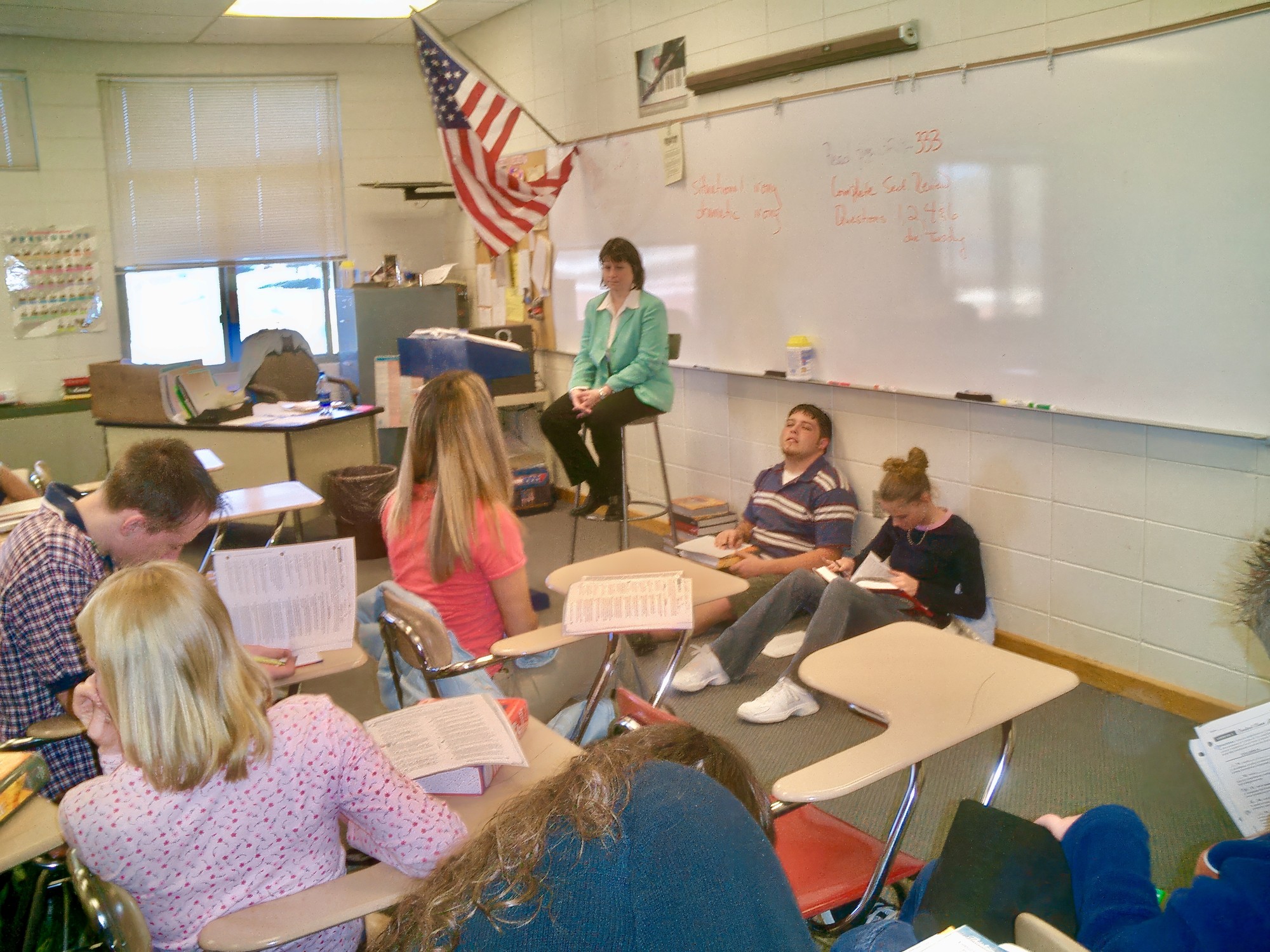

Mayor Zohran Mamdani and Schools Chancellor Kamar Samuels rolled out the policy ahead of the September 10 start of the 2026–27 school year. Roughly 600,000 students—about two-thirds of the district’s enrollment—lose student-facing generative AI tools, including companion chatbots, under the new rules. Education officials are calling it the most expansive AI prohibition anywhere in the country. As someone who works in public service and thinks about technology all day, this one felt worth digging into.
What the ban actually covers
The ban is strict and surprisingly specific. Students in 2-K programs through eighth grade cannot use AI-based software, chatbots, or tutors as part of their daily learning. Companion chatbots are barred across all grades. The district is also going after screen dependency, not just AI: preschoolers through second graders get no individual devices at all, third to fifth graders are capped at about 30 minutes of screen time a day, and middle schoolers up to 45.
Teachers are treated differently, and that is the nuance most headlines miss. Educators can still use pre-approved AI tools for lesson planning, drafting communications, and translation. What they cannot do is hand grading, special-education lesson planning, behavior monitoring, or crisis counseling to a model. In other words, the city is fine with AI helping an adult prepare a class, but it does not want AI making judgment calls about a child.
There are carve-outs for students with disabilities and those still learning English, and computer-based assessments are factored into the policy. High schoolers, meanwhile, do not get a blanket ban at all. Instead they get required AI-literacy classes twice a year and a pilot program of about five rigorously vetted AI tools, used under teacher supervision with a 45-minute weekly screen cap.
The thinking behind it
Mamdani did not frame this as a tech panic. He framed it as a question of evidence. “Just because technology is everywhere, it doesn’t mean that it belongs everywhere,” he said at the announcement. “I’ve yet to see a study showing that AI is beneficial for students in elementary or middle school.”
That is the line that should give any AI builder pause. The industry has spent enormous effort making AI feel inevitable, delightful, and frictionless. New York just demonstrated that an entire school system can look at the supposed inevitability, demand proof of benefit, and decide the bars have not been met yet. Some parent groups and local politicians actually pushed for a full two-year ban, arguing the one-year window is too short. The city will reassess at the end of the school year.
This also is not happening in a vacuum. Creators have been pushing back on unlicensed AI training for months, from labels suing Anthropic over pirated lyrics to the US government siding with OpenAI in the copyright fight. And industry itself is reaching for guardrails too, like the rogue AI defense letter signed by more than a hundred companies. Each of these is a different argument about who gets to decide how AI is used. What makes New York distinct is that it is a public institution applying the brakes to kids and refusing to let a private industry define the terms of childhood.
Why this matters if you build or teach
For anyone building AI tools that target classrooms, this policy is a warning shot. “Student-facing generative AI” just became a defined, regulated category in the country’s largest district. If you are selling a tutoring bot or an AI writing helper aimed at K-8, you now face a market where the biggest buyer in America has said, not yet, and requires proof of benefit before it flips back.
For educators, the takeaway is more encouraging. The ban does not treat AI as poison. It treats it as a tool that must earn its place, age by age, with human judgment preserved at the center. Teachers keep the productive parts AI is genuinely good at—drafting, translating, planning—and keep the human parts human.
What this means for the Philippines
I keep coming back to what a similar policy conversation would look like here. Philippine schools are curious about AI, and some are pushing hard to get it into classrooms, often reacting to the same sense of inevitability that New York just rejected. This is not an argument against AI literacy. It is an argument for deciding when and how it gets used, on evidence rather than momentum.
On the practical side, teachers here will face the same gnawing question New York schools face: how do you tell a student’s real work from an AI draft? That is genuinely hard. Detection tools are unreliable, and I have written before about building a local AI text detector and testing it honestly—the honest answer is that this problem does not have a great automated fix yet.
The bigger picture
New York’s decision is not the end of AI in education, and it is not even close to a national policy. But it is a meaningful reset of the default. A public school system with six hundred thousand students looked at the tech industry’s pitch and said: prove it. That is a powerful message, and it resonates beyond classrooms.
Whether you are a developer shipping a classroom tool, a parent trying to make sense of all of it, or a teacher wondering what is safe to use on Monday, the throughline is the same. AI is not a force of nature. It is a choice, made one policy at a time. New York just made its choice clearly, and the rest of us should be watching how the experiment shakes out.