
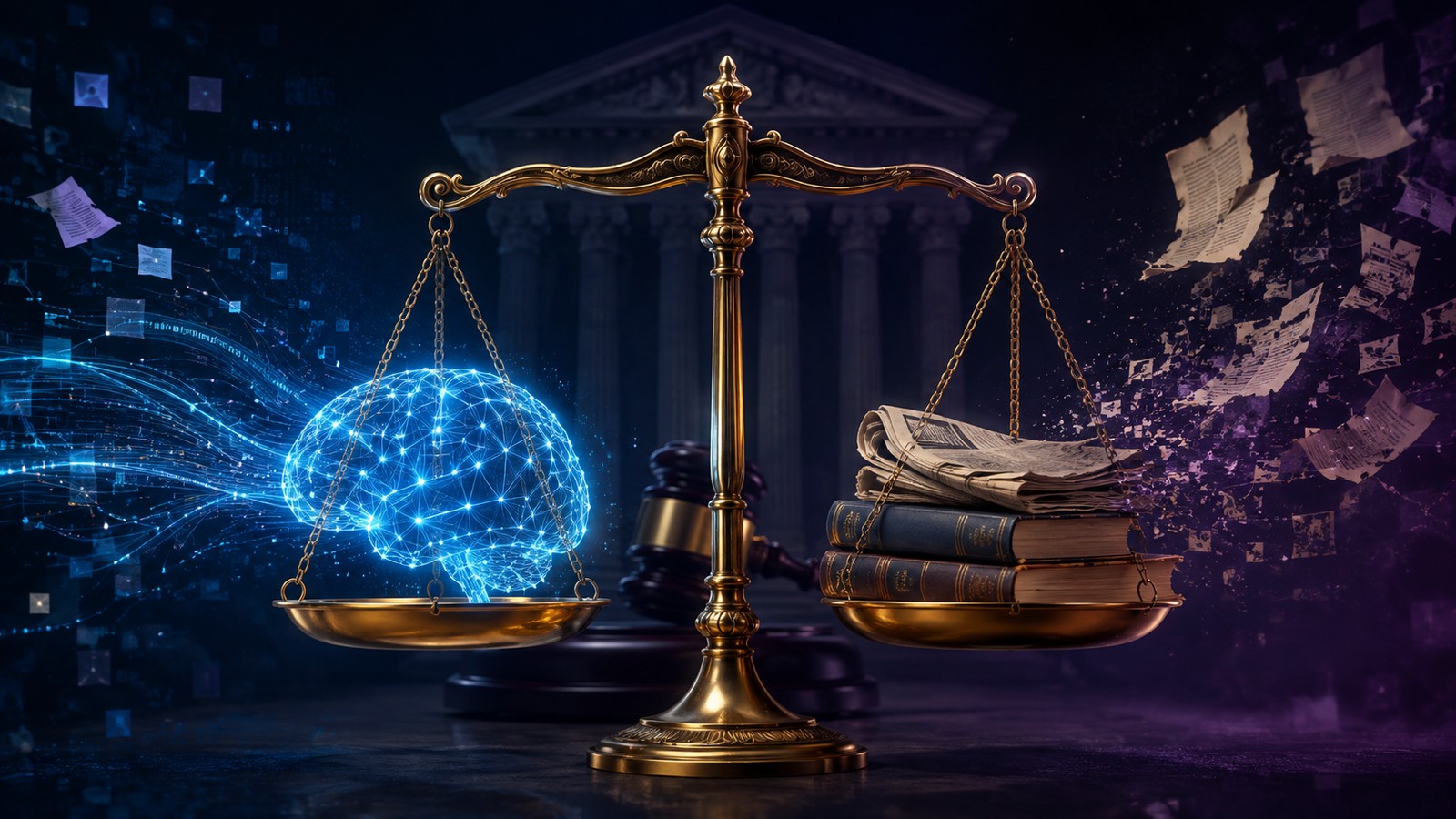
Earlier this week, the United States government walked into one of the most closely watched copyright cases in the AI era and picked a side. In the long-running fight between The New York Times and OpenAI, the Justice Department filed a statement of interest arguing that training a large language model on copyrighted work is fair use. That single filing tells you a lot about how the government views AI right now — and about how far apart the two sides of this debate really are.
What the government actually did
Let’s set the scene. The Times sued OpenAI and Microsoft back in December 2023, claiming the companies trained ChatGPT on millions of copyrighted articles without permission and seeking billions of dollars in damages. The case has been grinding through the U.S. District Court for the Southern District of New York ever since.
This week, the administration weighed in with a roughly 20-page brief backing OpenAI’s position. It’s not a ruling — the federal government has no jurisdiction over a private dispute in SDNY — but it’s loaded with policy signal. “The United States has a strong interest in continuing to develop a robust and competitive artificial intelligence industry that sets the standard for the practice and procedure of AI use globally,” the brief reads, citing an executive order the president signed last year over the push to “retain global leadership in artificial intelligence.”
The argument goes further than competitiveness. The department wrote that “the creative possibilities and public benefits” of training on large troves of text “far outweigh any competitive harm,” and folded in a national-security angle unusually direct for a copyright filing: models that help officials analyze and draw inferences from the real-world facts and information carried in news reporting.
The fair-use question at the heart of it
None of this is news for anyone who has followed the fair-use debate. Copyright law carves out exceptions for using someone else’s work without permission, and the whole argument here turns on one word: whether AI training is “transformative” enough to qualify. The government thinks it is. “Constraining LLM development under a misunderstanding of fair use doctrine would thwart such creative and scientific progress,” the DOJ wrote, “while hindering American prosperity and economic mobility.”
There’s a helpful precedent sitting right next to this case. In a landmark 2025 decision, a judge found Anthropic could lawfully train its models on books it had bought legitimately — comparing training to a human reading, not copying. But the same ruling held the lab liable for piracy, because part of its training data had come from illegal shadow libraries. The result was a $1.5 billion settlement. That’s the line the courts keep drawing: training on legally obtained content is largely fine; the moment you cross into pirated sources, everything changes.
Why publishers are pushing back
The Times sees things differently, and it pushed back hard. “The administration is siding with a handful of trillion-dollar AI companies at the expense of the countless American creators whose work they stole,” the paper said this week. Its spokesperson put the stakes plainly: “Both AI and creators can thrive — AI companies simply need to pay fairly for the content that makes their products possible, as copyright law requires.”
The complaint is about more than principles. The Times argues ChatGPT can directly compete with its journalism and swallow subscription, licensing, and ad revenue — a fear that got sharper when Google started auto-expanding AI Overviews and burying the search links that used to send readers to articles. And the Times isn’t alone. Publishers including the Chicago Tribune and New York Daily News have joined the fight, authors like Sarah Silverman have sued over their books, nearly 400 news organizations went after OpenAI and Microsoft in a separate case, and the music world is in on it too, from Sony and Warner Chappell suing Anthropic over pirated lyrics to studios and unions in Hollywood.
What this means for developers and creators
If you build software on top of large models, this case is quietly deciding the ground beneath your feet. For a long time the industry assumed broadly-available training data was a solved legal problem. It isn’t — and the honest takeaway from the Anthropic ruling is that how the data was obtained matters as much as the doctrine. Shadow libraries and pirated sources are where liability lives, even when fair use otherwise favors the model. Where your foundation data came from is a real supply-chain question now, not an abstract one.
For anyone who publishes content online, the same fight is about who gets paid for the writing that feeds these systems. Conferences like Twitch’s messy default to train on everyone’s streams keep hammering the same point: consent and compensation for training data are the unresolved tension of the moment. With roughly a third of new web pages now showing signs of AI authorship, the line between human-made and machine-made content — and who owns each layer — is only getting blurrier.
My take
As someone who writes and publishes for a living, I have complicated feelings about the government picking a side here. The national-security framing rings true — AI capability is a genuine strategic asset — but it’s an uncomfortably convenient rationale for letting companies take creative work without paying for it. The two positions aren’t as incompatible as the courtroom drama makes them seem. The market already senses it: dozens of outlets, from the AP to Vox Media, have quietly signed licensing deals with OpenAI.
Chess taught me that the strongest move in the middle game is usually the one that keeps the most options open. That’s what this dispute is really about — whether AI companies keep unfettered access to the internet’s human writing, or pay for it, or lose it. The government’s filing doesn’t end the game. But it just shifted the board, and anyone building or publishing around AI should be paying attention to where the next move lands.