
Suzuki’s first fully electric production model arrives at PHP 2.02M — a practical EV for Philippine roads.

Suzuki Takes the EV Plunge
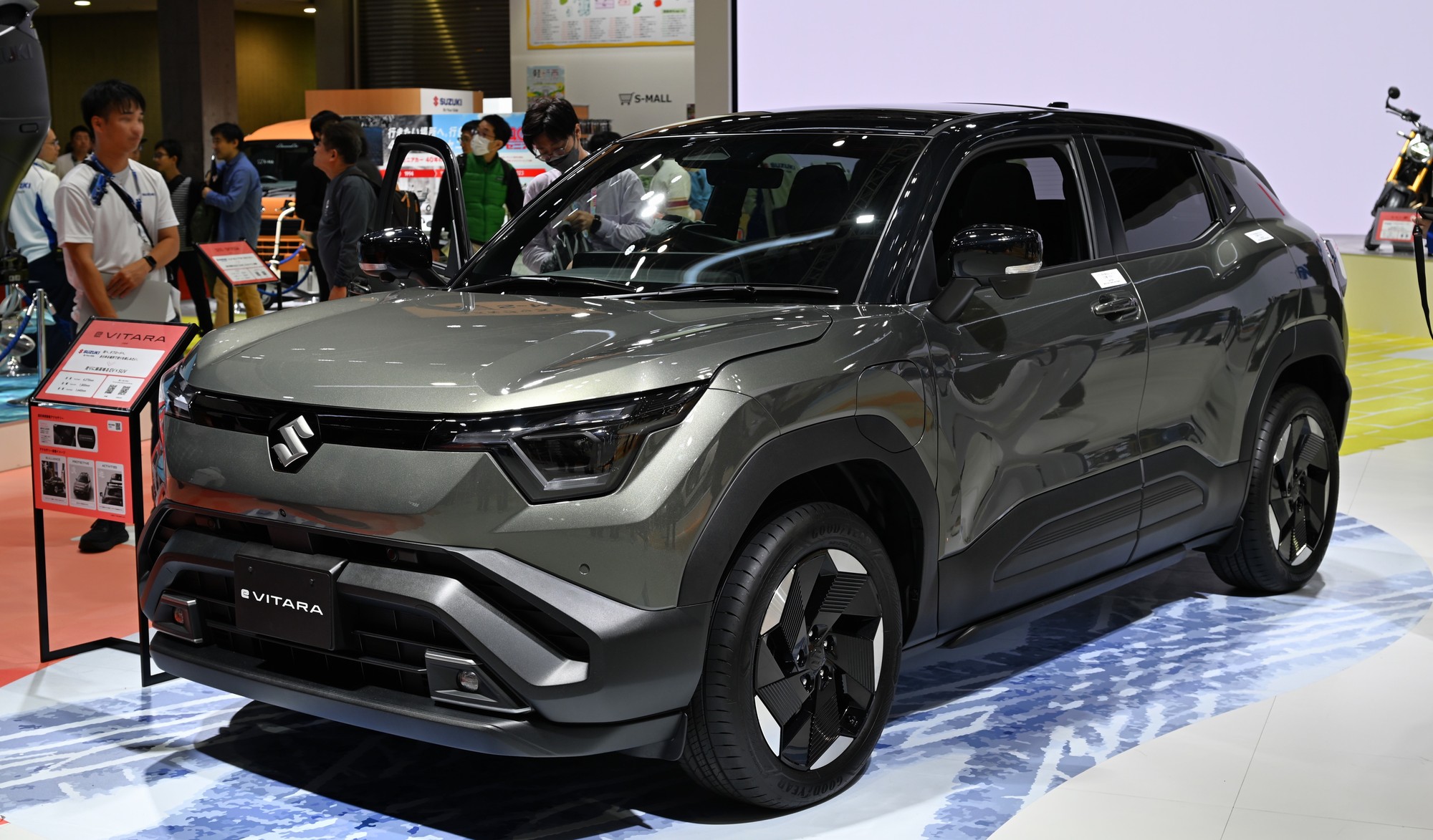
After months of teasers and speculation, Suzuki Philippines finally pulled the wraps off the all-new e-Vitara at the 2026 Philippine International Motor Show (PIMS). It marks a bold new chapter for the brand — Suzuki’s first fully production-ready global electric vehicle.
As Suzuki Philippines Director and General Manager for the Automobile Division Norihide Takei said during the official reveal: “Today, we take a monumental leap forward into a bold new chapter. The All-New e-VITARA reflects Suzuki’s commitment to delivering advanced mobility solutions that inspire confidence, excitement, and practicality for today’s generation of drivers.”
The e-Vitara isn’t a one-off experiment — it shares its bones with the Toyota Urban Cruiser EV, which launched here in March at PHP 2.135M. Suzuki prices the e-Vitara about a hundred thousand pesos below that twin, making it the more accessible pick of the pair while still sitting at the top of Suzuki’s local price stack.
Key Specifications
Unlike the dual-motor all-wheel-drive setups sold in other markets, the Philippine-spec e-Vitara comes in a single, front-wheel-drive GLX variant.
| Specification | 2026 Suzuki e-Vitara (GLX) |
|---|---|
| Price (PH) | PHP 2,020,000 (~$32,300 / ~₹30.6 lakh) |
| Motor | Single front axle electric motor, 174 PS (128 kW), 193 Nm |
| Battery | 61 kWh lithium iron phosphate (LFP), BYD Blade cells, liquid-cooled |
| Range | 475 km (DOE homologation data) |
| Efficiency | 87.22 km/Lge (~9.8 km/kWh, real-world AAP trial) |
| Charging | 7 kW AC (10-100% ~9 hrs); 70 kW DC (10-80% ~45 min); CCS2 / Type 2 |
| Platform | HEARTECT-e dedicated EV platform |
| Dimensions | 4,275 x 1,800 x 1,635 mm; 2,700 mm wheelbase |
| Ground clearance | 180 mm |
| Cargo | 238-310 L (rear seatbacks up) / 562 L (folded) |
| Turning radius | 5.2 m |
| Safety | Suzuki Safety Support, 7 airbags, all-wheel disc brakes, EPB with brake hold, DSBS II |
One thing to note: the DOE’s homologation range of 475 km is the headline figure, though LTO documents earlier listed up to 426 km. That difference is normal for how the two agencies report the same car — what matters most for buyers is that even the lower figure clears a week of Metro Manila commutes.
Design and Interior
Exterior design revolves around the concept of the “Metal Beast” — strong character lines, a unique coupe-like silhouette, and an advanced roof design optimized for aerodynamic flow. The front features three-point matrix LED lights complemented by a sculpted modern aesthetic at the rear.
Compared to the old Vitara, the e-Vitara sits lower and wider, giving it a more planted, upscale stance. The interior is a significant step up in premiumness:
- Wide dual-screen dash with a floating center console and rotary selector
- Polygon-shaped steering wheel that aids forward visibility
- Softer materials, ambient lighting, ventilated front seats
- 10-way power-adjustable driver’s seat
- Rear seats split 40:20:40 with sliding and reclining functionality
- Infinity sound system with 6 speakers and subwoofer
- Wireless Apple CarPlay and Android Auto via 10.1″ touchscreen
The platform is Suzuki’s new “HEARTECT-e” architecture, engineered for exceptional structural rigidity, maximized passenger space, and advanced high-voltage battery protection.
Practical Considerations for the Philippine Market
City Driving
The e-Vitara’s 475 km range is more than sufficient for daily city driving in Metro Manila and other Philippine cities. With an average daily commute of 20-30 km, a single weekly charge should be adequate for most users. The instant torque from the electric motor (193 Nm) is handy for Manila’s stop-and-go traffic.
Long-Distance Travel
For trips between major cities (e.g., Manila to Baguio ≈ 250 km), the 475 km range provides a comfortable margin. However, public fast-charging infrastructure outside Metro Manila is still developing. Plan routes with charging stops using apps like PlugShare, and note that charging speeds will vary by station. The 70 kW DC rate means a 10-80% top-up in about 45 minutes — practical enough for a coffee-break recharge.
Flooding and Weather
The e-Vitara’s battery pack has built-in safeguards including liquid cooling and voltage monitoring, making it suitable for the Philippine rainy season. However, as with any electric vehicle, avoid driving through deep flooded areas. The 180 mm ground clearance is on par with the compact crossover class, and the all-wheel disc brake system provides consistent stopping power even in wet conditions.
Heat Management
Philippine heat can affect EV range, as cabin cooling requires energy. The e-Vitara’s liquid-cooled LFP pack helps mitigate battery overheating, and LFP chemistry is inherently more thermally stable than NMC packs in hot climates — but expect slightly reduced range during peak summer afternoons when running the A/C continuously.
Comparing the EV Landscape in the Philippines
At PHP 2,020,000, the e-Vitara enters the premium compact EV segment. Here’s how it positions against key competitors:
- Toyota Urban Cruiser EV: ≈ PHP 2.135M — the e-Vitara’s “twin” under the skin, same 61 kWh pack and 174 PS motor, but with different branding and a larger price tag
- Nissan Micra EV: a compact electric hatch in the affordable city-car tier that I covered recently — a good comparison for range-per-peso
- BYD Great Seagull: a bigger, cheaper EV hatchback — strong value pick if you don’t need SUV height
- Hycan V09: a seven-seat electric MPV at P3.89M, two tiers higher for families who need space
It’s also worth remembering that the DOE list keeps growing — I noted the Isuzu N-Series EV joining as a DOE-listed electric truck, and the general pattern is clear: mainstream brands are bringing their first EVs here faster than the charging network can keep up.
The e-Vitara’s unique positioning as Suzuki’s first EV, combined with the brand’s reputation for reliability and the shared underpinnings with Toyota, makes it an interesting option for buyers who want electric without going too far outside their comfort zone.
Bottom Line
Suzuki Philippines announced the e-Vitara will soon be available nationwide. Final color lineup and full market specifications will be announced at a later date. Starting price: PHP 2,020,000.00.
If you’re shopping the premium compact electric crossover class and want Suzuki’s dependable badge with Toyota-grade underpinnings, the e-Vitara deserves a spot on your shortlist.