
Realme 16x 5G Review: A 7,000mAh Battery With Compromises That Show Up Everywhere Else
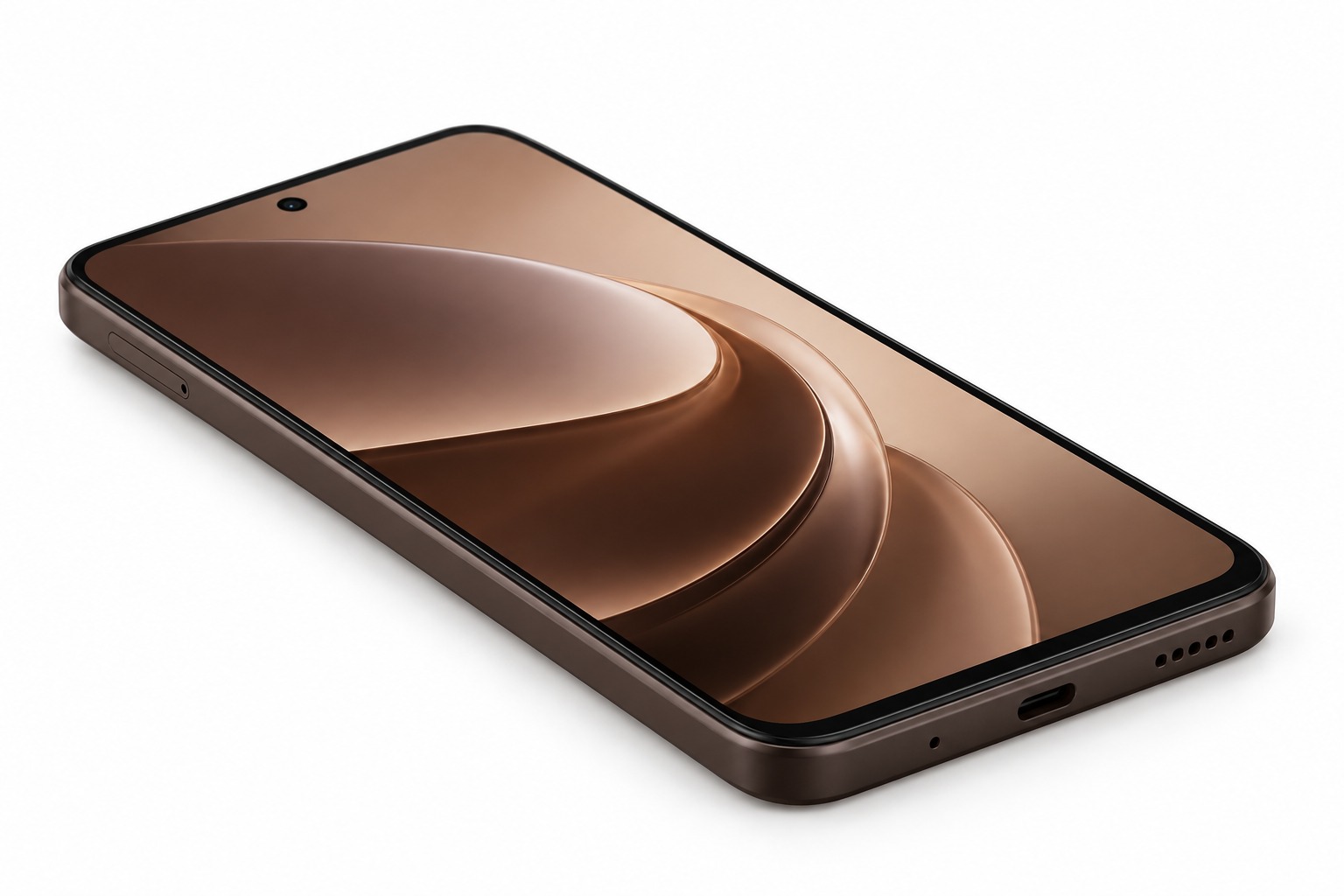
The Realme 16x 5G is the kind of phone that tells you everything you need to know in its first sentence: it has a 7,000mAh battery. That is a genuinely large cell for a sub-30,000 rupee phone, and it is the entire pitch. The Android 16 slab from Realme sells this from the moment you pick it up — at 217 grams and 8.8mm thick, it feels like a battery pack with a screen wrapped around it. I tested this on a bright afternoon in Roxas City, and the first thing you notice is the weight. It is not heavy in a dangerous way, but it is heavy in a “you will feel this in your pocket” way.
The good news is that the battery backs up the promise. Realme claims up to 3 days of usage, and while I would not bet my phone on that without independent testing, the capacity is real. The bad news is that just about everything else on this phone is a step sideways or backward from the phone Realme already sells in this segment. You are paying for endurance, and you are accepting trade-offs to get it.
Design & Build Quality
The Realme 16x is plastic through and through — glass front, plastic frame, plastic back. Nothing wrong with that at this price, and the 166.5 x 78.2 x 8.8mm footprint is reasonable for a phone carrying 7,000mAh. The 217g weight is the standout number here, a full 12 grams heavier than the realme 15x it replaces, and you feel it in the hand. The back has an RGB notification light on the rear, which is a nostalgic touch that looks more like a feature from 2018 than 2026.
Build quality gets a MIL-STD-810H drop certification and an IP65 rating. The MIL-STD claim is meaningful — drop resistance up to 1.8 meters is solid for a budget phone. But IP65 is a downgrade from the IP69 on the realme 15x, and that matters in a country where monsoon rain is a fact of life. IP65 handles low-pressure water jets. It does not handle high-pressure jets or immersion. If you drop this in a puddle during a typhoon, do not expect it to survive.
Colors are Endurance Brown and Glory White — both sensible, neither exciting. There is no headphone jack. At this price, that is increasingly standard, but it still stings when you are holding a phone that otherwise feels like it is aiming for the budget-conscious buyer who might still be using wired earphones.
Display
The 6.81-inch IPS LCD panel runs at 720 x 1570 pixels with a 144Hz refresh rate. The refresh rate is the headline — 144Hz is fast, faster than most phones at this price, and scrolling through feeds and menus feels smooth. But the resolution tells the real story: 720p on a 6.81-inch screen is 254 ppi. That is not sharp. Text looks soft. You notice pixel structure if you look for it. On a phone that costs 25,999 rupees, this is a compromise that is harder to excuse than the battery.
Brightness is listed at 975 nits typical and 1,200 nits HBM. That is enough for outdoor use in most conditions. I was able to read the screen comfortably in direct Philippine sunlight, though not with the same ease as the AMOLED panels on competing phones like the Samsung Galaxy A18 4G or the Lava Bold N4 Pro. The Panda-1681 glass protection is fine — it is not Gorilla Glass, but it is glass.
The 144Hz rate on an IPS LCD is a strange combination. You get the smoothness but not the contrast or blacks of an AMOLED. Dark mode looks grey, not black. Videos do not pop the way they do on OLED. For a phone pitching a big battery, you would think a big, rich display would be part of the package. Instead, you get a fast but flat-looking screen.
Performance
Under the hood is the MediaTek Dimensity 6300, a 6nm chipset with an octa-core layout (2×2.4 GHz Cortex-A76 + 6×2.0 GHz Cortex-A55) and a Mali-G57 MC2 GPU. This is a mid-range SoC in 2026 terms, and it shows. The 4GB and 6GB RAM options paired with 128GB or 256GB UFS 2.2 storage are adequate for everyday tasks — social media, messaging, light browsing, streaming video. Gaming is where the limits show. The Mali-G57 MC2 is not a gaming GPU, and the 720p screen is doing you a favour here by not demanding much from the GPU.
In daily use, the phone feels fine. Apps open, scrolling is smooth thanks to the 144Hz, and multitasking with a couple of apps open is acceptable. But heavy gaming — Genshin Impact at reasonable settings, sustained GPU loads — is not this phone’s territory. The Dimensity 6300 is a battery-efficiency chip, not a performance chip, and that is the trade-off. You get endurance, you give up power.
Storage is expandable via microSD (using the shared SIM slot), which is a welcome concession at this price. The 6GB RAM variant is the one to get — 4GB is too little for Android 16 in 2026 if you keep more than a couple of apps open.
Camera
The Realme 16x has a single 50MP main camera with an f/1.8 aperture and autofocus. No OIS. No ultrawide. No telephoto. The 8MP front camera handles selfies and video calls. This is a straightforward, no-frills camera setup, and the results reflect that.
The 50MP sensor is decent in good light. Daytime shots of landscapes, street scenes, and static subjects come out clean enough for social media. The f/1.8 aperture helps in lower light, but without OIS, low-light photos are where the phone struggles — motion blur creeps in, and the lack of optical stabilization means you need steady hands or a surface to rest the phone on. Video recording is 1080p at 30fps, which is standard. There is no 4K.
The 8MP front camera is the bigger compromise. This is a 2026 budget phone with an 8MP selfie shooter. The realme 15x had a 50MP front camera. That was a marketing point then, and its absence now is noticeable. Selfies are acceptable in good light, but they are not a reason to buy this phone. If camera quality matters to you, look elsewhere — the itel A300C at a lower price has a similar camera story, and phones like the Samsung Galaxy A08 offer a more complete camera experience for not much more money.
There is no ultrawide camera. That is increasingly unusual even in budget phones, and it limits what you can shoot. Landscapes, group photos in tight spaces, and architectural shots all lose out.
Battery & Charging
This is the section that matters for the Realme 16x. The 7,000mAh silicon-carbon battery is the phone’s reason for existing. In real-world use, the capacity delivers — a full day of heavy use is no problem, and stretching into a second day with moderate use is realistic. The 144Hz display and Dimensity 6300’s efficiency both help here. The 6nm process node is old enough to be power-efficient without being bleeding-edge, and that works in the phone’s favour for battery life.
Charging is 45W wired, with PPS support and 13.5W PD/QC. Realme claims a meaningful charge in a reasonable time, and 45W is not slow — it is just not as fast as the 60W on the realme 15x. A full charge takes around 90-100 minutes, which is fine overnight but not something you rush through at a cafe. There is 7W reverse wired charging, which is enough to top up an earbuds case or a secondary phone in an emergency, but do not expect to charge anything quickly.
There is no wireless charging. At this price, that is expected, but combined with the 45W wired speed, the charging story is purely functional. The 45W PPS support is a nice touch for people with compatible chargers, but you will need your own charger — the box contents vary by market, and in India the 45W charger is not always included.
The battery health story is standard: lithium-ion degrades over time, and a 7,000mAh cell at this price point is not going to deliver 7,000mAh forever. Realme does not publish a guaranteed battery health timeline, so treat the “3 days” claim as a launch-positioning number, not a long-term promise.
Software
The Realme 16x ships with Android 16 and Realme UI 7.0. Realme UI is the brand’s skin on top of Android, and version 7.0 is the current iteration. The important context here is that Realme announced in July 2026 that it is transitioning away from Realme UI to ColorOS 17, as the brand pauses its China operations. The realme 16x is one of the last phones to ship with Realme UI, and it is unclear whether this specific model will receive the ColorOS 17 upgrade or stay on Realme UI for its supported lifespan.
Realme has committed to 2 major OS updates for the 16x. That means Android 16 and Android 17, with security updates presumably following for a period after that. Two updates is the budget-tier standard — it is not the 4-7 years you get from Samsung or Google, but it is what you expect at 25,999 rupees. The phone comes with the usual Realme UI features: theme store, screen recording, screen off gestures, and the standard suite of productivity and utility apps.
There is no mention of bloatware beyond the standard Realme preload, which is relatively light compared to some competitors. The UI is functional and familiar if you have used a Realme phone before.
Pros and Cons
| Pros | Cons |
|---|---|
| 7,000mAh silicon-carbon battery delivers genuine all-day-plus endurance | 720p IPS LCD is soft for a 6.81-inch screen at 25,999 rupees |
| 144Hz refresh rate makes scrolling and animations smooth | 8MP front camera is a steep downgrade from the 15x’s 50MP |
| MIL-STD-810H drop certification adds durability confidence | IP65 is a downgrade from the 15x’s IP69 — less rain protection |
| MicroSD expansion via shared SIM slot | No ultrawide or telephoto camera — single 50MP shooter only |
| 45W wired charging with PPS support | 45W is slower than the 15x’s 60W — and no wireless charging |
| Android 16 with Realme UI 7.0, lightweight bloatware | Only 2 major OS updates — below Samsung/Google’s 4-7 year commitments |
| 6GB RAM variant handles everyday multitasking adequately | No NFC — mobile payments and quick-pair features absent |
| Plastic build keeps cost down at budget price point | 217g weight is noticeably heavy for a sub-30K slab |
Should You Buy This?
Buy it if:
- Battery life is your top priority and you need a phone that comfortably lasts a day and a half of moderate use
- You want a 144Hz display for smooth scrolling without paying flagship prices
- You are a basic-user buyer — messaging, social media, video streaming, light browsing — and do not need a powerful camera or gaming performance
- Drop resistance matters to you and MIL-STD-810H certification gives you peace of mind
- You are okay with Android 16 and Realme UI and do not need the latest OS for years to come
Skip it if:
- Camera quality matters — the single 50MP camera with no OIS and the 8MP front camera are not competitive at this price
- You need a sharp display — 720p on a 6.81-inch screen is soft, and the IPS LCD does not match AMOLED contrast
- You want a phone that will last 4-7 years with OS updates — the 2-update commitment is budget-tier
- You need NFC for mobile payments or quick pairing
- You hate heavy phones — at 217g, this is one of the heavier phones in its segment
- You want wireless charging or faster than 45W charging
Final Verdict
The Realme 16x 5G is an honest battery-first phone, and that is both its strength and its limitation. If you buy it for the battery, you will be satisfied — the 7,000mAh cell genuinely delivers endurance that most phones in this price range cannot match. The 144Hz display adds a smoothness that makes the daily experience feel better than the resolution numbers suggest. MIL-STD-810H drop certification and a reasonable IP65 rating give it a durability story that is solid for the segment.
But the compromises are real and they are everywhere. The 720p IPS LCD is soft. The 8MP front camera is a major step down from the realme 15x. The IP65 rating is weaker than the 15x’s IP69. Charging is slower. The camera system is a single sensor with no OIS, no ultrawide, and no telephoto. And the 2-year OS update commitment means this is not a phone you buy for the long haul.
The realme 15x it replaces had a better camera (50MP front), better water resistance (IP69), faster charging (60W), and a similarly large battery. The 16x keeps the battery story but cuts corners elsewhere to hit the price point. That is a valid strategy — not every buyer needs the same things — but it means the 16x is a phone for a specific kind of user, not a general-purpose upgrade.
For the buyer whose phone dies before the day ends, the Realme 16x is a solution. For everyone else, the competition — the Samsung Galaxy A08 with its 6,000mAh battery and better display, the itel A300C with MIL-STD and a similar battery at a lower price, or the Lava Bold N4 Pro with a sharper AMOLED — offers a more balanced package. The 16x does one thing very well. Just know what that one thing is before you buy.