
The Google Pixel 11 arrived at Made by Google 2026 on August 12, sharing the stage with the Pixel Watch 5 and Google’s first tracker tag, but the vanilla model carries the story that matters most: the Tensor G6, the first smartphone chip built on TSMC’s 2nm process. Pre-orders opened the same day, with the first units shipping August 20. I haven’t held one yet — the event hardware went to press hands-ons, not to reviewers — so treat this as a launch-window deep dive built from the official spec sheet, Google’s claims, and the hands-on coverage from the event. I’ll flag anything still unconfirmed.
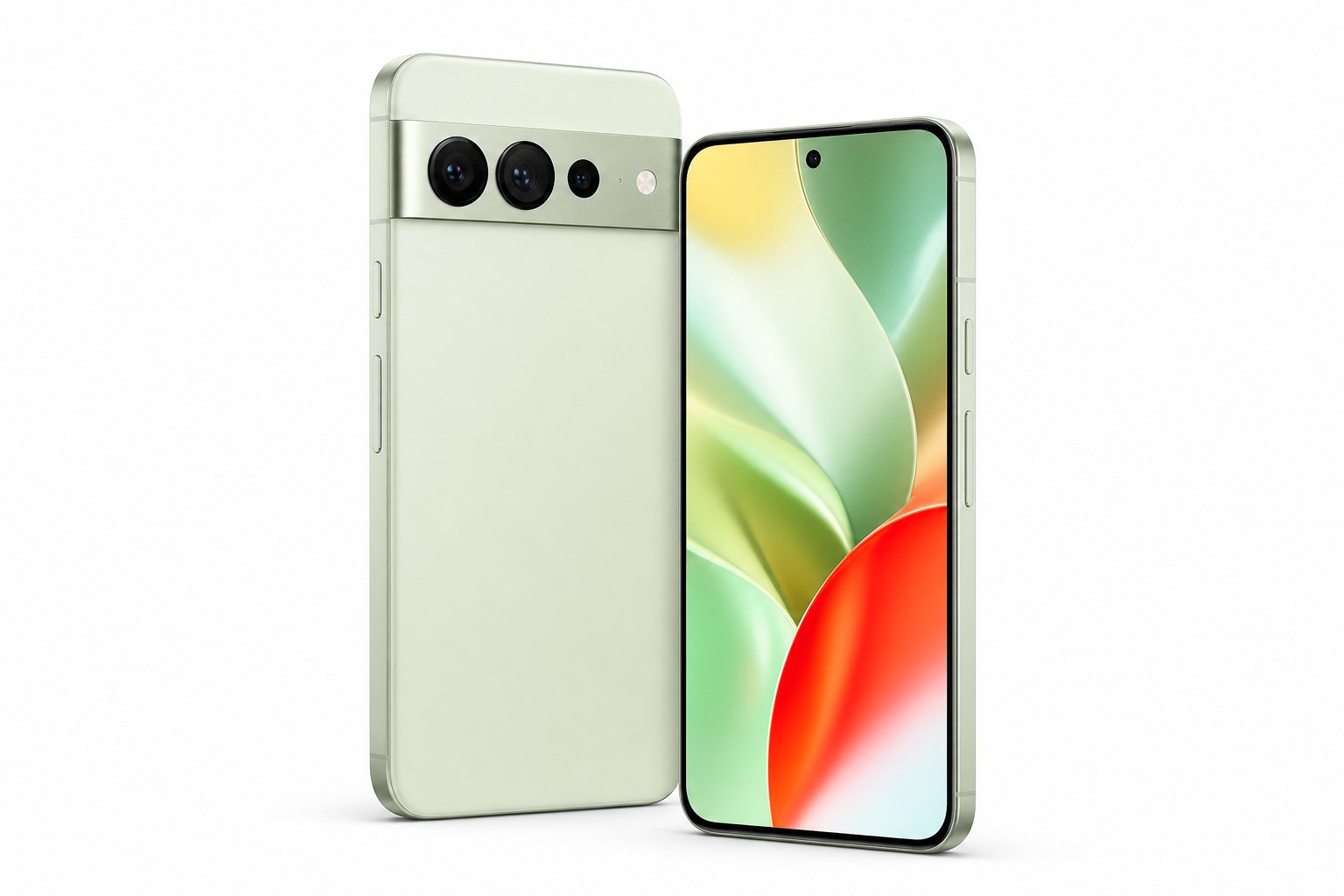
Design & Build Quality
The Pixel 11 keeps the exact footprint of the Pixel 10 — 152.8 x 72 x 8.6 mm — but shaves 7 grams off the weight, dropping to 197 g. That makes it noticeably lighter than the 204 g Pixel 10 and right in line with the compact flagships Google is clearly aiming at: the Galaxy S26 and iPhone 17 are both 6.3-inch phones too.
The big design change is the camera visor. It’s slimmer this year, and Google says it sits flush when you use one of its cases. The visor has been the Pixel’s most recognizable — and most polarizing — element since the Pixel 6, so a slimmer, less protruding version is a welcome refinement rather than a redesign. Build quality is the usual flagship fare: Gorilla Glass Victus 2 on the front and back, an aluminum frame, and IP68 dust and water resistance.
Four colors are available: Frost, Pistachio, Hibiscus, and Obsidian. The Pistachio green is the one that stood out in hands-on coverage, and it’s a nice break from the sea of black slabs. There’s no 3.5mm headphone jack, no surprise there, and the vanilla model also skips the temperature sensor Google is dropping from the whole lineup. Stereo speakers and an ultrasonic in-display fingerprint reader round out the package.
Display
The Pixel 11 has a 6.3-inch OLED panel at 1080 x 2424 (422 ppi) with a 60-120Hz refresh rate, HDR10+ support, and Gorilla Glass Victus 2 protection. It’s a good screen. It is also, honestly, the same screen as last year. GSMArena put it bluntly: Google skipped upgrading the panel “yet again.” No LTPO on the vanilla (that’s Pro territory), no resolution bump, and Google hasn’t published a headline brightness figure for the 11.
For a sense of what to expect: the Pixel 10’s panel measured around 2,030 nits peak in GSMArena’s lab, so the 11 should land in a similar ballpark for outdoor visibility — but that’s an expectation, not a confirmed number. The 6.3-inch size itself is the quiet win here. At a time when most flagships push 6.7 inches and up, a genuinely compact display with a high refresh rate is a feature in its own right.
Performance
The Tensor G6 is the star of this generation. It’s the first smartphone chip built on TSMC’s 2nm process, and the second Google chip to come out of TSMC fabs after the G5. Google claims up to 25 percent better performance than its predecessor, backed by a vapor chamber cooling solution and the Titan M3 security chip with post-quantum encryption. Early leaks pointed to a 1+4+2 core arrangement with a 4.11 GHz prime core — those details remain unconfirmed since Google hasn’t published the full core configuration.
Honest framing: Pixels have never won benchmark charts, and the Tensor G5’s numbers were comfortably behind the year’s Snapdragon and Dimensity flagships. The G6’s pitch is efficiency and AI, not raw frames. Treat “25 percent faster” as a claim until independent tests confirm it.
Where the vanilla does win outright is storage. Base storage doubles to 256 GB — up from the 128 GB of the Pixel 10 — with 12 GB of RAM, and a 512 GB option on top. That means the slow UFS 3.1 tier is gone; the Pixel 11 ships UFS 4.x across the board. The global memory shortage is exactly why Google pushed the base tier up instead of down — more storage is the new battleground, and the $100 price hike pays for it.
Camera
Here’s the year’s biggest letdown for spec-watchers: the Pixel 11 keeps the exact same triple camera as the Pixel 10. A 48MP main sensor at f/1.7, a 13MP ultrawide at 120 degrees, and the 10.8MP 5x telephoto at f/3.1. Early pre-launch rumors claimed a new 50MP main sensor, but production units ship with the 48MP hardware — and GSMArena readers were quick to point out the camera hardware hasn’t changed from the Pixel 10.
The upgrades this year are software. Super Res Zoom now reaches 30x, up from 20x on the Pixel 10. Magic Capture automatically snaps photos and short videos together into ready-to-share moments. Camera Looks lets you build custom color styles. The full Pixel toolkit carries over: Camera Coach, Add Me, Macro Focus, Night Sight, Astrophotography, Best Take, and Ultra HDR.
The one real hardware change is the selfie camera, which jumps from 10.5MP to a new 13MP sensor. And the 5x telephoto remains the vanilla Pixel’s biggest advantage over the iPhone 17, which ships with only two cameras and no zoom lens at all. That’s Google’s explicit pitch, and it’s a fair one.
Video is capped at 4K60 on the vanilla — the 8K Video Boost trick is Pro-only. If you want a big-sensor camera flagship that’s officially sold here, the HUAWEI Pura 90s Pro Max with its 200MP periscope is the local alternative at PHP 79,999 — but it runs HarmonyOS, which changes the app equation entirely.
Battery & Charging
The Pixel 11 packs a 4,985mAh battery — just 15mAh more than the Pixel 10’s 4,970mAh cell. That makes it the smallest capacity in the flagship conversation by a wide margin; even the Redmi K100 Pro packs 8,580mAh at a fraction of the price. Google claims 30 hours of “regular usage,” leaning entirely on the 2nm chip’s efficiency gains. That claim is unverified — the Pixel 10 managed a 12:08 hour active-use score in GSMArena’s testing, so the 11’s real endurance is the single biggest open question of this launch.
Charging stays modest. Wired tops out at 30W with PD 3.0 and PPS — GSMArena’s preliminary spec page lists 55 percent in 30 minutes — and the charger is sold separately, as Google has done for years. Wireless charging is where the numbers get fuzzy: The Verge’s official spec table lists up to 25W with Google’s Pixelsnap chargers, while GSMArena’s preliminary page still says 15W Qi2. Google says Pixelsnap charging is 25 percent faster than last year’s model, so I’d lean toward the 25W figure — but flag it as needing confirmation once units ship.
You do get reverse wired charging, bypass charging, and a new Extreme Charging Mode that prioritizes topping up over background tasks when you’re in a rush. Realistic expectation: a reliable full day of battery, not two. You buy a Pixel for the software, not the stamina numbers.
Software
Android 17 ships out of the box with a seven-year OS update promise — through Android 24 in 2033. That long update commitment is the vanilla Pixel’s strongest long-term argument, and it’s a promise few Android rivals match.
The headline feature this year is Gemini Intelligence. It pulls context from supported apps to surface proactive information, and the voice-to-text tool now strips filler words and cleans up formatting as you dictate. Writing assistance can use whatever is on screen to draft and refine messages. Live Translate extends to videos, podcasts, and voice messages, and Circle to Search works directly through the camera — point it at anything to identify, translate, or search without snapping a photo first. Gemini passed a billion users this year, and Google is betting the Pixel is the best showcase for it.
Everything else you expect carries over: the Magic Eraser family, Best Take, Now Playing, car crash detection, Satellite SOS, and dual eSIM with no bloatware. The vanilla does miss two things — the new HiLight face-down notification LED is Pro-only, and the temperature sensor is gone from the whole lineup. Both are nice-to-haves rather than dealbreakers.
Pros and Cons
| Pros | Cons |
|---|---|
| First 2nm smartphone chip (Tensor G6) | $100 more than the Pixel 10 at launch |
| 256GB base storage with UFS 4.x, finally | Same 48MP camera hardware as last year |
| 7 years of OS updates through 2033 | Same 1080p display as last year, no LTPO |
| 5x telephoto that the iPhone 17 doesn’t have | 30W wired charging, charger sold separately |
| Gemini Intelligence and the best Android AI suite | 4,985mAh battery leans on unproven efficiency |
| Compact 6.3-inch body at a light 197g | No official PH release — gray market markup applies |
| IP68, Victus 2, ultrasonic fingerprint | Wireless charging spec unclear (15W vs 25W) |
Should You Buy This?
Buy it if
- You want a compact flagship with a telephoto lens and the best Android update commitment in the business.
- You live in Google’s ecosystem — Gemini, Google Photos, Assistant — and want the phone those services are built for.
- You keep phones for five or more years and value clean, bloat-free software.
- You care more about computational photography and AI features than raw benchmark numbers.
Skip it if
- You’re in the Philippines and need local warranty and service — there’s no official PH release, so you’ll pay gray-market markup on top of the US price.
- You want big batteries or fast charging — 4,985mAh and 30W won’t impress anyone in 2026.
- You’re coming from a Pixel 10 — same display, same cameras, $100 more.
- You want class-leading raw performance — Tensor has never been the speed king, and this generation is about efficiency.
Final Verdict: Is the Pixel 11 Worth It?
The Pixel 11 is Google’s most confident “software is the product” phone yet. Doubled storage, a 2nm chip built for efficiency, and Gemini woven through every layer — while the hardware stays deliberately conservative. That’s a coherent strategy, but it’s also a bet: the $100 price hike only makes sense if the AI features and seven-year support genuinely change how you use a phone.
The price stings more in some markets than others. At ₹90,000 in India, readers immediately pointed out the base Pixel 11 is brushing up against discounted Ultra-tier rivals. In the Philippines there’s no official launch at all, so expect gray-market prices well above the $899 US sticker once import costs and seller margins are added — realistically PHP 55,000 and up depending on the reseller.
Against the Galaxy S26 and iPhone 17, the Pixel 11 is the enthusiast pick, not the crowd pick. It wins on camera zoom, update longevity, and software polish, and it loses on charging, battery, and raw performance. With the base iPhone 18 reportedly delayed past the fall, the Pixel 11 also gets a rare window as the most complete compact flagship on the market.
Who is this for? Android purists who want a small, light phone with a zoom camera and a decade of software life. If that’s you, it’s the best Pixel Google has made — just know exactly what you’re paying the premium for. For every budget and use case, our 2026 phone buying guide has you covered.