
Another Chinese EV brand is about to set up shop here, and this one is a big deal. XPeng has officially confirmed it will enter the Philippines in the third quarter of 2026, and the two cars leading the charge are the L03 crossover and the X9 MPV. Both are already on the Department of Energy’s list of recognized EVs, which, if you’ve been following the market, is the same pre-launch signal we saw with the VinFast VF 8 and the Kia EV3 before their debuts.
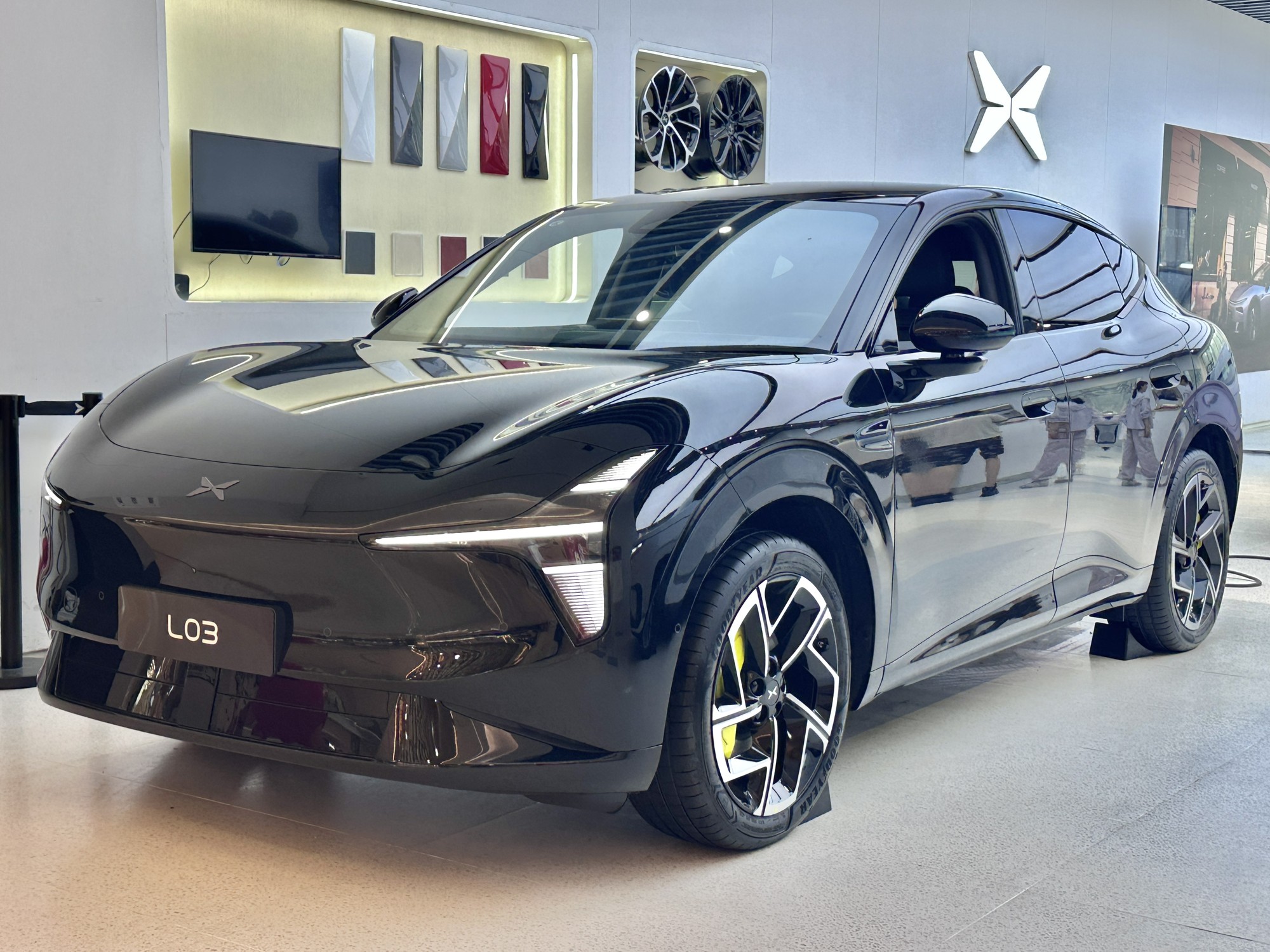

XPeng isn’t coming in through a franchise partner the way most Chinese brands did. XPeng Philippines will be a direct subsidiary, allowed under the Electric Vehicle Industry Development Act (EVIDA) which opens EV manufacturing and distribution to 100% foreign equity. That’s a statement of intent, and the lineup they’re starting with says the same thing: one car aimed squarely at the Tesla Model Y buyer, and one aimed at the luxury MPV crowd.
XPeng L03: The Affordable Model Y Rival
The L03 is a coupe-styled crossover that’s slightly longer than a Toyota RAV4 but a touch shorter than a Model Y, at 4,650 mm long and 1,920 mm wide. It was designed from the start as a global car, not a China-market model that got exported later, which matters for markets like ours where road quality and regulations differ.
According to the DOE listing, the Philippines will get two fully electric variants plus a range-extended version. Here’s the breakdown:
| Spec | L03 EV Standard | L03 EV Long Range | L03 REEV |
|---|---|---|---|
| Motor | Single rear motor, 245 PS / 264 Nm | Single rear motor, 245 PS / 264 Nm | Single motor, 245 PS / 264 Nm |
| Battery | 69 kWh LFP | 71.2 kWh LFP | 37.2 kWh LFP + 1.5L generator |
| Range | Up to 530 km (NEDC) | Up to 600 km (NEDC) | 315 km EV / 1,300+ km combined (CLTC) |
| Max DC charging | 193 kW | 236 kW | 236 kW |
| 10-80% time | ~20 min | ~20 min | ~20 min |
| Drivetrain | RWD | RWD | RWD |
| 0-100 km/h | ~7.5 sec | ~6.6 sec | Not published |
| Seats | 5 | 5 | 5 |
Note the range cycles: the DOE figures use NEDC, which is more generous than the WLTP numbers used in Europe, where the Long Range is rated at 520 km. Either way, this is comfortably enough for a week of Metro Manila commuting on a single charge.
The clever bit is the charging. The L03 runs a 400-volt architecture, yet it pulls up to 236 kW from a DC fast charger — 10 to 80 percent in about 20 minutes. Electrive called it “rapid charging at a bargain price,” noting the base car undercuts the entry-level Skoda Elroq and Hyundai Ioniq 5 on both price and power output.
Inside, you get a 15.6-inch central touchscreen running Google apps, an 8.88-inch digital gauge cluster, a head-up display, heated and ventilated front seats, and a panoramic roof as standard. XPeng’s XPILOT suite covers 13-plus driver assistance functions, and there are seven airbags. The warranty story is solid too: seven years or 160,000 km on the vehicle, eight years on the battery.
What the Reviews Are Saying
The international first-look verdicts have been strong. CleanTechnica’s Larry Evans, who examined the car in Munich, kept coming back to one line: “What really sets vehicles apart is the execution.” He describes the L03 as sitting in the “sweet spot of the global EV market” — and more importantly for us, he notes the car was designed with international roads and regulations in mind, not adapted afterward.
Electrek’s take is blunter: the L03 undercuts the Tesla Model Y by a wide margin in Europe while offering comparable range and much faster charging than its price suggests. For a market like ours, where the Model Y currently starts at P2.369 million, a credible rival under P2 million is exactly the kind of pressure that brought prices down in the crossover segment.
XPeng X9: The Premium People Mover
The second launch model is the X9, a seven-seat electric MPV that goes after the Denza D9 and Zeekr 009 crowd. This is where XPeng shows off: an 800-volt architecture that refills 10 to 80 percent in about 12 minutes, dual-chamber air suspension with adaptive adjustment, and active rear-wheel steering — a first for an MPV.
The DOE lists three EV variants and a range-extended one:
| Spec | X9 EV Standard | X9 EV Long Range | X9 AWD Performance | X9 REEV |
|---|---|---|---|---|
| Motor | Single, 320 PS / 450 Nm | Single, 320 PS / 450 Nm | Dual, 500 PS / 640 Nm | 286 PS + 1.5L turbo generator |
| Battery | 94.8 kWh | 110 kWh | 110 kWh | 63.29 kWh |
| Range | Up to 535 km | Up to 615 km | Up to 580 km | 452 km EV / 1,600+ km combined (CLTC) |
| Charging | 800V, 10-80% in ~12 min (DC) | DC fast charge | ||
| Seats | 7 | 7 | 7 | 7 |
Inside, XPeng calls it the “Starship First-Class Cabin”: captain seats in the second row, a split-folding third row, ventilation, heating and massage on the front and second rows, a built-in refrigerator, a 21.4-inch entertainment screen for rear passengers, and a 27-speaker HiFi system. Yes, 27. Top Gear PH got hands-on with the X9 in Hong Kong last year and tried the onboard AI voice assistant, which worked well for Cantonese speakers — the hope is that it’s tuned properly for English (and maybe Taglish) by the time it lands here.
Philippine Pricing: PHP, USD, and INR
Pricing hasn’t been finalized yet, but Zigwheels reports the indicative figures: the L03 under P2 million, and the X9 at around P4.5 million. For context, the Tesla Model Y starts at P2.369 million, the BYD Atto 2 EV sits at P1.338 million, and the BYD Seal 5 DM-i undercuts everything at P898,000.
| Model | PHP (indicative) | USD | INR |
|---|---|---|---|
| XPeng L03 | Under P2,000,000 | ~$32,900 | ~Rs 31.4 lakh |
| XPeng X9 | ~P4,500,000 | ~$74,100 | ~Rs 70.7 lakh |
Conversions use the BSP reference rate of 60.705 PHP/USD and 95.4 INR/USD (August 2026). Treat both as estimates until XPeng Philippines publishes official SRPs at launch.
Is the L03 Right for the Philippines?
Let’s walk through the conditions Filipino buyers actually deal with.
City driving
This is the L03’s home turf. The instant torque of a rear-motor EV is a blessing in EDSA stop-and-go, and the compact crossover footprint makes it easier to squeeze into Makati or BGC parking slots than a Model Y. The 15.6-inch screen with Google Maps built in handles the navigation workload. A full charge should cover a week of typical daily commutes.
Long-distance travel
Manila to Baguio is about 250 km — well within the L03’s rated range even on the more honest WLTP figure. Push further, say Manila to Bicol, and the 20-minute fast-charging stops at CCS2 chargers along the expressways keep the trip practical. The range-extender version, if it arrives, makes long provincial runs a non-issue entirely, the same strategy Jaecoo is pushing with the J8 PHEV.
Flooded streets
This is where I wish we had ground clearance numbers, because XPeng hasn’t published them yet. EVs have one built-in advantage: no intake, no exhaust, so no hydrolock — an EV can wade through water that would stall a gas car, up to its limits. But the battery sits under the floor, and you never want to test that boundary. Treat the L03 like any crossover: sensible wading only, avoid deep floods like the ones that turn EDSA and C5 into rivers during typhoons.
High temperatures
The LFP battery chemistry is the right call for a tropical country. LFP cells tolerate heat better and degrade slower than NMC packs, which matters in 36-38 degree weather. The standard heat pump doubles as efficient air conditioning management, and the ventilated front seats are a genuine quality-of-life upgrade when you’ve been parked in the sun all afternoon.
Where the X9 Fits
The X9 is a different conversation entirely. At P4.5 million, it’s competing with the Alphard crowd and the premium EV MPVs, not volume sellers. Its appeal in the Philippines is the same as it is everywhere: it’s the family hauler that does the school run silently, swallows seven people comfortably, and charges in about the time it takes to finish a meal. The 12-minute fast charge on 800 volts means range anxiety is barely a consideration even on long trips.
If you’re weighing the L03 against what’s already on sale, the GWM Ora 5 and the BYD Atto 2 are the natural comparables in the under-P2M crossover space — though neither matches the L03’s 236 kW charging ceiling. XPeng is betting that fast charging, the AI-assisted cabin, and the sub-Model-Y price will be enough to carve out a spot.
Bottom Line
XPeng landing here is good news for anyone shopping for an EV. The L03 gives the Model Y a credible under-P2-million challenger from a brand that’s clearly serious about the local market — direct subsidiary, DOE recognition already in place, and a September launch window. The X9 is the halo car, the one that tells Filipino buyers how far this brand’s technology goes.
The unknowns, honestly, are the same ones every new EV brand faces here: dealer network coverage, parts availability, and how their charging partnerships shake out. Those details should come into focus as the September launch approaches. If XPeng delivers the L03 at the price they’re hinting at, with that charging speed and that warranty, the crossover segment is about to get very interesting.