
BYD’s cheapest electric car is about to grow up. Across the first half of 2026 the little Seagull — sold as the Dolphin Mini and Dolphin Surf in other markets — was the sixth best-selling EV on the planet, and now the blueprint for its replacement is out in the open. Chinese regulators have quietly filed the new model, and judging by the numbers it’s bigger, quicker, and finally gets the kind of cabin a modern electric car deserves.
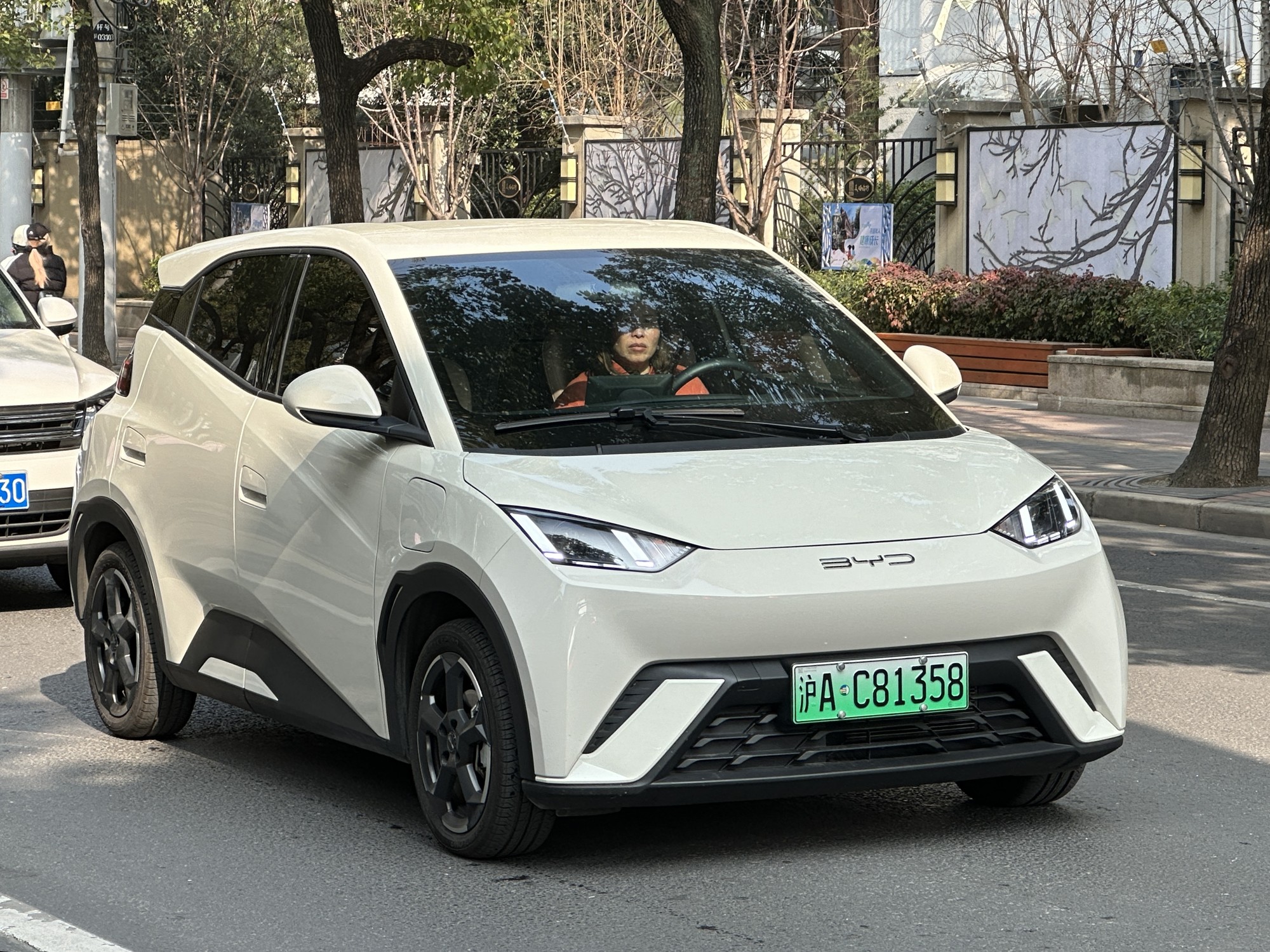

That matters here in the Philippines, because the current Seagull already sits at ₱898,000 — one of the most accessible ways into EV ownership. So when BYD reshapes its entry-level car, the ripples land squarely in our budget tier. Let me walk you through what’s new, what we still don’t know, and whether the next Seagull makes sense for the way we actually drive.
What’s new in the next-gen Seagull
Most of what we know comes from the new model appearing in China’s MIIT approval list last month, with leaked interior shots doing the rounds over the weekend. The headline change is size. The next Seagull stretches to 4,205 mm long, 1,810 mm wide and 1,570 mm tall on a 2,650 mm wheelbase — a solid step up from the current car’s roughly 3,780 mm length. It’s still compact, just more grown-up.
| Spec | Next-gen Seagull (reported) | Current Seagull (PH) |
|---|---|---|
| Length | 4,205 mm | ~3,780 mm |
| Wheelbase | 2,650 mm | ~2,500 mm |
| Motor | 95 kW (127 hp) PMSM | 55 kW (75 hp) |
| Top speed | 150 km/h | ~130 km/h |
| Seats | 5 | 4 |
| Battery | Blade LFP + Flash Charging (expected) | 30.08 / 38.88 kWh |
| Range (CLTC) | TBA | 305 / 405 km |
| Infotainment | Single large touchscreen | 10.1-inch |
The powertrain gets the biggest jump. The new Seagull is filed with a permanent-magnet synchronous motor peaking at 95 kW (around 127 hp), a healthy upgrade from the current 55 kW unit. Two BEV variants were listed, both with a 150 km/h top speed. Electrek reports the refresh should carry BYD’s newer Blade batteries and flash-charging tech, though official battery sizes and range figures are still pending.
Inside, the spy shots show a single large center touchscreen, a redesigned console, and — refreshingly — physical buttons kept below the screen and on the wheel. There’s also a LiDAR pod visible in BYD’s own teaser images, which hints this little car could gain real advanced driver-assistance hardware. If that trickles down to the entry model, it would be a first for this budget class.
How much will it cost?
BYD hasn’t said what the next Seagull will cost anywhere yet, let alone here. For context, the current 2026 Seagull starts at 69,900 yuan in China — about $10,000. In the Philippines it’s advertised at a single ₱898,000 price point with around 300 km of range, per Zigwheels.
| Market | Price |
|---|---|
| Philippines (current) | ₱898,000 |
| USD equivalent | ~$14,600 |
| INR equivalent | ~₹14.0 lakh |
| China (current) | 69,900 yuan (~$10,000) |
(Conversions at roughly 61.4 PHP/USD and 95.6 INR/USD, mid-August 2026.) Expect the successor to carry a modest premium over today’s car once it lands — BYD’s overseas pricing usually doesn’t sit a full yuan-for-peso away from the local market.
What people are saying
Electrek, which surfaced the interior photos, frames the upgrade as BYD answering fresh competition in its home market — the Seagull rolls out in China first, then overseas. The China EV press (ChinaEVHome, TIENCARS) corroborates the dimensions and the redesigned cabin. Because the current Seagull is the sixth best-selling EV globally in the first half of 2026, according to CleanTechnica’s sales data, this refresh isn’t a niche move — it’s BYD protecting its biggest volume seller.
The value question is what local buyers keep circling. If BYD keeps the next Seagull near the current ₱898,000, it stays the benchmark for what you can get without breaking the million-peso mark — more power, more space, and a smarter cockpit in the same budget envelope.
Is the next Seagull right for the Philippines?
City driving
This is the Seagull’s home turf. A sub-four-and-a-half-meter body is exactly what EDSA traffic and tight Makati and BGC parking want, and the extra 40 kW on tap makes merging and overtaking less of a gamble. For a daily Metro Manila commuter who can charge at home overnight, the range is plenty and the running costs are tiny.
Long-distance travel
Here’s the honest catch. Even at 405 km CLTC, real-world highway range lands closer to 300–350 km, so a Manila-to-Baguio run is doable but needs a charging stop planned in. It’s a city car first. If your monthly calendar is mostly provincial highways, a bigger battery or a plug-in hybrid is the better fit.
Flooded streets
This is the weak spot I’d flag. A low hatchback — and a sedan-style body on the new one — means modest ground clearance, and I don’t have a confirmed figure yet to quote. EVs don’t hydrolock like gas engines, which is a real advantage, but that’s not a license to wade into knee-deep water. Wait out the flood, don’t test the limits.
High temperatures
Around 36–38°C afternoons are a fact of life here, and LFP chemistry — that’s what BYD’s Blade batteries are — handles heat far more calmly than many alternatives. Battery degradation in tropical climates is a genuine worry, and LFP is the right answer for it. The bigger the screen, the more it’ll be on during your commute, so expect the cabin to run warmer too.
The bigger picture
BYD is leaning hard into the Philippines right now. Retail sales jumped 446% to 26,122 units in 2025, according to BusinessWorld, in a market where EV sales overall surged 132.7% to 31,381 units. A refreshed, more capable Seagull slots straight into the hottest tier of that growth — competing head-on with budget EVs like the Chery QEV at ₱1.12M, the Geely EX2, and the MG4 Urban.
Bottom line
The next Seagull looks like exactly the kind of upgrade that could widen EV adoption here: more power, more room, and a genuinely smarter interior, all aimed at the budget end of the market. We still don’t have official range, battery, or Philippine pricing, and I’d want those before signing anything. But the direction is clear — BYD’s cheapest car is getting less cheap in the best possible way.
If you’re weighing a budget EV now, it might be worth seeing what the refresh brings before you commit. For more on where this segment is heading, I covered the BYD Ti 7 plug-in hybrid and the compact BYD Atto 2 recently.