
The Porsche Cayenne Electric Is Officially Here
Porsche Philippines has formally launched the first-ever Cayenne Electric, marking the brand’s full entry into the battery-electric SUV segment in the country. The launch, confirmed by CarGuide.PH and AutoIndustriya on October 7, 2026, puts the fourth-generation Cayenne Electric on display at Porsche dealerships in Greenhills, Bonifacio Global City, Alabang, and Cebu.
I covered the DOE listing back in August as a pre-launch signal. Now it’s real: the Cayenne Electric is officially on Philippine soil, and it arrives with some serious numbers.
Two Variants, One Flagship
The Philippine launch starts with the SUV body style in two flavors. The base Cayenne Electric packs 408 horsepower (442 with Launch Control) and 835 Nm of torque from dual electric motors, sprinting from 0 to 100 km/h in 4.8 seconds. The Cayenne Turbo Electric — the most powerful production Porsche of all time — cranks out 857 horsepower (1,156 with Launch Control) and a staggering 1,500 Nm, hitting 100 km/h in just 2.5 seconds.
Both variants share a 113 kWh 800-volt lithium-ion battery. The base model delivers up to 642 km of WLTP range, while the Turbo manages 637 km despite its massive power advantage. The Coupe body style will follow soon after the SUV’s debut.
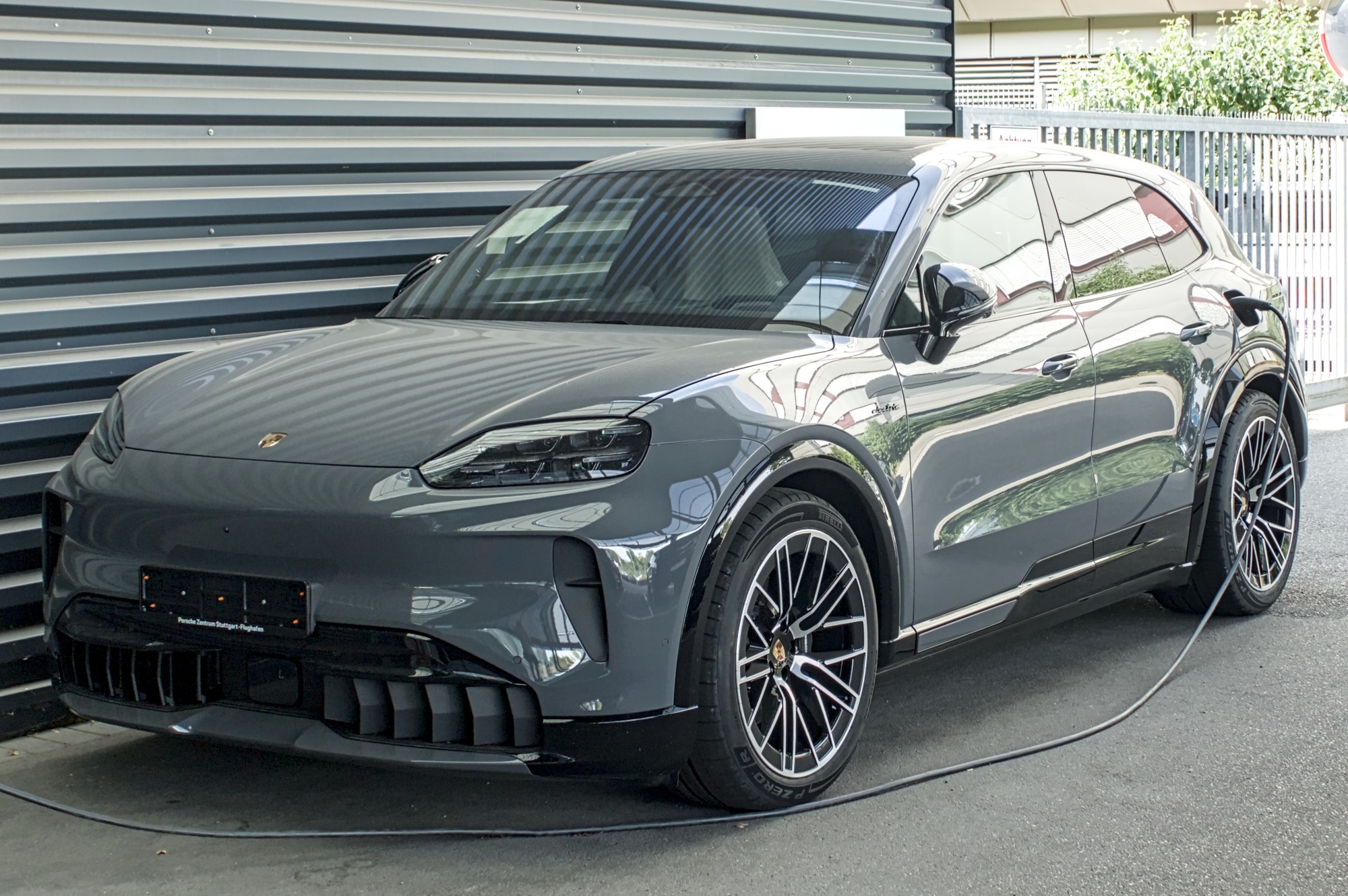

Key Specifications
| Specification | Cayenne Electric | Cayenne Turbo Electric |
|---|---|---|
| Power | 408 hp (442 w/ LC) | 857 hp (1,156 w/ LC) |
| Torque | 835 Nm | 1,500 Nm |
| 0-100 km/h | 4.8 seconds | 2.5 seconds |
| Battery | 113 kWh, 800V | 113 kWh, 800V |
| WLTP Range | Up to 642 km | Up to 637 km |
| DC Charging | Up to 400 kW | Up to 400 kW |
| 10-80% DC | <16 minutes | <16 minutes |
| AC Charging | Up to 22 kW | Up to 22 kW |
| Wireless Charging | Up to 11 kW (inductive) | Up to 11 kW (inductive) |
| Top Speed | 230 km/h | 260 km/h |
| Length x Width x Height | 4,985 x 1,980 x 1,674 mm | 4,985 x 1,980 x 1,674 mm |
| Wheelbase | 3,023 mm | 3,023 mm |
| Cargo Volume | 781-1,588 L + 90 L frunk | 781-1,588 L + 90 L frunk |
| Drag Coefficient | 0.25 Cd | 0.25 Cd |
| Suspension | Adaptive air suspension (std) | Active suspension + torque vectoring |
| Regen Braking | Up to 600 kW (97% motor-only) | Up to 600 kW (97% motor-only) |
Charging: 800V Speed
The 800-volt architecture enables DC fast charging at up to 400 kW. Porsche says 10 to 80 percent takes less than 16 minutes, and a 10-minute stop can add up to 325 km of range. For home charging, the Cayenne Electric supports up to 22 kW AC — and it’s the first Porsche EV to offer wireless inductive charging at up to 11 kW, a nice perk for garage owners who’d rather not plug in every night.
If you’re comparing charging speeds with other EVs on the market, the Tesla Model Y L remains the benchmark for charging infrastructure, but the Cayenne Electric’s 800V system is a step ahead of 400V competitors like the BMW iX3.
Philippine Pricing: Still Under Wraps
Porsche Philippines hasn’t announced local pricing yet. The company directs interested buyers to visit their showrooms for a quote, citing the number of options, exchange rates, and other costs that can affect final figures. For context, US pricing starts at around $111,350 for the base Cayenne Electric and $165,350 for the Turbo Electric, including delivery. At the current exchange rate of roughly 62.83 PHP/USD, that translates to approximately ₱7.0 million and ₱10.4 million before Philippine taxes and duties — so expect a significant premium over the US figures.
| Variant | USD (US MSRP) | PHP (est.) | INR (est.) |
|---|---|---|---|
| Cayenne Electric | ~$111,350 | ~₱7.0M | ~₹67.8 lakh |
| Cayenne Turbo Electric | ~$165,350 | ~₱10.4M | ~₹100.7 lakh |
These are estimates based on US MSRP and current exchange rates (62.83 PHP/USD, 96.91 INR/USD as of October 12, 2026). Philippine pricing will be announced by Porsche Philippines and may differ significantly due to local taxes, duties, and import costs.
What Others Are Saying
International reviews have been strong. Edmunds called the Cayenne Electric an “excellent premium electric SUV” after their first drive, praising its range and performance while noting that vent controls buried in the touchscreen are a gripe. MotorTrend’s Mike Floyd was more emphatic: “Physics May Have Met Its Match,” he wrote, after experiencing the Turbo’s 2.5-second launch and pancake-flat cornering. Car and Driver tested the Turbo and clocked a 2.1-second 0-60 time, though they warned that “pricing that will bring tears to your eyes.”
The Cayenne Electric’s combination of luxury, performance, and Porsche DNA puts it in rarefied air. It’s a different proposition from the Jaguar Type 01, which is a design-forward statement piece — the Cayenne is the more complete everyday performance SUV.
Philippine Driving Conditions
City Driving
At 4,985 mm long and 1,980 mm wide, the Cayenne Electric is a substantial SUV. Makati and BGC parking will be tight, and the 21-inch aero wheels (on higher trims) won’t do you any favors on pockmarked side streets. The standard adaptive air suspension helps with speed bumps and the occasional rough EDSA stretch, though. The 600 kW regenerative braking system means about 97 percent of braking can be handled by the motors alone — excellent for stop-and-go traffic, where one-pedal driving becomes second nature.
The Flow Display — a curved OLED panel that blends into the center console — is a genuinely nice interior touch, and the fact that Porsche kept physical buttons for climate and volume is a relief. The 14.9-inch passenger display (optional) will keep front-seat occupants occupied on long gridlock stretches.
Long-Distance Travel
The 642 km WLTP range easily covers Manila to Baguio (about 250 km) with room to spare. For longer trips, the 400 kW DC charging means a 16-minute coffee break tops up 10 to 80 percent — faster than almost any EV on the Philippine market. The 3,023 mm wheelbase, 130 mm longer than the combustion Cayenne, translates to excellent rear-seat comfort on highway drives to Subic or Batangas.
If you’re cross-shopping with the BYD Ti 7, the Cayenne Electric offers nearly double the power and a more premium cabin, but at a significantly higher price point. The Ti 7 is the value play; the Cayenne is the aspirational one.
Flooded Situations
Ground clearance hasn’t been officially published, which is a notable gap for Philippine buyers. The Cayenne sits lower than typical body-on-frame SUVs, and the battery pack floor placement raises concerns during deep flooding. The battery is sealed and IP-rated, and EVs don’t face hydrolock risks like combustion engines — but I’d exercise serious caution during monsoon season. The air suspension can raise the ride height for better clearance, but exact figures aren’t available yet. This is a dealbreaker unknown that Porsche Philippines should address for the local market.
High Temperature
The 800V system and liquid-cooled battery are well-suited to Philippine heat. The adaptive air suspension and thermal management should keep the battery in its optimal range even in 36-38°C weather. The 0.25 drag coefficient helps efficiency at highway speeds, and the heat pump (standard on modern Porsches) reduces AC load compared to resistive heating. The large glass roof, if specified, will load the AC — but overall, the Cayenne Electric should handle Philippine summers better than many EVs with smaller cooling systems.
The Bottom Line
The Cayenne Electric is Porsche’s statement that electrification doesn’t mean compromise. With 408 to 1,156 horsepower, up to 642 km of range, and 400 kW charging, it competes at the very top of the Philippine EV market. The lack of announced pricing keeps it in the “if you have to ask” category for now, but for buyers cross-shopping with the BMW iX3 50 xDrive or the Denza Z9 GT, the Cayenne Electric deserves a serious look. It’s the most complete performance SUV Porsche has ever made — and now it’s here.
If you’re in the market for a six-figure EV and want something that drives like a Porsche first and an EV second, this is it. Just maybe wait for the official Philippine price tag before you sign anything.