
Apple is finally doing it. After years of watching Amazon and Google turn the smart home into a bargain-bin arms race, Cupertino is about to drop its own dedicated smart home hub — the HomeView — and I have some honest thoughts about whether it actually matters.
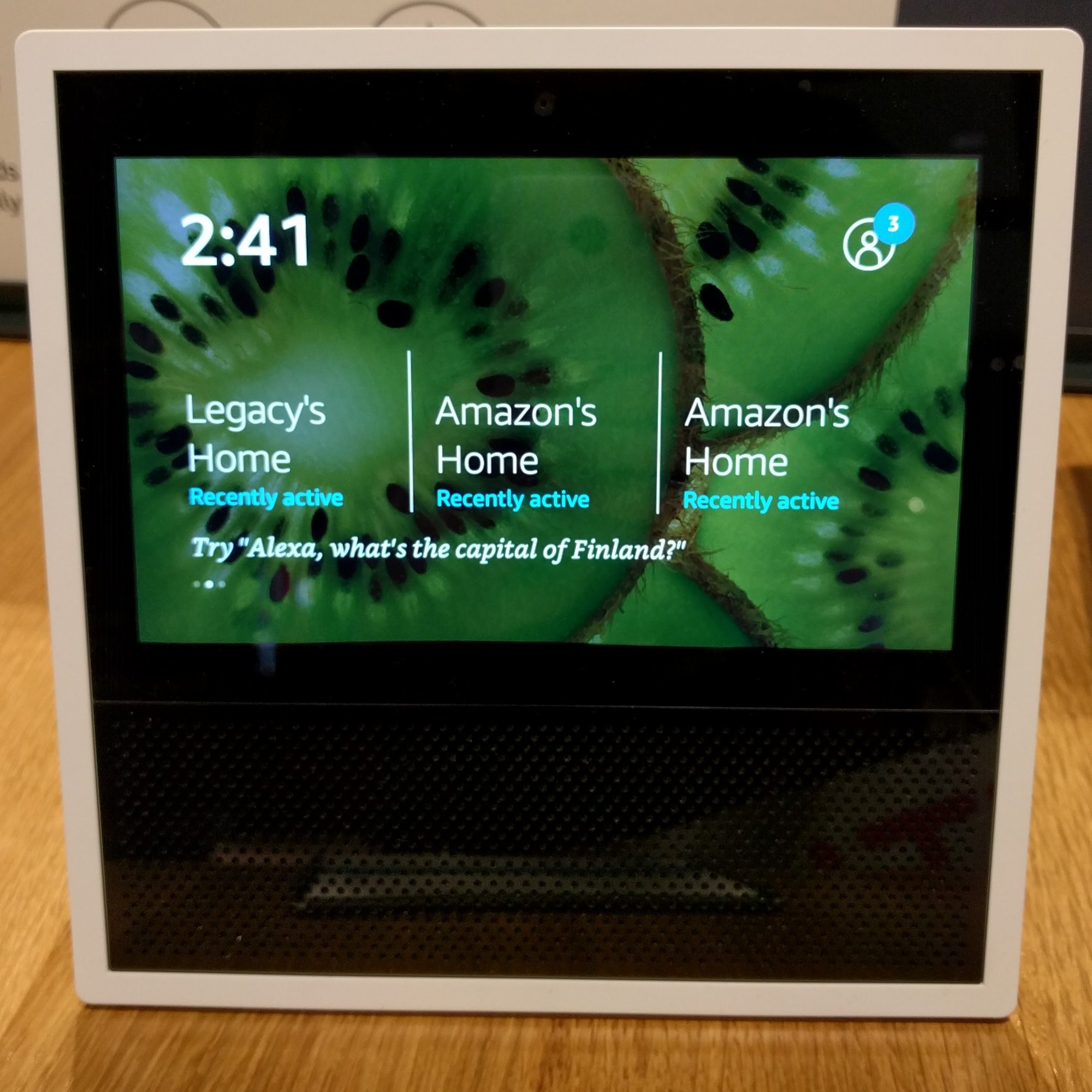

The device gets its official unveiling at Apple’s “Welcome Home” event on October 13, 2026, with a shipping target of mid-November. Bloomberg’s Mark Gurman has been tracking this for months, and the picture that’s emerged is… well, it’s very Apple. A 6-inch square display floating on a metal speaker base, powered by an A18 chip, running Siri as its primary interface. No App Store. No third-party app free-for-all. Just a focused, voice-first command center for your home.
I’ll be honest — my first reaction was “about time.” My second reaction was more complicated.
What the HomeView Actually Is
Let’s break down what we know so far. The HomeView comes in two form factors: a countertop model with a round metal speaker base (space gray, silver, starlight, or pink) and a wall-mounted version with a flat square base (space gray or silver only). The display is a 6-inch square panel — think iMac G4 vibes, that floating screen on a pedestal.
Under the hood, it’s running an A18 chip — the same silicon that powers the iPhone 16 lineup. That’s serious compute for a smart home hub. The new HomePod mini, also announced at the event, gets an S10 chip. The refreshed Apple TV 4K gets an A19. Apple is clearly not treating these as accessories; they’re building a full home hardware stack.
The HomeView is controlled primarily by voice, with Siri AI as the centerpiece. The screen supports touch, but the design intent is clear: you talk to it, it responds, and the display shows you what you need to see. It runs a limited selection of Apple apps — no dedicated App Store. Connected accessories are controlled through Siri, the Home app, and other Apple devices.
Sound quality is said to beat the new HomePod mini, which makes sense given the larger speaker base on the countertop model.
The Ecosystem Play
Here’s where it gets interesting. Apple isn’t just dropping a hub and hoping for the best. They’ve partnered with LG Electronics to design a full lineup of smart home accessories — a smart doorbell, deadbolt lock, thermostat, temperature sensor, indoor and outdoor security cameras, and a floodlight camera. LG will manufacture and support these under what Apple is calling the “Apple Home Collection.”
The accessory lineup reportedly won’t ship until later in 2026 at the earliest, which means the HomeView launches into a world where you’re mostly controlling existing Matter and Thread devices. That’s actually fine — Matter and Thread support means it should play nicely with the tens of thousands of already-compatible accessories on the market.
But the LG partnership signals something bigger: Apple is done just supplying the software layer and hoping someone else builds the hardware. They’re offering a ready-made ecosystem now. That’s a fundamental shift from the HomePod era, where Apple basically handed the keys to third-party makers and wondered why the experience felt fragmented.
My Honest Take: The Good
Let me start with what I think Apple gets right here.
Privacy is the killer feature. HomeKit was built from day one around local control. Automations execute directly on your HomePod or Apple TV inside your house. End-to-end encryption is mandatory. HomeKit Secure Video keeps your security feeds off third-party clouds. When your broadband goes down, your lights and locks still work. In a world where Amazon and Google are essentially in the business of collecting your home data to sell ads, Apple’s “we don’t want your data” stance isn’t just marketing — it’s a genuine architectural difference. The contrast with Amazon and Google could not be sharper, especially as I wrote in my analysis of Satya Nadella’s call for an AI emergency brake — the entire tech industry is being forced to reckon with questions of data trust.
The ecosystem advantage is real. Apple has 1.8 billion active devices worldwide. If you’re already in the ecosystem — iPhone, iPad, Mac, Apple Watch — the HomeView slots into your life in a way that no Echo or Nest ever could. FaceTime, intercom, photos, music, calendar, notifications: all the things you’d want on a home display are already there, already synced, already familiar. It is the same advantage I described in my guide on running local AI for daily tasks — once you are inside the ecosystem, the friction just disappears.
The timing is right. Matter and Thread have finally brought some order to the protocol wars. The smart home market is mature enough that people know what they want, but fragmented enough that there’s room for a unifier. Apple doesn’t need to win the budget segment — they need to win the premium segment, and that’s exactly where they’re positioning.
My Honest Take: The Concerns
Now for the parts that make me pause.
The price. Target is reportedly around $350. That’s not cheap for a smart home hub. Amazon’s Echo Show 8 runs $150. The Nest Hub (2nd Gen) is $100. Even the Echo Hub — Amazon’s wall-mounted control panel — is $180. Apple is asking you to pay a significant premium, and while the build quality and ecosystem integration justify some of that, $350 is a real barrier for a lot of households.
No App Store is a double-edged sword. I understand the logic — Apple wants a curated, secure experience. But the Echo and Nest platforms have thousands of third-party skills and integrations. Some are junk, sure, but some are genuinely useful. By locking the HomeView to Apple’s own apps, Apple is betting that their first-party experience is good enough. I’m not always sure it is. Siri has improved, but it’s still not Alexa or Google Assistant when it comes to breadth of voice commands and third-party integrations. The comparison with Anthropic’s decision to cut internet access for its AI agents is instructive — even the most capable AI companies are struggling to control their own creations.
The accessory gap at launch. The LG partnership is promising, but those products won’t ship until late 2026 at the earliest. At launch, the HomeView is a hub without a full accessory lineup. You’ll be controlling existing Matter and Thread devices, which is fine, but it means the “Apple Home Collection” vision is still months away from being real.
Apple’s track record in the home is… mixed. The original HomePod was a great speaker with a terrible smart assistant. The HomePod mini fixed the price problem but never became a true hub. Apple TV has been a solid streaming box but a mediocre home hub. The company has historically treated the home as a side project rather than a priority. As I discussed in my piece on Tony Fadell and the first wave of AI gadgets, the problem has never been hardware quality — it is whether the product solves a real problem. The HomeView feels like a genuine commitment, but I’ll believe it when I see sustained investment over multiple product cycles.
The Competitive Landscape
Amazon’s Echo ecosystem controls roughly 28% of the smart speaker market. Google’s Nest has gained ground, especially on the AI assistant side. Both have had years to build out their accessory partnerships, refine their voice assistants, and iterate on their hardware. Apple is entering a market that’s already mature and crowded.
But here’s the thing: neither Amazon nor Google has achieved the seamless integration that consumers actually want. The smart home is still a mess of apps, protocols, and compatibility issues. Apple’s bet is that they can be the unifying force — the premium, privacy-first option that just works with everything you already own.
It’s a bold bet. And honestly? I think it might pay off.
Where I Land
Look, I’m not going to tell you the HomeView is a must-buy. At $350, it’s a premium product for a premium ecosystem, and if you’re not already invested in Apple’s world, it’s a tough sell. The lack of an App Store, the delayed accessory lineup, and Siri’s still-catch-up voice AI are real limitations.
But I think this is the most important Apple home product since the original HomePod. Not because it’s perfect — it isn’t — but because it represents a genuine strategic commitment to the home as a platform. Apple is building a full stack: hub, speaker, TV, accessories, and the software to tie it all together. That’s not a side project. That’s a platform play.
If you’re in the Apple ecosystem and you’ve been waiting for a reason to smarten up your home without handing your data to Amazon or Google, the HomeView is worth watching. It ships in mid-November. I’ll have a full review once I’ve spent real time with it.
Until then, the smart home wars just got a lot more interesting.