
Bill Gates just wrote his longest essay on AI in three years, and the headline idea is one people usually laugh at: a tax on robots. But buried inside his roughly 6,000-word memo is a sharper, more human question that I think we’ve been avoiding. He calls it “Human Reserved” jobs — the roles we decide machines simply should not take, the same way a nature reserve sets aside land we could build on but choose not to. As an ICT division manager who watches automation creep into the work I manage, I read it twice.
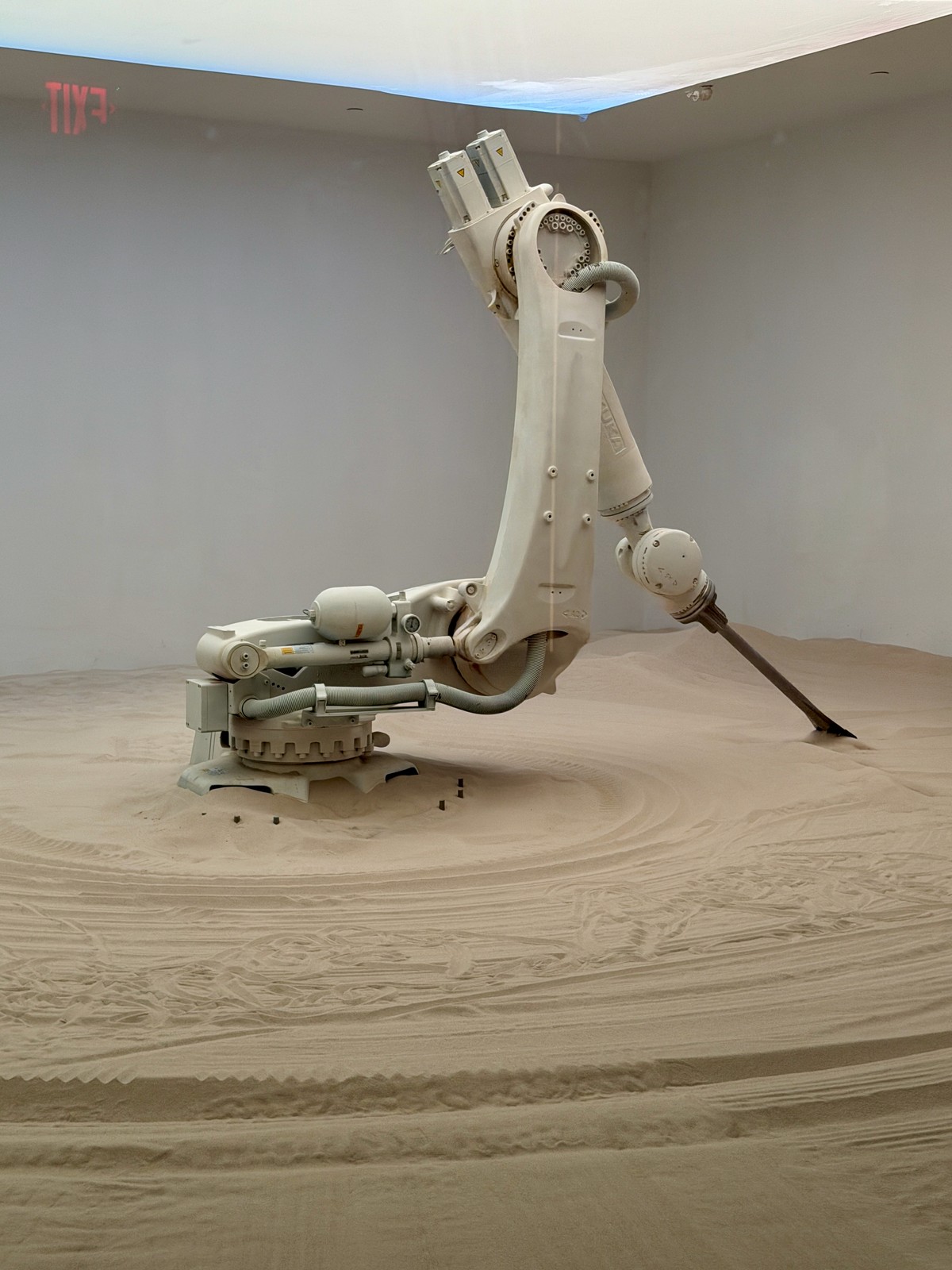

>”AI will either be the greatest equalizer ever invented, or the worst source of injustice,” Gates wrote in the essay titled The Turbulent AI Era Is Here. That is not the soft optimism people expect from a man who helped build Microsoft. It is a warning from someone who has watched enough technology transitions to know how badly they can go.
The tax system is quietly pushing us toward robots
Here is the argument that stopped me. “Right now, if you’re an employer and you hire someone, you pay payroll taxes on their earnings,” Gates wrote. “But if you buy a robot, you can usually write it off right away as a business expense. The tax system nudges you toward replacing people with machines.”
That is true, and it is almost never talked about. My own division has weighed software licenses and headcount against things we could automate, and the math quietly leans toward automation because of incentives nobody wrote on purpose. Payroll taxes, benefits, insurance, training all cost more than a tool you can expense and forget.
Gates is proposing what he calls a “token tax” that would make it more expensive to substitute AI agents and robots for employees. The money, he argues, would fund retraining and a stronger safety net. “It would need to be targeted so it does not slow down the purely beneficial uses of AI, like making medicine and education cheaper,” he wrote. He knows the objection is coming.
Nobody agrees on whether a robot tax is a good idea
The critics have been loud about this for years. Back in 2017, when Gates first floated the idea, former U.S. Treasury Secretary Larry Summers said Gates was “seriously astray” and called the proposal “essentially protectionism against progress.” Robert Seamans of NYU Stern argued around the same time that a robot tax would discourage firms from investing in automation, slow economic growth, and, where robots complement labor, lead to less hiring and lower wage growth.
Both are serious arguments, and I don’t think either one is crazy. Taxing the thing that makes us more productive does feel backward. But Gates has an answer to them: “They’re not considering the broader value of work for individuals and society. And with all the accelerated innovation we will have, we’ll be able to afford a little inefficiency as the price for keeping people employed.”
That line lands differently when you live somewhere like the Philippines, where work is more than a paycheck. It is identity, dignity, and the way a family feeds itself.
What “Human Reserved” really means
The phrase is the heart of the essay. “I’ve started calling this domain human reserved,” Gates wrote. “I like the phrase human reserved because it makes me think of nature reserves — places where we could put buildings and roads, but we choose not to because the loss would be too great.”
His example is personal. His father died of Alzheimer’s in 2020, and Gates has described the 24-hour caregivers who looked after him. “Something in the care they gave my dad was irreplaceably human, no robot could or should have done it,” he wrote. Then the gut punch: “Imagine a robot giving you the awful news that you have an incurable disease. There’s no technical reason why it couldn’t. Yet it shouldn’t.”
There is no real gap between Gates and the skeptics on this part. It is not about whether AI “can” do something. It is about whether it should, and who decides. That is a governance question, not an engineering one.
The disruption will hit faster than the PC era
Gates is careful to say this transition is different from past ones. The computer-in-every-home shift took decades, he argues, because software, costs, and skills had to catch up. AI spreads through devices and systems that already exist, which means disruption hits entry- and mid-level jobs before society has time to adjust.
If you manage a team, you felt this already. It is not the dramatic “everyone’s fired” story from a headline; it’s the quieter shift where junior tasks get absorbed by tools and the rungs of the ladder get farther apart. Gates put it better than I could: “It’s hard to move up the ladder when there is no bottom step to help you get on that ladder.”
The numbers back up the unease. A Pew Research study published in August found 71% of U.S. adults think AI will lead to fewer jobs over the next two decades, up from 64% in 2024. Only 5% believe it will create more. And young people, the ones whose whole careers are still ahead of them, are even more anxious — 73% think they will get fewer career opportunities because of AI.
That generational anxiety is where Gates thinks governments are failing. He sees the odds of an overall negative outcome as “very high.”
Three steps, and a hard reality check
Gates lays out three concrete moves: create national and international institutions to manage the AI transition; define the Human Reserved positions; and change the tax system so companies are not rewarded for replacing workers. He calls it “a monumental task,” comparing the scale to the U.S. government’s post-9/11 reorganization — and then says AI will require “much, much more” than that.
“It is fair to wonder whether the world’s institutions are up to the task of designing and implementing this new architecture,” he wrote. As someone who works inside a government institution, I can tell you that is not a rhetorical question. We are barely keeping up with patch management and system upgrades — the idea that we are ready to redesign the social contract around AI, this year, is optimistic. And the record so far is not reassuring: just last week independent reviews gave AI labs poor marks at containing rogue models, which hardly inspires confidence that they will lead the way on protecting workers.
There is also the funding reality nobody wants to say out loud. Gates notes that a shrinking income-tax base plus bigger retraining and safety-net demands means revenue has to come from somewhere, at a time when budgets are stretched and U.S. borrowing has already crossed $40 trillion. The robot tax is partly an answer to that arithmetic.
Why this matters more than the tax itself
The robot tax is easy to poke at, and I get why. But the conversation it opens is the valuable part. Every argument about whether to tax automation is really an argument about who benefits from AI and who carries the cost.
For me, the “Human Reserved” framing is the piece worth keeping. It forces us to name the jobs that should stay human not because a machine can’t do them, but because a machine shouldn’t. Caregiving. Delivering bad news to a patient. Teaching someone who is discouraged. The work where the presence of a person is the point.
That has real stakes in the Philippines, where the BPO industry and caregiving are not abstract statistics — they employ actual families. If entry-level customer service work is among the first to be absorbed by AI agents, the ladder really does lose its bottom rung for a lot of young Filipinos. I wrote more about what happens when an algorithm becomes the one managing workers in my piece on Uber’s recent fine and algorithmic management. The same instinct to treat people as fungible inputs is at work here, just on a bigger stage.
And it is worth connecting to the wider AI economics picture. The same week Gates asks how we fund retraining, Anthropic is shelling out billions more for compute, racing to build the very models that drive this disruption. The computing power and the social safety net are on two completely separate budgets, and nobody is reconciling them.
I do not think this gets solved by a tax rate
Let me be honest: a single tax rate will not fix any of this. Gates himself does not pretend it will — he calls it part of a “wise response,” not the whole answer. If I had to pick the thread that matters most, it is his insistence that technological capability should not automatically decide what society automates.
That is a principle a chess player recognizes. You do not make the move just because it is available; you make the move that keeps you in the game a few moves down the board. We got good at asking “can we build this?” AI forces us to finally get good at asking “should we?”
There are no easy answers, and I am not going to pretend my side is obvious. But Gates has done something useful by writing an essay that is not a hype piece and not a doom piece. It is a framework — imperfect, debatable, sometimes too tidy — for a problem we have barely started naming. If the poorest and most vulnerable people are not part of whoever benefits from AI, then the “greatest equalizer” line is just marketing. I have written before about how the AI tools people love quietly trade away their data; the labor question is the same pattern at a society-wide scale — the cost and the benefit rarely land on the same people.
Gates ends closer to my own view: “if the world takes the right steps, AI will be a force for good and leave everyone better off.” The clock on deciding those steps is not slow. The only real question left is whether the world’s institutions are up to it.