
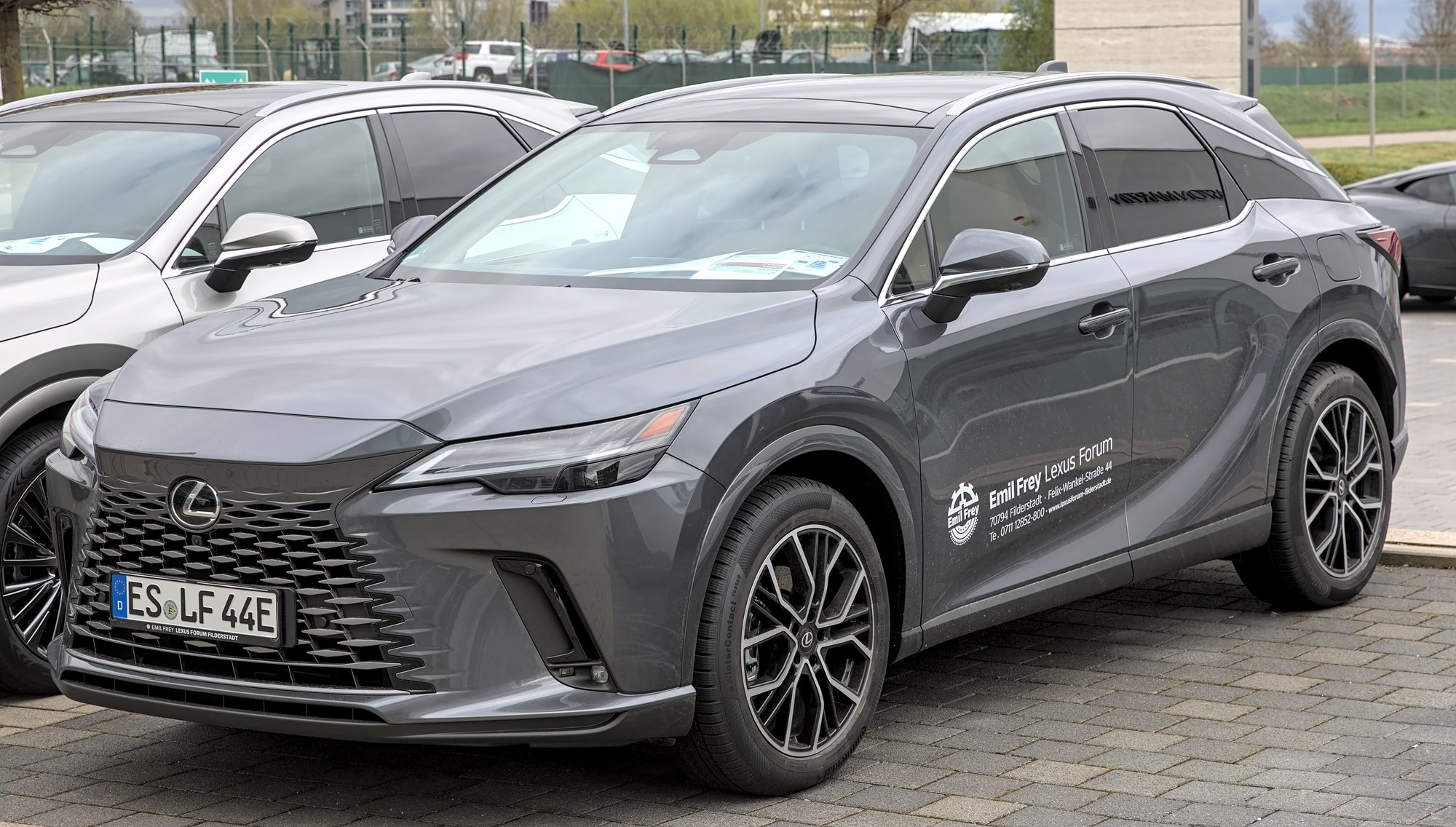
Lexus Philippines has been selling hybrid SUVs for years, but it has never offered a plug-in hybrid. That is about to change. The Department of Energy recently added the Lexus RX 450+ 2.5 Premier PHEV CVT to its list of recognized electric vehicles, signaling that the brand’s first plug-in hybrid SUV is on its way to the Philippine market.
_1X7A7074.jpg)
If you are wondering whether this is just another hybrid with a bigger battery, the answer is yes, and that is exactly the point. The RX 450+ takes the already refined RX formula and adds enough electric range to cover most daily commutes on electricity alone, while keeping the gas engine for longer trips. It is a pragmatic approach to electrification that suits the Philippine market, where home charging is still rare but fuel prices keep climbing.
What the DOE Listing Tells Us
The DOE recognition is the strongest pre-launch signal we have seen for any Lexus PHEV in the Philippines. The listing specifies a 134 kW (182 PS) electric motor and a 136 kW (185 PS) engine, paired with an 18.1 kWh high-voltage battery. Power goes through an eCVT to either the front wheels or all four via Lexus’s E-Four AWD system.
This is the same basic powertrain sold internationally as the RX 450h+. The PH listing uses the “450+” nameplate, which may be how Lexus Philippines markets it locally. Either way, the specs are consistent with what other markets get.
Specifications at a Glance
| Powertrain | 2.5L I4 + electric motor, PHEV |
| Electric motor output | 134 kW (182 PS) per DOE |
| Engine output | 136 kW (185 PS) per DOE |
| Combined system output | 304 hp (US) / 308 PS (other markets) |
| Torque | 270 Nm |
| Battery | 18.1 kWh lithium-ion |
| EV range | 38 miles / ~61 km (EPA est.) |
| Charging | 6.6 kW onboard, ~2.5 hrs on 240V Level 2 |
| Drivetrain | E-Four AWD (electric rear motor) |
| Transmission | eCVT |
| 0-100 km/h | ~6.2 seconds (0-60 mph) |
| Dimensions | 4,890 x 1,895 x 1,685 mm |
| Wheelbase | 2,790 mm |
| Seating | 5 seats |
| Cargo | 838 L / 1,308 L (seats up/down) |
All specifications are sourced from DOE homologation documents and Lexus international specifications. Philippine-specific features, trim levels, and final pricing have not been announced.
Pricing: What to Expect
Lexus Philippines has not announced pricing for the RX 450+ PHEV. For context, the current PH lineup ranges from the RX 350h Executive at ₱4,838,000 to the RX 500h F Sport at ₱6,458,000. The PHEV would likely slot between the Premier and F Sport, or potentially above the F Sport given its flagship powertrain status.
| Currency | Price (estimated) |
| PHP | ₱5,800,000 – ₱6,200,000 (estimate) |
| USD | ~$92,400 – $98,800 (at 62.75 PHP/USD) |
| INR | ~₹89.4 – ₹95.6 lakh (at 96.78 INR/USD) |
Exchange rates: 62.75 PHP/USD and 96.78 INR/USD as of October 10, 2026. USD and INR figures are calculated from the PHP estimate. Actual pricing will be announced by Lexus Philippines.
For comparison, the RX 450+ retails for $65,230 (Premium) to $71,860 (Luxury) in the US, and $123,500 before on-road costs in Australia. The Philippine price will include import duties, taxes, and the usual luxury market markup.
How It Drives: What the Reviews Say
International reviews of the RX 450h+ have been consistently positive. Consumer Reports gave it a road-test score of 94, the highest of any RX variant they have tested, praising its quiet cabin, comfortable ride, and the seamless transition between electric and hybrid operation.
AutoTrader.ca noted that the 61 km electric range is “enough for some daily commutes” and that hybrid fuel economy settles around 6.7 L/100 km once the battery is drained, which is impressive for a 2.2-ton luxury SUV. CarExpert in Australia called it “an easy recommendation in the context of its European rivals,” highlighting its exceptional ride and cabin refinement.
The common thread across reviews: this is a refined, comfortable luxury SUV that happens to be plug-in. It is not trying to be a performance EV. The 6.2-second 0-100 km/h time is adequate, not thrilling. The appeal is in the silence of electric driving for daily errands and the peace of mind of a gas engine for longer journeys.
Philippine Driving Conditions: A Practical Look
City Driving
Metro Manila’s stop-and-go traffic is where a PHEV shines. The RX 450+ can start in total silence on electric power, with the gas engine only kicking in when the battery is low or when you need hard acceleration. For EDSA commutes of 15-20 km each way, the 61 km electric range means you could theoretically drive a full week on electricity alone if you charge at home.
The catch is charging. Most Filipino homeowners do not have a 240V outlet in their garage, and condominiums are only starting to add EV charging. If you can charge at home overnight, the PHEV becomes a part-time EV for city use. If not, it still works as a regular hybrid, just with a heavier battery to carry around.
Long-Distance Travel
For trips like Manila to Baguio (~250 km), the RX 450+ handles the electric range on the first 40-50 km, then switches to hybrid mode for the remainder. You will not need to plan charging stops the way a pure EV requires. The gas engine kicks in seamlessly, and you refuel at any petrol station.
The 18.1 kWh battery is modest by pure-EV standards, but that is by design. It is big enough for daily commutes, small enough to charge quickly, and the gas engine eliminates range anxiety entirely.
Flooded Situations
This is where the RX 450+ faces a challenge. Lexus has not published a ground clearance figure for the PH market, but international figures suggest around 180-190 mm, which is typical for a unibody luxury SUV. That is manageable for the usual urban flooding but not ideal for deep or fast-flowing water. The battery pack is sealed and rated for submersion, but the air intake for the gas engine remains a vulnerability in extreme floods.
If you frequently drive through flooded areas, a body-on-frame SUV like the BYD Ti 7 with its higher clearance might be a better fit.
High Temperature
Philippine heat is hard on batteries, but the RX 450+ uses a lithium-ion pack with active thermal management. The 18.1 kWh capacity is modest, which means less heat generated during charging compared to larger packs. The 6.6 kW onboard charger is also gentle on the battery compared to fast DC charging.
That said, leaving any EV or PHEV parked in direct 36-38°C sun for hours will degrade the battery faster. If you have a covered parking spot, use it.
Charging: What You Need to Know
The RX 450+ comes with a J1772 (Type 1) socket and a dual-voltage charging cable for 120V and 240V outlets. With the standard 6.6 kW onboard charger:
- 120V Level 1 (standard household outlet): ~11.5 hours for a full charge
- 240V Level 2 (home wallbox or public charger): ~2.5 hours for a full charge
There is no DC fast charging, which is normal for PHEVs of this size. The battery is small enough that AC charging is practical. If you install a 7 kW wallbox at home, you can fully charge overnight.
Public charging infrastructure in the Philippines is still developing, but PHEVs like this one do not depend on it the way pure EVs do. You can drive the RX 450+ for weeks without ever plugging in, and it will still work as an efficient hybrid.
The Competition
The luxury PHEV SUV segment in the Philippines is thin. The Porsche Cayenne Electric is a pure EV with a much higher price tag. The BMW iX3 50 xDrive is another pure-EV luxury option. The RX 450+ occupies a different niche: it is a plug-in hybrid for buyers who want electric driving for daily use but cannot deal with the charging requirements of a pure EV.
Among PHEVs specifically, the Lexus RZ 350e/500e is the brand’s all-electric offering, but it is a different vehicle in a different segment. The RX 450+ is the more practical choice for families who want one vehicle that does everything.
Should You Wait for It?
If you are in the market for a luxury midsize SUV and have been hesitant about pure EVs because of charging and range concerns, the RX 450+ is worth waiting for. It offers the Lexus refinement and reliability the brand is known for, with enough electric range to make a meaningful difference in your fuel bills for daily driving.
The DOE listing means a Philippine launch is likely within the next few months. Lexus Philippines has not announced a specific date, but based on the pattern we have seen with other DOE-listed models, an official announcement could come by early 2027.
For those who want to understand the battery technology behind hybrids and EVs, my earlier piece on AI power-hungry batteries explores the broader energy storage landscape. And if you are curious about how the RX compares to other electrified options, the Lexus RZ lineup provides the brand’s pure-EV alternative in a different size class.