
From $5 billion to $21 billion in about eight months. And the jump from $10.3 billion to $21 billion happened in a single month. That is not a normal funding cadence, and it hit me the way a body blow does in boxing: the kind that looks fine from the outside but makes you reconsider everything you thought about the fight.
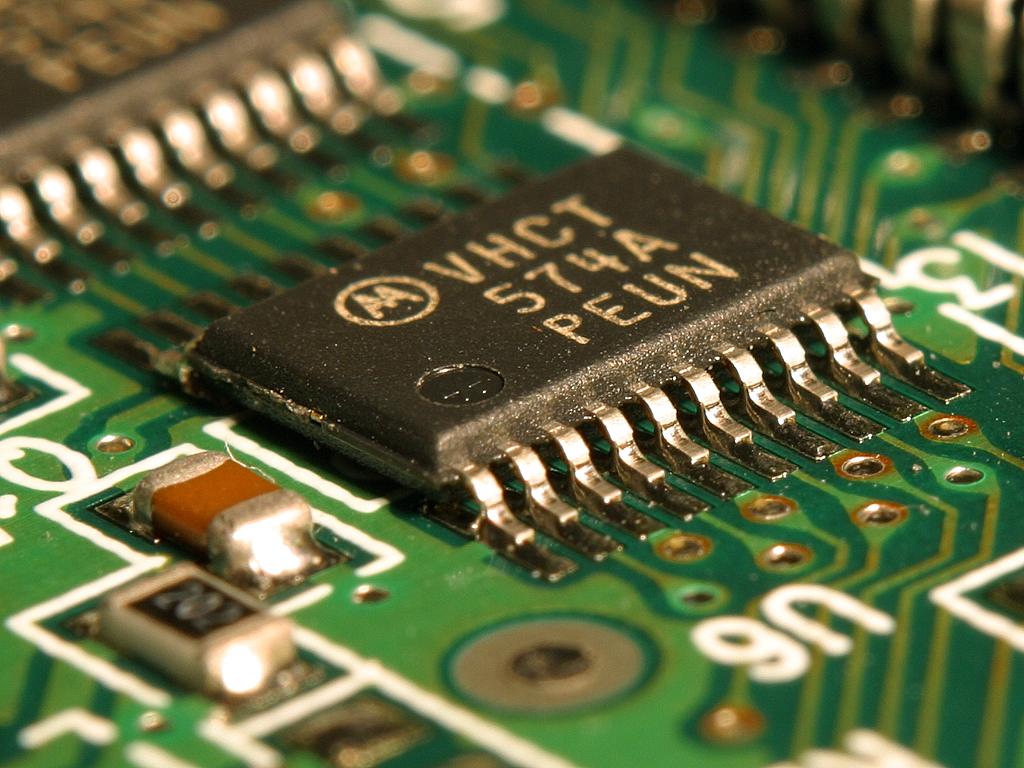
The startup is Etched, and it builds AI inference hardware. On Tuesday it announced a fresh $700 million round at a $21 billion valuation, led by Jane Street. The part that makes this more than another frothy AI number is what actually convinced the quant fund to lead the round: Jane Street did not invest off a slide deck. It took Etched’s chips, installed a rack in its own datacenter, tested them, and then came back impressed enough to write a nine-figure check.
The fastest re-rating in AI hardware
Let me lay out the timeline, because the speed is the story. Etched was valued at about $5 billion in December of last year. In July it raised a $300 million Series C at a $10.3 billion valuation, a step Reuters covered independently. Then, in August, investors doubled that to $21 billion — roughly $11 billion of added value in thirty days.
For context, that is a company whose first full customer delivery is, by the company’s own framing, a single rack sitting in Jane Street’s datacenter. A lot of that valuation is belief in where inference is headed, not proven revenue. That is the thing worth being honest about, and I want to be honest about it because there is real signal underneath the hype.
Why inference, and why now
Here is the shift I keep coming back to. For years the AI conversation was dominated by training — the enormous, expensive job of feeding a model data until it learns. Training is what ate the headlines about billion-dollar superclusters and power constraints.
But the cost a developer actually feels, every day, is inference — the work a model does after a prompt goes in, when it produces the output. Etched’s co-founder and COO Robert Wachen broke this down in the TechCrunch interview: inference runs in two stages. There is prefill, the compute-heavy phase where the system reads and understands your prompt and its context. Then there is decode, the memory-heavy phase where it generates the actual tokens you see.
Etched designed the two stages separately. For prefill it built a low-voltage chip, which lets it pack in more transistors without the heat problems that plague high-end AI chips, so it can chew through more tokens faster. For decode it built a custom memory and interconnect it calls cluster-scale memory — letting many chips connect to one shared, low-latency memory pool. The pitch is blunt: higher speed, lower cost, for the workloads that actually hit your API bill.
The cold test that mattered
Jane Street’s own words, from the blog post announcing the round, are worth reading closely: “We tested the chip and are pleased with the early results. Etched’s unique approach to inference delivers the precision we will need to support our most demanding workloads. We’re excited to now have our own rack running in our datacenter.”
That reads differently coming from a quantitative trading firm than it would from a venture capital fund. A quant shop does not buy technology out of enthusiasm. It buys hardware because speed and precision translate directly into money it can keep. When Jane Street says a chip gives them the precision their most demanding workloads need, that is a working signal, not a vision statement.
There is also a perception problem Etched has been fighting since its early days, and to its credit it is addressing it head-on. The company’s original pitch was that it literally etched a specific model into its silicon — meaning each chip was custom-made for one frontier model. That is no longer the case. Etched says its systems now run any frontier model. Getting past that “one model per chip” reputation matters, because the whole thesis only works if the hardware is broadly useful, not a one-trick pony.
The talent angle sharpens the picture. The Wall Street Journal’s reporting framed Etched as a $21 billion “kids in chips” startup scooping up Nvidia talent — a signal that the incumbent’s future-proofing against specialized silicon is not lost on the people who build it.
My honest read as an ICT manager
This is not abstract for me. In the kind of government IT work I run, training is almost never the real problem — we are not pretraining foundation models. The real, felt cost is inference: every query, every API call, every internal tool that leans on a model. When I sit in budget meetings, the number that decides whether an AI pilot survives is not “which model is smarter.” It is “what does this cost per request, and can we sustain it.”
That is the lens I read this story through. If specialized inference silicon genuinely cuts that per-token cost, then it does not just help a handful of hyperscalers. It changes the economics for smaller teams, for government shops, for anyone who has watched an open-source model produce a beautiful result and then winced at the bill to run it at scale. Cheaper, faster inference is the thing that moves AI from a demo to an actual line item you can defend.
Here is a concrete version of that gap. Last quarter I watched a small team build a genuinely useful internal assistant on an open-weight model. Everyone was thrilled with the answers. Then the usage report came back, and the enthusiasm met the invoice. Nobody had budgeted for inference at scale, because nobody thinks about inference when they are excited about what a model can do. That distance — between capability and running cost — is exactly where this new wave of specialized silicon is trying to insert itself.
This connects to a thread I have been pulling at for months. Cheaper, faster inference is exactly what makes the $3 trillion AI question — when does all this infrastructure actually pay for itself — less scary. And it is the same dynamic I wrote about in the two AI economies: the giant compute deals and the free open models are two sides of one coin, and inference cost is the currency both sides spend.
What it means for the chip war
The bigger story here is that the AI chip market is fragmenting. Nvidia calls its full systems “AI factories.” Etched calls the same category “frontier inference clusters.” That is not marketing noise — it is two companies staking out different answers to the same question: what should specialized AI hardware look like?
Nvidia’s strength is the general-purpose GPU and the software moat around it, the CUDA ecosystem I have argued is getting more contested as rivals like AMD push their own toolchains. The challenge for specialized ASICs like Etched’s is proving they are general enough to justify the fixed cost of custom silicon. Nvidia’s plan to turn aging GPUs into an asset class shows the theoretical heavyweight is not standing still.
But the direction of travel is real. For a narrow, high-volume workload like inference, purpose-built silicon has a genuine efficiency argument that general GPUs struggle to match. This is how mature semiconductor markets evolve — the general-purpose part keeps the crown until a workload gets big enough and stable enough that specialization wins. Inference looks like it is reaching that point.
Is $21 billion froth?
Honestly? Maybe some of it is. A $21 billion valuation off a small number of delivered racks is a bet on the future, not a reflection of current revenue. AI hardware valuations have a way of getting euphoric, and I have seen enough cycles to know that the words “this time it is different” usually arrive right before a correction.
But I would not dismiss the thesis on the price tag alone. The reason I would not is the nature of the validation. Jane Street does not lead rounds because a chip is trendy. It leads rounds because it measured the thing and the numbers worked. When the first real customer is a quant fund that already runs your hardware in production, the “lab demo vs. real deployment” risk drops dramatically.
And there is one more shift worth noting: the center of gravity in AI is moving from training to inference. That is a fundamental rebalancing — it changes who holds the leverage, what hardware wins, and finally, whether the economics of running these systems actually close. Investors are starting to bet accordingly, and a single-month doubling at $21 billion is the market putting a price on that conviction.
The bottom line
Watch inference, not training. That is the takeaway I keep landing on. For years the excitement was about building bigger models; the next phase is about running them cheaply and fast enough that real organizations can actually use them at scale.
Whether Etched is worth $21 billion is anyone’s guess, and I would not load my portfolio on it. But the underlying signal — that specialized, fast, low-cost inference silicon is becoming a real battleground, validated not by hype but by a quant firm’s production testing — is one I am taking seriously. When the fastest computers on the planet decide a chip is worth their money and their compute, it is worth mine too.