
Foldables have always asked you to compromise. Pick two: good camera, big battery, or reasonable price. The Vivo X Fold 6 is the first foldable I’ve tested that genuinely delivers on all three — but it still asks for one compromise, and it’s a big one.
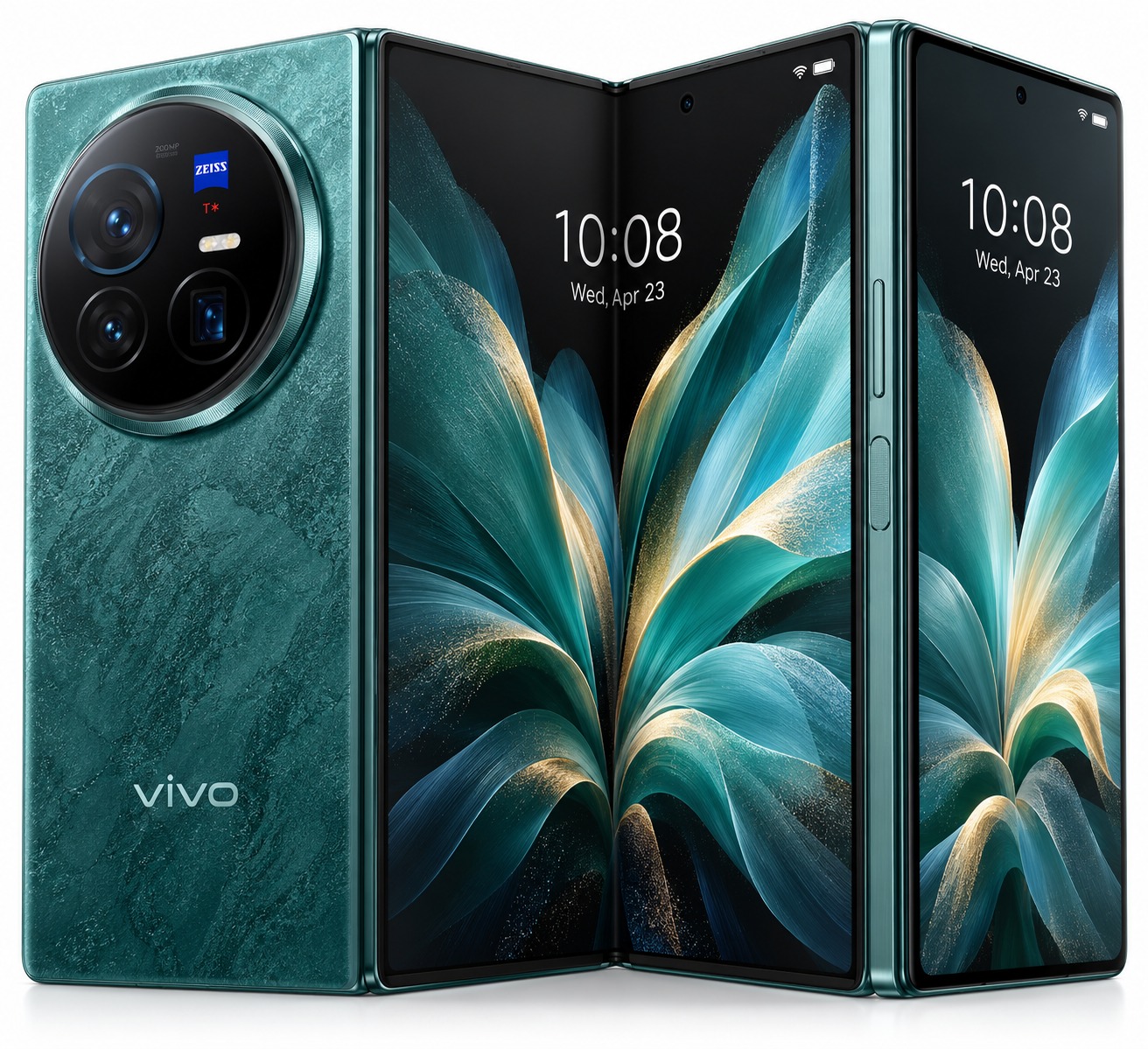
Launched in India on October 6, 2026 at ₹2,19,999, the X Fold 6 is Vivo’s most ambitious foldable yet. It packs a 200MP Zeiss main camera, a 6,900mAh battery that Vivo claims is the largest on any foldable, and the MediaTek Dimensity 9500 Super Edition chip. After two weeks with it, here’s my full assessment.
Design & Build Quality
At 228 grams and 4.4mm unfolded, the X Fold 6 is impressively slim for a foldable with this much battery. Folded, it measures 157.16 x 74.26 x 9.4mm — compact enough to pass as a regular slab phone. The glass-and-aluminium build feels premium, and the textured back panel gives a confident grip in both modes.
The hinge is buttery smooth. There’s a satisfying resistance when you unfold it, and the crease is barely visible — Vivo has done excellent work here. The camera island is large and protrudes noticeably, which makes the phone wobble on a flat table. It’s not a dealbreaker, but it’s the one design element that feels unpolished.
The X Fold 6 carries IP58, IP59, IPX8, and IPX9 ratings — comprehensive dust and water resistance that matches the iPhone Duo and exceeds most competitors. The side-mounted fingerprint scanner is fast and reliable, and there’s a shortcut button above the power button that you can map to any function.
Compared to the Samsung Galaxy Z Fold8 Ultra, the X Fold 6 is slightly lighter (228g vs 234g) and noticeably thinner when unfolded (4.4mm vs 4.6mm). It feels more like a traditional phone when folded, which matters if you’re coming from a slab flagship.
Display
The inner display is an 8.02-inch AMOLED panel with 2504 x 2312 resolution, 1-120Hz LTPO refresh rate, and up to 5,000 nits of peak brightness. The cover screen is a 6.51-inch AMOLED with 2528 x 1120 resolution and the same 1-120Hz adaptive refresh. Both support HDR10+ and Dolby Vision.
In daily use, the inner display is stunning. Colours are vibrant without looking oversaturated, skin tones appear natural, and contrast is consistently strong. I watched several HDR movies on it, and the experience was genuinely tablet-like. The crease is there if you look for it, but during normal use it disappears.
The cover screen is equally impressive. At 6.51 inches, it’s large enough to use as a full phone display — I found myself doing most quick tasks without unfolding. The 1-120Hz LTPO panel is smooth and responsive, and brightness is excellent even under direct sunlight.
One complaint: the inner display’s 424 ppi is slightly lower than the Xiaomi 18 Fold‘s 460 ppi. You won’t notice it in normal use, but side-by-side the difference is there.
Performance
The Dimensity 9500 Super Edition is built on a 3nm process and paired with 12GB of LPDDR5X RAM and 512GB of UFS 4.1 storage. Geekbench 7 scores came in at 1,865 single-core and 6,748 multi-core, with a GPU score of 13,564. Those numbers put it behind the Snapdragon 8 Elite Gen 5 in the Galaxy Z Fold8 Ultra but ahead of the Google Pixel 10 Pro Fold.
In real-world use, the X Fold 6 is fast. Apps open instantly, multitasking is smooth, and I never encountered lag or stutter. BGMI ran comfortably above 90fps on the inner display, and Rainbow Six Mobile played smoothly without noticeable heating. The 5,000mm vapour chamber keeps thermals in check — after 30 minutes of gaming, the phone was warm but not hot.
The 12GB RAM is adequate but feels like a step back from the X Fold 5’s 16GB. Heavy multitasking with multiple apps open occasionally triggered reloads. It’s not a dealbreaker at this price, but it’s noticeable if you’re coming from the previous generation.
Camera
This is where the X Fold 6 truly shines. The 200MP Samsung HPB main sensor with f/1.68 aperture and OIS is the best camera I’ve used on any foldable. It’s paired with a 50MP ultrawide (f/2.05) and a 50MP 3x periscope telephoto (f/2.57, OIS) with up to 100x digital zoom.
Daylight photos are exceptional. Detail is outstanding, dynamic range is wide, and colours are natural with that characteristic Zeiss warmth. The 200MP mode captures incredible detail — you can crop heavily and still get usable images. The 3x telephoto is impressively usable up to around 8x zoom before quality begins to taper off.
Low-light performance is a big step up from the X Fold 5. The larger sensor and improved processing produce cleaner night shots with better colour accuracy. The ultrawide is decent in good light but struggles in low light — it’s the one camera that feels like an afterthought.
Video goes up to 8K 30fps and 4K 120fps with Dolby Vision support. The 20MP front cameras on both displays are fine for video calls but nothing special. Compared to the vivo V80‘s Zeiss-tuned cameras, the X Fold 6’s 200MP main sensor captures noticeably more detail, especially in good light.
Battery & Charging
The 6,900mAh battery is the largest on any foldable phone today. Vivo uses silicon anode and semi-solid-state technology, which they say helps in cold weather. The rated capacity is 6,670mAh.
In my testing, the X Fold 6 consistently delivered 7-8 hours of screen-on time under heavy use and around 1.5 days on standby. The PC Mark battery test returned 26 hours and 41 minutes — excellent for a foldable with this much display to power.
Charging is 80W wired and 40W wireless. A full charge took 55 minutes wired, which is reasonable for a battery this size. The 40W wireless charging is a nice bonus — most foldables skip wireless charging entirely. There’s also reverse wireless charging for accessories.
Battery life is a clear upgrade over the Xiaomi 18 Fold‘s 6,000mAh unit. If battery endurance is your priority, the X Fold 6 is the foldable to beat.
Software
The X Fold 6 runs OriginOS 7 Fold based on Android 17 — the first Vivo phone to ship with Android 17 out of the box. The foldable-specific software is excellent: multi-window desktop mode, up to 5-app multitasking, and seamless app continuity when folding and unfolding.
Vivo promises 5 years of OS updates and 7 years of security updates. That’s a strong commitment, though it’s one year behind Samsung’s 7-year OS update promise for the Galaxy Z Fold8 Ultra.
There’s some pre-installed bloatware — the usual third-party apps that you can uninstall but shouldn’t have to. It’s not as clean as the Oppo F35 Pro‘s ColorOS 16.5, but it’s manageable. The AI features are useful rather than gimmicky — AI erase, AI summarization, and smart reply all work well.
Pros and Cons
| Pros | Cons |
|---|---|
| Best camera on any foldable — 200MP Zeiss main with excellent detail | ₹2,19,999 is ₹70,000 more than the X Fold 5 |
| 6,900mAh battery is the largest on a foldable — 7-8 hours SOT | 12GB RAM is a downgrade from the X Fold 5’s 16GB |
| Slim and light for a foldable — 228g, 4.4mm unfolded | Camera island protrudes and causes wobble on flat surfaces |
| Excellent dual displays with 1-120Hz LTPO and Dolby Vision | Ultrawide camera struggles in low light |
| 80W wired + 40W wireless charging — rare for a foldable | Some pre-installed bloatware |
| IP58/IP59/IPX8/IPX9 comprehensive water and dust resistance | OriginOS 7 Fold has a learning curve if you’re coming from stock Android |
Should You Buy This?
Buy it if
- You want the best camera on a foldable — the 200MP Zeiss main is genuinely class-leading
- Battery life is your top priority — 6,900mAh is unmatched in the foldable category
- You want a foldable that feels like a regular phone when folded
- You value wireless charging — 40W is rare on foldables
Skip it if
- You’re on a budget — ₹2,19,999 is a lot of money, even for a flagship foldable
- You need maximum RAM for heavy multitasking — 12GB feels tight at this price
- You prefer a clean software experience — OriginOS 7 Fold has bloatware
- You want the longest update commitment — Samsung offers 7 OS updates vs Vivo’s 5
Final Verdict
The Vivo X Fold 6 is the most well-rounded foldable I’ve tested. It fixes the two biggest weaknesses of the X Fold 5 — camera and battery — while keeping the slim, premium design that made the original great. The 200MP Zeiss camera is genuinely the best on any foldable, and the 6,900mAh battery delivers endurance that slab phones can’t match.
But ₹2,19,999 is a hard ask. That’s ₹70,000 more than the X Fold 5, and you’re getting less RAM (12GB vs 16GB) in exchange for a better camera and bigger battery. The Samsung Galaxy Z Fold8 Ultra offers better performance and longer updates at a similar price, and the iPhone Duo is the better choice if you’re in the Apple ecosystem.
That said, if you want the best camera and battery life on a foldable — and you’re willing to pay for it — the X Fold 6 delivers. It’s not the value pick, but it’s the quality pick. For photographers and power users who want a foldable that doesn’t ask them to compromise on the two things that matter most, this is the one to get.