
Kia Philippines is about to make a move that most people didn’t see coming. While the EV conversation here usually revolves around crossovers and sedans, the company is bringing in something far more practical: the Kia PV5 Cargo, a purpose-built electric van designed for businesses, fleet operators, and commercial transport. And it lands in October 2026.
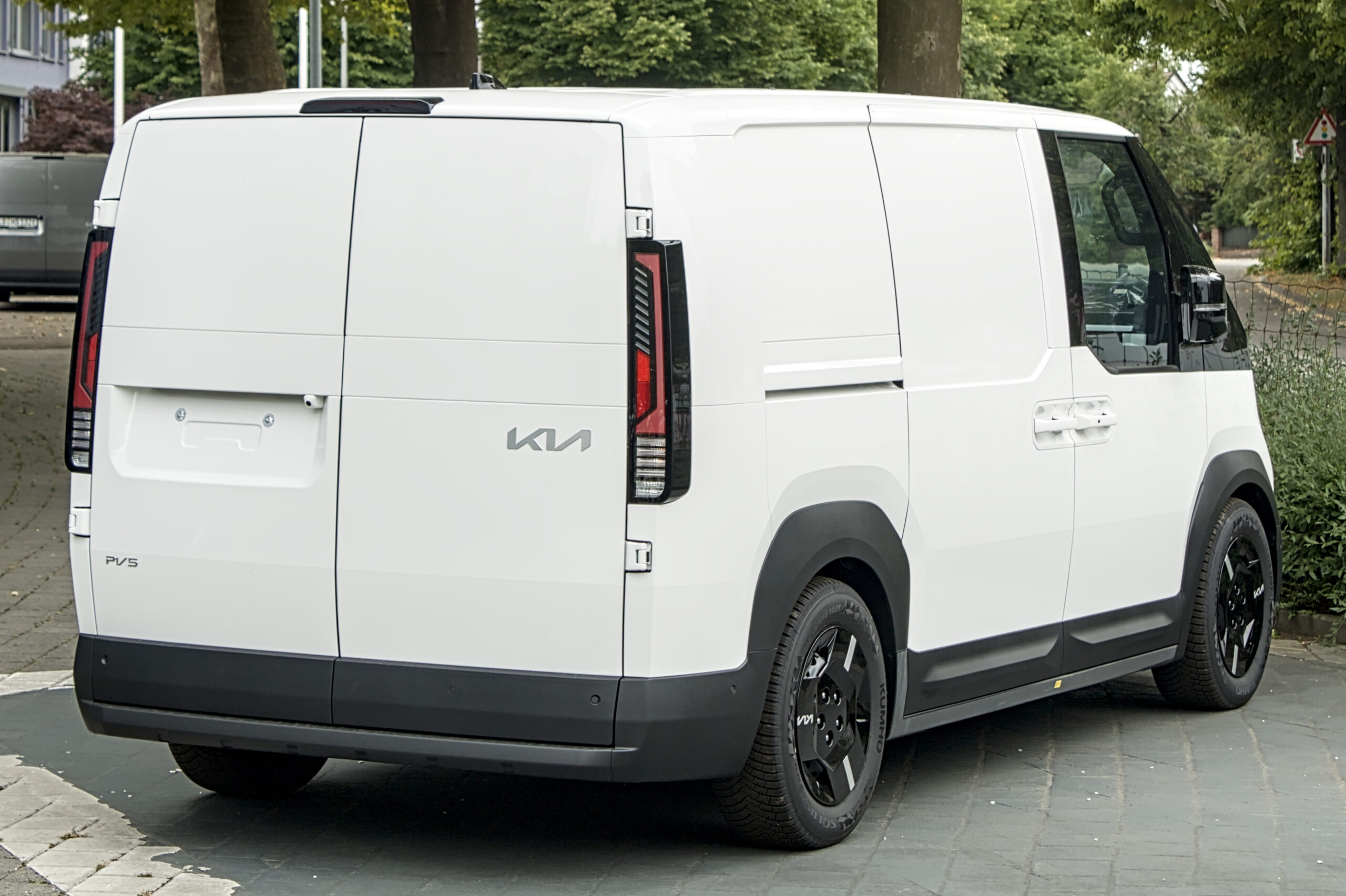

This isn’t a converted ICE van with a battery stuffed underneath. The PV5 sits on Kia’s E-GMP.S platform, a dedicated electric commercial vehicle chassis that optimizes interior space, loading efficiency, and drivetrain packaging. It recently won the 2026 International Van of the Year award, the first Korean vehicle and Asia’s first electric van to do so. That’s not a minor trophy. It signals that Kia is serious about the commercial EV segment, and the Philippines is one of its first Southeast Asian markets.
What Exactly Is the Kia PV5 Cargo?
The PV5 is a battery-electric van built on a modular platform. The Cargo variant is the first to arrive in the Philippines, targeting logistics companies, delivery fleets, and businesses that need a reliable, low-running-cost workhorse. It’s not trying to be a family hauler. It’s trying to be the smartest way to move goods around a city.
The “Long” version measures 4,695 mm long, 1,895 mm wide, and 1,899 mm tall, with a 2,990 mm wheelbase. That’s compact enough for urban maneuverability but tall enough to swallow serious cargo. The advertised cargo volume is 4,420 liters with a maximum payload of 790 kg. The load floor sits just 419 mm off the ground, which makes loading and unloading far easier than a typical van.
Specifications at a Glance
| Motor | Permanent Magnet Synchronous (front) |
| Max Power | 120 kW (163 hp) |
| Max Torque | 250 Nm |
| Battery (Standard Range) | 51.5 kWh NCM |
| Battery (Extended Range) | 71.2 kWh NCM |
| Range (NEDC, Standard) | 384 km |
| Range (WLTP, Extended) | 416 km |
| DC Fast Charge | Up to 150 kW, 10-80% in ~30 min |
| AC Charging | 11 kW (Type 2) |
| Cargo Volume | 4,420 L |
| Max Payload | 790 kg (Standard) / 690 kg (Extended) |
| Dimensions (L x W x H) | 4,695 x 1,895 x 1,899 mm |
| Wheelbase | 2,990 mm |
| Turning Radius | 5.5 m |
| Battery Warranty | 8 years / 160,000 km |
| V2L | Yes |
Philippine Pricing (Estimated)
Kia Philippines has not announced official SRP for the PV5 Cargo. Based on European pricing (Cargo MR Essential at €39,190, Cargo LR Essential at €43,190) and typical PH market adjustments, here are reasonable estimates:
| Variant | PHP (est.) | USD (est.) | INR (est.) |
| Standard Range (51.5 kWh) | P1,800,000 – P2,200,000 | $28,700 – $35,100 | ₹27.7 lakh – ₹33.8 lakh |
| Extended Range (71.2 kWh) | P2,200,000 – P2,600,000 | $35,100 – $41,500 | ₹33.8 lakh – ₹40.0 lakh |
Rates used: 62.64 PHP/USD, 96.41 INR/USD (open.er-api.com, Oct 6 2026). These are projections, not confirmed prices. Kia will likely announce final figures closer to the October launch.
What Others Are Saying
The PV5 Cargo has been reviewed extensively in other markets, and the consensus is strong. Electrifying.com named it “Van of the Year” at their 2026 awards, while Parkers and News UK gave it multiple “Van of the Year” titles. What Van? awarded it a perfect 10/10, the only electric LCV to receive that score in their 2025 evaluations.
The Independent’s review called it “one of the cleverest family EVs on sale,” noting its Guinness World Record for the longest distance traveled by an electric van on a single charge (430 miles on an urban route). CarsGuide Australia praised its compact dimensions, ride comfort, and the way it carves out a niche between small vans and mid-size commercial vehicles.
The common thread in reviews: the PV5 Cargo drives more like a car than a commercial van. The 5.5-meter turning radius makes it surprisingly nimble in tight urban environments, and the forward driving position gives excellent visibility. For a delivery fleet navigating EDSA traffic or provincial roads, that matters.
Philippine Practical Considerations
City Driving and Fleet Use
The PV5 Cargo is built for this. The compact footprint and tight turning radius make it ideal for Metro Manila’s congested streets. The 419 mm step-in height is a genuine advantage for delivery drivers who load and unload dozens of times a day. Electric torque means quick acceleration from stoplights, and the low running cost (estimated at P2.4-3.0 per km for home charging) undercuts diesel vans significantly over a fleet’s lifetime.
For context, the XPeng Philippines launch earlier today showed that Chinese EV brands are aggressively targeting the PH market. Kia’s entry with a commercial vehicle is a different play: it’s not competing on price or tech specs, it’s competing on reliability, fleet economics, and the kind of after-sales network that businesses need.
Long-Distance Travel
The Extended Range variant’s 416 km WLTP range is more than enough for Manila-to-Baguio (250 km) or Manila-to-Legazpi (350 km) with margin to spare. The 150 kW DC fast charging means a 10-80% top-up in about 30 minutes, which is reasonable for a lunch stop. For provincial delivery routes, the PV5 Cargo can handle a full day of stops without range anxiety.
The Geely Monjaro EM-i launching the same month shows the PHEV alternative for buyers who want electric driving with gas backup. The PV5 Cargo is a pure BEV, which means zero tailpipe emissions and lower maintenance, but it requires charging infrastructure planning for longer routes.
Flooded Situations
This is where the PV5 Cargo needs careful consideration. Kia has not published an official ground clearance figure for the PV5 Cargo, and the low step-in height (419 mm) suggests the battery pack sits relatively low. For a commercial vehicle that may encounter flooded streets during typhoon season, this is a real concern.
The battery pack is sealed to IP67 standards (typical for Kia EVs), which means it can handle temporary submersion. But the low step-in height and the van’s flat underbody mean water ingress into the cabin or electrical components is a risk in deep floods. Fleet operators should avoid driving through water deeper than 200 mm, and the PV5 Cargo is not designed for off-road or extreme flood conditions.
The Mazda CX-80 PHEV that appeared on the DOE list earlier this week offers a different approach: a higher-riding SUV with a hybrid powertrain that doesn’t depend on charging infrastructure. For businesses operating in flood-prone areas, that might be the safer bet.
High Temperature
The PV5 Cargo uses NCM (nickel manganese cobalt) battery chemistry, which is energy-dense but requires active thermal management. Kia’s E-GMP.S platform includes liquid cooling, which is essential for the Philippines’ 36-38°C ambient temperatures. The battery will degrade faster if consistently charged in extreme heat without thermal management, but the liquid cooling system should handle normal operating conditions.
For fleet operators, the key is to schedule DC fast charging during cooler parts of the day (early morning or evening) and avoid leaving the vehicle in direct sunlight for extended periods. The 8-year battery warranty provides peace of mind, but proper thermal management will extend the pack’s useful life beyond the warranty period.
The Bottom Line
The Kia PV5 Cargo is not a vehicle for everyone. It’s a tool. For delivery companies, logistics firms, and businesses that operate fleets in Metro Manila and nearby provinces, it represents a genuine shift: lower running costs, zero tailpipe emissions, and a driving experience that doesn’t feel like a compromise.
The October launch will reveal final pricing and variant availability. If Kia prices the Standard Range competitively (under P2 million), it could undercut many diesel vans on total cost of ownership over a 5-year fleet cycle. The Extended Range variant makes sense for businesses that run longer routes or don’t have reliable overnight charging.
The Philippine EV market is evolving fast. From the XPeng X9 and L03 launching today to the Kia PV5 Cargo arriving next month, the options for businesses and consumers are expanding beyond the usual crossover and sedan segments. The question is no longer whether EVs are coming to the Philippines. It’s whether your business is ready to use them.