
Samsung Galaxy A18 4G in Singapore: A Different Chip, the Same Good Phone
It does not happen often that the same handset arrives in two different markets with two completely different processors, but Samsung has done exactly that with the Galaxy A18 4G. The phone first made it to Europe in September with Samsung’s own Exynos 1610 chip, and when it finally reached Singapore earlier this week, the manufacturer quietly swapped in a MediaTek Helio G99+ instead. Same body, same screen, same camera set, different silicon underneath. Our Oppo Reno17 review covered the same budget Android price band in detail earlier this week.
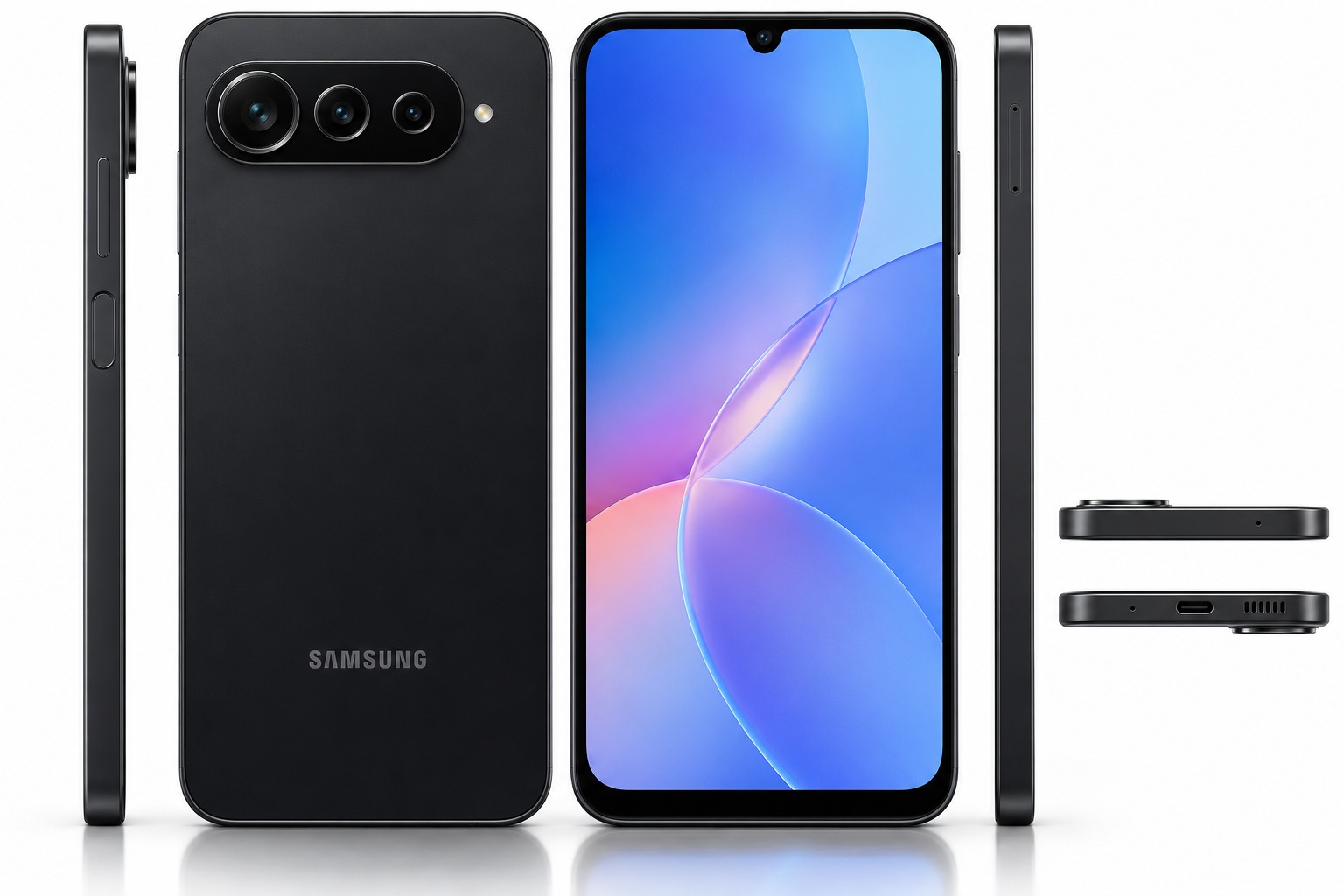
Before we go anywhere, a quick note on the variant: this is the Singapore launch only. The European A18 4G runs the Exynos 1610, while the Singapore model uses MediaTek’s Helio G99+ on a 6nm process. Samsung keeps the rest of the spec sheet identical across both markets. That regional split is the whole story here, so let’s start with the parts that do not change.
Design and Build Quality
The Galaxy A18 4G is a slab of polished aluminum around a plastic back, measuring 164.4 by 77.9 by 7.7 mm and weighing 196 grams. It carries a compact, almost dainty feel for a phone of this size, and the side-mounted fingerprint scanner reads cleanly and instantly. The three available colours are Black, Light Blue and Silver. The front is shielded by Corning Gorilla Glass 3, a step down from the more common Gorilla Glass Victus or Victus 2 found on more expensive rivals, but it still resists the minor drops and pocket scrapes that define everyday life. The build earns a modest durability grade: fine for a mid-range phone, but do not expect it to survive a fall from a table.
Display
The 6.7-inch Super AMOLED panel runs at Full HD+ resolution (2,340 by 1,080) with a 90Hz refresh rate and an Infinity-U notch. It is a clean, comfortable display that stays bright and colourful in ordinary daylight, though the screen does not reach the peak brightness of the higher-end A-series models. The 90Hz panel is a solid mid-range choice and noticeably smoother than the 60Hz panels you still find on some budget phones, but again it falls short of the 120Hz panels that have become standard up the segment. If you want buttery scrolling and buttery games. We covered the same panel series at 120Hz in our Galaxy F70 5G review, if you want a head-to-head on the brighter, faster display.
Performance
This is where the Singapore variant takes the spotlight. Under the hood sits the MediaTek Helio G99+ at 6nm, a chip that is fine for everyday use: social media, video streaming, casual games, and a handful of background apps all run without complaint. In heavier gaming, the chip delivers acceptable frame rates but does not hold up well under sustained load, and the phone runs warm. The European Exynos 1610 in most reviews comes out slightly ahead in synthetic benchmarks, though the gap is narrow enough that it rarely shows up in real-world use. The pin-processing takeaway: this is a phone that will satisfy you for a year or two, and then it is time to think about an upgrade. Expansion is not an issue, with up to 2TB support via a microSD card.
Camera
The rear camera system is a triple setup: a 50MP main sensor, a 5MP ultrawide, and a 2MP macro lens. The 50MP primary is a solid workhorse: daylight shots are crisp, colours are well balanced, and the device handles progressive scans acceptably when the light turns to dusk. The ultrawide adds a wide-angle perspective that a 50MP main alone cannot offer, and the 2MP macro is essentially a party trick, useful for close-ups of textures and flowers rather than anything else. The 13MP front camera handles selfies and video calls without embarrassment. It is a competent camera for the price, not a great one. In low light, expect noise and softer detail, which is fair for a sub-15,000-peso phone.
Battery and Charging
A 5,000mAh cell lives comfortably under the back panel, and with the mid-range Helio G99+ underneath, a full day of moderate use is a comfortable guarantee. The 25W wired charger is adequate for a phone of this tier, but it is nowhere near the 45W, 60W or even 100W charging speeds found on more premium budget and mid-range flagships. Expect roughly two hours of charging from empty to full, which is fine if you charge overnight or during a workday, and less fine if you habitually charge on the go. There is no wireless charging, a gap that is increasingly noticeable as the price band moves up.
Software
Out of the box the phone runs Android 17 with Samsung’s One UI 9 skin. The skin is clean, the one-handed usability is decent, and the inclusion of Circle to Search and Find the Look, plus Google Gemini and Perplexity access, gives the budget phone a surprisingly useful set of tools. Samsung promises up to six generations of OS upgrades and six years of security updates, a very generous long-term support slate for a phone in this class. Samsung Knox Vault adds hardware-based data protection. The phone is not released without its share of bloatware, but it is far less intrusive than what you will find on cheaper rivals.
Pros and Cons
| Pros | Cons |
|---|---|
|
The Helio G99+ Singapore variant will actually be faster than the Exynos version on launch day |
25W charging is slow; do not buy for the fast-charge claim |
|
164.4 x 77.9 x 7.7 mm, 196 g, Android 17 + One UI 9, clean skin with no bloatware |
90Hz screen is not as smooth as the 120Hz panels on higher-priced rivals |
|
5,000mAh battery and six years of OS and security updates, six OS generations |
No wireless charging, no telephoto lens, and no water resistance rating above IP64 |
|
50MP main + 5MP ultrawide + 2MP macro rear array, 13MP front camera |
Mid-range performance; does not hold up under sustained gaming or heavy multitasking |
|
Gorilla Glass 3 on the front, side-mounted fingerprint scanner |
IP64 is dust-tight only; immersion protection (like an IP68 claim) is not included |
|
SGD 328 / ~PHP 16,280 — the cheapest 50MP triple-camera phone in the segment |
The European Exynos 1610 version ships the same hardware at the same price, which calls the Singapore chip swap into question |
Should You Buy This?
Buy it if
-
You want a 50MP triple camera at the lowest possible price and do not care about telephoto zoom
-
You spend most of your day on social media, videos, and light multitasking and want a reliable daily driver under SGD 400
-
You are a Samsung loyalist who values a clean One UI experience and the six-year update commitment more than raw performance
-
You want a local Singapore phone on launch day — this is a genuine first-weekend availability choice
Skip it if
-
You want a 120Hz screen and fast charging as table stakes; both will feel dated within a year. The OnePlus Ace 7 Pro shows what a real 120Hz screen + fast charging looks like in this range.
-
You game the lead or play heavy titles for long stretches; the Helio G99+ will not cope with sustained load
-
You need a telephoto lens; the rear setup is prime-only, and a separate ultrawide and macro lens do not change that
-
You live near water or in a damp environment; IP64 is not a water-resistant rating, only a dust-resistant one
Final Verdict
The Galaxy A18 4G Singapore is a solid entry-level phone that punches above its price class in software support and design, but it is not a fast charger, it does not reach the performance of the mid-range flagships, and the regional chip swap from Exynos to MediaTek adds an interesting footnote that probably does not change the day-to-day experience. Samsung has delivered a clean, well-supported, six-year-upgrade phone at SGD 328, and it is the most affordable way to get a genuine 50MP triple camera and a 6.7-inch Super AMOLED panel in 2026. The Helio G99+ does not sound like a flagship chip, but in this price band it does the job without embarrassment. If you can live with 25W charging and a 90Hz screen, the A18 4G is a sensible, honest pick that makes the most of its price.
For the Singapore buyer at SGD 328, the phone wins on value. For the regional sceptic, note that the Singapore model gets MediaTek, and the European one gets Exynos, and that the difference in daily life is marginal at best. Either way, the Galaxy A18 4G is the rare budget phone that gives you six years of software support, and that alone is worth the price — a reminder that the Xiaomi 18 is the closest comparable Samsung rival in this price band.