
2027 Hyundai Tucson: A Bolder, Boxier Fifth Generation Just Got Revealed
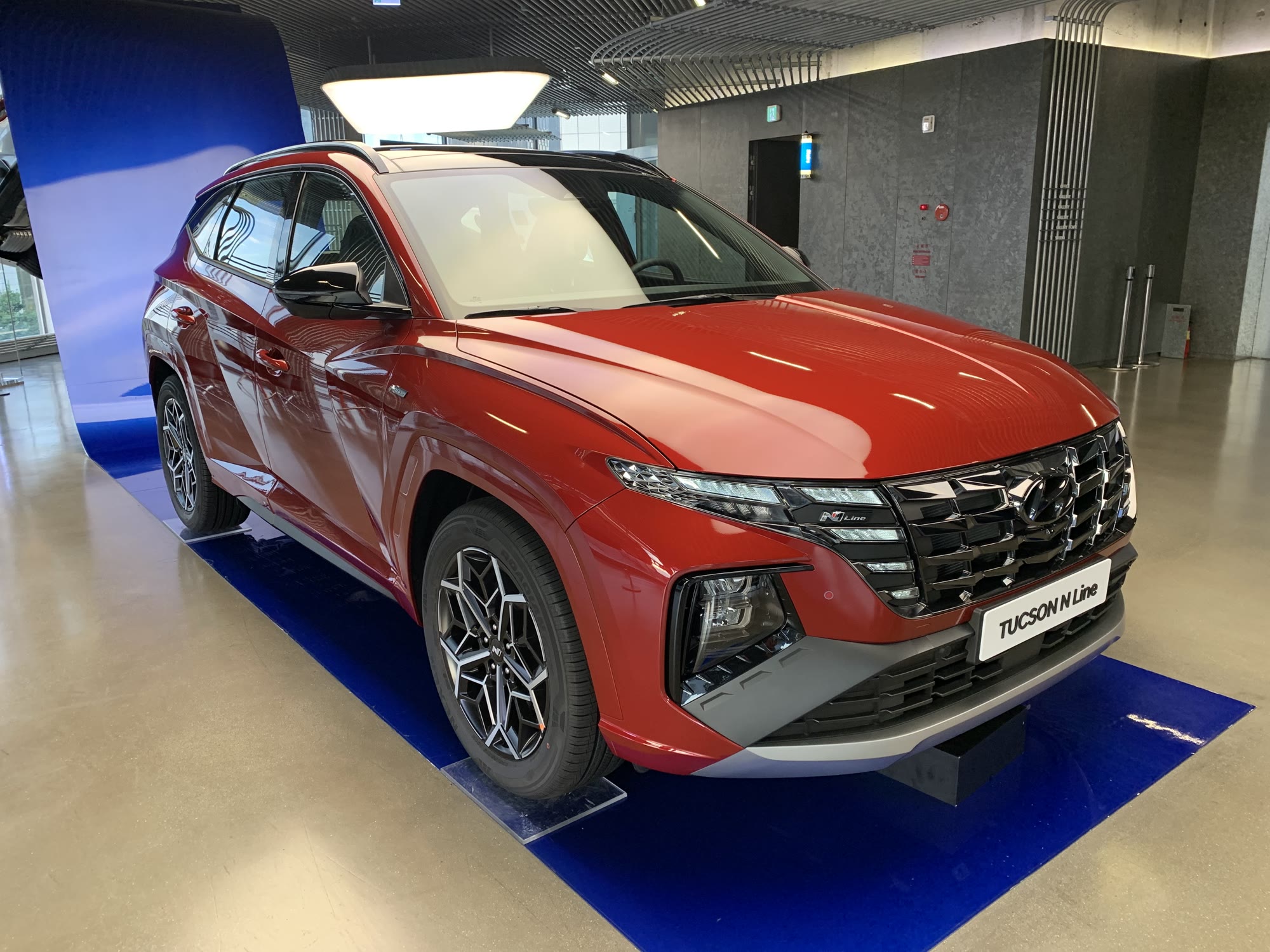
Hyundai just pulled the sheets off the all-new 2027 Tucson, and it’s a dramatic break from everything we’ve come to expect from this compact SUV. The Korean automaker revealed the fifth-generation model on its home website in mid-August 2026, and the redesign is genuinely polarizing — boxy, upright, and muscular, with the brand’s new “Art of Steel” design language front and center.
_N_Line_1.jpg)
If you’ve been waiting to see what Hyundai would do with its best-selling SUV, this is it. And for Filipino buyers, the big question is simple: when does this land here, and do we get the hybrid?
What Changed: A Radical Visual Identity
The 2027 Tucson abandons the softer, sculpted look of the outgoing model for something far more architectural. Think sharp geometric lines, pronounced fender flares, and a more upright stance.
Up front, a slim full-width light bar handles the daytime running lights, paired with angular LED headlights integrated into a wider, more geometric grille. The rear carries the same horizontal lighting theme, which visually stretches the crossover and gives it a more planted, premium presence on the road.
Inside is where things get even more contemporary. There’s a large central touchscreen dominating the dashboard, a slim digital driver display, a redesigned two-spoke steering wheel, and a cleaner, more minimalist center console. Hyundai hasn’t fully disclosed the infotainment setup yet, but expect the company’s latest Pleos platform to play a role.
Bigger Footprint, Roomier Cabin
The new Tucson is noticeably larger than before. Based on the figures shared by international outlets like Edmunds and CarBuzz, it measures roughly 4,700 mm long, about 1,900 mm wide, and rides on a longer wheelbase near 2,785 mm.
That translates to meaningful space gains. Rear headroom grows by over an inch, and the rear doors now open to 83 degrees instead of 73 — a genuinely useful change if you’re buckling a child into a car seat or helping an older passenger climb in. For a segment where space wins buyers, this is a smart move.
Powertrain: Here’s What We Expect
Hyundai has been deliberately quiet on the mechanical details — this was a purely visual reveal. But the smart money says the proven lineup carries over, possibly with tweaks.
| Spec | 2027 Tucson (Expected / International) |
|---|---|
| Powertrain options | 2.5L gas, 1.6L turbo hybrid, 1.6L turbo PHEV (carry-over expected) |
| Hybrid output (current-gen benchmark) | ~231 hp combined (1.6T hybrid) |
| PHEV output (current-gen benchmark) | ~268 hp combined |
| Base gas output (current-gen benchmark) | ~187 hp (2.5L four-cylinder) |
| Drive | FWD standard, AWD option |
| Length | ~4,700 mm (up ~60 mm) |
| Width | ~1,900 mm (up ~40 mm) |
| Wheelbase | ~2,785 mm (extended) |
| Rear headroom gain | ~+3 cm |
| Rear doors | 83-degree opening (vs 73) |
Full Philippine specs aren’t confirmed yet. The figures above are international expectations based on the current Tucson’s proven powertrains, not finalized local data. As soon as Hyundai Motor Philippines confirms what we’re getting, this needs an update.
What They’re Saying About the Tucson
Edmunds has long praised the current Tucson — its hybrid earned an 8.8 out of 10 in the outlet’s testing, with comfort, space, and a smooth ride singled out as strengths. The complaint was always the base gas engine, which felt sluggish. Stronger base power would make the redesign a more complete package.
CarBuzz frames the new design as making the RAV4 and CR-V look boring, praising the blocky, sculpted look as something more at home on a premium vehicle. The site notes the Tucson is Hyundai’s best-selling vehicle globally by a wide margin, so the company is unlikely to rock the boat mechanically.
AutoCar Philippines flags the honest gap: Hyundai Motor Philippines hasn’t made any statement on a local launch yet. The current Tucson, including its hybrid variant, remains an important part of the compact SUV lineup here, so the arrival of this redesigned model could shake up a crowded segment.
2027 Hyundai Tucson Price in PHP, USD, INR
There’s no confirmed Philippine SRP for the 2027 Tucson. For a realistic anchor, we look at what the current model sells for locally and what the new generation will plausibly command.
| Market | Estimated Price |
|---|---|
| Philippines (current-gen anchor) | ₱1.68M – ₱2.29M |
| USD equivalent (61.71 PHP/USD) | ~$27,200 – $37,100 |
| INR equivalent (95.74 INR/USD) | ~₹26.1 lakh – ₹35.5 lakh |
The 2027 redesign and its larger footprint could push pricing slightly upward over the outgoing model, but that’s speculation. Watch for an official Philippine announcement — that’s when we’ll have real numbers. If the new Tucson follows the same formula as the Kia Sportage Turbo Hybrid, which launched here at ₱1.978M, expect the hybrid Tucson to land somewhere in that competitive compact-SUV bracket.
Is the 2027 Tucson Right for Filipino Driving?
Until official local specs arrive, this analysis leans on the current-gen Tucson and expected updates. Still, it’s worth thinking about how this SUV fits our roads.
City Driving
The Tucson’s hybrid powertrain is a natural fit for EDSA and the congested streets of Makati and BGC. Instant electric torque from the hybrid system makes stop-and-go traffic quieter and more efficient, and the instant response is a big step up from a sluggish base engine. The compact dimensions — even with the growth, it stays car-friendly — make tight parking spots manageable.
Long-Distance Travel
For Manila-to-Baguio runs up NLEX and SCTEX, a hybrid Tucson holds its own. The current hybrid’s combined output keeps highway overtaking confident, and the bigger cabin now has more room for passengers and gear. If the PHEV lands locally, you’d get meaningful all-electric range for shorter provincial hops too.
Flooded Situations
Ground clearance hasn’t been finalized for the 2027 model, so treat this as a caveat. The Tucson isn’t a hardcore off-roader — it’s a compact crossover, and those flood-prone EDSA areas and low-lying barangays demand caution regardless. EVs and hybrids have the advantage of no hydrolock, but you still shouldn’t push water depths past the door-bottom rule.
High Temperatures
Philippine heat is brutal on interiors, and the new Tucson’s big central touchscreen and minimalist dash look are a plus here. Hyundai’s hybrid batteries use proven, heat-managed packs, and the current model’s AC copes well in 36-38°C conditions. The added cabin space also means better airflow for rear passengers — something families will appreciate on long, hot drives.
The Bottom Line
The 2027 Tucson is a bold, deliberate direction for Hyundai — a design that will likely divide opinions at first, and that’s a good thing. It stands out in a crowded market instead of playing it safe.
For Filipinos, the real story is still unwritten. Hyundai Motor Philippines hasn’t confirmed local specs, pricing, or timing, so treat everything here as an informed preview. The current Tucson, and its hybrid in particular, remains a strong buy today — and if you’re comparing compact electrified SUVs, it’s up against strong recent competition like the Mazda CX-5 HEV at ₱2.495M and the GAC GS4 Max HEV at ₱1.218M.
If you’re weighing an electrified SUV now, balance the existing deals against the wait for a redesigned option. The hybrid tech in today’s Tucson is proven and well-reviewed, and the new one builds on that foundation with a bolder look and more space. For families who need three rows instead, the MG RX9 PHEV covers that ground at ₱1.998M.