
BMW Philippines just did something it has never done before: it launched a self-charging hybrid. The all-new X3 20 xDrive xLine, which made its local debut today alongside the X5 xDrive 40i xLine, swaps the plug-in hybrid powertrain of its 30e sibling for a 48-volt mild hybrid system that never needs a wall socket. For Filipino buyers who want the efficiency and smoothness of electrification without hunting for a charger, this is the most accessible BMW hybrid yet.
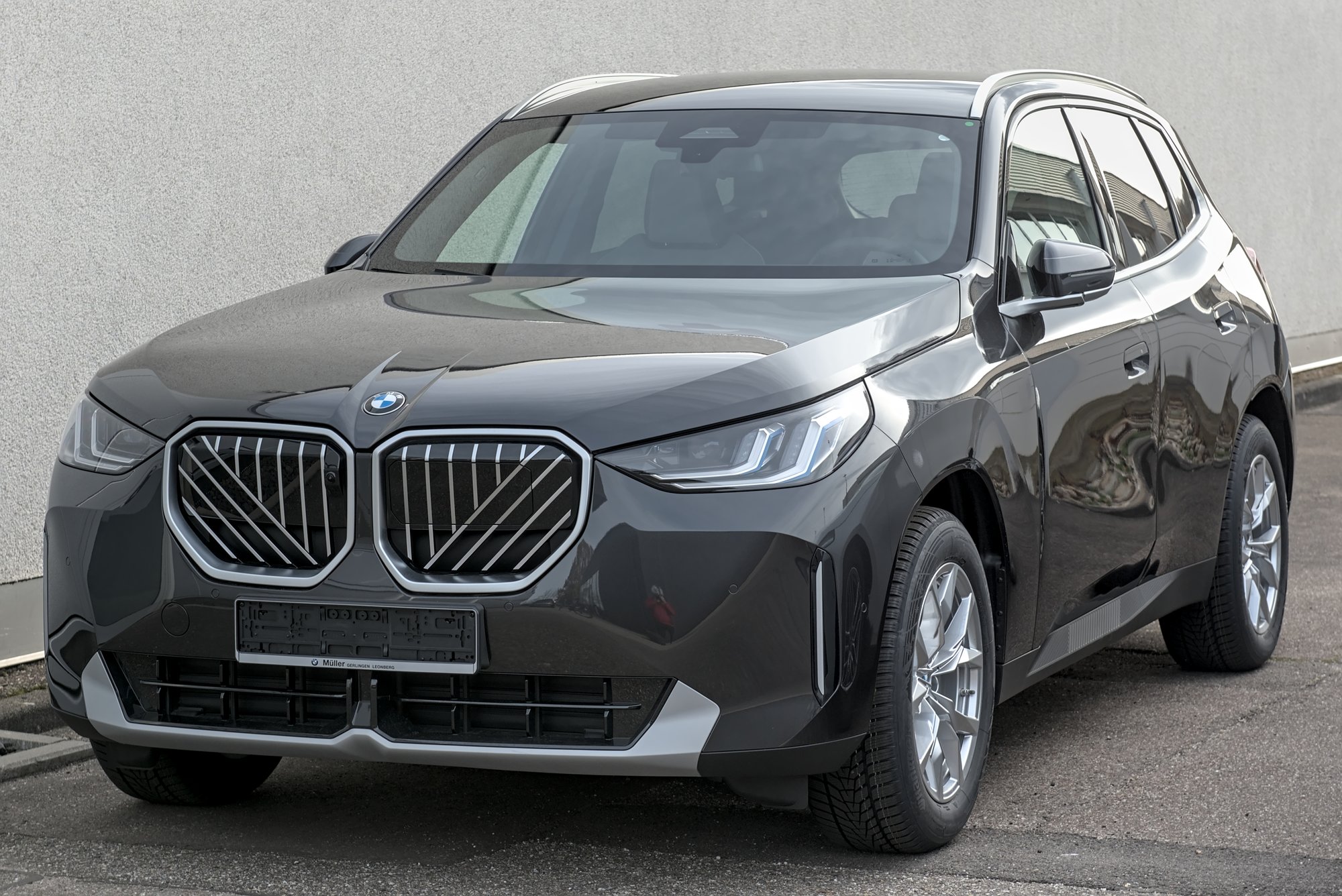

The X3 20 xDrive xLine sits below the plug-in hybrid 30e xDrive xLine (P4.498 million) in the local X3 lineup. It uses the same fourth-generation G45 body that has been on sale globally since late 2024, but with a powertrain tuned for simplicity and urban drivability rather than outright electric range.
What Under the Hood
At the heart of the X3 20 xDrive xLine is BMW’s trusty B48 2.0-liter TwinPower Turbo four-cylinder engine, now paired with a 48V mild hybrid system. An integrated starter generator sits inside the eight-speed Steptronic transmission, providing an additional 18 hp (13 kW) and 200 Nm of torque during acceleration. The combined system output is 208 PS (153 kW) and 330 Nm, sent to all four wheels through BMW’s xDrive all-wheel-drive system.
This is not a plug-in hybrid. There is no charging port, no large battery pack, and no electric-only driving mode. The 48V system recuperates energy during deceleration, stores it in a small 0.9 kWh lithium-ion battery, and uses it to smooth out stop-start, fill in torque at low rpm, and enable brief engine-off coasting. It is the kind of electrification that works invisibly in the background.
Specifications at a Glance
| Parameter | BMW X3 20 xDrive xLine |
| Engine | 2.0L B48 TwinPower Turbo I4 + 48V mild hybrid |
| Combined Power | 208 PS (153 kW) |
| Combined Torque | 330 Nm |
| Electric Motor Output | 18 PS (13 kW) / 200 Nm |
| Transmission | 8-speed Steptronic automatic |
| Drivetrain | xDrive AWD |
| 0-100 km/h | 7.8 seconds |
| Top Speed | 215 km/h |
| Fuel Consumption (WLTP) | 6.9 – 7.6 L/100 km |
| Battery | 0.9 kWh lithium-ion (48V) |
| Length | 4,755 mm |
| Width | 1,920 mm |
| Height | 1,660 mm |
| Wheelbase | 2,865 mm |
| Ground Clearance | 208 – 216 mm |
| Cargo Volume | 460 – 570 L (up to 1,600 L folded) |
| Wheels | 19-inch Style 941 bi-color aero alloys |
| Warranty | 5 years / 200,000 km |
Pricing and Value
The X3 20 xDrive xLine is priced at P3,998,000 — a full P500,000 less than the plug-in hybrid 30e xDrive xLine. That gap buys you a simpler powertrain, slightly less power, and no electric-only range, but it also means no charging anxiety and no range compromise on long drives.
For context, here is how the pricing stacks up across currencies (using today’s exchange rates: 63.05 PHP/USD and 95.11 INR/USD):
| Currency | Price |
| Philippine Peso (PHP) | P3,998,000 |
| US Dollar (USD) | ~$63,400 |
| Indian Rupee (INR) | ~Rs 60.3 lakh |
The X5 xDrive 40i xLine, launched at the same event, starts at P5,298,000 and uses a larger 3.0-liter inline-six with the same 48V mild hybrid tech. Both models are coding exempt — the Department of Energy officially recognizes them as Hybrid Electric Vehicles, which matters for buyers in Metro Manila where number-coding schemes are a daily reality.
What Others Are Saying
The fourth-generation X3 has been on sale in Europe and Australia since late 2024, and the reviews are in: this is arguably the best-driving medium SUV BMW has ever made. Chasing Cars Australia gave the G45 X3 an 8.0 out of 10, calling it “the best-handling medium SUV on the market, regardless of price.” Their praise centered on the chassis balance, steering precision, and ride comfort — areas where BMW has traditionally led the segment.
Autocar was more measured with a 3.5 out of 5, noting that the base 2.0-liter returns around 35 mpg in real-world driving — respectable but not class-leading. They also flagged the interior plastics as a weak point, with door pulls and lower dash trim that feel out of place in a premium product.
The consensus is clear: the X3 20 xDrive is not the fastest or most efficient choice in its class, but it is the most cohesive. It is a car that feels engineered to be driven every day, not just admired in a showroom.
Philippine Driving Conditions
City Driving
Makati and BGC are where the X3 20 xDrive xLine will spend most of its life. The 48V system earns its keep here — stop-start becomes seamless, and the extra 200 Nm from the electric motor helps the 2.0-liter turbo pull cleanly from a standstill without hunting for torque. The 4,755 mm length and 1,920 mm width are manageable in tight parking structures, though you will want the standard Parking Assistant Plus and 360-degree camera for those inevitably narrow slots.
The 19-inch aero wheels are a good compromise for city use. They fill the wheel arches without the punishing ride that larger 20- or 21-inch options would deliver on EDSA’s patched and pockmarked surface.
Long-Distance Travel
The X3 20 xDrive xLine is built for provincial highway runs. The WLTP-rated 6.9-7.6 L/100 km translates to roughly 950-1,150 km of range from a full tank — enough to cover Manila to Baguio (about 250 km) with room to spare, or Manila to Legazpi (about 520 km) with a fuel stop. The 48V system does not extend range the way a PHEV would, but it smooths out the transitions between cruising and accelerating, which is where traditional engines are least efficient.
The xDrive AWD system provides confidence on rain-soaked highways, and the adaptive suspension (standard on xLine) keeps the car composed through the twisty sections of Kennon Road or the SLEX viaducts.
Flooded Situations
The X3 20 xDrive xLine sits at 208-216 mm of ground clearance — on par with most compact luxury SUVs and significantly higher than a low-slung EV like the Porsche Cayenne Electric. That is a real advantage during the rainy season, when MacArthur Highway and the lower stretches of EDSA can wade through 200 mm or more of standing water.
The 48V electrical system is low-voltage and does not carry the same flood-risk anxiety as a high-voltage EV battery pack. You still do not want to submerge any car, but the mild hybrid architecture is inherently less vulnerable than a full EV’s 400V or 800V system.
High Temperature
Metro Manila’s 36-38 degree Celsius heat is tough on every powertrain, but the X3’s 2.0-liter turbo is a well-proven unit with robust thermal management. Unlike EVs that must dedicate battery cooling capacity to avoid thermal throttling, the mild hybrid’s 0.9 kWh battery is a fraction of the size and dissipates heat easily. The three-zone climate control keeps the cabin comfortable, and the leather upholstery breathes better than the synthetic alternatives some rivals use.
The Bottom Line
The BMW X3 20 xDrive xLine is not trying to be the most efficient, the most powerful, or the most electrified choice in its class. It is trying to be the most well-rounded — and in that, it largely succeeds. At P3.998 million, it undercuts the plug-in hybrid 30e by half a million pesos and offers a simpler ownership experience that many Filipino buyers will prefer.
If you want a full-electric BMW, the BMW iX3 50 xDrive remains the flagship zero-emission option. If you cross-shop against other luxury EVs, the Porsche Cayenne Electric is the performance benchmark, while the Tesla Model Y L dominates the three-row family EV space. For PHEV alternatives, the BYD Sealion 6 DM-i offers a compelling value proposition.
But if you want a BMW SUV that sips fuel without ever needing a charger, the X3 20 xDrive xLine is the one to watch. It is the right car at the right time for a market that is warming up to electrification but not quite ready to plug in.