
The Department of Energy’s recognized EV list just got a lot more interesting. BMW’s first Neue Klasse electric vehicle, the iX3 50 xDrive, quietly showed up on the DOE’s roster this week — and it brings something no other electric car on sale in the Philippines can match right now: a claimed range of around 800 kilometers.
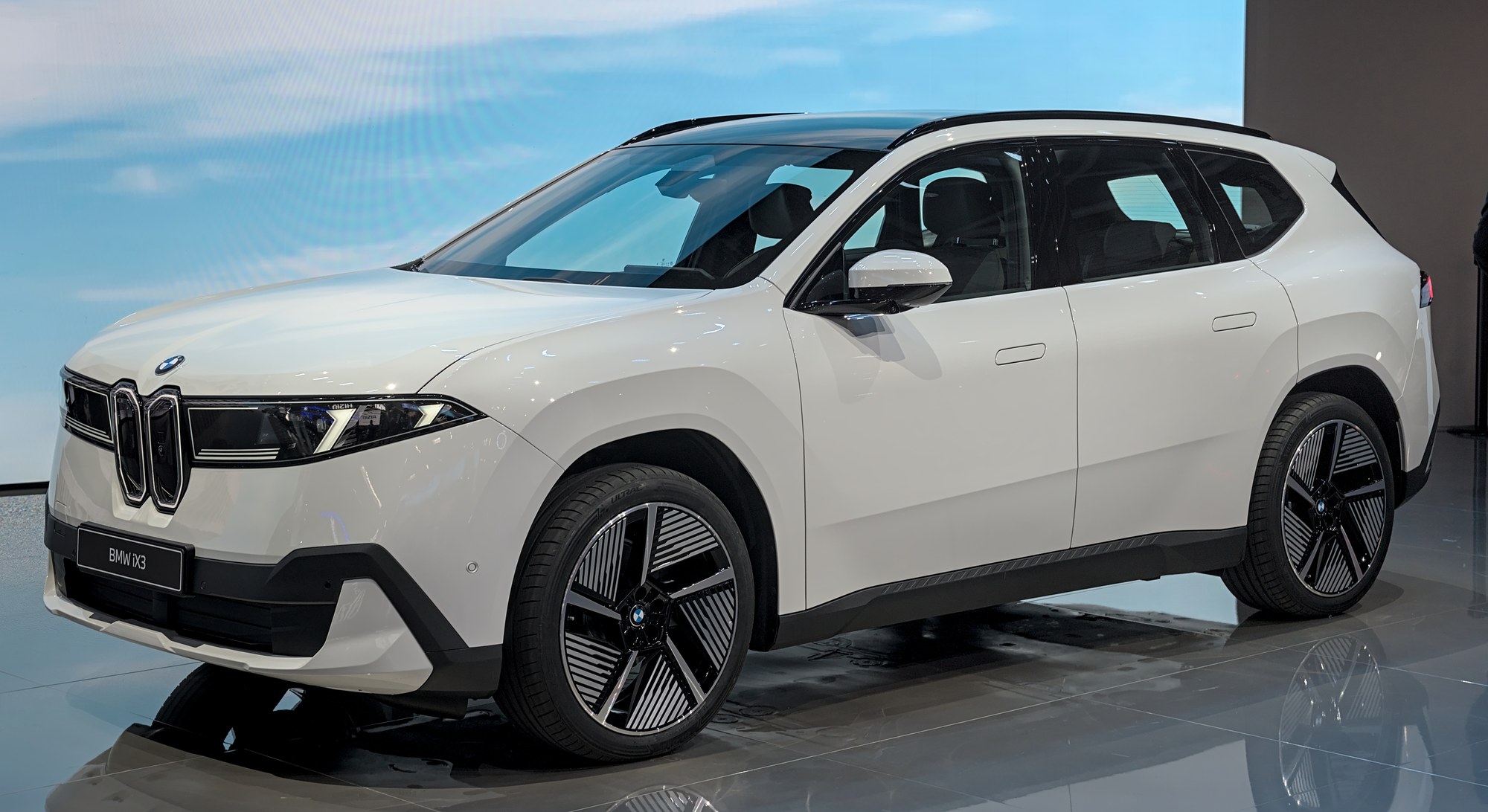

That’s more than the Tesla Model 3 Long Range, which currently holds the record for the longest-range full EV available locally at 750 km. BMW Philippines hasn’t made a formal announcement yet, but the DOE listing is the same early signal that preceded the Kia EV3, the Jaecoo J8, and most recently the Nissan Primera EV — all of which showed up on the list before their local launches. Thailand has been selling the iX3 since March, so the pieces are in place for a Philippine debut.
What just landed on the DOE list
Top Gear Philippines spotted the listing on July 30, 2026. The homologation papers carry the dimensions, the power figures, and a link to BMW’s global press release — but no public documents from BMW Philippines yet. That’s the classic pattern: the DOE recognition happens first, the launch announcement follows.
This would be the first car on the Neue Klasse platform in the country. For BMW, that’s a bigger deal than any single model launch — it’s the architecture that will underpin at least six EVs by 2028, including the next electric 3 Series.
BMW iX3 50 xDrive: full specifications
| Body | Compact luxury crossover (Neue Klasse, NA5) |
| Dimensions | 4,782 mm L x 1,895 mm W x 1,635 mm H |
| Wheelbase | 2,895 mm |
| Motors | Dual (front asynchronous + rear separately-excited synchronous), all-wheel drive |
| Power | 345 kW (469 PS per DOE; ~463 hp in US/UK figures) |
| Torque | 645 Nm |
| Battery | 113.4 kWh (DOE listing; 108.7 kWh usable per EV Database) |
| Chemistry | NMC, cylindrical cells, 800V architecture |
| Range | Up to 805 km WLTP (claimed); ~635 km real-world per EV Database |
| 0-100 km/h | 4.9 seconds |
| Top speed | 210 km/h |
| DC fast charging | Up to 400 kW; 10-80% in ~21 minutes |
| AC charging | 11 kW standard (up to 22 kW optional) |
| V2L / V2H | 3.7 kW AC vehicle-to-load; up to 11 kW DC vehicle-to-home |
| Cargo | 520 L (1,750 L max) plus 58 L frunk |
| Kerb weight | ~2,360 kg |
| Safety | Euro NCAP 2026: 86% crash protection, 95% post-crash |
| Battery warranty | 8 years / 160,000 km |
Why the Neue Klasse tech matters
This is BMW’s sixth-generation eDrive system, and it’s a real step forward rather than a badge refresh. The 800-volt architecture is the headline: it lets the iX3 charge at up to 400 kW, so a 10-80% top-up takes roughly 21 minutes at a compatible station. BMW says the drivetrain cuts energy losses by 40% compared with the previous generation, drops vehicle weight by 10%, and is 20% cheaper to build.
The battery itself is a 113.4 kWh pack with cylindrical cells — a bigger swing than most rivals. A heat pump comes standard, which helps squeeze range in both hot and cold weather, and the car can power your appliances (V2L at 3.7 kW) or even your home (V2H at up to 11 kW DC). For a country that deals with rolling brownouts, that last feature is genuinely interesting.
Battery economics are the quiet story behind all of this. I wrote a whole post about why battery supply chains are becoming as strategic as the chips in your gadgets — the same forces driving down pack costs per kilowatt-hour are what let BMW offer this much range at this price point.
What others are saying
The early reviews are unusually strong for a first-generation platform. Autocar’s verdict: “Sharper to drive, significantly more efficient and smarter inside. The Neue Klasse is off to a strong start.” The trade-offs they flagged are the few scratchy plastics in the cabin and an interior that has ditched nearly all physical controls — everything lives on the new panoramic iDrive screen.
Car and Driver estimates the US base price around $60,000 and praises the dual-motor setup’s 463 hp output. BMW officially priced the iX3 50 xDrive at $61,500 in the United States (CAD 75,900 in Canada), where it arrives on September 25, 2026. Paultan’s Bangkok launch coverage confirmed the Thai market got a single 50 xDrive M Sport variant, priced around 3.5 million baht.
Price and competition
There’s no official Philippine price yet — the DOE listing doesn’t carry one. Based on how BMW PH prices its EVs, a projection makes sense: the iX1 (204 hp, 64 kWh) starts at P3.99 million, and the gas X3 sits around P4.19 million. The iX3 is bigger, roughly doubles the battery, and adds a second motor, so expect it to land in the P4.9-5.5 million neighborhood. That’s an estimate, not a price — treat it that way until BMW PH speaks.
| Market | Price |
| Philippines (projected) | ~P5.2 million |
| United States (official) | $61,500 (~P3.74 million at 60.8 PHP/USD) |
| India (equivalent) | ~Rs 58.6 lakh (from US price) |
| Thailand (OTR) | ~3.5 million baht |
| Germany / UK | ~EUR 70,900 / ~GBP 58,755 |
At that projected price, the iX3 lands in a sparse but growing field. The Tesla Model 3 Long Range is the range benchmark at P1.838 million but it’s a sedan; among SUVs, the iX3’s real dance partners are the GAC GN8 PHEV Executive at P3.338 million (a different animal — seven seats, plug-in hybrid) and, if you stretch the budget, the bigger BMW iX. The Lexus ES 350e arriving this August shows the luxury brands are all heading the same direction.
Is it right for Philippine conditions?
City driving
On EDSA, the iX3 is effortless — instant torque from both motors, near-silent cabin, and enough acceleration to merge into anything. The flip side is size: at 4,782 mm long with a 12.1-meter turning circle, it’s no parking-lot featherweight. Makati and BGC basement parking will be workable, but expect some careful maneuvering and a reliance on the camera system. For the daily BGC-to-Quezon City commute, you’d realistically charge once or twice a week.
Long-distance travel
This is where the iX3 is genuinely unusual for the local market. A Manila-to-Baguio round trip is about 500 km — the iX3 can do it on one charge on paper, with margin. EV Database gives it a perfect 5/5 long-distance score, and its 10-80% fast-charge time of 21 minutes at 400 kW beats almost anything else sold here.
The honest caveat: most Philippine fast chargers today run at 50-150 kW, not 400 kW. Plugged into a common 150 kW unit, the same 10-80% session stretches to roughly 38 minutes; at a 50 kW charger, closer to 96 minutes. The car’s capability isn’t the bottleneck — the network is. If you’re planning NLEX-to-SLEX road trips, check the charger map before you leave, same as you would for any EV here.
Flooded situations
An EV’s sealed underfloor battery gives it one real advantage in flood-prone areas: there’s no air intake to hydrolock, no exhaust to backflow. But don’t mistake that for a wading vehicle. BMW hasn’t published a ground clearance figure for the iX3 yet, and I won’t invent one — until the PH spec sheet is official, treat deep floodwater the same way you would in any crossover: turn around, don’t test it.
High-temperature conditions
The 800V architecture runs liquid cooling, and the standard heat pump helps manage thermal load in our 36-38°C afternoons. Real-world range does drop with heavy air-conditioning — EV Database’s highway figure swings from 595 km in mild weather to 455 km in cold, and our heat sits on the battery’s mind in a different way. Expect the AC to eat into the headline range, but the cooling system is designed for sustained fast driving, which is more than you can say for some budget EVs.
The bigger picture
What the DOE listing really signals is that the premium EV segment is about to get crowded. This week alone, the Ford Territory Hybrid Platinum launched at P1.655 million — a very different price tier, sure, but it shows how fast electrified options are multiplying across every bracket. The iX3 would sit at the top of that wave.
Bottom line
The iX3 50 xDrive is the most compelling BMW EV in years: genuine 800V fast charging, class-leading range, and the driving dynamics the brand is known for. If the Philippine price lands anywhere near the P4.9-5.5 million projection, it becomes the default answer for anyone shopping a luxury electric SUV.
For now, it’s a wait-and-see situation — BMW PH hasn’t confirmed timing or pricing. But the DOE listing is the strongest signal yet that it’s coming. Keep an eye on the announcements; when a German brand this deliberate files its paperwork, the launch usually follows within a few months.