
Lexus Philippines just confirmed what a lot of us have been waiting for: the all-new ES is landing this August, and for the first time ever, there’s a fully electric version. The ES 350e — already listed by the Department of Energy — becomes the first battery-electric executive sedan from the brand in the country. The formal reveal is set for August 6.
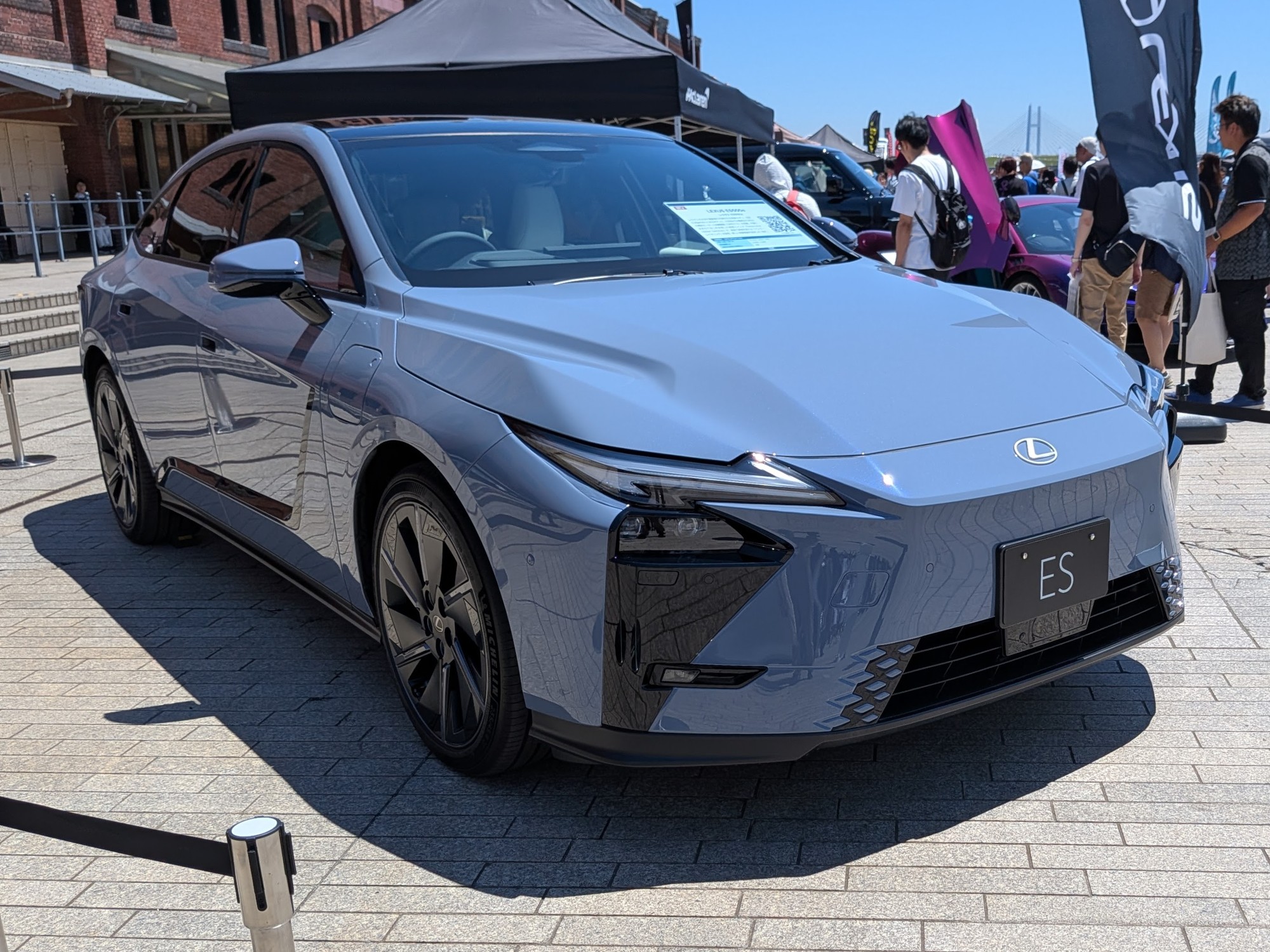

That’s not a small deal. The ES has been Lexus’s quiet workhorse for decades — the sedan you pick when you want comfort without the drama. Now it’s going electric, and Filipino buyers finally get a luxury EV sedan that isn’t a Tesla or a European import. I’ve been covering the local EV wave all year, and this one feels different: it’s a nameplate Filipino executives already trust, just with a plug instead of a fuel cap.
The First Electric ES
The eighth-generation ES is a ground-up redesign, not a facelift. Consumer Reports notes it’s about 6.5 inches longer than its predecessor, with a stiffer structure and a new multilink rear suspension for a smoother, more settled ride. The old gas-only ES is gone entirely — abroad, the lineup is now the ES 350h hybrid, the ES 350e (single motor, front-wheel drive), and the ES 500e (dual motor, all-wheel drive).
Here in the Philippines, the DOE’s updated recognition list shows two variants coming: the ES 350e (full EV) and the ES 350h (hybrid). The listing gives us the first hard numbers — a 74.68 kWh battery pack and an electric motor making 227 PS (167 kW) for the 350e, with exterior dimensions of 5,145 mm long, 1,920 mm wide, and 1,560 mm tall. That matches the ES 350e sold in other markets, which suggests we’re getting the same car, not a watered-down version.
Lexus ES 350e Specs at a Glance
| Spec | Lexus ES 350e (2026) |
|---|---|
| Body | Midsize luxury sedan, 5 seats |
| Motor | Single front e-motor, 167 kW / 227 PS (221 hp) |
| Torque | ~269 Nm |
| Battery | 74.7 kWh NMC lithium-ion (77 kWh nominal, 72 kWh usable per EV Database) |
| Drive type | Front-wheel drive (FWD) |
| 0-100 km/h | ~8.0 seconds (7.4s 0-60 mph per Lexus US) |
| Top speed | 160 km/h |
| Range | 307 miles (~494 km) EPA on 19-inch wheels; ~530 km WLTP cited by local outlets; ~390 km real-world per EV Database |
| DC fast charging | Up to 150 kW, 10-80% in about 30 minutes |
| AC charging | 11 kW onboard charger, roughly 7 hours on Level 2 |
| Dimensions | 5,140-5,145 mm (L) x 1,920 mm (W) x 1,560 mm (H) |
| Wheelbase | 2,950 mm |
| Curb weight | ~2,225 kg (EU unladen) |
| Cargo volume | ~517 L (EV Database) |
| Heat pump | Standard |
| Safety | Lexus Safety System+ 4.0 |
| Infotainment | 14-inch touchscreen, 12.3-inch digital cluster |
One honest note on range: the number depends on who’s measuring. The US EPA says up to 307 miles (~494 km) on the standard 19-inch wheels, dropping to 292 miles on the optional 21s. European WLTP figures run higher — EV Database lists 525-581 km depending on the test — while PH outlets like CarGuide have cited around 530 km WLTP. Real-world driving in Metro Manila heat will land somewhere below all of them, which is normal for any EV.
Price: What It Costs in PHP, USD, and INR
Lexus Philippines hasn’t announced local pricing yet — expect that at the August 6 reveal. For now, international pricing gives us an anchor. In the US, the ES 350e starts at $47,500 (about $48,895 with destination), and the loaded Luxury trim runs $57,295. For local context, the current ES 300h sells in the Philippines between ₱3.508 million and ₱4.198 million, so the electric ES should slot into a familiar bracket.
| Market / Variant | Price | PHP equivalent | INR equivalent |
|---|---|---|---|
| US base MSRP (ES 350e Premium) | $47,500 | ~₱2.92 million | ~₹45.4 lakh |
| US with destination fee | $48,895 | ~₱3.01 million | ~₹46.7 lakh |
| US Luxury trim | $57,295 | ~₱3.52 million | ~₹54.7 lakh |
| Philippines SRP | To be announced Aug 6 | — | — |
Conversions use roughly ₱61.5 per US dollar (BSP July 2026 average) and about 95.5 Indian rupees per dollar. A direct conversion of the US price doesn’t automatically mean the PH SRP — import duties and local taxes always push prices up, which is why the existing ES 300h starts well above the converted figure. If the local 350e lands anywhere near the current ES range, it will undercut the Tesla Model 3 Performance while sitting above the BYD Seal.
For buyers who care more about value than the badge, the gap is huge. Sedan shoppers can get the BYD Seal 5 DM-i — a plug-in hybrid I wrote about at launch — for under ₱900,000, less than a third of what the ES will likely cost. That’s not a fair comparison in most ways; the Lexus brings a different level of refinement, dealer network, and resale confidence. But it’s the reality of the 2026 market: the luxury price premium for electric motoring is shrinking from above while Chinese brands attack from below.
What the Reviews Say
International reviewers have been largely positive on the electric ES, and the recurring theme is that it’s a better ES first, a good EV second.
Consumer Reports put it bluntly: it’s “more polished than a Tesla Model 3 and less expensive than an Audi A6 E-Tron,” and the ES “proves that a quiet, cushy luxury sedan is well-suited to an electric powertrain.” That sums up the appeal — the electric version amplifies everything the ES was already known for: silence, ride comfort, and build quality.
MotorTrend called the ES 350e “a commuting all-star luxury sedan,” noting it’s quieter than the similarly priced hybrid, smoother to drive, and more convenient if you have a home charger. GreenCars said the $48,895 starting price “makes Lexus electric luxury feel surprisingly approachable.” Cars.com scored it 7.3 out of 10 and its conclusion was simple: stick with the ES 350e if an EV fits your life, and take the hybrid if it doesn’t.
On the local side, AutoIndustriya and the Manila Times both highlighted that the all-new ES gives Filipino buyers their first chance to own a battery-electric Lexus — combined with the near-silent smoothness you’d expect from the badge. Nobody has driven the PH-spec car yet, so treat local reviews as previews rather than verdicts.
Is the ES 350e Right for Filipino Roads?
City Driving
This is where the ES 350e shines. EDSA stop-and-go traffic is exactly what an electric motor does best — instant torque for quick lane changes, zero idle fuel burn, and near-silent crawling. The 221-hp single motor is plenty for city speeds, and the 2,950-mm wheelbase means rear passengers get genuinely comfortable legroom. The main caveat is parking: at 1,920 mm wide, it’s a big car for Makati or BGC basement parking, and it’ll need a full spot, not a cramped one. If you’re comparing compact options, the BYD Atto 2 plug-in hybrid I covered in July is a cheaper, nimbler city EV — but it’s a crossover, not a luxury sedan, and that difference matters to buyers in this segment.
Long-Distance and Provincial Trips
Manila to Baguio is about 250 km — comfortably inside the ES 350e’s real-world range even with the aircon running. A Manila-to-Lucena or Manila-to-Subic round trip is doable on a single charge with margin to spare. For longer hauls up NLEX or SLEX, the 150 kW DC fast charging adds 10-80% in roughly 30 minutes, which lines up with a decent stop for coffee or a meal. EV Database rates the ES’s long-distance suitability at a modest 2.5 out of 5 — the charging speed is fine, but the real-world highway range (around 360 km at 110 km/h in mild weather) means you’ll be planning stops on very long trips. That’s a non-issue for most provincial routes, and the highway ride quality is exactly what you want for a six-hour drive.
Flood Season
Here’s the honest, uncomfortable part. The ES 350e is a low-slung luxury sedan — ground clearance is modest, and there’s no official wading depth published for the Philippine variant. In a flood-prone country, that matters. EVs don’t suffer hydrolock like gasoline engines, and the battery is sealed under the floor, but you should never treat any EV as a flood toy. If your route regularly takes you through areas like Marikina or low-lying Pasig during typhoon season, this is not the car for those days — take the elevated route or stay home. It’s the same advice I gave for the Mitsubishi Outlander PHEV last week, except the Outlander sits higher and has an engine as a safety net. If flood resilience is a hard requirement, a high-riding crossover or pickup remains the smarter daily driver.
High Heat and Humid Weather
Philippine summers are brutal on EV range, and there are two things to know here. First, the ES 350e comes with a heat pump as standard — that’s genuinely useful in our climate because it makes the aircon far more efficient than resistive heating systems, which matters for range in 36-degree heat with the AC on full blast. Second, the NMC battery chemistry handles warm climates well, and Lexus’s liquid thermal management keeps the pack happy. Expect a real-world range hit in summer traffic — maybe 10-15% — but that’s true of every EV sold here, from the compact Kia EV3 to full-size pickups like the Radar RD6.
Charging Reality in the Philippines
The charging picture is improving but still uneven. Home charging is the ideal scenario — an 11 kW AC charger fills the 74.7 kWh pack in about seven hours, perfect for overnight. If you live in a condo, that’s the real hurdle: you need a building that allows a dedicated wallbox or access to a shared charger, and not all do. Public fast charging is growing — SM malls and major fuel stations have been rolling out DC chargers — and a 150 kW-capable car will make the most of the newer units. For the luxury-sedan buyer, the practical advice is the same as always: the EV only makes sense if you have somewhere predictable to charge.
The Bottom Line
The Lexus ES 350e is a statement launch for the Philippine EV market. It brings electric power to a nameplate that Filipino executives already trust, backed by Lexus’s dealer network, service reputation, and the quiet comfort the brand is famous for. It’s not the cheapest EV — not even close — and the sedan body, modest ground clearance, and long charging stop on epic road trips are real trade-offs. But if you’re a luxury buyer who has been eyeing the electric shift and waiting for something that doesn’t feel like a science experiment, this is the car.
The reveal on August 6 will answer the two questions that matter: the exact Philippine price and the official variant lineup. My guess, based on the ES 300h’s current pricing, is that the 350e lands in the ₱3.8-4.5 million range — comfortable but not outrageous for a first-generation electric Lexus. From the Chevrolet Captiva EV to the Radar RD6 pickup to this, the message of 2026 is clear: whatever segment you shop in, an electric option is coming — and this time, it wears a Lexus badge.