
Mitsubishi hasn’t had an electrified car in Philippine showrooms in years. That changes on August 20, 2026, when Mitsubishi Motors Philippines (MMPC) officially launches the all-new Outlander GT PHEV — the fourth-generation plug-in hybrid crossover that’s been turning heads since its preview at the 10th Philippine International Motor Show.
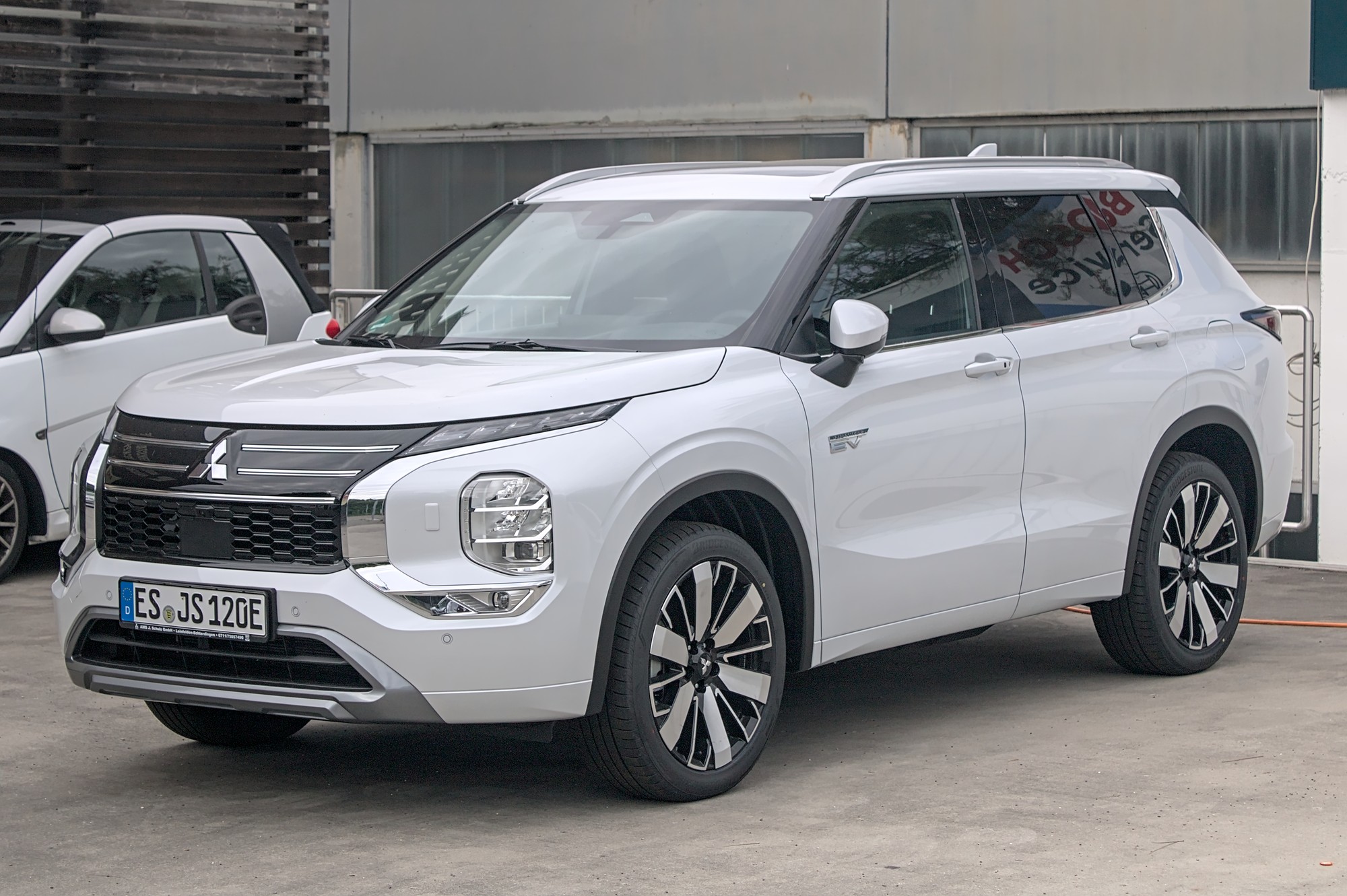
_IMG_3128.jpg)
This one matters beyond Mitsubishi fans. It’s the first serious Japanese-brand PHEV SUV to arrive in the local market at a time when Chinese EVs dominate the affordable end of the segment. I’ve been watching the electrified lineup grow — from the compact Geely EX2 to the MG S5 EV — and the Outlander PHEV slots into a completely different conversation: a midsize, all-wheel-drive family SUV that refuses to make you choose between electric driving and road-trip practicality.
Mitsubishi Outlander PHEV: Price in the Philippines
MMPC hasn’t released official pricing yet — expect that at the August 20 launch. Based on the PIMS preview chatter and Mitsubishi’s regional pricing, the Outlander GT PHEV is expected to land between P2.88 million and P3.0 million.
| Currency | Expected Price | Notes |
|---|---|---|
| PHP | P2,880,000 – P3,000,000 | Estimated SRP at launch (no official pricing yet) |
| USD | $47,200 – $49,200 | At ~60.96 PHP/USD (Aug 2026) |
| INR | ₹45.0 – ₹46.9 lakh | At ~95.3 INR/USD (Aug 2026) |
That puts it squarely in midsize SUV territory — think CR-V RS e:HEV money, not BYD money. But unlike those hybrids, the Outlander gives you a meaningful electric-only range and the kind of all-wheel-drive hardware you’d normally find on pricier luxury crossovers.
Full Specifications
Here’s what we know from the Department of Energy’s recognized PHEV list and MMPC’s PIMS preview:
| Spec | Mitsubishi Outlander GT PHEV |
|---|---|
| Engine | 2.4L inline-4 MIVEC (4B12), 133 PS / 195 Nm |
| Front motor | 116 PS / 255 Nm |
| Rear motor | 136 PS / 195 Nm |
| Combined output | ~302 hp (306 PS) / 450 Nm |
| Battery | 22.7 kWh lithium-ion (up from 20 kWh) |
| Electric-only range | 86 km (WLTP) / 103 km (NEDC) |
| Total range | Up to 844 km (with 53L fuel tank) |
| Charging | AC 3.7 kW (Level 2 ~6.5 hrs); DC fast charging (CHAdeMO) ~29 min to 80%; V2L 240V outlet |
| Drivetrain | AWD with Super All-Wheel Control (S-AWC) |
| 0–100 km/h | ~7.9 seconds (international spec) |
| Dimensions (L×W×H) | 4,720 × 1,862 × 1,751 mm |
| Wheelbase | 2,704 mm |
| Ground clearance | 199 mm |
| Curb weight | 2,115 kg |
| Seats | 5 (PH spec; some markets get 7) |
| Wheels | 20-inch alloys, 255/45 R20 |
Inside, you get a 12.3-inch infotainment screen with Apple CarPlay and Android Auto, a 12.3-inch digital instrument cluster, heads-up display, triple-zone climate control, a panoramic sunroof, heated and ventilated power front seats with memory, and an 8-speaker Yamaha sound system. Safety kit includes blind-spot warning, lane departure warning, forward collision warning, and rear cross-traffic alert.
What Others Are Saying
Top Gear Philippines highlighted the powertrain’s flexibility: 302 hp and 450 Nm across all four wheels, with seven drive modes including Eco, Normal, Tarmac, Snow, Mud, Gravel, and Power. That’s a lot of character for a family crossover.
AutoIndustriya notes the PH-spec unit is a 5-seater (other markets get three rows) but keeps the good stuff: 86 km of WLTP electric range, a total system range of 844 km, and a vehicle-to-load function that can power appliances during a blackout — a feature that’ll hit different for anyone who’s survived a long brownout season.
Zigwheels Philippines confirmed the August 20 launch date from MMPC’s media invitation and walked through the DOE spec sheet, pointing out the 22.7 kWh battery is a solid bump over the outgoing 20 kWh pack.
International reviews are consistently positive. Consumer Reports says the PHEV is quicker and quieter than the regular Outlander, and — because it uses a direct-drive setup like an EV instead of a CVT — it feels remarkably smooth in electric mode. The caveat they flag: when the battery runs out, fuel economy settles back to roughly the non-hybrid’s level, so the PHEV’s real-world benefit depends on charging regularly.
Driving.ca‘s first drive backs that up: 3.2 L/100 km combined when the battery’s charged (they even saw 1.0 L/100 km on one stretch), but around 8.6 L/100 km once depleted. Paultan.org notes the bigger pack can deliver 108% higher continuous output thanks to reduced internal resistance, while The Driven and Zecar both confirm the 86 km WLTP electric range on the updated model.
How the Outlander PHEV Handles Philippine Conditions
City Driving
This is where a PHEV like this shines. An 86 km electric range covers the average Metro Manila daily drive — EDSA to Makati to BGC and back — without burning a drop of fuel. You’ll creep through traffic on electric torque, which is instant and silent, and the smooth direct-drive feel beats any CVT I’ve driven on a bad day.
The 4,720 mm length is on the longer side for tight Makati parking, but the 360-degree camera (multi-around-view monitor) and power tailgate make the size manageable. If your daily commute is under 80 km round trip and you can charge at home, you might fill the tank once a month.
Long-Distance Travel
Here’s the Outlander’s killer advantage over full EVs: no range anxiety. Unlike a plug-in sedan that trades space for efficiency, the Outlander gives you up to 844 km of combined range — Manila to Baguio and back, or Manila to Naga, on a single tank and charge. On the highway the 2.4L engine takes over efficiently, and S-AWC keeps you planted on those winding Kennon Road hairpins.
Flooded Situations
With 199 mm of ground clearance — noticeably higher than the compact EVs we’ve covered like the EX2’s 175 mm — the Outlander sits closer to typical crossover flood capability. And because there’s no engine intake to hydrolock in EV mode, you have one less thing to worry about in knee-deep water. That said, the battery sits under the floor, so the rule still applies: don’t push through water you can’t see the bottom of. Higher clearance plus electric confidence makes it one of the more flood-tolerant options in this price class.
High Temperature Conditions
Mitsubishi upgraded the battery cooling system for this generation — the pack can sustain 60% more continuous power output than before, which matters in our 36–38°C summers. The improved thermal management keeps the battery performing even when the aircon’s been blasting for hours. The ventilated front seats are a godsend for our climate too; I’d take ventilated seats over heated ones any day in this country.
How It Compares
The Outlander PHEV isn’t competing with subcompact EVs — it’s a bigger, pricier, more capable machine:
| Model | Type | Price | EV Range |
|---|---|---|---|
| BYD Atto 2 DM-i | Compact PHEV | P998,000 | Up to 1,340 km total |
| Geely EX2 Pro | Compact EV | P938,000 | 325 km (CLTC) |
| Chevrolet Captiva EV | Compact EV | P1,999,000 | 415 km (NEDC) |
| Kia EV3 | Compact EV (coming) | TBA | 436 km (WLTP) |
| Mitsubishi Outlander GT PHEV | Midsize PHEV SUV | ~P2.9M | 86 km EV / 844 km total |
It’s a different segment from the DOE-listed compact EVs arriving this year — think of it as the electrified Montero-adjacent choice for families who need space, AWD, and the option of going full electric around town.
Who Should Buy It
- Families who want one car that does everything: school runs, groceries, provincial trips, the occasional unpaved road.
- City commuters with home or office charging who want to drive electric daily without ever being stranded by a dead battery.
- Provincial drivers who value AWD and ground clearance for wet-season roads and gravel access.
- Blackout-weary households — the V2L outlet can run a fan, router, and phone chargers during brownouts.
Where It Falls Short
The biggest question mark is price. At an expected P2.9M, it’s roughly three times a base compact EV — you’re paying for size, AWD hardware, and Japanese-brand build quality. The 5-seat configuration in PH (versus 7-seat in some markets) might disappoint families hoping for a third row. And as Consumer Reports notes, if you don’t charge it, you’re just driving a heavier-than-usual gas SUV.
Bottom Line
The Mitsubishi Outlander GT PHEV is the most compelling Japanese-brand electrified option we’ve seen in the Philippines so far. It doesn’t chase EV extremes — it gives you the electric daily drive and the gasoline safety net, wrapped in a properly capable AWD SUV. That’s a rare combination here, and it’s why I’ll be watching the August 20 launch closely.
For a deeper look at the battery tech powering this generation of EVs — and why pack chemistry and cooling matter more than marketing numbers — check out my piece on why batteries might be the answer to our energy problems.
Frequently Asked Questions
When is the Mitsubishi Outlander PHEV launching in the Philippines?
MMPC has confirmed the official launch date of August 20, 2026, following its preview at PIMS 2026.
How much is the Mitsubishi Outlander PHEV in the Philippines?
Official pricing comes at launch. Expect a range of roughly P2.88 million to P3.0 million (about $47,200–49,200 or ₹45–47 lakh).
How far can the Outlander PHEV go on electric power?
Up to 86 km on the WLTP cycle (103 km NEDC) from its 22.7 kWh battery — enough for most Metro Manila daily commutes.
Is the Outlander PHEV good for Philippine roads?
Yes — 199 mm ground clearance, all-wheel drive with S-AWC, and a combined range of 844 km make it a strong fit for city traffic, provincial trips, and wet-season conditions.