
Samsung’s F-series has quietly become the place where the company tests its most practical ideas before the rest of the world catches up. The Galaxy F70 Pro 5G, which landed in India on August 3, 2026, is the clearest example yet: a 6,000mAh battery, 45W charging, a stabilized main camera, and a six-year software promise wrapped in a mid-range price tag that starts at under $260. That’s a spec sheet built around the things people actually complain about, not the ones they brag about. After the months I’ve spent reviewing battery-first midrangers on this site, the F70 Pro feels like Samsung finally reading the room.
It’s not a flashy phone. There’s no periscope zoom, no 200MP sensor, no fancy frame materials. What it does have is judgment — the kind of judgment that asks what a phone in the ₹20,000-₹30,000 bracket should prioritize, and then commits to the answer. Whether that’s enough to beat the increasingly crowded competition is the question worth answering.
Design & Build Quality
The F70 Pro is a big, flat slab, and it makes no apologies for it. You’re looking at 162.4 x 78.2 x 8.1mm and somewhere around 202-206g depending on which source you trust — Gizmochina lists 202g, GSMArena says 206g, so the real number lands in between. It’s not light, but the weight reads as substance rather than bloat, and the wider frame gives you a solid grip that the skinny flagships have abandoned.
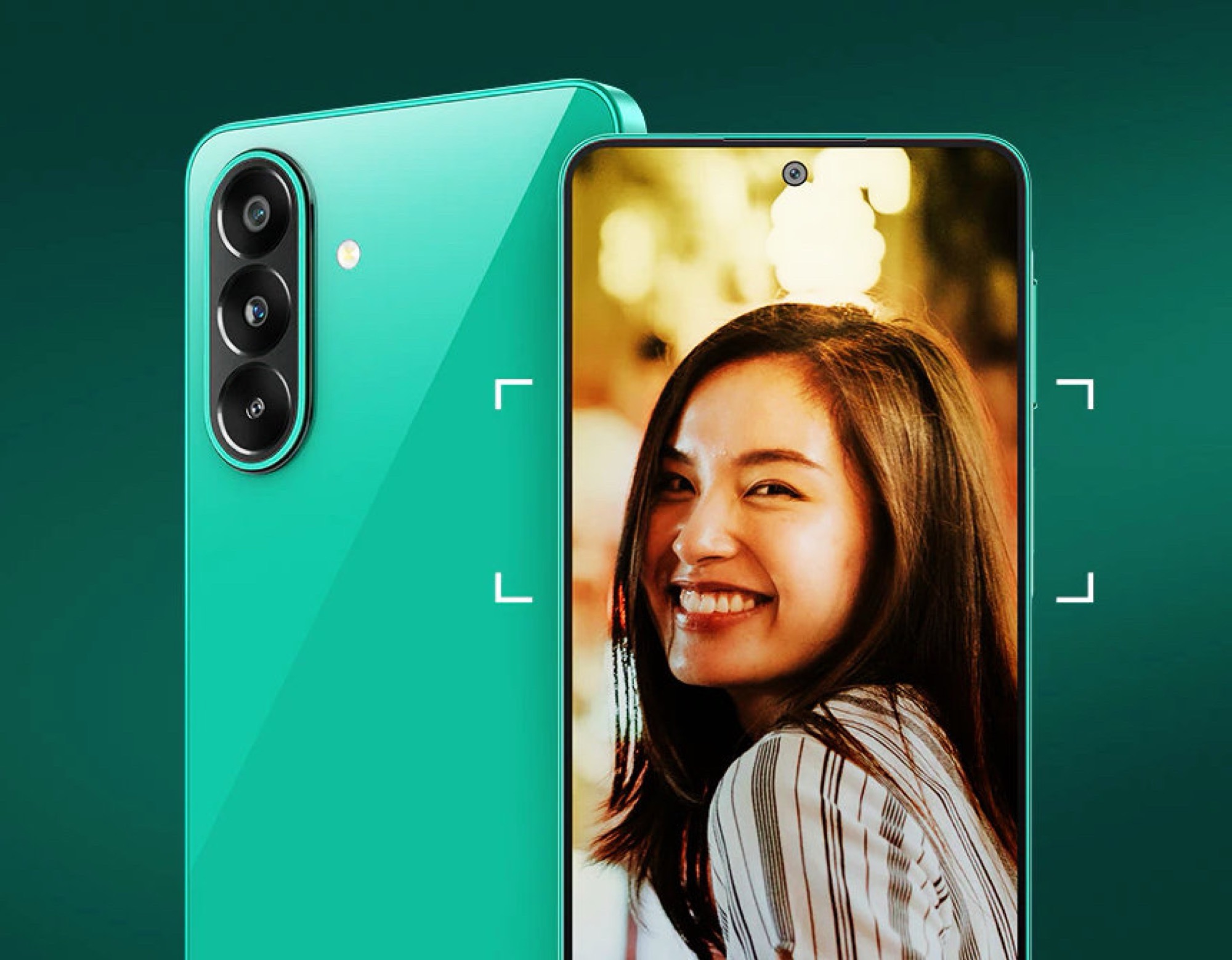
The back panel is the interesting bit. FoneArena describes it as a textured, leather-like finish, which is a deliberate move away from the glossy fingerprint magnets Samsung used on older F-series models. In Alpha Black it’s understated; in the green colorway — officially Aura Green, though some outlets write “Aurora Green,” so don’t be surprised to see both spellings in coverage — it gives the phone a slightly premium, automotive feel. The camera module is a clean vertical pill in the corner, holding three lenses plus a flash, and the whole thing sits flush enough that the phone doesn’t rock when you set it down.
Durability is a genuine step up for the price. Gorilla Glass Victus+ covers the front (India Today’s spec listing also puts Victus+ on the back), which is the same glass you’d find on phones costing twice as much. The IP64 rating means it shrugs off rain and dust — not a dunk in the pool, but honest splash protection for the daily commute. Samsung also claims drop resistance up to 2 meters. The side-mounted fingerprint scanner is fast and natural, though it does mean the display stays flat — you won’t get an in-screen sensor here, and that’s fine at this price.
Display
Samsung builds some of the best panels in the industry, and it doesn’t skimp even in the mid-range. The F70 Pro carries a 6.7-inch Super AMOLED with FHD+ resolution (1080×2340) and a 120Hz refresh rate — bright, punchy, and calibrated with that signature Samsung saturation that makes everything from Netflix to mobile games pop.
There’s no LTPO here, so the refresh rate isn’t adaptive; you’re looking at a fixed 120Hz that the phone manages between modes. What you get instead is a flat display — genuinely flat, not the subtly curved panels of years past — which makes screen protectors easy to fit and accidental touches a non-issue. The punch-hole camera cutout is small and unobtrusive, a clear design refresh over the notch on the earlier F70e.
For outdoor visibility, the panel holds its own. Samsung doesn’t quote a headline peak-brightness number in the same way the Chinese brands do — some spec trackers list 800 nits typical — but in real-world use, direct sunlight legibility is well within acceptable for the segment. Paired with Gorilla Glass Victus+ on top, this is one of the best displays you can get at the price.
Performance
Under the hood sits the Qualcomm Snapdragon 6 Gen 3, a 4nm chip from 2024 built around four Cortex-A78 performance cores at 2.4GHz and four Cortex-A55 efficiency cores. It’s paired with an Adreno 710 GPU. Let me be direct: this is not a gaming flagship chip, and Samsung isn’t pretending otherwise. In benchmarks, the 6 Gen 3 lands around 1,015-1,025 single-core and 2,690-2,920 multi-core on Geekbench 6, with AnTuTu figures floating between roughly 570K and 626K depending on the test version — solidly mid-range territory. If you want to see how this stacks up against your current phone, my full Geekbench 7 guide walks you through benchmarking it yourself.
Day-to-day, the experience is smooth. One UI 8.5 is well-optimized, and the combination of an efficient chip with a 120Hz panel makes scrolling feel fluid and app launches feel instant. The RAM situation deserves a footnote: GSMArena lists LPDDR5X memory, but Gizmochina notes that retail units actually ship with LPDDR5 — and Samsung’s own fine print admits the Snapdragon 6 Gen 3 tops out at LPDDR5-level memory performance anyway. In practice this means you won’t notice a difference; just don’t buy the phone expecting the memory spec to be the story. Storage is UFS 3.1, and there’s a hybrid microSD slot for expansion, which is increasingly rare and genuinely welcome.
Thermals are the chip’s quiet strength. The 6 Gen 3 runs cool, which means sustained use — long video calls, extended navigation, marathon social media sessions — doesn’t turn the frame into a hand warmer. It’s the same “marathon runner, not a sprinter” character I noted when testing this chip generation: stability over peak performance.
Camera
The headline here is a 50MP main camera with optical image stabilization — OIS at this price is the feature Samsung is leaning on hardest, and with good reason. The sensor is a 1/2.76-inch unit with f/1.8 aperture and 0.64µm pixels, paired with a 5MP ultrawide and a 2MP macro. It’s the classic mid-range triple: one genuinely capable main shooter, one serviceable ultrawide, and one macro that exists for the spec sheet.
In good light, the main camera delivers sharp, well-exposed shots with Samsung’s characteristic color science — punchy but not overblown. The OIS earns its keep at dusk and indoors, where it stabilizes slower shutter speeds and lets you pull out handheld shots that would otherwise be blurry. Samsung’s “No Shake Cam” video stabilization extends the same idea to video, and the phone records 4K at 30fps on the rear camera with gyro-EIS.
The 12MP front camera supports HDR for selfies, and Samsung’s camera app is loaded with modes — Night, Portrait, Pro, Pro Video, Hyperlapse, Slow Motion, Super Slow Motion, Single Take. That’s a genuinely deep toolkit for the price. The honest caveats: the ultrawide is basic by 2026 standards, the macro is best ignored, and there’s no telephoto, so you’ll rely on digital zoom past 2x. Early GSMArena commenters are already grumbling about the camera, but most of that noise is spec-sheet pessimism before anyone has actually tested the unit. For the money, the main shooter is the point, and it delivers.
Battery & Charging
This is the section that defines the F70 Pro. The 6,000mAh battery (5,830mAh rated) is the phone’s centerpiece, and 45W wired charging is the right partner for it. Samsung’s own claims — 24+ hours of YouTube streaming, over 8 hours of gaming, 12 hours of social media scrolling — are lab numbers, and I always treat manufacturer battery claims as optimistic until proven otherwise. But the capacity is real, and the efficiency of the 6 Gen 3 plays into the same story.
In the context of this year’s mid-range, the battery arms race is on. I reviewed the Poco M8 Power with its 8,000mAh pack and the OnePlus N6 with the same capacity — both outlast the F70 Pro on paper. But the F70 Pro’s 6,000mAh is paired with something those phones can’t claim: a 45W charger (sold separately, mind you) and bypass charging, which routes power directly to the system while gaming to keep the battery cool and reduce wear. That’s a feature usually reserved for gaming phones.
There’s no wireless charging here, and no reverse wireless either. If you’re coming from a flagship that topped up on a stand, that’s a real downgrade to consider. But for the segment, wired 45W plus a huge cell plus bypass charging is a very honest package. This is a phone you charge once a day and stop thinking about — and for heavy users, maybe not even every day.
Software
The F70 Pro ships with Android 16 and One UI 8.5 out of the box, and here’s the headline: Samsung is promising six years of OS upgrades and six years of security updates. For a phone at this price, that’s the single most valuable feature on the spec sheet — no other mid-range Samsung, and few phones of any brand in this bracket, commit to supporting a device for that long.
One UI 8.5 is mature and polished. You get Galaxy AI features including Circle to Search with Google, AI voice transcription, and Direct Voicemail, plus Samsung Knox for security. There’s some bloatware to clear out — Samsung and Flipkart both preload their app suites in India — but it’s manageable and mostly removable. The software story here is genuinely one of the strongest arguments for the phone: buy it in 2026, and it’s still receiving Android updates in 2032.
Pros and Cons
| Pros | Cons |
|---|---|
| 6,000mAh battery with efficient chip — genuine two-day potential | 45W charger sold separately |
| Six years of OS and security updates — class-leading commitment | No wireless charging of any kind |
| 50MP main camera with OIS and 4K video at this price | 5MP ultrawide and 2MP macro are token additions |
| Gorilla Glass Victus+ front and back with IP64 rating | No telephoto — digital zoom only |
| Flat 6.7″ 120Hz Super AMOLED — one of the best in the segment | LPDDR5 memory in practice, not LPDDR5X |
| Bypass charging for cooler gaming sessions | Snapdragon 6 Gen 3 won’t satisfy heavy gamers |
| Hybrid microSD expansion, stereo speakers, side fingerprint | Heavy at ~202-206g |
Should You Buy This?
Buy it if
- You want to buy a phone and forget about it for six years — the update promise alone justifies the price.
- Battery life is your top priority and you’d rather have a huge cell than a fancier camera.
- You take a lot of handheld photos in low light and want OIS without paying flagship money.
- You’re buying for a parent or a teenager and want something durable, splash-resistant, and hard to break.
Skip it if
- You’re a mobile gamer chasing frame rates — the Snapdragon 6 Gen 3 is a capable daily driver, not a gaming chip.
- You need a telephoto lens or genuinely good ultrawide photos.
- You’ve already got a wireless charging setup and don’t want to go back to cables.
- You want the absolute most raw performance per peso — rivals like the Redmi Note 17 Pro and vivo X300 E pack faster silicon.
Final Verdict
The Galaxy F70 Pro is the most honest Samsung phone in years. It doesn’t chase specs for the sake of a marketing slide — it identifies the three things that actually matter to a mid-range buyer in 2026 — battery endurance, long-term software support, and a dependable main camera — and spends the entire budget on those three things. That focus shows in the compromises: a token ultrawide, no telephoto, no wireless charging, and a two-year-old chip that favors efficiency over grunt.
Where does that leave it against the battery kings I’ve reviewed recently? The Poco M8 Power and OnePlus N6 both pack 8,000mAh cells and will outlast it in a straight endurance contest. The Redmi Note 17 Pro offers a bigger battery with an IP69K rating. But none of them match Samsung’s six-year support commitment at this price, and the F70 Pro’s combination of OIS, Victus+ glass, and a genuinely excellent display makes it the most balanced all-rounder of the group.
For Filipino buyers, the caveat is availability: the F70 Pro launches exclusively in India via Flipkart starting August 8, with direct-conversion pricing around ₱15,300-₱16,600 for the base variants before taxes and duties. There’s no Philippine launch announced yet. If Samsung PH brings it over — and given how the F-series has historically reached our market — it would slot into the ₱18,000-₱22,000 range and become an immediate contender.
This is the phone I’d hand to a non-enthusiast without a second thought. It’s not the phone I’d buy to impress anyone. It’s the phone you buy to never think about again — and in a market where mid-range phones quietly fail after two years, that kind of longevity is worth more than any benchmark score. Samsung’s F-series has found its purpose: boring on paper, brilliant in practice.