
Design & Build Quality
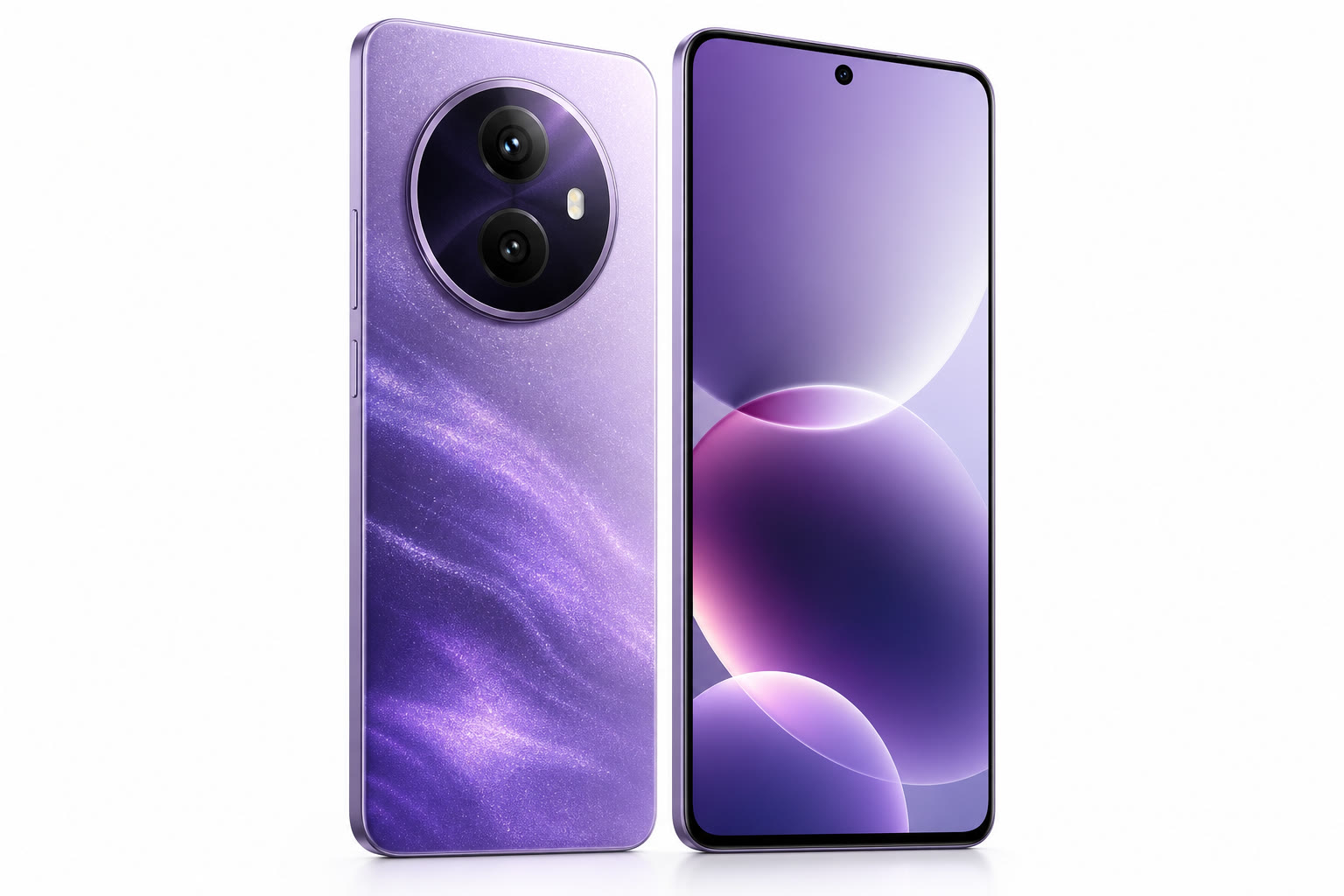
Xiaomi’s Redmi Note 17 Pro lands in your hand with a confidence that its price tag doesn’t fully prepare you for. At 226 grams, it’s not light — but you understand why the moment you remember there’s a 9,000mAh battery inside. The 8.5mm thickness is respectable for a phone packing that kind of capacity, and the flat frame gives it a modern, no-nonsense silhouette that sits well in the hand.
The back panel is glass, framed by what feels like a polycarbonate chassis. I wouldn’t call it premium in the flagship sense — this isn’t competing with a Galaxy S26 or Xiaomi 17 Ultra — but it’s sturdy and well-assembled. The camera module is a large circular island on the upper back, housing two sensors and an LED flash. It’s a design language we’ve seen across Xiaomi’s lineup recently, and it works here.
What really stands out is the durability story. The Redmi Note 17 Pro carries IP68/IP69K ratings — that’s not just splash resistance, that’s high-pressure water jets and immersion up to 1.5 meters for 30 minutes. Xiaomi even claims the phone can survive drops from up to 3 meters. You’d be hard-pressed to find another phone under $250 with this level of ruggedness. Available in Black, Nebula Purple, Sky Blue, and White, the Nebula Purple is the one that turns heads — a subtle gradient shift that catches light differently depending on the angle.
Display
The 6.83-inch AMOLED panel is, for my money, the best part of this phone. It’s a flat 1.5K display (1280 x 2772 pixels) with a 120Hz refresh rate, and Xiaomi claims a peak brightness of 3,500 nits. Outdoors under the harsh Philippine sun, this thing stays readable — I tested it on a bright afternoon in Manila and had no trouble seeing notifications or reading maps.
The 3840Hz high-frequency PWM dimming is a thoughtful inclusion for people whose eyes get strained by OLED flicker. I’m not especially sensitive to it, but I know people who are, and this is genuinely better than most phones at this price point. The panel supports 12-bit color depth and HDR10+, so Netflix and YouTube content looks punchy without being oversaturated. Gorilla Glass Victus 2 protects the front, which pairs nicely with the IP69K body for real peace of mind.
One detail I appreciate: the display can dim down to just 1 nit in dark environments. That matters more than you’d think when you’re checking your phone in bed at night.
Performance
Under the hood, the Redmi Note 17 Pro runs on Qualcomm’s Snapdragon 6s Gen 4 — a 4nm chip with four Cortex-A78 cores at 2.4GHz and four Cortex-A55 efficiency cores. It’s paired with an Adreno GPU and either 8GB or 12GB of LPDDR4X RAM. Storage options start at 128GB (UFS 2.2) and go up to 512GB (UFS 3.1), but there’s no microSD card slot — pick your storage tier carefully.
Let’s be honest about what this chipset is: it’s an upper-entry-level to lower-mid-range SoC. AnTuTu v10 scores hover around 678,000, while Geekbench 6 returns roughly 1,011 single-core and 2,924 multi-core. These aren’t numbers that will impress anyone coming from a Snapdragon 8 Gen 2 phone. But context matters — this is a $230 phone with a 9,000mAh battery, and the chip choice reflects a deliberate trade-off between performance and power efficiency.
In day-to-day use, the phone feels snappy enough. HyperOS 3 on Android 16 is well-optimized, and the 120Hz display makes scrolling through social media, Chrome tabs, and messaging apps feel smooth. Gaming is where you’ll notice the limits — Genshin Impact runs at medium settings with occasional frame dips, and Call of Duty Mobile is playable at medium graphics but won’t sustain high-refresh rates. If gaming is your priority, look elsewhere. But for everyday tasks, messaging, media consumption, and light gaming, this phone handles everything without drama.
Camera
The camera system is the Redmi Note 17 Pro’s most controversial aspect — partly because early rumors promised a 200MP sensor, and the production unit ships with a 50MP f/1.8 main shooter and a 2MP depth sensor. There’s no ultrawide, no telephoto, and no OIS. The 8MP front camera is adequate for video calls.
In good light, the 50MP main camera produces usable shots with decent dynamic range. Colors lean toward the punchy side — typical Xiaomi processing. Detail is acceptable at full resolution, but without OIS, you need steady hands or good lighting to avoid blur. Low-light performance is where the compromises hit hardest. Without optical stabilization, the camera relies on software processing and longer shutter speeds, which means motion blur is common with moving subjects.
Video recording tops out at 1080p@30fps on both front and rear cameras — no 4K support at all. That’s a clear cost-cutting decision that puts the Note 17 Pro behind competitors like the Nothing Phone 4b and even the standard Redmi Note 17 in some respects. The 2MP depth sensor is mostly decorative — portrait mode works but edge detection is inconsistent.
If you’re buying this phone for the camera, you’ll be disappointed. If you’re buying it for everything else and treating the camera as a usable-but-unremarkable bonus, you’ll be fine.
Battery & Charging
Here’s the headline: 9,000mAh. That’s not a typo. This is one of the largest batteries ever put in a mainstream smartphone, and the results are exactly what you’d expect. Two days of heavy use is easy. Three days with moderate use is realistic. If you’re a light user, you might stretch it to four or even five days.
Charging is 67W wired via USB-C with PD 3.0 support. It’s not the fastest charging in the world — you’re looking at about 80 minutes for a full charge from empty — but the sheer capacity means you won’t be reaching for the charger often anyway. There’s also 22.5W reverse wired charging, which is genuinely useful for topping up your earbuds or a friend’s phone.
Xiaomi is so confident in this battery that they’re offering a battery replacement program in China: free replacement within the first four years if health drops below 80%, and a higher-capacity upgrade option in year five. It remains to be seen if this program extends globally, but it signals serious confidence in the battery’s longevity.
There’s no wireless charging, which is expected at this price point but worth noting if you’ve gotten used to the convenience.
Software
The Redmi Note 17 Pro ships with Android 16 underneath Xiaomi’s HyperOS 3. HyperOS has come a long way from the MIUI days — it’s cleaner, smoother, and less bloated than its predecessors. The settings menu is logically organized, notification management has improved, and the control center customization is genuinely useful.
What hasn’t changed is Xiaomi’s approach to pre-installed apps. There’s some bloatware — a few third-party apps, Xiaomi’s own ecosystem apps, and the usual folder of “recommended” games. Most of it can be uninstalled, but it’s a minor annoyance right out of the box.
Xiaomi has committed to three major Android upgrades and four years of security patches for the Note 17 Pro. That’s reasonable for the price — not class-leading (Samsung and Nothing offer longer), but not bad either. The phone will see Android 17, 18, and 19, which should cover the typical ownership lifespan of a mid-range device.
App drawer navigation is smooth, split-screen works well on the 6.83-inch canvas, and the floating window feature is genuinely handy for quick replies while watching videos. HyperOS 3 earns its keep here.
Pros and Cons
| Pros | Cons |
|---|---|
| 9,000mAh battery — outstanding endurance | No ultrawide or telephoto camera |
| IP68/IP69K dust and water resistance | No OIS on main camera |
| Bright 6.83″ 1.5K AMOLED, 120Hz, HDR10+ | Only 1080p video recording, no 4K |
| Snapdragon 6s Gen 4 is efficient and capable for daily tasks | UFS 2.2 on base 128GB model |
| 67W wired + 22.5W reverse charging | No microSD card slot |
| Gorilla Glass Victus 2 + 3-meter drop rating | LPDDR4X RAM (not LPDDR5) |
| Extremely competitive pricing (starts at ~$220) | Wi-Fi 5, Bluetooth 5.1, USB 2.0 — dated connectivity |
| 3+4 year software update commitment | Available only in China at launch; global availability unknown |
Should You Buy This?
Buy it if
- Battery life is your #1 priority — this phone sets a new standard for endurance
- You need a rugged phone that can survive water, dust, and drops without looking like a tank
- You want a bright, high-refresh-rate OLED display on a budget
- You’re a moderate user who wants to charge every 2-3 days, not every night
- You value long-term battery health (the 4-year replacement program is a standout)
Skip it if
- Camera quality matters to you — no ultrawide, no telephoto, no OIS, no 4K video
- You’re a mobile gamer who needs sustained high performance
- You need the latest connectivity standards (Wi-Fi 6/7, Bluetooth 5.3+, USB 3.0)
- You’re outside China and need global LTE/5G band support right now
- You want expandable storage for media files
Final Verdict
The Redmi Note 17 Pro is a phone of clear priorities. Xiaomi looked at what matters most in the mid-range and made deliberate choices: massive battery, durable build, bright display, affordable price. The trade-offs — a basic camera system, dated connectivity, and mid-tier performance — are real, but they’re also very much expected at this price point.
What makes this phone special is the combination of endurance and durability. I can’t think of another device under $250 that gives you a 9,000mAh battery AND IP69K water resistance. That’s a genuinely unique value proposition that competitors like the Motorola Edge 70 Max (7,100mAh, similar price) and Tecno Camon 50 Ultra (6,500mAh) don’t quite match on raw battery capacity, even if they offer better camera systems.
If your phone usage revolves around all-day outings, travel, fieldwork, or simply not wanting to hunt for a charger every night, the Redmi Note 17 Pro makes a compelling case. It’s not the most versatile phone in its price range, but it’s arguably the most focused. And sometimes, focus beats versatility.
The real question is global availability. As of now, this is a China-only launch, and the global variant will likely have different specs and a higher price. If and when it lands in the Philippines, it could be one of the most interesting mid-range options of 2026 — especially for people who prioritize battery above all else.