
The smartphone market under ₹25,000 in India has become a battleground where brands throw everything at the wall to see what sticks. Bigger batteries, faster displays, more cameras — you name it. But OnePlus just did something interesting with the N6. Instead of chasing specs across the board, it picked one feature and went all in: battery life.
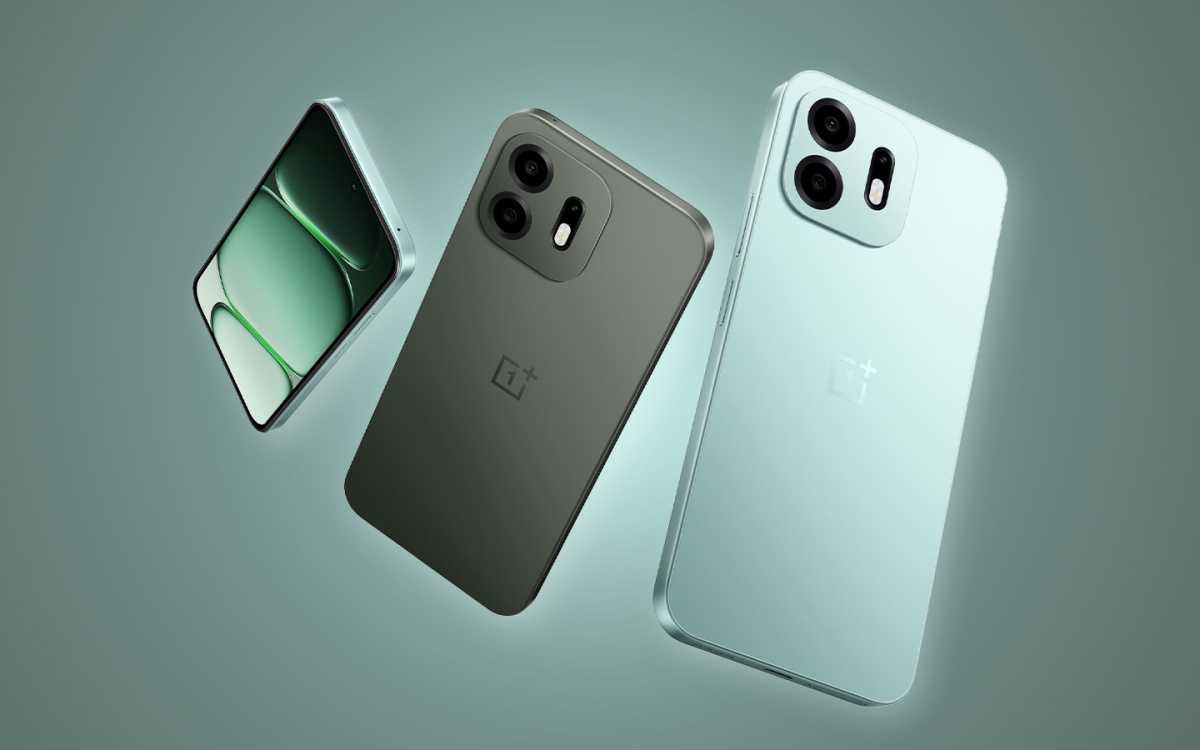
>The result is a phone that feels almost intentionally lopsided. An 8,000mAh battery in a device that costs ₹22,999. That’s not just big — that’s tablet territory. I’ve been using the OnePlus N6 for a little over a week now, and I keep coming back to the same question: does a phone need to be this good at one thing if it means cutting corners everywhere else? Let’s find out.
Design & Build Quality
The OnePlus N6 takes a straightforward approach to design. Flat display, flat frame, flat back. Nothing fancy, nothing flashy. The square camera module on the top-left corner houses a single 50MP lens and an LED flash, and it sits flush enough that the phone doesn’t wobble on a desk.
I got the Fresh Mint variant, and I have to say — the matte finish on the plastic back does a solid job at keeping fingerprints at bay. After a day of use without a case, the back still looked clean. That’s more than I can say for most glass-backed phones I’ve tested. The Midnight Green option looks more subdued if that’s your thing, but the Mint has a certain charm that grows on you.
Here’s where things get interesting: MIL-STD-810H certification. OnePlus claims the N6 has been tested for drops, extreme temperatures (65°C to -60°C), rain, salt corrosion, and sand exposure. It also carries an IP65 rating, which means it’s dust-tight and can handle low-pressure water jets. I didn’t throw mine off a roof, but I did accidentally knock it off my desk onto a tiled floor. No scratches, no dents. The ArmorShell Protection system — reinforced corners, airbag cushioning, and strengthened glass — seems to work.
At 224 grams, it’s heavy. There’s no getting around that. The weight comes from the massive battery inside, and you feel it in your hand. But the weight distribution is good enough that it never feels like it’s going to tip out of your palm. The 8.9mm thickness is noticeable with a case on, but manageable without one.
One notable omission: there’s no 3.5mm headphone jack. The upcoming N6x variant is expected to bring it back, but the N6 itself skips it entirely. The USB-C 2.0 port handles audio and charging.
Display
The 6.8-inch IPS LCD panel is both a strength and a compromise. Let me explain.
At 720 x 1570 pixels (~254 PPI), this is not a sharp display by 2026 standards. Text looks slightly softer compared to the FHD+ panels you’ll find on competing phones in this price range. If you’re coming from a phone with a crisp AMOLED display, you’ll notice the difference immediately.
That said, OnePlus made some smart choices here. The 120Hz refresh rate makes scrolling and navigation feel smooth — the kind of fluidity that matters more to daily experience than pixel count. The panel also hits 975 nits typical brightness and 1,200 nits peak in HBM mode. I tested it on a bright afternoon, and while direct sunlight does wash it out a bit, it’s still usable — much better than I expected from an LCD at this price.
Colors look vibrant enough for YouTube and OTT content. The punch-hole cutout for the 8MP front camera is unobtrusive, and the 86.8% screen-to-body ratio is decent for a budget device. The thick bottom chin reminds you this isn’t a flagship, but you stop noticing it after a day of use.
The bottom line on the display: it’s fine for what this phone is trying to be — a battery-first device meant for media consumption, casual browsing, and everyday tasks. Just don’t expect flagship sharpness.
Performance
The MediaTek Dimensity 6360 Apex is a 6nm chipset with two Cortex-A76 cores at 2.4GHz and six Cortex-A55 efficiency cores. Paired with 4GB or 6GB of LPDDR4X RAM and a Mali-G57 MC2 GPU, it’s positioned firmly in the upper-budget segment.
In day-to-day use, the N6 handles routine tasks without complaint. Switching between apps, browsing social media, scrolling through heavy websites — it’s smooth enough that you won’t feel like you’re using a budget phone. OxygenOS 16 (based on Android 16) is well-optimized for this hardware, and the 120Hz display helps everything feel snappy.
Gaming is where the Dimensity 6360 Apex shows its limits. BGMI and Call of Duty Mobile run fine at medium graphics settings. Genshin Impact is playable at low settings, but you’ll notice frame drops during密集 combat scenes with multiple effects. The 5,300mm² vapour chamber cooling system does help — the phone stays warm, not hot, even after 30 minutes of gaming. Bypass charging is a nice touch for gamers, letting the phone draw power directly from the charger without heating up the battery.
Benchmark-wise, the N6 scores around 615,800 on AnTuTu v11 (from Smartprix data). That puts it slightly behind the Redmi Note 17 Pro’s Dimensity 7300 but ahead of the Tecno Camon 50 Ultra’s Dimensity 7350. Real-world performance feels about right for the price.
Storage is limited to 128GB across both variants, but you can expand via microSDXC (it uses the shared SIM slot). UFS 2.2 is the standard here — not the fastest, but adequate for budget devices.
Camera
The OnePlus N6 has a single 50MP f/1.8 main camera with PDAF and a 2MP depth sensor. That’s it. No ultrawide, no telephoto, no macro. In 2026, that’s a noticeable omission — even budget phones usually pack at least a triple camera setup.
In good lighting, the 50MP sensor captures decent photos. Colors lean towards natural rather than punchy, which I actually prefer. Dynamic range is average — highlights sometimes blow out in high-contrast scenes. Detail is acceptable for social media sharing, but pixel-peepers will notice softness around the edges.
Low-light performance is where the single camera setup really shows its limitations. Without OIS and without a dedicated night mode algorithm that can work miracles, indoor and nighttime shots come out soft with noticeable noise. The LED flash helps for close subjects but doesn’t do much for wider scenes.
The 8MP front-facing camera is adequate for video calls. Selfies look fine in good lighting but fall apart quickly indoors or at night. Video recording tops out at 1080p@60fps for the rear camera and 1080p@30fps for the front. No 4K here — that’s a clear cost-cutting move.
Look, the camera situation is straightforward: if photography is a priority, look elsewhere. The Redmi Note 17 Pro offers a much more versatile setup for similar money. But if you’re the type of person who takes the occasional photo for social media and doesn’t think twice about it, the N6’s camera will do the job — just don’t expect flagship results.
Battery & Charging
This is the OnePlus N6’s reason for existing. The 8,000mAh battery is absolutely massive — the kind of capacity you’d expect from a tablet or a rugged phone, not a mainstream budget device.
In my testing, the N6 easily lasted two full days with moderate use — social media, messaging, YouTube, some light gaming, and email. Heavy users will comfortably get through a day and a half. OnePlus claims up to three days of battery life, and I can see that being achievable with lighter use patterns.
Charging speed is 45W SuperVOOC. OnePlus claims 50% in 47 minutes. In my testing, a full charge from near-empty took about 1 hour and 40 minutes — not the fastest for an 8,000mAh battery, but reasonable. The 45W speed feels slow compared to the 80W+ charging we’re seeing on competing devices, but OnePlus seems to have prioritized battery longevity over raw charging speed.
The 7-year battery health claim is worth mentioning. OnePlus says the N6’s battery is engineered to survive over 1,600 charge cycles while retaining over 80% capacity. That’s an unusually long warranty for battery health, and it suggests OnePlus is confident in its battery management technology.
There’s also 5W reverse wired charging — you can use the N6 as a power bank for your earbuds or another phone. Bypass charging lets you power the phone directly from the charger during gaming, bypassing the battery entirely to reduce heat generation. These are thoughtful additions that add real utility.
One thing to note: there’s no wireless charging. At this price point, that’s expected, but worth mentioning for anyone coming from a phone that had it.
Software
The OnePlus N6 runs OxygenOS 16 based on Android 16 out of the box. OxygenOS has matured into one of the more polished Android skins, and this version continues that trend. It’s clean, customizable, and reasonably fast.
OnePlus promises two major Android OS updates and three years of security patches. For a phone at this price, that’s adequate but not generous. The Redmi Note 17 Pro, for comparison, offers three OS updates and four years of security patches.
The software experience is mostly bloatware-free. There are a few pre-installed apps (Amazon, Facebook, some OnePlus apps), but nothing excessive. You can uninstall most of them. The notification shade, quick settings, and overall UI flow feel familiar to anyone who’s used a OnePlus phone before.
OxygenOS 16 brings Android 16’s new features — improved privacy dashboard, notification cooldown to reduce spam, and partial screen sharing. It also includes OnePlus-specific touches like the always-on display (which is limited to showing notifications and basic info due to the LCD panel) and customizable gestures.
OnePlus has also committed to 60 months of fluency — claiming the phone won’t slow down noticeably over five years. That’s a bold claim for a budget Dimensity chip, and I can’t verify it in a week of testing, but the software optimization is good enough that I’m cautiously optimistic.
Pros and Cons
| Pros | Cons |
|---|---|
| Exceptional 8,000mAh battery life — 2 days easily | HD+ display is noticeably soft at 254 PPI |
| MIL-STD-810H durability and IP65 rating | Single rear camera — no ultrawide or telephoto |
| 7-year battery health guarantee | No 4K video recording |
| Bypass charging for gaming | 45W charging is slow for an 8,000mAh battery |
| Clean OxygenOS 16 with minimal bloatware | Plastic build feels less premium than glass competitors |
| MicroSD expansion up to 2TB | No 3.5mm headphone jack |
| 120Hz display makes UI feel smooth | No NFC for contactless payments |
| 5W reverse wired charging | No wireless charging |
Should You Buy This?
Buy it if
- Battery life is your absolute top priority — you want a phone that lasts two full days without thinking about charging
- You work outdoors or in demanding environments and need a durable phone with IP65/MIL-STD certification
- You’re looking for a secondary phone or a travel companion that can also double as a power bank
- You value software cleanliness and OxygenOS’s smooth experience over raw specs
- You’re a student or light user who primarily uses their phone for social media, messaging, and YouTube
Skip it if
- Camera quality matters — the single 50MP shooter without OIS or ultrawide won’t satisfy photography enthusiasts
- You want a crisp, sharp display for media consumption — the HD+ resolution is noticeably below competing phones
- You need NFC for contactless payments or Google Wallet
- Gaming performance at high settings is important — the Dimensity 6360 Apex is strictly a budget chip
- You prefer a lightweight phone — at 224g, this is a heavy device by any standard
Final Verdict
The OnePlus N6 is a phone of clear priorities. OnePlus looked at the budget segment, identified battery life as the feature that would make people choose this phone over the competition, and built everything else around that decision. The result is a device that excels at one thing — lasting forever on a charge — while making compromises that will matter to some users and not to others.
Compared to the Redmi Note 17 Pro, the N6 falls short on display sharpness, camera versatility, and raw processing power. The Motorola Edge 70 Max offers a superior Snapdragon chip and a better display but costs significantly more. And the Tecno Camon 50 Ultra brings a telephoto camera and 6,500mAh battery to the table for a similar price — but its software experience isn’t as refined as OxygenOS.
If battery life is what you care about most — if you’re tired of carrying a power bank, if you forget to charge overnight, if you want a phone that just keeps going — the OnePlus N6 is the best choice in its price bracket. But if you want a well-rounded phone that does everything reasonably well, there are better options for the same money.
OnePlus built a specialist, not a generalist. And in a market full of phones that try to do everything and excel at nothing, that’s a refreshingly honest approach.