
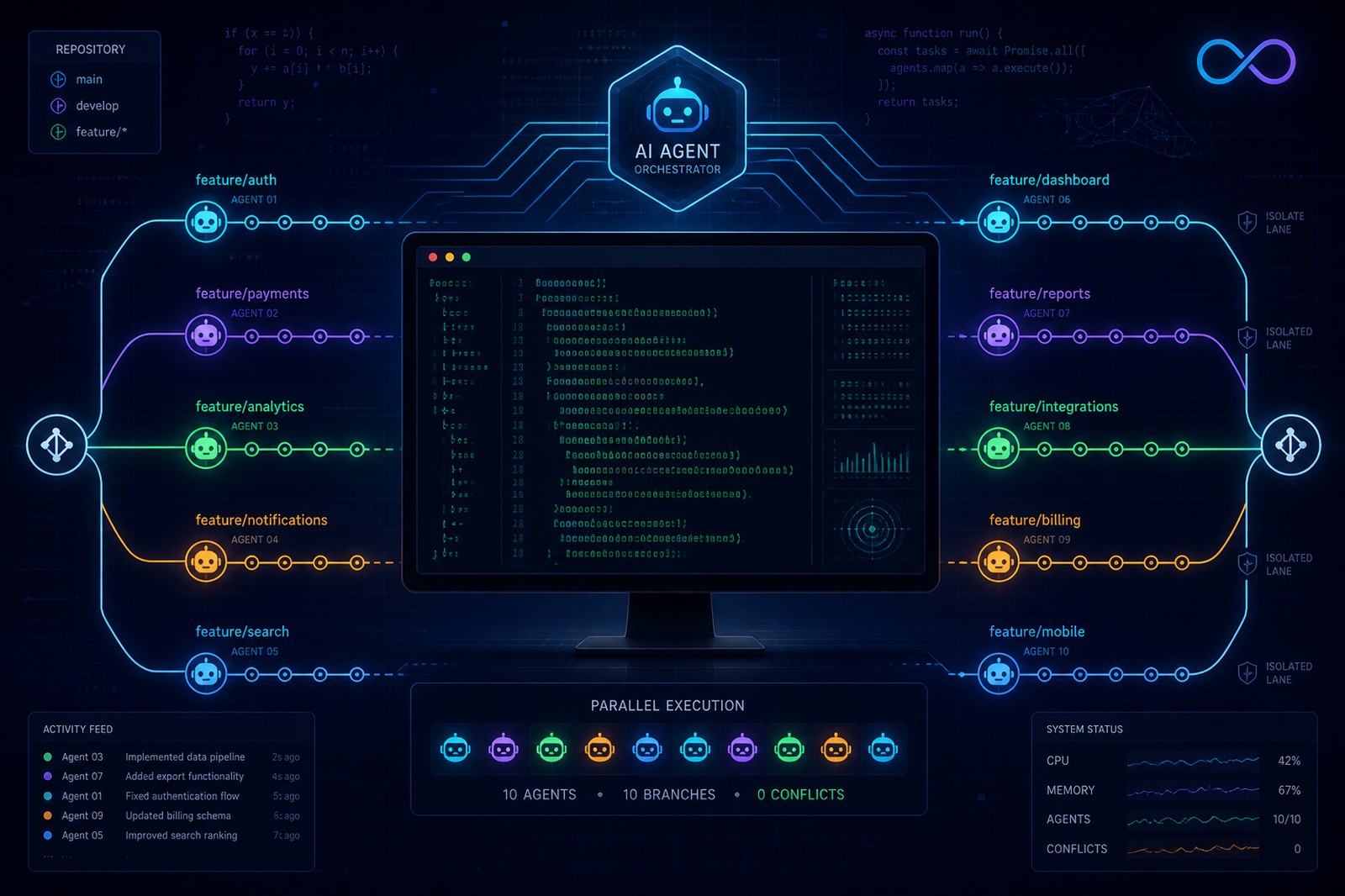
Meta finally shipped a terminal coding agent, and it is not messing around. On Wednesday, CEO Mark Zuckerberg announced Muse Code in beta — a tool that takes on complete software engineering tasks across large repositories, powered by the company’s Muse Spark model line. It lands in a market already crowded with OpenAI’s Codex and Anthropic’s Claude Code, but Meta is betting on one thing to stand out: parallel sub-agents that work in isolated git worktrees without ever touching your working copy.
Zuckerberg announced the release in a post on X — a platform he rarely uses. “It’s a terminal coding agent that takes on complete software engineering tasks across large repos: planning changes, writing code, validating the results,” he wrote. The timing is deliberate. Meta wants a seat at the table where coding agents are becoming the default way teams ship software.
What Muse Code Actually Does
Muse Code is a command-line agent aimed at programmers wrestling with complex tasks across large codebases. Meta says it plans changes, writes code, and validates results — the full loop, not just autocomplete with extra steps. It installs with a single command and is powered by Muse Spark 1.2, a coding-focused update to the model Meta released earlier this year.
The architectural bet is what makes this interesting. Instead of spawning a fresh helper agent for every task, Muse Code keeps specialized background agents alive for your whole session. They build context over time instead of re-reading the repo from scratch each time, carrying out next steps on their own and reporting back to the main agent when they have something useful.
When a job gets big enough, it fans out further. “It fans out to separate sub-agents working in parallel in isolated worktrees,” Zuckerberg explained. “Your working copy is never touched. In testing we had it build six features for a game simultaneously with no collisions.”
That last line is the one that should grab developers. Git worktrees let multiple branches check out into separate directories at the same time, and Meta is leaning on them hard — parallel lanes of work that never fight over the same files, plus a local append-only event log for traceability and crash recovery. Interactive commands like /plan, /grill, and /goal round out the workflow.
Meta’s Play Is Price
Meta is not pretending to out-build everyone. Its pitch is cost. Alexandr Wang, Meta’s AI chief who leads Meta Superintelligence Labs, told the Wall Street Journal that “for a lot of workflows and a lot of use cases, this can be an incredibly good option, especially from a cost perspective.”
That tracks with how Meta priced Muse Spark. When the model hit public preview in July, Meta charged $1.25 per million input tokens and $4.25 per million output tokens — squarely at the budget end of the market. Agentic workloads burn tokens fast, and if you have watched an AI agent bill rack up, you know the damage a long session can do. I wrote about exactly this failure mode when Amazon’s $1.8 million Claude blunder made the rounds — runaway agent costs are a real operational risk, not a hypothetical one.
Meta is positioning itself as the affordable option for teams that want agentic coding without the premium price tag. For developers in markets like the Philippines, where US pricing hits differently once converted to pesos, that is not a trivial pitch.
What This Means for Developers
The immediate takeaway is that you now have another serious option in the terminal-agent space, and competition is good for your wallet. Claude Code and Codex have been setting the pace, but a third big player with aggressive pricing changes the math on which agent you wire into your workflow.
That said, beta is beta. Claims like “six features with no collisions” come from Meta’s own testing, not independent benchmarks — treat them as marketing until the community runs its own trials. I have seen enough AI coding assistant failures to stay cautious, from AI coding assistants hallucinating package names to agents quietly making a mess of a clean tree. Worktree isolation is a genuine safeguard, but it protects your working copy, not your merge history.
If you already live in git workflows, this agent’s approach will feel familiar. It is the same branch-and-merge discipline behind stacked pull requests with gh-stack — parallel lanes of work that only touch the mainline when they are ready. The difference is that now the agent is doing the lane management for you.
The Bigger Picture: The Coding Agent Wars
This launch is part of a wider shift. Meta has spent the year building out its AI presence beyond advertising — it entered the enterprise AI market in June with a business agent, and Muse Code extends that push into developer tools. The company is no longer content to be the model provider; it wants to own the interface where developers actually work.
There is also an open-source thread here that matters. Zuckerberg teased on X that open-sourcing Muse Spark or another product is “in the cards.” If Meta follows its Llama playbook and releases the model weights, the economics of self-hosted coding agents change dramatically — the same way open-weight AI catching up to the frontier is reshaping the broader market. Local-first agents like Collie are already proving the demand for that path.
What I find striking is how fast this space moved. Two years ago, a “coding agent” was a glorified autocomplete. Today, the biggest AI labs are shipping autonomous agents that plan, code, and validate across entire repos — and pricing them like commodity infrastructure. The hidden cost of AI agents is becoming the battleground, and Meta is betting that cost wins over flash.
Whether Muse Code lives up to the parallel-worktree promise is something only real repos will tell us. But one thing is clear: the AI coding agent market just got a new heavyweight, and it is fighting on price. For developers, that usually means one thing — better options, lower bills, and the freedom to let the agent do the boring parts while you keep the interesting ones.