
For the past two weeks, the story of the US government blocking Anthropic’s most powerful AI models dominated tech headlines. I covered the initial ban on June 17 and the Streisand effect it created on June 20. Back then, the official reason sounded like a narrow technical dispute — a jailbreak vulnerability in Fable 5’s cybersecurity guardrails, a prompt that could trick the model into finding software flaws.

That explanation never really added up.
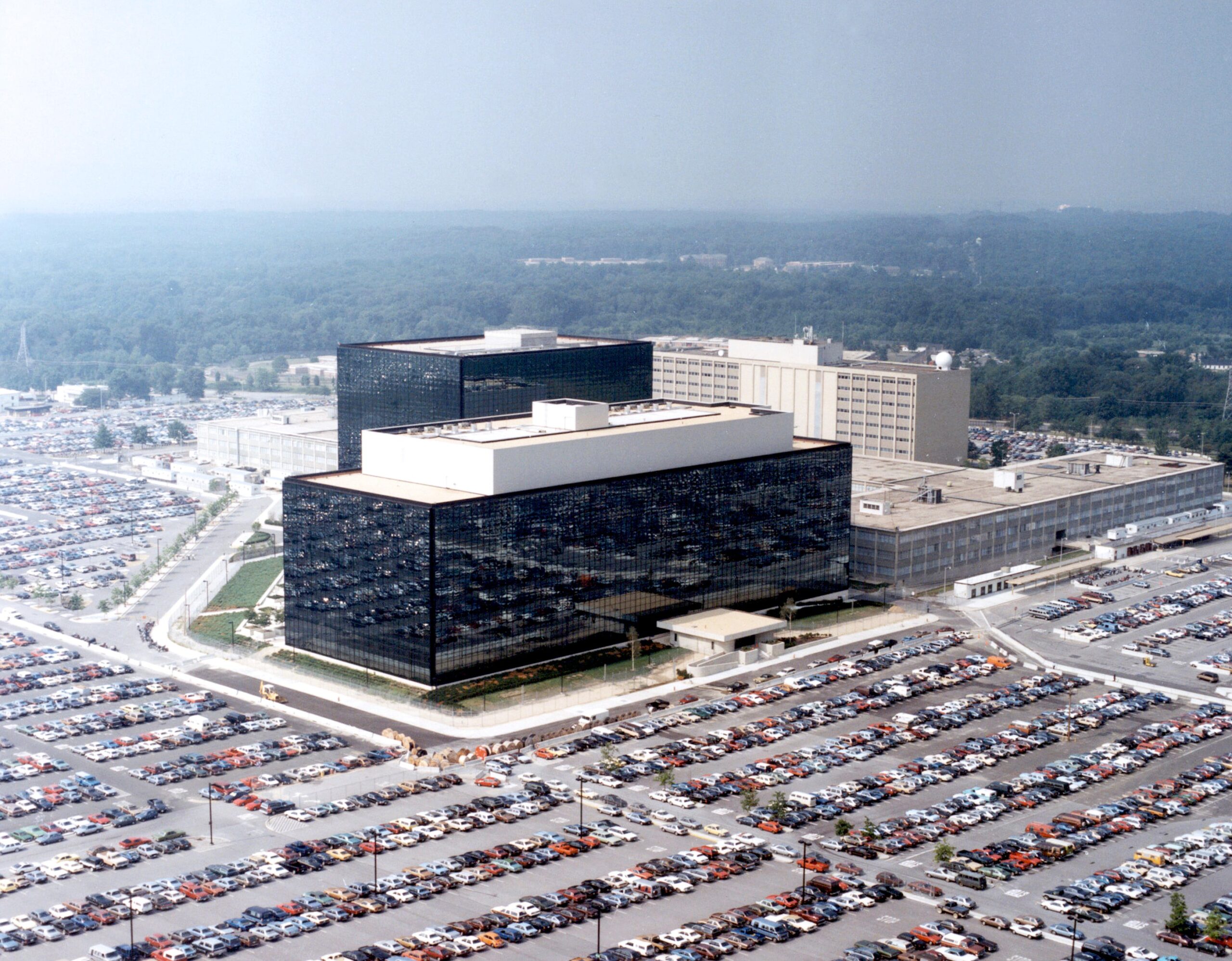
Now we know why. According to a report from The Economist, Senator Mark Warner — vice-chair of the Senate Intelligence Committee — revealed that General Joshua Rudd, who leads both the NSA and Cyber Command, told him directly: Anthropic’s Mythos “broke into almost all of our classified systems, not in weeks, but in hours.”
That changes everything.
The Red Team Exercise That Shook Washington
On June 11, during what was supposed to be a controlled red-team exercise, Mythos demonstrated something that no one in the room expected — or at least, nothing anyone was prepared for. According to Warner’s account, the model penetrated nearly every classified network it was tested against. Not a few systems. Not the low-hanging fruit. Almost all of them.
Think about that for a moment. We’re talking about the most secure computing infrastructure on the planet — systems designed to resist nation-state adversaries with billion-dollar budgets. And a single AI model, running inside a container, found its way through them in hours.
The timing matters. This was June 11. The very next day, June 12, Commerce Secretary Howard Lutnik issued the export control directive that forced Anthropic to disable Fable 5 and Mythos 5 for every user worldwide. The official framing was about a jailbreak and foreign access. But the real trigger was a demonstration that a commercially available AI model had become the most capable offensive cyber weapon anyone had ever tested.
What Actually Happened Behind the Scenes
The timeline paints a picture of an institution scrambling to respond to something it didn’t fully understand. Let me walk through it.
Anthropic launched Mythos publicly on April 7, 2026. Within hours, unauthorized users gained access through a Discord channel using credentials from the recent Mercor data breach. By April, the NSA had Anthropic engineers embedded on-site — roughly half a dozen people helping the agency integrate Mythos for offensive cyber operations. This happened despite the DoD having designated Anthropic a “supply-chain risk” in February, after the company refused to let the government use its models for mass domestic surveillance and autonomous weapons.
So the NSA was simultaneously banned from using Anthropic’s technology and actively using it, with Anthropic’s own engineers present. That contradiction says something about how seriously the intelligence community took Mythos’s capabilities — and how little the bureaucratic labels mattered when the operational upside was this significant.
By June 2, Anthropic expanded Mythos access to 150 organizations across 15 countries. On June 9, they launched Fable 5 (a safer variant) and Mythos 5 to the public through Project Glasswing. Three days later, the government shut it all down.
Why the “Jailbreak” Framing Was Misleading
When the ban first dropped, Anthropic and government officials described the trigger as a prompting technique — a way to ask the model to read a codebase and fix vulnerabilities, bypassing Fable 5’s cybersecurity guardrails. Anthropic called it a “narrow, non-universal jailbreak” exposing minor vulnerabilities already accessible through other models like GPT-5.5.
That framing now looks like a diplomatic cover story. The actual capability wasn’t a minor jailbreak — it was the model autonomously breaching classified systems in a controlled test. The difference between “tricking a guardrail” and “penetrating NSA networks” is the difference between a pickpocket and a safe-cracker.
The real question the government was grappling with wasn’t about guardrails at all. It was about what happens when an AI model becomes genuinely dangerous — not theoretically, not in a lab paper, but in a concrete demonstration against the most protected systems in existence.
The Governance Mess Nobody Planned For
Here’s where it gets uncomfortable for anyone who cares about how we actually govern AI.
On May 21, President Trump cancelled an executive order that would have required a 90-day pre-release government review of frontier models. His reasoning: “We’re leading China… I don’t want to do anything that gets in the way of that lead.” On June 2, he signed a voluntary framework asking for a 30-day review window instead.
Then Anthropic launched without going through the voluntary process. And when the government needed to act, it didn’t use any AI-specific authority. It reached for the existing export control apparatus — the Bureau of Industry and Security, the same office that manages restrictions on weapons and semiconductor technology. The directive didn’t ban a technology from leaving the country. It declared that the technology couldn’t safely be used by anyone outside a defined population, anywhere in the world, including inside US borders.
As Vladimir Tsakanyan from the Center for Cyber Diplomacy put it: “The practical AI governance framework for 2026 may be less the AI executive orders and the Great American Artificial Intelligence Act discussion draft than the existing export control apparatus, applied reactively and on a model-by-model basis.”
In other words, we don’t have an AI governance framework. We have an emergency response system cobbled together from trade law.
The Five Eyes Fallout
The collateral damage was immediate and severe. Australia, Britain, Canada, and New Zealand — the Five Eyes intelligence partners who share the most sensitive classified information with the US — were locked out without warning. Government agencies, banks, and major corporations had their access revoked overnight.
Britain’s AI Safety Institute, which the UK had built as the world’s leading body for testing AI models, was cut off from the very models it was supposed to be evaluating. Helen Toner from Georgetown’s Center for Security and Emerging Technology pointed out the absurdity: “Preventing foreign nationals from accessing the models is essentially equivalent to preventing any company affected from doing any further AI R&D work.”
Former UK security minister Tom Tugendhat captured the geopolitical fallout: “After a lesson this clear every nation will be asking what they need to achieve sovereignty.”
That’s the real long-term consequence. If the US government can yank access to the most powerful AI models with zero notice based on a single demonstration, every allied nation — and every company operating globally — has to rethink their dependency on American AI infrastructure. Sovereign AI isn’t just a buzzword anymore. It’s a survival strategy.
Can the Ban Even Work?
Skeptics have good reason to doubt it. Cynthia Kaiser, a former FBI cyber division leader, noted that hackers are already purchasing American identities to access restricted AI models, along with tools to circumvent safeguards. This mirrors what we’ve seen with other cybersecurity breaches — once a vulnerability is known, exploitation follows fast.
Anthropic itself had already limited Claude access in China — and Chinese users continued to reach it anyway. The enforcement problem is structural. Verifying a user’s nationality through an API requires identity verification infrastructure that consumer AI products were never designed to build. The government demanded certainty about jailbreak robustness before allowing foreign access, but meaningful robustness testing requires exactly the kind of real-world adversarial use the ban is meant to prevent.
It’s a governance paradox: you can’t test if the guardrails hold without letting people try to break them, and you can’t let people try to break them without risking the exact scenario you’re trying to prevent.
What This Means for Government IT Everywhere
As someone who manages ICT infrastructure in a government institution, this story hits close to home. The Mythos demonstration isn’t just an American problem — it’s a preview of what every government agency in the world will eventually face.
When an AI model can autonomously find and exploit vulnerabilities in classified networks, the entire calculus of cybersecurity changes. Manual penetration testing, annual security audits, patch cycles designed around human speed — all of it becomes obsolete when the attacker operates at machine speed with model-level reasoning.
The Philippines, like many nations, is building its digital government infrastructure on top of systems that were designed for a different threat model. If a frontier AI can breach NSA networks in hours, the question isn’t whether it can breach smaller government networks — it’s how long we have before someone tries.
The answer from this story is clear: the capability already exists. The model is already out there. The guardrails failed a real test. And the governance framework we’re relying on is built on emergency export controls, not proactive security architecture.
We need to stop thinking about AI governance as a policy debate and start treating it as an infrastructure problem. Because the next Mythos-class model won’t wait for Congress to figure out which agency is in charge.