
The pause
The news broke on Friday morning for anyone watching where the AI build-out is heading. Nvidia has told its manufacturing partners, including Dell and Super Micro, to stop shipping servers to Malaysia, Singapore, Thailand and Indonesia for an unspecified period while it checks whether regional partners are meeting U.S. export requirements, according to the Wall Street Journal.
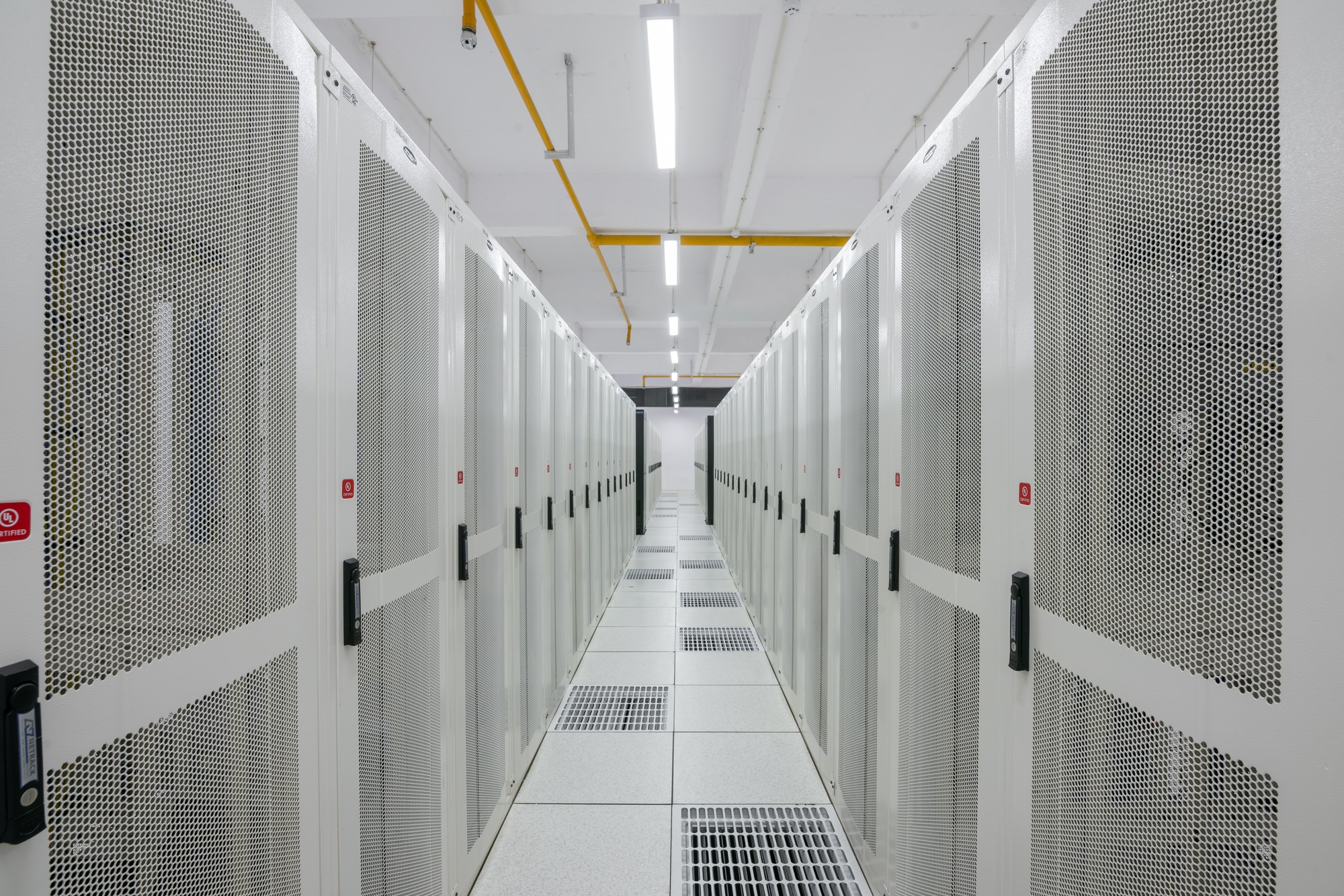

Two independent wires confirmed it the same day. Reuters, citing the Financial Times, reported that Nvidia asked partners to halt server shipments to the four countries as it assesses compliance with new U.S. controls. The move closes a fast-moving chapter in the semiconductor chip war: Washington spent weeks tightening the rules, and the region that was supposed to be the next AI frontier is suddenly a compliance question mark. The same wave that will put AI agents are moving into your text messages everywhere is the one being policed now.
Why now: a loophole the U.S. had to close
The pause did not come out of nowhere. In November, the Commerce Department’s Bureau of Industry and Security moved to close a loophole that let Chinese companies rent computing power from data centers in Southeast Asia to run on Nvidia chips remotely. The new rules, effective November 19, require export licenses for advanced chip shipments to Indonesia, Malaysia, Singapore and Thailand, and for overseas data centers that supply “significant volumes” of computing power to Chinese companies.
As the TechCrunch report noted, Chinese firms have been tapping Nvidia chips remotely from data centers in the region. Think tank the Institute for Progress estimates such remote data centers supply about 24% of China’s AI computing power. That is a big number, which is why the U.S. treated it as a national security problem rather than a trade inconvenience.
For an AI developer like me, the logic is easy to follow even if the politics are not. Compute is the fuel of the industry, and like any fuel, it is being rationed at the source. What changes for the rest of us is where that fuel can be bought, and at what price.
How the domino effect is hitting the region
The export clampdown is already moving prices and plans. Shares in Malaysia’s data center infrastructure firms MN Holdings and Critical Holdings plunged nearly 20% on November 17 as fresh US chip curbs hit the region’s AI build-out, Reuters reported in mid-November, and YTL Power, an Nvidia infrastructure partner, fell nearly 10%. The numbers told the story in a single glance: the region’s data center boom is losing momentum.
Asia-Pacific data center investment will slow and become more selective, Fitch Ratings said on Thursday. The region’s data center and chip supply chain industries together form a more than $100 billion AI industry, according to Reuters, and the new rules hit the part that depended on Chinese demand.
The effect is already showing up in hardware delivery. China’s Z.AI and Moonshot AI, two of the country’s biggest AI labs, face delayed flagship model releases as overseas computing access gets harder, Reuters exclusively reported. Moonshot expects development cycles to double to a year or longer if overseas compute access is cut off entirely. When the world’s fastest chips are a licensing exercise, even the labs that do not ship hardware feel it.
The governance thread running through the story
The export crackdown cannot be separated from what happened inside Nvidia. The rules landed while the company was reeling from months of reports about an extramarital affair between chairman and CEO Jensen Huang and a suspected Chinese spy who worked at Singapore-based cloud company Megaspeed, which has come under scrutiny for possible illegal diversion of advanced chips to China. Huang resigned, and the board reinstated him as CEO on November 23.
The Economist, in an essay published on November 25, argued Nvidia made the right call in bringing him back. Whether you agree or not, the timing is impossible to ignore: the company fighting the leak is the same company being asked to police the very chips at the center of the leak. It is a reminder that in the AI industry, technology and governance now travel together.
What this means for the AI map
For Asia’s data center builders, the message is blunt: speed alone will not win this race anymore. Companies want proof of where every chip sits and who it serves, said Ke Yan, head of research at Singapore-based investment research firm Shenton Research, in Reuters coverage. The era of treating overseas data centers as a convenient black box for Chinese compute is ending. For cities and regions across Asia, the physical footprint of the AI build-out is about to get a lot more visible — to citizens, not just to investors.
That has practical consequences for developers and businesses here in the Philippines and across the region. Hardware lead times stretch while export licenses sort out who gets what. Cloud bills for overseas capacity may climb as compliance and risk premiums are priced in. And the old assumption that the cheapest compute could always be found somewhere far away is quietly dying.
There is a silver lining in the smaller, more careful build-out. The same rules push investment toward data centers that serve local customers, and toward harder guarantees on where compute actually runs. If you are building on the edge of that map, the practical play is the same one developers have always used: know your supplier, ask where the compute lives, and do not assume a rack in another country behaves like your own.
Three things to watch in the weeks ahead: whether export license wait times for advanced chips widen beyond the four countries, how much of the region’s data center construction migrates back to local demand, and whether cloud providers start publishing where their customers’ compute physically runs. In the software layer, Signal’s screenshot-blocking move to stop AI agents working inside messaging apps is a sign of the same tightening. If you are shipping software that depends on the cloud, treat the answer as a question you should be asking your vendor today.
Bottom line
In chess, when a player’s pieces come under attack, you do not wait for checkmate to move. You shift the geometry of the board before the pieces get captured. That is what Nvidia’s pause is: a repositioning, not a surrender. The U.S. wants the fastest chips kept where it can see them, and the map of where AI gets built is being redrawn in real time.
For anyone shipping software that depends on it, the takeaway is the same as it has always been: the fastest path is not always the shortest one, and the best players are the ones who adjust before the board changes again. The cheapest form of AI is increasingly the one that runs on your own laptop — the kind you can run locally on Windows, without sending a byte abroad.